• The move to the new server is done. There are some software and database maintenance updates in process. This has us passing the hat around to help out. We appreciate any donations. Seriously, even a dollar helps. The payment page may be found here - https://www.audiokarma.org/support.html

Digital vs Audio Formats in Music

Status
Not open for further replies.
I think my points might be less-controversially stated like this:

The normal music listener, ESPECIALLY an AK'er, would be surprised to find out that most/all of their favorite recordings, were made on studio equipment such that the many mics, preamps, consoles, tape machines, transformers, etc are all creating theoretical little bottlenecks that often prevent any meaningful material above 30kHz in the final product.

Absolutely. That's why I agree with Dan Lavry that 60 KHz sampling rate would be a really smart choice.

Cheers,

Otto
 
I'm having a great day!It would be even better if you could support your side of the discussion with factual information
Review posts 170,174, 180, and 203 where you will most certainly find factual information. You have to click the links (those words underlined in blue) to find the references.

Chain of evidence trumps hearsay every time.
Couldn't agree more. Review posts 170,174, 180, and 203 where you will most certainly find factual information. You have to click the links (those words underlined in blue) to find the references.

this is an interesting study performed by NHK in Japan
You find studies with null results interesting? By their very nature they neither prove nor disprove nothing. Translation: they are meaningless. Let's review the exciting conclusion, shall we?

"From above results, we can still neither confirm nor deny the possibility that some subjects could discriminate between musical sounds with and without very high frequency components."

Too funny. You're a real trip. :)
 
I'd not heard about microphonics, it would make sense since the needle acts to some degree like that.

any microphonic plug ins for digital? I listened to some tube plugins on foobar and they sounded like crap.

Maybe there is no digital substitute for the real thing

Nah. Why bother EQing digital when you can just get the whole original analogue experience with its natural effects with a TT and a stack of vinyl LPs. Have multiple options and enjoy each one you like at any moment, tape, vinyl, cd, flac...

Bob Carver says same microphonics add to the special feel tube amps give us. http://youtu.be/LQ9USqpclWc?t=50m2s
 
E-Stat & Positron, thank you for your great knowledge and contributions.
You're certainly welcome.

I think my points might be less-controversially stated like this... that often prevent any meaningful material above 30kHz in the final product.
Which immediately rules out the Redbook specification. I'm not a vinyl bigot nor find it is somehow inherently superior to digital - since there are so many different expressions of that term.

What is evident to most folks is that the crippled-limited-by-1983-computer-technology Redbook standard cannot replicate the bandwidth of analog.

One must get to at least 88.2 (using existing recording gear) in order to do that without screwing the pooch with an eleventh order brickwall filter.
 
Nah. Why bother EQing digital when you can just get the whole original analogue experience with its natural effects with a TT and a stack of vinyl LPs. Have multiple options and enjoy each one you like at any moment, tape, vinyl, cd, flac...

Bob Carver says same microphonics add to the special feel tube amps give us. http://youtu.be/LQ9USqpclWc?t=50m2s

Carver's a man who knows his stuff, I read the whole Carver challenge thing a little while back, fascinating stuff.
 
Review posts 170,174, 180, and 203 where you will most certainly find factual information. You have to click the links (those words underlined in blue) to find the references.


Couldn't agree more. Review posts 170,174, 180, and 203 where you will most certainly find factual information. You have to click the links (those words underlined in blue) to find the references.


You find studies with null results interesting? By their very nature they neither prove nor disprove nothing. Translation: they are meaningless. Let's review the exciting conclusion, shall we?

"From above results, we can still neither confirm nor deny the possibility that some subjects could discriminate between musical sounds with and without very high frequency components."

Too funny. You're a real trip. :)

Correct me if I've missed something in my quick perusal of your links, but the one thing that seems to be missing from them is peer review. Most of the studies you've cited are from white papers, not peer-reviewed academic journals. These days any idiot can write a white paper and post it on a Web site, and unfortunately many do.
 
You find studies with null results interesting? By their very nature they neither prove nor disprove nothing. Translation: they are meaningless. Let's review the exciting conclusion, shall we?

"From above results, we can still neither confirm nor deny the possibility that some subjects could discriminate between musical sounds with and without very high frequency components."

Too funny. You're a real trip. :)

I find them very interesting!
In the study performed, no one could tell the difference.
While they did not test every human alive, it showed that in their sampling, NONE COULD TELL THE DIFFERENCE.
That's interesting!

I'm still waiting for your chain of evidence for the capture and replication of ultrasonic info. from the live performance to your eardrum...
 
I find them very interesting!
Apparently, you don't understand the statistical significance of the null result as concluded by the authors. Those who do understand statistics appreciate the fact you can't prove a negative. Oh, well!

At least it appears you finally figured out how to click a link. Congratulations!

Maybe some day, you'll understand the facts presented in post 36 which will require more use of your newly developed skill. :)
 
Correct me if I've missed something in my quick perusal of your links
You really do have a short retention span. Ok, I'll play the nurse maid.

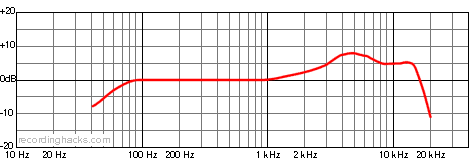
Post 170 - No studies. Only a graph of a Schoeps microphone and an explanation of styli types and bandwidth.

Post 174 - No studies. Information about the current Pyramix DXD workstation that grammy winning engineers like Bob Ludwig use with high resolution (analog and digital alike) sources.

Post 180 (oops, that's 181) - Here is the only "study". He clearly references the gear used and the frequency response measured. Feel free to dispute any aspect of the measurements.

Post 203 - No studies. A link to the B&K 4003 microphone frequency response curve and two links to recording venues using high bandwidth microphones you once thought didn't exist. Steve Epstein kinda knows how to record. :)

Thanks for having such a humorous discussion!
 
So, if you had ten people sit down and taste test whole milk versus skim and none could tell the difference, would you consider that signifcant or not?

While the test may not prove that a difference is impossible to detect, it shows that in the specific test that none could.
If in the test, none could tell a difference, then it may be true that none in any test could ever do it.
Maybe we need to make it a test given to every school student when they enter high school.
Then again, we may miss a few students and THEY would be the ones that MAY skew any results.

Your logic is similar to those who are against lie-detector tests:
Since it has been shown they are not 100% accurate, you cannot assume ANY of them are accurate.
Wrong!
 
Maybe your equipment can play it, but can the microphones capture it?

Shure SM58 studio microphone response chart:
frequency-response_sm58.gif


Shire SM57s:
frequency-response_sm57.gif


AKG D112:
0552.png

Robgmn, those are great examples, but here's a little trivia, using these examples, just to prove that there are no absolutes in the creation and enjoyment of art.

These are indeed lesser expensive "dynamic" mics. The D112 is not a good example because its frequency response IS DELIBERATELY "voiced" like that to compliment bass drums, and lower-frequency instruments. It was mainly marketed as a bass-drum mic for rock, to smooth the low end and bring out the attack of the beater. AKG apparently does not care about you hearing 20kHz on a bass drum recording. (but should they?)

On the other hand, Bono has used the SM58/57 for his actual vocal tracks many many times. I'm not even necessarily a big U2 fan, but how many millions of records is that? I'M NOT mentioning sales because music sales somehow validate the artist's work, I'm just saying, for better or worse, THE WORLD has heard Bono's recordings, and it has said "we find the sound of Bono's voice to be very satisfying to listen to, there's nothing missing here."
 
Robgmn, those are great examples, but here's a little trivia, using these examples, just to prove that there are no absolutes in the creation and enjoyment of art.

True, but a little off target to the whole discussion of format capabilities.

While a Veyron tire can handle runs over 200MPH, it doesn't mean my SUV will do 200MPH if I put the same tire on it, or even if I put the same engine and transmission in it.

While someone's cartridge may be able to reproduce 40KHz, it doesn't mean it will happen if there is no software that has that frequency recorded in it (why would it if the mics don't pick it up? or if the lathe head doesn't cut it? etc.)

Working backwards through the "chain of events/evidence", I have given examples of COMMON studio audio equipment that does not do it (specifically microphones and cutting lathe heads).
I haven't mentioned home speakers (though I'm sure etstat could find one for $100K that will reproduce from 2Hz to 16GHz).
Etstat has given examples of a microphone element that can do it, but has not covered the chain of events to show it happens.

As said, it would be very enlightening for him to do so.
 
Audio testing has different confounds than taste testing. So why should we believe you when you do not understand the basics of testing? By the way, not addressing all the confounds will result in skewed tests, every single time, 100% of the time.

Maybe you can rig some audio tests for us Rob. But don't tell anyone that they are being taken for a ride. Just our secret.

Cheers.

Post understood, but please stop using a word that doesn't exist with regards to this discussion.

I understand the basics of testing very well.

The test is the same no matter what sense we are talking about.
Our senses allow us to discern (or not) differences between two similar (or dissimilar) stimuli.

You can compare foods, colors, sounds, textures (sense of touch), smells.
Either you CAN or CANNOT distinguish a difference (maybe even a preference) by comparing one or more stimulus/stimuli to another.

It's actually quite simple (though the concept obviously confounds YOU).
 
So, if you had ten people sit down and taste test whole milk versus skim and none could tell the difference, would you consider that signifcant or not?
Your example is a poor one that doesn't relate the level of complexity and series of assumptions required to perform the audibility test. If it were as simple as you make it out to be, the authors would not have concluded:

"From above results, we can still neither confirm nor deny the possibility that some subjects could discriminate between musical sounds with and without very high frequency components."

I remain amused at those who don't understand the series of assumptions and Rube Goldberg styled approaches taken with audio tests. Let's see how you do with this one:

Interconnect test

Scroll down about midway through the page and look at the test for comparing interconnects via a Y-adapter. Does that sound like a reasonable test that would provide a comparison of two different cables?
 
Last edited:
On the other hand, Bono has used the SM58/57 for his actual vocal tracks many many times. I'm not even necessarily a big U2 fan, but how many millions of records is that? I'M NOT mentioning sales because music sales somehow validate the artist's work, I'm just saying, for better or worse, THE WORLD has heard Bono's recordings, and it has said "we find the sound of Bono's voice to be very satisfying to listen to, there's nothing missing here."

Right. The SM57 is a lectern mike. OTOH, it's commonly used live, as is the SM58 and other similar mikes. If someone wanted to hold an SM57 and sing vocals in the studio and it works for them to perform like it matters (i.e. there is a live audience to perform for) then that is totally the right way to record and who cares about frequency response? Studio recordings are about making good recordings, not transcribing audio events.

Cheers,

Otto
 
Last edited:
Status
Not open for further replies.
Back
Top Bottom