• The move to the new server is done. There are some software and database maintenance updates in process. This has us passing the hat around to help out. We appreciate any donations. Seriously, even a dollar helps. The payment page may be found here - https://www.audiokarma.org/support.html

Dual Binding Posts a Marketing Gimmick?

I think it is, it's a good way for companies make a few more bucks, amp companies, speaker companies and cable companies.
I think you be hard press to hear a difference unless you have a zillion dollar audio system.
 
I think it is, it's a good way for companies make a few more bucks, amp companies, speaker companies and cable companies.
I think you be hard press to hear a difference unless you have a zillion dollar audio system.

I don't have an opinion on whether bi-wiring improves sound quality or not. Even if they don't improve sound quality at all, I could easily see speaker manufacturers adding dual binding posts anyway so they don't lose sales on the perception of having a functional deficit. In that case though, I would not expect them to recommend bi-wiring in their owners manuals if they didn't see benefit because almost no speaker manufacturer sells speaker wire, so there is no reason to promote expensive wires.

Bi-amping, sure, I'd expect them to talk about that because that is something totally different, but I don't know why speaker manufacturers would specifically recommend bi-wiring when there is nothing in it for them (and any money spent on expensive third-party speaker cable means fewer dollars available to buy their speakers).

 
I don't have an opinion on whether bi-wiring improves sound quality or not. Even if they don't improve sound quality at all, I could easily see speaker manufacturers adding dual binding posts anyway so they don't lose sales on the perception of having a functional deficit. In that case though, I would not expect them to recommend bi-wiring in their owners manuals if they didn't see benefit because almost no speaker manufacturer sells speaker wire, so there is no reason to promote expensive wires.

Bi-amping, sure, I'd expect them to talk about that because that is something totally different, but I don't know why speaker manufacturers would specifically recommend bi-wiring when there is nothing in it for them (and any money spent on expensive third-party speaker cable means fewer dollars available to buy their speakers).
It's not as critical as it once was. Speaker loads can be modeled and tamed. Much more information available. A major speaker company I used to rep designed and modeled enclosures, drivers, and crossovers on a computer. They found that they would get 90% there and just needed minor tweaks to the samples built. It was pretty interesting.
Anyway, I do biamp my speakers on occasion, using am amp with variable outs to align the top end with the bottom. It would be handy for those Klipsch.
 
I have a friend who has bi-wired his system and found the it didn't make a difference, I guess it
depends on the system.
 
Some like to use tube power for the tweeters and ss power for the woofers.

Doing that now with my Allison One's. Mcintosh MC225 on the tweets/mids, McIntosh MC2120 on the woofers. Figure if Roy Allison thought it was a worthy enough for him to design a speaker this way, and I have an abundance of amps, why not?
 
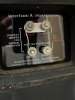
My 1970s EVs have a dual terminal system modeled after pro sound practices. (I used an unbent paper clip to jumper them.)

From what I've read it was to prevent overdriving the tweeter with a really big amp. They sold a tweeter protector box that provided 4 outputs from 2 inputs, with wiring instructions for the biamp terminals (with a fun engineering double entendre they were marked "Common" and "Sense"). I believe they removed the system after they switched from the 2.5" Peerless cone tweeter to the indestructable 1.5" Superdome.
IMG_2285.png
 
My understanding of Biamping coincides with the linked Snell manual. Woofers are electrical generators, putting out tremendous amounts of power on return, controlled by the damping factor of your amp. That is still an electrical surge in the system. Detaching the woofer from the tweeter and amping it separately takes that all out of the equation. It is also almost 'free' if you have a multi channel amp that you are not using all the channels on. I did it first on my CS Tower IIs and it was instantly noticeable. Sounds cleaner IMO. Not a thing at low volumes, but when you crank it up pretty sure lower distortion is what you hear
 
My understanding of Biamping coincides with the linked Snell manual. Woofers are electrical generators, putting out tremendous amounts of power on return, controlled by the damping factor of your amp. That is still an electrical surge in the system. Detaching the woofer from the tweeter and amping it separately takes that all out of the equation. It is also almost 'free' if you have a multi channel amp that you are not using all the channels on. I did it first on my CS Tower IIs and it was instantly noticeable. Sounds cleaner IMO. Not a thing at low volumes, but when you crank it up pretty sure lower distortion is what you hear

Dumb question here but do multichannel amps always have separate amps for each channel?
 
My understanding of Biamping coincides with the linked Snell manual. Woofers are electrical generators, putting out tremendous amounts of power on return, controlled by the damping factor of your amp. That is still an electrical surge in the system. Detaching the woofer from the tweeter and amping it separately takes that all out of the equation. It is also almost 'free' if you have a multi channel amp that you are not using all the channels on. I did it first on my CS Tower IIs and it was instantly noticeable. Sounds cleaner IMO. Not a thing at low volumes, but when you crank it up pretty sure lower distortion is what you hear

I looked into that myself a little while ago too and was directed to the term "passive bi-amping" and this thread which was really interesting: https://www.avsforum.com/threads/learn-why-passive-bi-amping-isnt-actually-more-powerful.2770993/
 
Dumb question here but do multichannel amps always have separate amps for each channel?
Some amps, like mine allow redefining channels so you can parallel output for bi amping. multi channel amps by definition, should have separate amps for each channel. How separate depends on the quality of the amp
 
I looked into that myself a little while ago too and was directed to the term "passive bi-amping" and this thread which was really interesting: https://www.avsforum.com/threads/learn-why-passive-bi-amping-isnt-actually-more-powerful.2770993/
I never said it got louder. I said you can hear the difference when you play it louder
I did not read that entire thread, but the beginning did not address what i had been lead to believe about bi amping.
Which is not that it will get louder
If there is commentary to that point in that thread let me know, TLDR
 
I sold someone my nice pair of JBL 4330 speakers years ago, they promptly tried biamping them without an external crossover for the top end, blew the horn drivers in doing so. :yikes:
 
IMO bi-amping if you expect to go loud is intuitively a good idea. Seems like there would be minimal effect on the sound except when the amp is clipping (which will of course happen in the bass), but at the limit your tweeters will be less likely to blow and also will sound better.

I liked the Snell advice on the external crossover settings. I would also like to understand more about that Jim Thiel assertion.
 
IMO bi-amping if you expect to go loud is intuitively a good idea. Seems like there would be minimal effect on the sound except when the amp is clipping (which will of course happen in the bass), but at the limit your tweeters will be less likely to blow and also will sound better.

Not really.
In either case (bi-amp or not), turning it down will save the tweeters and sound better.
 
I would think clipping is not the 'only' source of speaker distortion
I would think that relieved of the burden of producing sounds below, what say 300 hz[or whatever], the amplifier channel driving the tweeters would not be prone to clipping
 
I would think clipping is not the 'only' source of speaker distortion
I would think that relieved of the burden of producing sounds below, what say 300 hz[or whatever], the amplifier channel driving the tweeters would not be prone to clipping

Amplifier distortion and speaker distortion are 2 different things right?
Over driving tweeters (basically what clipping is) can and will damage them.
Nobody I know has ever blown a tweeter with a single amp (or bi-amped), with low or high power.
Stories about blown tweeters are because of lack of (applied) knowledge and/or alcohol (or similar).
If something doesn't sound right, turn it down. If you think you need it louder, get a system that can go louder.
 
Back
Top Bottom