

You are using an out of date browser. It may not display this or other websites correctly.
You should upgrade or use an alternative browser.
You should upgrade or use an alternative browser.
[help] Trouble with Revox B215 cassette
- Thread starter Patlamm
- Start date
Register to hide this ad

Jon_Logan
Addicted Member
The way cassette machines "know" to stop is when the reel tables stop, indicating the end of tape has been reached. Revox always makes things in a very complicated way. Nice, but complicated. cheaper manufacturers use a belt from one of the reel tables that drives a counter. That counter assy has a magnet wheel that turns when the tape moves. When the counter stops, that is the signal that "tells" the machine to go into stop mode. On cheaper machines a worn belt could cause this premature stop. Knowing how Revox is, they probably have reel table sensors on both reel tables and perform a calculation to use two sensors to get a real time counter. When in fast wind mode, watch the counter. If the counter isn't inc/decrementing smoothly, you might have a reel table rotation sensing issue going on. Loose belt, photo interrupter, hall sensor.
Hi, it does not stop only near the end of the tape, it can be in the middle, or at the beginning also. It stop very fast. When it's reaching the end of the tape, the mecanism with the infra-red light seems to work ok because it stops at the right place. I did tried different tapes, they was no real difference. Sometimes it can FF/REW for like half of the tape, then stops.
I have seen some other pictures of Revox and Studer (A721) units, and the infra-red or led light seems to be visible, glowing red. It's not the case on mine..but then again, I can say that it works correctly when reaching the end of the tape.
Do you guys know if they change from a visible LED light to infra-red? The revox/studer you have or saw, did they always got a visible red sensor light?
I have seen some other pictures of Revox and Studer (A721) units, and the infra-red or led light seems to be visible, glowing red. It's not the case on mine..but then again, I can say that it works correctly when reaching the end of the tape.
Do you guys know if they change from a visible LED light to infra-red? The revox/studer you have or saw, did they always got a visible red sensor light?
Can be a few things.
Does the FF/REW stop close to the end of the tape? Does FF/REW speed slightly slow down before it stops? Does the unit struggle to move the tape? Have you tried different tapes?

SaSi
Seriously Illogical
... Knowing how Revox is, they probably have reel table sensors on both reel tables and perform a calculation to use two sensors to get a real time counter. When in fast wind mode, watch the counter. If the counter isn't inc/decrementing smoothly, you might have a reel table rotation sensing issue going on. Loose belt, photo interrupter, hall sensor.
Well, you guess right.
The transport on the Revox cassette decks has two direct drive reel motors and two direct drive capstan motors (4xDD motors in all).
Of course the reel motors have motion sensors and there is no belt to be found. The motion / pulse sensors translate pulses into tape meter readings which is a digital LED redout even from the early B-710 design.
Now, the circuitry there is able to identify exception conditions. If for example one reel is spinning but the other is not, this is an error and the transport stops.
If the tape is in FF and the left reel rotates very fast (close to the rotation speed of an empty reel) then the FF speed is reduced to guard the tape. This can cause some problems with thin tape that can fool the deck and have it slow down early.
The same thing applies to REW.
Now, once the FF/REW speed is reduced, the reel motor has a reduced torgue which, in worn systems or worn out motors, can cause the motor to stall. This is a common problem with B710 variations, especially early ones, but can be fixed either by replacing the motor or - if the problem is in the early stages - by a thorough cleaning of the motor with a generous amount of WD40 and drying it.
As the OP says, the FF/REW stops abruptly and without slowing down or showing sluggish behavior.
I don't want to point out something stupid so I will consult the service manual once I go back home. My hands on experience is with the very similar B710/B710MkII transports.
But, it appears to be something very closely related to the IR sensor that senses tape. If it doesn't sense tape it just shuts down.
SaSi, it's very interesting. So what you say is, it's possible that even if the sensor for the end of the tape is not working, the tape can stop at the end because of the sensors on the motors. So because of the not working sensor light, there is some missing information for the system to work properly.
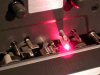
See the picture below, on mine, the red light is not visible.
See the picture below, on mine, the red light is not visible.
Attachments
"Of course the reel motors have motion sensors and there is no belt to be found. The motion / pulse sensors translate pulses into tape meter readings which is a digital LED redout even from the early B-710 design."
Just as an aside, this was not rocket science in the 70's. PLL direct Drive turntables had a speed/motion coil built in feeding the signal back to the proceessor for comparison and correction.
Just as an aside, this was not rocket science in the 70's. PLL direct Drive turntables had a speed/motion coil built in feeding the signal back to the proceessor for comparison and correction.
SaSi
Seriously Illogical
Well, it's not visible on my decks as well. But, how could an IR (Infrared) LED produce visible light?See the picture below, on mine, the red light is not visible.

I have read that the LED produces visible light on some systems, and as thorough as Revox engineers are known to be, I cannot come to think for a reason why they would put such a LED on a system that would produce distracting light emission in the dimmed room where people usually enjoy music. I think that these reddish lights are replacement leds used to repair faulty units.
Ignore the following: After reading the manual I realized this is incorrect.
Furthermore, this IR sensor on the cassette decks doesn't function in the same way as it does on the Revox R2R decks like A77, B77, PR99 and others. On a R2R deck, if the sensor doesn't sense tape there (or if the tape is too thin, like many uncoated 7" / 3600ft reels) it stops the transport. This is why I can't use my clear plastic leader tape on tapes I want to play on the Revox machines (i.e. all of my tapes).
On a cessette deck where the cassette typicaly has clear leader tape, the sensor is (perhaps) an overkill and it senses lack of cassette. I don't have the details fresh in my mind so I will refrain from expanding until I have a look a the Service Manual.
In the meantime, has this deck been left idling for several years? If so, it is well worth to try and use it in Play mode only for several days. It might (magically) restore correct operation once everything starts rolling again.
"In the meantime, has this deck been left idling for several years? If so, it is well worth to try and use it in Play mode only for several days. It might (magically) restore correct operation once everything starts rolling again."
Yes, it's have been stored for many years. I didn't tried that :-S
Yes, it's have been stored for many years. I didn't tried that :-S

Tinman
Super Member
The infrared LED is visible to the CCD sensor in digital cameras. I had the same problem with an A710. Sensors were fine. The 2 reel motors needed cleaning and oiling. Easier said than done, but successful. I re-capped my deck while I was at it. Runs like new.
The motors..... I wish I could find a supply of the tiny ball bearings that can be used in place of the sintered bronze bearings. But for now, it's fine.
The motors..... I wish I could find a supply of the tiny ball bearings that can be used in place of the sintered bronze bearings. But for now, it's fine.
Jon_Logan
Addicted Member
Yeah, get out your circlip pliers. I mean, I've got to respect ReVox to cost no object and fully discrete logic gates for the speed control on their turntable, but ....their just showin off. I respect them, but they are busy. I think ultimately rebuildable.
Circuit well explained by SaSi. Thank you for that.:thmbsp:
Circuit well explained by SaSi. Thank you for that.:thmbsp:
Tinman, your explication seems pretty logical. My unit is now open for a motor cleaning job. Did you dissasemble completely the motor? Would it be possible for you to explain how you did it?
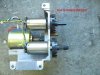
On the motor's shaft, there's that black part (see the picture) that I'm not sure how to remove. And once the motor is free, to open the assembly, there's no screw that hold the motor's cover.
On the motor's shaft, there's that black part (see the picture) that I'm not sure how to remove. And once the motor is free, to open the assembly, there's no screw that hold the motor's cover.
The infrared LED is visible to the CCD sensor in digital cameras. I had the same problem with an A710. Sensors were fine. The 2 reel motors needed cleaning and oiling. Easier said than done, but successful. I re-capped my deck while I was at it. Runs like new.
The motors..... I wish I could find a supply of the tiny ball bearings that can be used in place of the sintered bronze bearings. But for now, it's fine.
Attachments
Tinman
Super Member
There is a nut behind there as you can see. Grasp the nut with a wrench or needlenose pliers and turn the whole assembly to the left while holding the nut. A quarter turn is usually enough. The reel table then just slides off.
Getting the motor apart is another thing entirely. It is NOT designed to come apart.
Seriously, if you are even slightly uncomfortable here, DON'T do it. I can do them for you if you like, just ship both ways.
However, if you are willing to risk it all:
Mark the position of the end cap to the body. This is important!
remove the circlip and shims from the front (do ONE motor at a time).
Next use a small drill to just drill out the dimples around the back of the motor. Those are the plastic rivets that hold it together.
Next use pliers to grip the back housing and rock it back and forth to get it free from the motor body. If possible, push the whole thing out by pressing down on the shaft in front.
Now you should have a brush assembly, a (probably red) rotor, and the motor body with the 2 bronze bearings.
Clean the motor shaft carefully. Apply one drop of sewing machine oil to each bearing and reassemble the motor taking GREAT care not to damage the brush assembly. If you hold the brush assembly and rotor with your fingers, you can get it back together without the brushes slipping off the commutator.
It's delicate work. Then rotate the whole back end back to it's original (marked) position. Holding the motor together, you can use a fine pencil point iron to stab each hole and melt the plastic enough to re-rivet the motor.
Re-assemble everything and pray to god it works.
Someone had found a set of bearings to replace the bronze bearings, but I am still looking for that info. This would be the ideal way to fix the motor.
Remember the brush assembly is VERY delicate and can easily be damaged. If you have ANY doubts that you can do this, let someone else go at it instead.
Getting the motor apart is another thing entirely. It is NOT designed to come apart.
Seriously, if you are even slightly uncomfortable here, DON'T do it. I can do them for you if you like, just ship both ways.
However, if you are willing to risk it all:
Mark the position of the end cap to the body. This is important!
remove the circlip and shims from the front (do ONE motor at a time).
Next use a small drill to just drill out the dimples around the back of the motor. Those are the plastic rivets that hold it together.
Next use pliers to grip the back housing and rock it back and forth to get it free from the motor body. If possible, push the whole thing out by pressing down on the shaft in front.
Now you should have a brush assembly, a (probably red) rotor, and the motor body with the 2 bronze bearings.
Clean the motor shaft carefully. Apply one drop of sewing machine oil to each bearing and reassemble the motor taking GREAT care not to damage the brush assembly. If you hold the brush assembly and rotor with your fingers, you can get it back together without the brushes slipping off the commutator.
It's delicate work. Then rotate the whole back end back to it's original (marked) position. Holding the motor together, you can use a fine pencil point iron to stab each hole and melt the plastic enough to re-rivet the motor.
Re-assemble everything and pray to god it works.
Someone had found a set of bearings to replace the bronze bearings, but I am still looking for that info. This would be the ideal way to fix the motor.
Remember the brush assembly is VERY delicate and can easily be damaged. If you have ANY doubts that you can do this, let someone else go at it instead.

steerpike2
Super Member
I had great success on my B710 by turning each of the reel motors upside-down. Because the bronze bushes wear only on one side - where the tape tension puts most friction, the 'other side' of the bush is still relatively good. The motor is held in by 2 screws 180-degrees apart, so turning it through 180-deg is easy enough. You dont need to disassemble the transport at all - just unplug the motor wires and make sure you get + and - back on the right way.
The Revox casstte decks use photo-interuptors on the reel turntables (which have toothed plastic wheels) to detect rotation. Each photo-interuptor has a sensitivity adjustment potentiometer on the tape drive control board. If that pot is incorrectly adjusted, it may fail to sense rotation reliably.
Winfred M. Berg Engineering Components has suitable ball races for the reel motors (nb: they are metric, not US sizes), but I haven't done a replacement yet. Also have replacement bronze bushes, but the new revox motors are ball bearing types so thats obviously what they think is best.
The coment re- the tape optical sensor not working like on the r-2-r machines is not correct. It operates exactly like the B77/Pr99. The B215 detects a cassette present by means of two physical microswitches on either side of the cassette - horizontally in line with the reel hubs. The head-area photosensor is used to find the start of the leader. It too has a sensitivity adjustment pot.
The Revox casstte decks use photo-interuptors on the reel turntables (which have toothed plastic wheels) to detect rotation. Each photo-interuptor has a sensitivity adjustment potentiometer on the tape drive control board. If that pot is incorrectly adjusted, it may fail to sense rotation reliably.
Winfred M. Berg Engineering Components has suitable ball races for the reel motors (nb: they are metric, not US sizes), but I haven't done a replacement yet. Also have replacement bronze bushes, but the new revox motors are ball bearing types so thats obviously what they think is best.
The coment re- the tape optical sensor not working like on the r-2-r machines is not correct. It operates exactly like the B77/Pr99. The B215 detects a cassette present by means of two physical microswitches on either side of the cassette - horizontally in line with the reel hubs. The head-area photosensor is used to find the start of the leader. It too has a sensitivity adjustment pot.
steerpike2
Super Member
I'll check my WM Berg catalogue. They were quite expensive - (a few dollars, but after exchange rates and import duty etc, it adds up) and I found a local (Johannesburg) supplier that was much cheaper (around 1 US$ each).
But when I found turning the motor over fixed all the problems I gave up on the relatively 'dangerous' task of trying to take the motor apart. A new motor is over US$150, so I was very nervous about destroying it unecessarily.
Pinch rollers too are expensive if you buy from ReVox, but the ones for older (early 80s) Sharp car cassette decks are a drop in fit. A supplier actually GAVE me two complete and brand new Sharp mechanisms (two pinch rollers each) for nothing, since they just can't sell 80's car tape deck spares anymore.
But when I found turning the motor over fixed all the problems I gave up on the relatively 'dangerous' task of trying to take the motor apart. A new motor is over US$150, so I was very nervous about destroying it unecessarily.
Pinch rollers too are expensive if you buy from ReVox, but the ones for older (early 80s) Sharp car cassette decks are a drop in fit. A supplier actually GAVE me two complete and brand new Sharp mechanisms (two pinch rollers each) for nothing, since they just can't sell 80's car tape deck spares anymore.
steerpike2
Super Member
W.M Berg parts:
B1-50-S Shielded grease ball race, id=3mm od=7mm t=3mm
B1-51-S Shielded grease ball race, id=3mm od=8mm t=4mm
B3M-2 Oil-less sintered bronze, id=3mm od=8mm t=3mm
B1-50-S Shielded grease ball race, id=3mm od=7mm t=3mm
B1-51-S Shielded grease ball race, id=3mm od=8mm t=4mm
B3M-2 Oil-less sintered bronze, id=3mm od=8mm t=3mm
 I will tried the simplier method of turning the motors first!
Similar threads

- Replies
- 41
- Views
- 5K


