• The move to the new server is done. There are some software and database maintenance updates in process. This has us passing the hat around to help out. We appreciate any donations. Seriously, even a dollar helps. The payment page may be found here - https://www.audiokarma.org/support.html

It's not just stereos that the kids don't want.

When graduates finish and get their degrees there is no doubt about their debt. Can education be cheaper? Do collages really need to own hundreds of acres of land and millions of dollars in real estate?
Should faculty be paid on the merits of their performance or the performance of their students? Students do not really know what they are getting themselves into. Not all anyway.
Maybe collages should hold the debt? Have their students pay back according to their abilities they learned.
The costs of education are out of control. Something must be done.
My youngest is starting at an art college in September. They don't own a lot of land or heck, maybe they are leasing some of it (maybe two city blocks' worth). It's a small college No idea why it's so expensive. I will say their facilities are top notch, and many of their graduates have gone on to very high profile careers. But I could buy a nice car and take a couple of nice lengthy road trips based on their yearly tuition. She has scholarships to cover a lot of it but still, a portion needs to be thrown onto student loans.

And then there are those of us who went to school, worked hard, got degrees in fields that were supposed to be useful (not underwater basket weaving or whatever), and still couldn't find crap for decent jobs.
That applies here also. Part of it are career "experts" who push everyone into a career path, then those graduates wonder why there are no jobs. Why? Because everyone's doing it.

While it's not a degreed position, medical billing I felt was a big scam. All the schools pushed it as the Next Big Thing. Only thing is, hospitals and doctor's offices now only hire people who have experience in it, and most of them were cutting back on their billing departments concurrently with the schools pushing it as a career choice. I know two friends whose wives went into it several years ago; they still don't have jobs in that field.

I also feel that schools should start focusing their curriculum on degrees that actually apply to industries and careers that will make their graduates money, and lose the "crap" degrees like philosophy. Tell me where all of these philosopher jobs are at. Nope, couldn't find them myself either. ;) Degrees like that shouldn't even exist. Goal #1 should be to make graduates employable. In real career paths that exist here and now.

On the flip side, employers need to start realizing that holding a piece of paper does not guarantee anything. I've seen $10-$12/hour jobs posted where a friggin' Bachelor's degree was needed. And some employers don't even care what the degree is in--as long as you have that magical piece of paper. (The phrase "...or equivalent experience" means nothing, I've found. Yet I find experience trumps any book/classroom learning available.) And they keep raising the bar. Some now want a Masters...for jobs that don't need them. And of course, they want that 5-10 years of experience on top of it.

Thing is this sort of career is still valid, in fact more now than ever with shortages of young people applying for apprenticeships.
The service trades will never go away. Can't offshore those, and there will always be a need for them. :) I wish I had gotten into HVAC decades ago. That always fascinated me.
 
In one more semester I'll have my associates degree. I just applied for a job in HR, the field I want to work in. It's an associated preferred position. I'm crossing my fingers that an employee referral will at least get me an interview. If I don't get the job I'll continue working for this cellphone carrier, and working on my bachelors degree, and be fine. The internet puts the median salary for this position at $39k with the range being 34-42. I want experience in my field but I can't do it for less then 35. We'll see what happens. In the last four years at my current job I've made enough money, even though I HATE sales, almost completed my associates debt free, saved some money, and interviewed for other jobs to stay fresh. If I don't get this HR job, nothing lost, but hell it's worth a try.
 
Health fields are where it's at.I've seen some RNs that easily bring in 100k.Too many degrees offered at colleges that get you nowhere.Of course they are not going to tell you that.They want your tuition.
 
Health fields are where it's at.I've seen some RNs that easily bring in 100k.Too many degrees offered at colleges that get you nowhere.Of course they are not going to tell you that.They want your tuition.

Well this raises the question of the purpose of a college education--is it about learning for it's own sake and training in true professions--law, medicine and teaching come to mind--or is it just to be white collar vocational school?
 
I know someone who got a foot in the door with just her English literature degree with AT&T Wireless and knocks down 6 figures. She tried to describe what she does, but it was all over my head. Something to do with software conceptualization or some such. Point is sometimes a degree alone is a pass to gain access to the inner kingdom if you are bright enough (and lucky enough). Without a degree in some form or another, don't matter how smart you are, you ain't getting in.
 
In one more semester I'll have my associates degree. I just applied for a job in HR, the field I want to work in. It's an associated preferred position. I'm crossing my fingers that an employee referral will at least get me an interview. If I don't get the job I'll continue working for this cellphone carrier, and working on my bachelors degree, and be fine. The internet puts the median salary for this position at $39k with the range being 34-42. I want experience in my field but I can't do it for less then 35. We'll see what happens. In the last four years at my current job I've made enough money, even though I HATE sales, almost completed my associates debt free, saved some money, and interviewed for other jobs to stay fresh. If I don't get this HR job, nothing lost, but hell it's worth a try.

Check into Charter Communications. Your cell background fits in their experience criteria and they are growing. The HR dept may need young grads. if not do not be afraid of their sales areas. look at any of these as a path info supervision/management. HR as well. Their sales programs are dynamic. Hard workers are rewarded and ya might get a discount on cable.
 
I know someone who got a foot in the door with just her English literature degree with AT&T Wireless and knocks down 6 figures. She tried to describe what she does, but it was all over my head. Something to do with software conceptualization or some such. Point is sometimes a degree alone is a pass to gain access to the inner kingdom if you are bright enough (and lucky enough). Without a degree in some form or another, don't matter how smart you are, you ain't getting in.
I am certain you were also including hard work in there. :thumbsup:
 
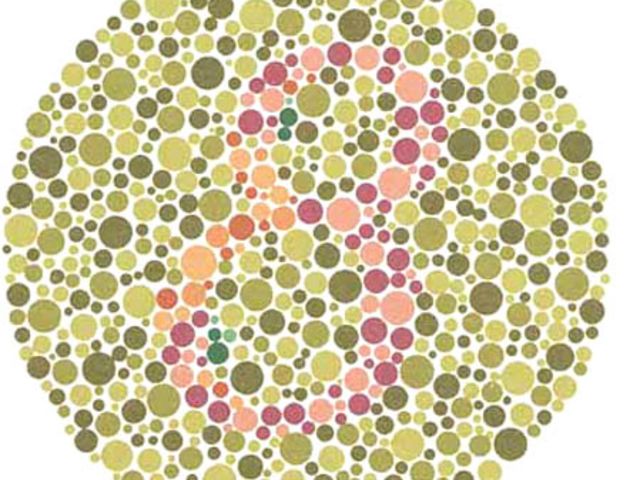
Color blindness has kept me from enjoying jobs I would have liked to pursue, let alone identify the color coded resistor of a amp I'd like to restore in a hobby I enjoy.:whip:
872c8b7d-5933-4db5-86c8-88136c6bdbad.jpg

It occurred to me reading this that in the 21st century we ought to have a gadget you can point at a resistor that will give you the stripe colors in text form. Took about two seconds to realize that should be a cell phone app. Googled 'color blindness app' and the first hit was "20 iPhone Apps for the Color Blind." :idea:
 
My youngest is starting at an art college in September. They don't own a lot of land or heck, maybe they are leasing some of it (maybe two city blocks' worth). It's a small college No idea why it's so expensive. I will say their facilities are top notch, and many of their graduates have gone on to very high profile careers. But I could buy a nice car and take a couple of nice lengthy road trips based on their yearly tuition. She has scholarships to cover a lot of it but still, a portion needs to be thrown onto student loans.


That applies here also. Part of it are career "experts" who push everyone into a career path, then those graduates wonder why there are no jobs. Why? Because everyone's doing it.

While it's not a degreed position, medical billing I felt was a big scam. All the schools pushed it as the Next Big Thing. Only thing is, hospitals and doctor's offices now only hire people who have experience in it, and most of them were cutting back on their billing departments concurrently with the schools pushing it as a career choice. I know two friends whose wives went into it several years ago; they still don't have jobs in that field.

I also feel that schools should start focusing their curriculum on degrees that actually apply to industries and careers that will make their graduates money, and lose the "crap" degrees like philosophy. Tell me where all of these philosopher jobs are at. Nope, couldn't find them myself either. ;) Degrees like that shouldn't even exist. Goal #1 should be to make graduates employable. In real career paths that exist here and now.

On the flip side, employers need to start realizing that holding a piece of paper does not guarantee anything. I've seen $10-$12/hour jobs posted where a friggin' Bachelor's degree was needed. And some employers don't even care what the degree is in--as long as you have that magical piece of paper. (The phrase "...or equivalent experience" means nothing, I've found. Yet I find experience trumps any book/classroom learning available.) And they keep raising the bar. Some now want a Masters...for jobs that don't need them. And of course, they want that 5-10 years of experience on top of it.


The service trades will never go away. Can't offshore those, and there will always be a need for them. :) I wish I had gotten into HVAC decades ago. That always fascinated me.

There are some interesting articles regarding the value of degrees in the fields know as the "Humanities." While there may not be many jobs titled "Philosopher" (outside of teaching it in an academic institution), the career paths of people with such degrees are interesting. https://www.forbes.com/sites/jeffre...vide-great-return-on-investment/#79a6e03a2031
 
Well this raises the question of the purpose of a college education--is it about learning for it's own sake and training in true professions--law, medicine and teaching come to mind--or is it just to be white collar vocational school?

I vehemently disagree that the purpose of a college education is to train for specific jobs. Ideally, professional degrees ought be taught after one obtains a modicum of knowledge through an undergraduate degree. Unfortunately, entering undergraduates now need to do too much remedial work. Yes, college is not and never was intended to be a vocational school; however, a lot of people think that it is. Arts, science, and humanities ought be focused on instilling a sense of wonder and a yearning to know while concomitantly honing the tools that make that possible. Learning how to learn ought be the primary goal. That necessitates critical thinking, effective communication, and most important, discipline.
 
I don't think that it is the responsibility of a university to guarantee employment once a degree has been earned. In this day and age what is in demand one year will not be the next.
 
My youngest is starting at an art college in September. They don't own a lot of land or heck, maybe they are leasing some of it (maybe two city blocks' worth). It's a small college No idea why it's so expensive. I will say their facilities are top notch, and many of their graduates have gone on to very high profile careers. But I could buy a nice car and take a couple of nice lengthy road trips based on their yearly tuition. She has scholarships to cover a lot of it but still, a portion needs to be thrown onto student loans.


That applies here also. Part of it are career "experts" who push everyone into a career path, then those graduates wonder why there are no jobs. Why? Because everyone's doing it.

While it's not a degreed position, medical billing I felt was a big scam. All the schools pushed it as the Next Big Thing. Only thing is, hospitals and doctor's offices now only hire people who have experience in it, and most of them were cutting back on their billing departments concurrently with the schools pushing it as a career choice. I know two friends whose wives went into it several years ago; they still don't have jobs in that field.

I also feel that schools should start focusing their curriculum on degrees that actually apply to industries and careers that will make their graduates money, and lose the "crap" degrees like philosophy. Tell me where all of these philosopher jobs are at. Nope, couldn't find them myself either. ;) Degrees like that shouldn't even exist. Goal #1 should be to make graduates employable. In real career paths that exist here and now.

On the flip side, employers need to start realizing that holding a piece of paper does not guarantee anything. I've seen $10-$12/hour jobs posted where a friggin' Bachelor's degree was needed. And some employers don't even care what the degree is in--as long as you have that magical piece of paper. (The phrase "...or equivalent experience" means nothing, I've found. Yet I find experience trumps any book/classroom learning available.) And they keep raising the bar. Some now want a Masters...for jobs that don't need them. And of course, they want that 5-10 years of experience on top of it.


The service trades will never go away. Can't offshore those, and there will always be a need for them. :) I wish I had gotten into HVAC decades ago. That always fascinated me.
A couple of things I want to focus on in your quote. I bolded the part I really wanted to focus on. I worked for J.C. Penney for between 7 and 8 years (had they have listened to their employees, they might not be having to close stores, but that's a different story). My store manager started trying to convince me to pursue management, but told me I would really need a college degree. I asked him would I need it in business or marketing or what. Oh, it doesn't matter; it can be in art, just so long as it's a 4 year degree. This poor guy had spent 30 years with Penney's and was just getting his own store to manage. They literally would call a person on a Friday and tell them they were being shipped off to another store and be there on Monday. I explained to him that since my house was paid for free and clear that I had no desire to take a job in which I could be shipped out to California at the drop of a hat.

I'm 43, and I'm about a year away from having my degree in Elementary Education. Even at a local college, the fees are outlandish. They jerk you around like you're just a number. They'll assign a course, you complete it, and then find out a few semesters later that things have changed, and that you have to take a different course in place of one you've already completed. They then expect you to work for free as a student teacher for a good while before you can complete the course! Some people have to work, so I'm still unsure how they expect people to accomplish that part.
 
I took tons of philosophy classes in college. I'd like to believe it helped with my critical thinking and writing skills.

 
What I find backwards is that you can go to school for 4 or 5 years and come out with a degree in engineering, and have never laid a foot on a job site and think you can design real world products. Yet to become an electrician you have to work as an apprentice for quite a number of years and then take a test before becoming an electrician. One would think prior to becoming an engineer they would need some real world experience. It is amazing the crap these engineers try to push out for me to build, if I built it to specs most of them would never work. Yet somewhere behind those doors there are a few who know what they are doing as after a million meetings they finally come out with the info to make it work.
 
What I find backwards is that you can go to school for 4 or 5 years and come out with a degree in engineering, and have never laid a foot on a job site and think you can design real world products. Yet to become an electrician you have to work as an apprentice for quite a number of years and then take a test before becoming an electrician. One would think prior to becoming an engineer they would need some real world experience. It is amazing the crap these engineers try to push out for me to build, if I built it to specs most of them would never work. Yet somewhere behind those doors there are a few who know what they are doing as after a million meetings they finally come out with the info to make it work.
Some of the better EE's have worked with the tools as electricians prior or to finance their engineering degrees. The ones that didn't sometimes tend to be a little impractical as to what works well in the field and what doesn't. Certainly isn't uncommon for the electrician doing the install to have to at least partially re engineer something that simply won't work. This is probably especially true in Alaska where you may be way out there in the bush, hundreds or thousands of miles from whoever did the engineering in the first place and with just a single engine Cessna in crap weather for transport. They will eagerly give the go ahead to "just get er done"..
 
My situation is similar to a lot of guys on this chat line, Never married until I was in my Fifties. No kids, my wife has 3 young boy grandkids, who have never come down here to visit. That girl, LA's daughter, lives in Manchester, Ne, N, but they never got along.
 
I don't think that it is the responsibility of a university to guarantee employment once a degree has been earned. In this day and age what is in demand one year will not be the next.
Not so much guarantee it, but stop pushing all of the "fluff" classes and degrees. Let's face it--in today's job market, an undergrad degree is a bare minimum to get a job in many industries. I agree about having the "fully rounded" education a college can provide but on the other hand, if so many jobs today didn't need a degree, we wouldn't need to attend college in the first place. This isn't the old days where you can go to college "just because." Nobody except the uber-rich can afford to go "just because." Today it's an investment in a career and job security, and colleges need to be providing the background for that. It does involve other skills the schools teach...but I think the "underwater basketweaving" example above is a good one. There is still too much fluff in courses and degrees.

My other half had to take three frickin' religion courses for her legal admin degree. Why? One reason, and one reason only--it's a Catholic college. They pocketed $8,100 ($900/cr.hr., three 3-credit classes) for throwing something at her that she has zero use for, and has no interest in. But no, it's a "requirement," and all it does is pad the school's pockets. Don't take the classes? You don't graduate. Nothing...nothing...she learned in any of those three classes even remotely pertained to her degree, or any of the jobs she has held post-degree. (On top of that, two of those classes really sucked.) The other courses in English comp, business classes, management, etc. were all something she has applied. It's **** like that which pisses me off about these schools.

When I got a degree a few years ago, my courses all pretty much pertained to my line of study, and the more advanced courses showed us how the skills we learned in the class applied to jobs out in the field. Then again, this school (a community college, no less) has some rather advanced thinking. They're not stuck in the old ways of some of these schools that peddle (and profit from) fluff courses and degrees.

Just being totally realistic here. I've been there--as a student, as the "other half" to a student, and soon, as a father. And we got hit hard in Michigan in 2009. For what these institutions demand in payment, the very least they can do is provide a good enough education, and preparation for the working world their "expensive piece of paper" supposedly provides...
 
One question for fellow compatriots, how many of us were growing up or coming of age during the recession and watched people we knew lose their jobs and homes?

How many of us saw that, and realized that collecting stuff would just hold us back if things didn't go our way? Or that we should be capable at any moment of paying off all our debts if we lost our job or have a medical emergency?

And how many of us applaud that recent article about how millennials are killing Applebees and Buffalo Wild Wings because those predictably bland at best shitty chains are garbage anyway?
 
Back
Top Bottom