• The move to the new server is done. There are some software and database maintenance updates in process. This has us passing the hat around to help out. We appreciate any donations. Seriously, even a dollar helps. The payment page may be found here - https://www.audiokarma.org/support.html

KLH model six acoustic suspension speakers question

I just picked up a pair of KLH model six acoustic suspension speakers. Do I need to have the 'amplifier connect' connected for it to work? Thanks in advanceIMG_7920.jpg.c7f6440ac3a5c605f0acf985c838b307.jpg
 
Register to hide this ad
Not sure if you are serious. Rephrase the question, because as stated this seems, to be nice, a silly question.
If you really mean what you asked, then of course it needs to be hooked to a receiver and some type of source. For example CD player, turntables etc.
 
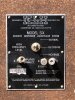
Your speaker wires need to be connected to A (negative speaker wire) and B & C (positive speaker wire). The B terminal connects to the woofer circuit and the C terminal connects to the tweeter circuit. KLH built in the capability to biwire the speaker, but it is not necessary for good sound. You can download the manual at http://www.classicspeakerpages.net/library/klh/klh_6_klh_model_six/

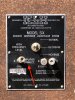
In your picture, the strap (jumper) between B and C is missing. See my pic below. You can use a short piece of wire to connect B and C.

KLH 6 Rear SN 102563 IMG_0714 small.JPG
 
Not sure if you are serious... as stated this seems, to be nice, a silly question.
....
@trinhsman

I believe what the OP was asking was does he need to connect his speaker wire to the "Amplifier Connect" terminal. I don't know the OP so this isn't a put down but my guess is with having 3 terminals he wasn't sure where to connect the 2 speaker wires.

IMG_7920.jpg.c7f6440ac3a5c605f0acf985c838b307.jpg
 
Not sure if you are serious. Rephrase the question, because as stated this seems, to be nice, a silly question.
If you really mean what you asked, then of course it needs to be hooked to a receiver and some type of source. For example CD player, turntables etc.
Thanks for the thoughtful response. I never had these type of speakers so I am looking for support from others so I can get this to work. I have the Model 6 speakers without the 3rd terminal
 
@David Bright

Those are great speakers and well thought of and respected here on AK. Based on the back plate it looks like you have the early iteration of that model.

If you have any issues with them after hooking them up and giving them a listen let us know as there are copious amounts of threads here on AK with regards to troubleshooting and problem solving.

One of the most common issues with those speakers is the assumed "dead tweeter" when in fact the tweeter is fine and it's the capacitor inside the cabinet that has failed due to age. They are replaceable, not expensive however if in fact yours are the early model getting inside the cabinet can be quite the task but doable
 
Good information. I have to say though, those terminals look bent. Are they wobbly? Beneath the plate, sits an epoxy tub encasing the crossover. Due to age, it’s become very brittle, and if the terminals were bumped against some of the epoxy broke up a bit where the screws go into it. Not a big deal, just info for you. I would strongly suggest recapping these. You’ll need to remove the aluminum plate, break up the epoxy tub to expose the caps and three way switch, and to gain access into the cabinet. There will be an 8uf cap, strapped to the front baffle, which will need replacing. On the crossover itself, will be single cap, that’s actually two caps one package.
Another issue is the woofer surrounds are fabric, and we’re sealed to be air tight. Over the years, it dries making the surround porous, causing pour and flabby bass output. You may be lucky that your have removable grills making it easy to apply new sealer, restoring the excellent bass output these are known for.
I have a set circa 1963 that I did a complete restoration on, and they are amazing speakers.
Here’s the link to the restoration you may find helpful. BTW, the model Seventeen has the same crossover, so any reference to the Seventeen will apply to the Six.

Cheers, Glenn

https://audiokarma.org/forums/index...-original-1963-owner-pics-restoration.520806/
 
Good information. I have to say though, those terminals look bent. Are they wobbly? Beneath the plate, sits an epoxy tub encasing the crossover. Due to age, it’s become very brittle, and if the terminals were bumped against some of the epoxy broke up a bit where the screws go into it. Not a big deal, just info for you. I would strongly suggest recapping these. You’ll need to remove the aluminum plate, break up the epoxy tub to expose the caps and three way switch, and to gain access into the cabinet. There will be an 8uf cap, strapped to the front baffle, which will need replacing. On the crossover itself, will be single cap, that’s actually two caps one package.
Another issue is the woofer surrounds are fabric, and we’re sealed to be air tight. Over the years, it dries making the surround porous, causing pour and flabby bass output. You may be lucky that your have removable grills making it easy to apply new sealer, restoring the excellent bass output these are known for.
I have a set circa 1963 that I did a complete restoration on, and they are amazing speakers.
Here’s the link to the restoration you may find helpful. BTW, the model Seventeen has the same crossover, so any reference to the Seventeen will apply to the Six.

Cheers, Glenn

https://audiokarma.org/forums/index...-original-1963-owner-pics-restoration.520806/
Thanks for the link...pretty extensive. What did you apply to the woofers for a sealant?
 
Thanks for the link...pretty extensive. What did you apply to the woofers for a sealant?
eBay seller “vintage-ar” sells the sealer. It was developed by Roy Champaign, and matches the original factory sealer. Roy makes it for vintage-ar.
Have you checked to see if you grills are removable? Make sure you unscrew the KLH badge before attempting removal.
If yours are earlier like mine, then the grills are glued to the baffles and not removable. Some cut the fabric to access the woofers, others actually have removed the front baffles from the cabs, removed the fabric, sealed the surrounds, and reinstalled the fabric and baffles. Lots of work, but doable. Luckily, the grills were already removed on mine, and eventually I found removable grills on fleabay.
 
Th
eBay seller “vintage-ar” sells the sealer. It was developed by Roy Champaign, and matches the original factory sealer. Roy makes it for vintage-ar.
Have you checked to see if you grills are removable? Make sure you unscrew the KLH badge before attempting removal.
If yours are earlier like mine, then the grills are glued to the baffles and not removable. Some cut the fabric to access the woofers, others actually have removed the front baffles from the cabs, removed the fabric, sealed the surrounds, and reinstalled the fabric and baffles. Lots of work, but doable. Luckily, the grills were already removed on mine, and eventually I found removable grills on fleabay.
Thanks for the feedback. Yes the grills come off
 
Th

Thanks for the feedback. Yes the grills come off
Lucky you! Everything much easier to restore then. You’ll still need to break up the epoxy tub though. It’s very brittle, shouldn’t take long to do. Post some pics when you get a chance.
 
KLH could have labeled the connections a little more clearly. It would be easy for a user to think the "C" terminal meant "common". Of course, if you have the instructions, fine, but they aren't always there.

Doug
 
I have a pair of these speakers stashed away for a few reasons, and I was thrown off by the connections when I looked at them when I first got the speakers, then add to that they did not sound good due to caps ? woofer sealant req ? So to the side they went bc they seemed a bit hard to get into beings an older model I suppose. Reminded me of speaker connections on the Fisher 101B when I first picked one up, was like why is this common and that wire going to the ................ anyhow like I said I also can get thrown off very easily with older audio, so glad the OP posted up. Be nice to know how the OP makes out with the speakers no not really "make out with the speakers" how the speakers sound I should say. It's late.........
 
KLH could have labeled the connections a little more clearly. It would be easy for a user to think the "C" terminal meant "common". Of course, if you have the instructions, fine, but they aren't always there.

Doug
Vintage Acoustic Research connectors were labeled even worse. “1”, “2”, and “T”.
 
I have been reading and enjoying the wealth of information available on the threads in this forum regarding all things KLH, but this is my first posting on anywhere, and fear I may be asking a question in an incorrect place.
I just received a pair of KLH 6 cabinets with the crossovers and fiberglass. No woofers, tweeters or grill panels. These were added to a craigslist purchase of a Sansui FR 1080 turntable that I wasn't convinced was what I really wanted due to some issues with said turntable. These cabinets were offered after he showed me a really nice pair of KLH 6's he just restored when I mentioned that I was trying to create a pair of cabinets to mount a set of KLH 17 components from a set of KLH 17 sized cabinets I created earlier which did not turn out the way I had hoped. I made the new cabinets sized for the KLH 6 hoping to see how the difference in size would contribute to the sound compared to the KLH 17's I recently acquired.
I had read here that the difference in lower bass was slight between the KLH 6 and 17. I can relate that the KLH 17 woofer and crossover, but with a PE Express Phenic Ring Tweeter, installed in the KLH sized 6 cabinets that I built, do indeed sound deeper, cleaner and punchier overall than the Bonafide KLH 17's, with all original components
Now that I had the actual KLH 6 cabinets and crossovers I now naturally want to build a real pair of 6's. But before I started to venture down that road I wanted to check if the crossovers were okay which leads me to my questions.
From what I have learned (correctly, I hope!) on this forum, the crossovers for the KLH 6 and KLH 17 are the same except for the .4 mh inductor coil for the woofer on the KLH 6. When I connected the KLH 17 woofers and tweeters to the KLH 6 crossovers, cabinet 1 read 2.1 ohms on all 3 tweeter settings and cabinet 2 read 2.4 ohms on all 3 settings. When connected to my SONY STR-6055 receiver, both speakers played fine, woofer and tweeter, but I could detect a faint clicking form the tweeter. Fearing the worst, I disconnected the amp. I then checked the resistance without the inductor and cabinet 1 read 8.1 ohms and cabinet 2 read 8.3 ohms. These readings were consistent with the readings from the KLH 17 the drivers came from. Both played fine when connected to the amp with no clicking detected.
Is the lower resistance reading normal?
Does the inductor lower the overall resistance?
Could the inductor be defective?
Is the KLH 17 woofer contributing to this change?
I am trying to find KLH 6 woofers and tweeters to complete this "Restoration" so I can see what REAL KLH 6's really sound like!
 
I have been reading and enjoying the wealth of information available on the threads in this forum regarding all things KLH, but this is my first posting on anywhere, and fear I may be asking a question in an incorrect place.
I just received a pair of KLH 6 cabinets with the crossovers and fiberglass. No woofers, tweeters or grill panels. These were added to a craigslist purchase of a Sansui FR 1080 turntable that I wasn't convinced was what I really wanted due to some issues with said turntable. These cabinets were offered after he showed me a really nice pair of KLH 6's he just restored when I mentioned that I was trying to create a pair of cabinets to mount a set of KLH 17 components from a set of KLH 17 sized cabinets I created earlier which did not turn out the way I had hoped. I made the new cabinets sized for the KLH 6 hoping to see how the difference in size would contribute to the sound compared to the KLH 17's I recently acquired.
I had read here that the difference in lower bass was slight between the KLH 6 and 17. I can relate that the KLH 17 woofer and crossover, but with a PE Express Phenic Ring Tweeter, installed in the KLH sized 6 cabinets that I built, do indeed sound deeper, cleaner and punchier overall than the Bonafide KLH 17's, with all original components
Now that I had the actual KLH 6 cabinets and crossovers I now naturally want to build a real pair of 6's. But before I started to venture down that road I wanted to check if the crossovers were okay which leads me to my questions.
From what I have learned (correctly, I hope!) on this forum, the crossovers for the KLH 6 and KLH 17 are the same except for the .4 mh inductor coil for the woofer on the KLH 6. When I connected the KLH 17 woofers and tweeters to the KLH 6 crossovers, cabinet 1 read 2.1 ohms on all 3 tweeter settings and cabinet 2 read 2.4 ohms on all 3 settings. When connected to my SONY STR-6055 receiver, both speakers played fine, woofer and tweeter, but I could detect a faint clicking form the tweeter. Fearing the worst, I disconnected the amp. I then checked the resistance without the inductor and cabinet 1 read 8.1 ohms and cabinet 2 read 8.3 ohms. These readings were consistent with the readings from the KLH 17 the drivers came from. Both played fine when connected to the amp with no clicking detected.
Is the lower resistance reading normal?
Does the inductor lower the overall resistance?
Could the inductor be defective?
Is the KLH 17 woofer contributing to this change?
I am trying to find KLH 6 woofers and tweeters to complete this "Restoration" so I can see what REAL KLH 6's really sound like!

If you are measuring resistance at the speaker terminals, you are measuring the resistance of only the woofer circuit. Capacitors block dc, so you are not measuring anything in the tweeter circuit.

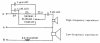
I suggest checking your wiring against the Model Six schematic (image below). Also, the schematic below does not show the external jumper between B and C. The lower resistance you measured, if done at the speaker terminals, likely indicates a wiring problem. A properly wired Model Six should have a resistance (measured at the speaker terminals A & B+C) equal to the resistance of the inductor plus the resistance of the driver (measured at the driver terminals).
KLH Model 6 crossover.png

If you have not already done so, check out the Model Six info at Classic Speaker Pages:
http://www.classicspeakerpages.net/library/klh/klh_6_klh_model_six/

Lastly, if the crossover in the Model Six cabinets have not been recapped, you may have failed capacitors. KLH speakers are notorious for having bad caps (except for some very early speakers that used oil caps).
 
Back
Top Bottom