There is absolutely nothing wrong with constant impedance networks, but the point is that they're not absolutely required. I take great issue with the notion that any passive network that isn't flat impedance is somehow a "poor filter". It isn't just Klipsch - every modern loudspeaker engineer is employing filters of that manner. But then, they're using modern amps too. I am absolutely aware of the possible benefits that a flat impedance presents, but those benefits are certainly not huge.
All I'm trying to point out is that there is more involved with filter design than simply presenting a flat impedance to the amp and crossing over as steep as you possibly can. Looking at the various suggested implementations in this thread, I am just cringing at the sacrifices being made. Of course, anytime I mention compromises you fly off your handle thinking I'm some brainwashed wannabe filter designer. The crazy thing is that I'm looking at it from the perspective of a loudspeaker engineer who is only concerned with the actual acoustical output. I could really care less if the amp is working a little harder if it doesn't affect the sound coming out of the speakers.
For what it's worth, the "in-room responses" are misleading - or really completely meaningless. The way psychoacoustics works, we naturally filter out reflections that occur outside the Haas window and perceive them as part of the semi-reverberant field of the room. Unless you're doing time delay spectrometry, you won't be able to filter out the reflections occuring outside the Haas window that are having dramatic effects on the frequency response. In other words, despite what an in-room measurement might show you, psychoacoustics shows us that we're still able to distinguish the direct sound of the speaker. The direct sound is by definition an anechoic sound which is what would be measured in an anechoic chamber.
And then the ear response...well if you're calibrating your ears to live music often enough, then you should know what a live instrument sounds like. You can then expect it to sound the same played back on your speakers. In other words, the ear response negates itself out because the human mind already self-compensates for the hearing loss.
The big picture I wanted to talk about is that the complex impedance of the driver is a function of output level and source material. In other words, the impedance of the driver is continuously changing all the time. This is gonna wreak havoc on a carefully balanced circuit that relies on the driver impedance remaining constant. This is why steeper slopes sound more consistent when implemented in an active line-level crossover than in a passive speaker-level crossover. Go ahead and model what happens when the inductance of the driver doubles, or the impedance peaks shift around, etc etc...never mind maximizing amplifier damping via direct connection to the driver. Compensating for frequency response aberrations of the natural driver behavior is way simpler than the dynamic nature of drivers, but you even reject that notion...the crazy thing is this is considered basic loudspeaker engineering and is never not done anymore. Should we get into acoustic roll-offs? Or how about polar patterns? Or how bout the phase response of the drivers? Acoustical center offsets? I don't see how someone unfamiliar with these attributes can consider them trivial. That's certainly not a scientific approach (especially when there are plenty of measurements verifying their importance).
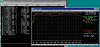
What's even more fun is the original network doesn't really have that bad of an impedance response anyway (I believe this plot is with zobels)...
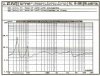
The effect on the performance of the speakers is essentially unmeasurable until you start using high output-impedance amplifiers...and then it's on the order of +-1dB. The audible differences are about on par with the differences of time-alignment, or the differences between 24dB and 48dB per octave slopes. I would be curious what measurements and listening comparisons you have done to quantify your claims.
The crazy thing is I'd like to see you do your filter magic and keep all these other things in mind at the same time.