• The move to the new server is done. There are some software and database maintenance updates in process. This has us passing the hat around to help out. We appreciate any donations. Seriously, even a dollar helps. The payment page may be found here - https://www.audiokarma.org/support.html

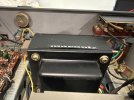
Marantz 2230 Transformer

Smitty1979

New Member
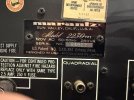
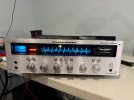
Hey guys new member here, I’ve recently gotten into vintage audio with the last year. I’m an Automotive Tech by trade so I’ve got some electrical knowledge but there’s been a lot to learn over the last year, which isn’t a bad thing! I’ve repaired and sold a half dozen turntables and partially recapped a Pioneer receiver. I just purchased a Marantz 2230 off of a gentleman that didn’t know anything about it. Cosmetically it’s in very good condition although it was filthy and spent a fair bit of time detailing it which is one of my favorites parts of getting old gear, but I’ve run into an issue with it electrically. I gave it a visual inspection to make sure there wasn’t anything obviously damage or worn, which there wasn’t. After that I connected it to a dim bulb tester and fired it up, no issues found on there, bulb went bright and dimmed to nothing after a sec or 2. And then noticed that I had only the source light bulb working and no others. I connected a couple cheap speakers to it and quickly noticed that had a hum from the left channel at any volume and a very weak right channel but no hum through it. This happens all the time and on all sources? I then put the cart before the horse and did an led conversion which was and looks great now. I’m just wondering if anyone has any ideas on were to start this diag? One thing I did notice is there’s a slight buldge in the transformer cover but no other signs of heat damage? I ran that by a retired audio tech that I know and he said it likely needs the transformer replaced because someone damaged it somehow. Does anyone have an opinion about that and a suggestion on how to test it? Thanks in advance. I’ll attach a couple photos of the unit.
 

Attachments

  • IMG_6710.jpeg
    IMG_6710.jpeg
    143.9 KB · Views: 36
  • IMG_6712.jpeg
    IMG_6712.jpeg
    223.1 KB · Views: 35
  • IMG_6664.jpeg
    IMG_6664.jpeg
    251.4 KB · Views: 36
Register to hide this ad
Use scope to confirm 100/120Hz (or 50/60Hz) wave

Since only left channel affected I'd be looking at GND connections but the above info 50/100Hz? would help diagnosis.
Thanks, Ahhh, that’s above my skill set/equipment. I was hoping there might be a test with a multimeter, what do you think of the pic? Does the bulge look like something I should be concerned with?
 
I doubt the transformer needs to be replaced. Looks like little more than a cosmetic cover over the laminations.

In the, IMO, rare event it might be some sort of functional shielding, if you can press down the bulge, squirt a bit of glue in there and weight/press it down until the glue sets.
 
he said it likely needs the transformer replaced because someone damaged it somehow

No. And I wouldn't let said "audio tech" anywhere near that.

It's just some electrostatic shielding, if the bulge bugs you ^^ @whoareu99 offers good advice.

To get this thing going, you'll need at least a VOM and possibly a scope. For me, a scope makes such troubleshooting so much easier because you can trace the signal thru and see where it quits, gets distorted, etc. But there is a definite learning curve.

Perhaps you might get more focused advice in the Marantz forum. You can hit "report this post" and request the thread be moved, and we moderators will take care of it.
 
No. And I wouldn't let said "audio tech" anywhere near that.

It's just some electrostatic shielding, if the bulge bugs you ^^ @whoareu99 offers good advice.

To get this thing going, you'll need at least a VOM and possibly a scope. For me, a scope makes such troubleshooting so much easier because you can trace the signal thru and see where it quits, gets distorted, etc. But there is a definite learning curve.

Perhaps you might get more focused advice in the Marantz forum. You can hit "report this post" and request the thread be moved, and we moderators will take care of it.
Ok well thanks very much, I’ll go ahead and report it :)
 
that’s above my skill set/equipment. I was hoping there might be a test with a multimeter
There are some mobile phone ap's (spectroid...) that can detect the frequency. Also PC freeware like AUDACITY

If it's 50Hz hum then unlikely to be psu caps. If it's 100Hz then psu is prime candidate.
 
There are some mobile phone ap's (spectroid...) that can detect the frequency. Also PC freeware like AUDACITY

If it's 50Hz hum then unlikely to be psu caps. If it's 100Hz then psu is prime candidate.

Or 60Hz and 120Hz, if it's a US model. The difference between 60 and 120 is not subtle. :)


Hey, thanks for the info, so I’ve measured it and it seems to be a solid 60hz. As far as the model, the model tag says, Designed in USA, Produced in Japan so I guess it’s the Japan model?
 

Attachments

  • IMG_6734.jpeg
    IMG_6734.jpeg
    264.2 KB · Views: 10
Last edited:
@Smitty1979

USA and some other places mains frequency is 60Hz. Many (most, actually, afaik) other places in the world like some parts of Japan, use 50Hz mains frequency. The unit itself is capable of either as indicated by 50/60Hz designation.

If it was a Japan model in the technical sense the operating voltage would indicate 100V, not 120V.
 
Last edited:
Don't forget to clean pots and switches. Might even fix the balance issue (propably bad caps though).

How come an experienced tech suspects the transformer like a total noob?
 
Don't forget to clean pots and switches. Might even fix the balance issue (propably bad caps though).

How come an experienced tech suspects the transformer like a total noob?
He basically said that because the cover on it is distorted that it means it was overheated and would have to be replaced. Have you ever seen one like that?
 
He basically said that because the cover on it is distorted that it means it was overheated and would have to be replaced. Have you ever seen one like that?
I have not, hundreds of units through my hands. Not sure if all models have them or not, but there is a thermal fuse inside the windings that should blow if it gets too hot. I've seen others have dug these out and replaced them when found to be opened.
 
He basically said that because the cover on it is distorted that it means it was overheated and would have to be replaced. Have you ever seen one like that?
A small dent. By your description it works just fine.
I have seen a failed transformer that looked perfectly fine. An amp with water damage, the transformer failed while repairing and testing. Corroded innards most likely. Could be repaired perhaps, but had a spare. May open it one day.
 
Hey, thanks for the info, so I’ve measured it and it seems to be a solid 60hz.
If it's definitely 60 Hz, then your hum is being generated before the power supply's rectifier and filter caps.

That would mean it's from the primary side of the power transformer. Or from any secondary leads, before rectification (like lamps that work off AC voltage).

Check all grounding points. You may need to have that power transformer tested


Marantz 2230 power supply USA.jpg
 
  • Like
Reactions: mbz
He basically said that because the cover on it is distorted that it means it was overheated and would have to be replaced. Have you ever seen one like that?

I suggest moving on from this. You have much bigger fish to fry like investigating this...

... a very weak right channel ...


This cart seems way ahead of the horse. Have you even checked rail voltages yet which is a basic point of troubleshooting.
 
Last edited:
If it's definitely 60 Hz, then your hum is being generated before the power supply's rectifier and filter caps.

That would mean it's from the primary side of the power transformer. Or from any secondary leads, before rectification (like lamps that work off AC voltage).

Check all grounding points. You may need to have that power transformer tested


View attachment 3838399
So I was giving the 2230 another visual and checking grounds. I powered it up and noticed that when I touch the chassis the hum decrease substantially which had me thinking ground issue for sure. I looked at all the ground points and solder joints at grounds but it’s all good. I’m being very cautious when touching things in the chassis but I moved my finger near one of the filter capacitors on the p400 board and noticed the hum increased alot, and when I tap on that cap in particular the hum is bad. I took a video for reference but I’m not sure how to attach it (iPhone). What do you guys think about the hum when touching the cap?
 
So I was giving the 2230 another visual and checking grounds. I powered it up and noticed that when I touch the chassis the hum decrease substantially which had me thinking ground issue for sure. I looked at all the ground points and solder joints at grounds but it’s all good. I’m being very cautious when touching things in the chassis but I moved my finger near one of the filter capacitors on the p400 board and noticed the hum increased alot, and when I tap on that cap in particular the hum is bad. I took a video for reference but I’m not sure how to attach it (iPhone). What do you guys think about the hum when touching the cap?
Get a wooden chopstick (or a non-conductive probe). Start tapping all the ground points. Check the grounding of those filter caps. Check the grounding of the circuit boards. Check anything that may look loose on the chassis (including the transformers).

Check the grounding line (if the power cord is a three-prong variety).

Look for loose, bad, broken, or corroded solder points to ground, too. Really tap everything! See if you can induce the hum or make the noise sound louder or quieter. I use headphones because they pick up changes in noise much better than speakers do. Then, inspect that noisy area for damage.

Keep your free hand OFF the chassis.

Good luck!
 
I moved my finger near one of the filter capacitors on the p400 board and noticed the hum increased alot, and when I tap on that cap in particular the hum is bad.
It looks like there are only three filter caps on the P400 board, C405 (10uF), C406 (10uF), C409 (100uF). The rest are bypass caps. Does touching it affect only one channel (L or R), or both?
 
Back
Top Bottom