Here is a link to the catalogs:
https://www.hifiengine.com/manual_library/marantz/stereo-receivers.shtml
The earliest discussions on "champagne" color that I've found is 2004-2008. It seems that both "gold" and "champagne" was being used to describe the color. Later in around 2011 to present it seems "champagne" become the dominant term used to describe the color of these face plates.
https://audiokarma.org/forums/index.php?threads/marantz-faceplate-finishes-hues.22160/ [2004]
https://audiokarma.org/forums/index...-marantz-similiar-to-the-kenwood-story.61246/ [Feb. 2006]
https://audiokarma.org/forums/index.php?threads/marantz-faceplates-color.154495/ [March 2008]
https://audiokarma.org/forums/index.php?threads/marantz-2230-miracle-102nd-unit-ever-made.174520/ [July 2008]
https://audiokarma.org/forums/index.php?threads/marantz-receivers-turn-golden-with-age.92773/ [Dec. 2006]
I think the term "engraved" followed a similar route, I found a few mentions in earlier listings that described it as "machined", "stamped", "graver", "etched" or "recessed". I think "engraved" just seem to catch on as the agreed upon term for this feature, not necessarily an accurate description of the manufacturing method. This was also a feature in earlier models (see July 2008 link below) so no surprise it was used on the first 2220-2270 models and then I assume dropped.
https://audiokarma.org/forums/index.php?threads/engraved-faceplate-or-not-engraved.249412/ [Sept 2009]
https://audiokarma.org/forums/index.php?threads/what-does-engraved-really-mean.176794/ [July 2008]
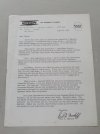
I also just found a 1969 dealer letter (see attached file) that describes the "famous Marantz exclusives" .... "and deep-etched front-panel"... It is also mentioned in the 1968 catalog for the Model 7T which also mentions "photo-etched front panel". In the same catalog for the Model 15 it mentions the "gold-anodized face front panel" to match the model 7T preamp and Model 10B tuner. Also found a 1974 catalog that lists the Model 19 with gold-anodized face panel. See next link for a clear picture of the model 19 gold-anodized face plate and silver knobs.
https://www.marantz.com/en-us/world-of-marantz/finer-things-model-19.html
So it looks like the gold-anodized was dropped for some models but not all.
Now it appears that the engraving (maybe I should say stamped instead) was common on most Marantz units from 1968-1972 until it was dropped in 1972 (except for the TOTL units) after cost cutting was implemented, or as suggested by others intentional design changes. The gold anodized was also used on earlier units during the same time peried (1968-1972) and was then dropped on some units as part of the same cost cutting/design change. All of my thoughts about the champagne color variation being caused by manufacturing issues is nullified by this information. Gold-anodized face panels (face-plates) were used from at least 1968 and continued on to at least 1974 but dropped in 1972 for most units.
https://www.marantz.com/en-us/world-of-marantz/finer-things-model-19.html [Model 19 looks very gold in this link, compare the face plate color to the knobs]
After my last post yesterday and thinking about the color variations overnight I think the simplest explanation for the variation in color is age related changes. For those that have an obvious gold tint it is probably nicotine related (I have some equipment here from a smokers home and I swore everything was gold plated until I stated cleaning). For those with a really light tint and easily mistaken as "silver" versions (I think mine is close to this), sun fading. General aging could account for other shades
More reseach should be done to clearly define the models and years these features were manufactured.
I found very little related to the 20th anniversary issue. The Sept. 2009 link above also mentions the 20th anniversary idea. Here is a quote from that thread:
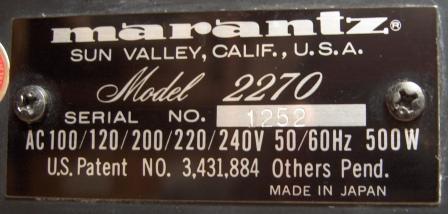
" The best I've come up with so far is from a friend who knew Saul, Sid and Richard. He "kinda" remembers it as something to do with Marantz's 20th anniversary. The 2270 came out around 1971-72 and Marantz started business around 1952 so the math would be correct yet they don't say "limited edition" or "anniversary anything" on them.
And similar information from Nov. 2009 link:
https://audiokarma.org/forums/index...-than-others-i-have-seen.264286/#post-3206473 [Nov. 2009]
"Do "all" of the earliest 2230/45/70's have the engraved face plates or was it an option? I have a tech that used to know Saul and Sid. When I asked him about this he thought these had something to do with Marantz's 20th anniversary but he only vaguely recalls and isn't positive."
So far that is all I've found for the 20th anniversary story line. You would think more could be found if it was truely something Marantz wanted to celebrate.
Anyway, it seems most of what I have concluded in my few hours of research has been stated before, in multiply threads going all the way back to 2004. It seems to me that over time, the story line started to solidify around a 20th anniversary edition, 4000 units each for the different models introduced in 1972 with engraved lettering and then it all changed.
In reality, engraved and gold-anodized face plates were common features from 1968 (and maybe earlier) until 1972 for most models with it being retained on the TOTL models to at least 1974 (Model 19) for a while. Cost-cutting opr intentional design change in 1972 resulted in the engraving and gold-anodized face plates being changed for most models but not all. Other changes were made at the same time. No anniversay special editions, and no silver engraved variation. At least this is the story that makes the most sense to me given what I have found to date. Maybe others can find documented information that help clarify this story and maybe expand it.