Personally I don’t understand the excitement.
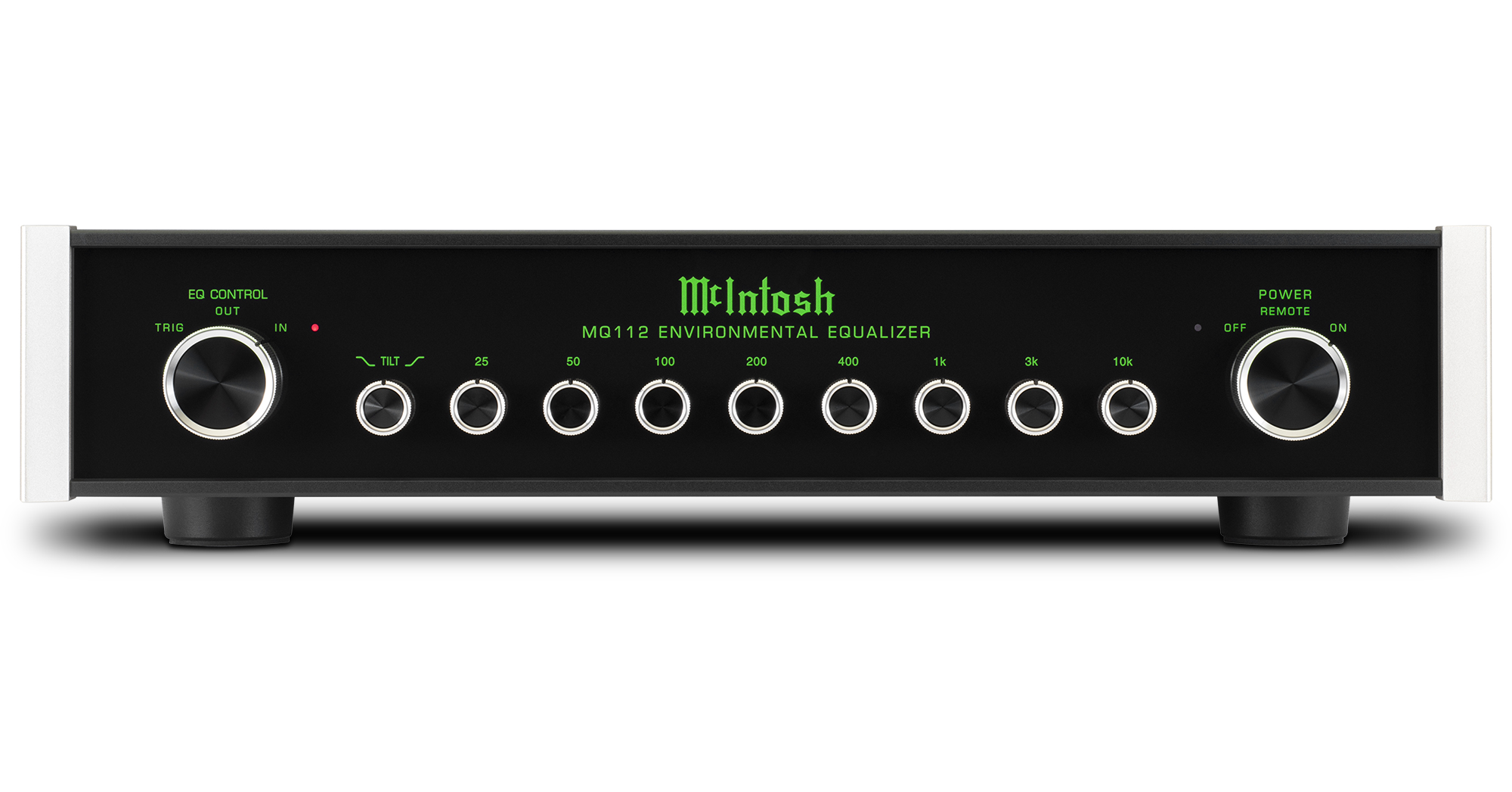
True, the MQ112 does allow the listener to adjust (course) different frequency ranges in the music to taste, and taylor the music, for those who like to add bass, soften parts of the vocal spectrum, or correct bad recordings or poor speaker response. It does not allow room correction as most listening spaces are asymmetrical, separate channel adjustment would have been wise IMO. Also introducing this much analog circuitry to the signal path will only create more phase-distortion (more/less depending on attenuation of each octave I suspect).
However the MEN220 or any decent DSP allows this, by channel, and much finer control PLUS the ability to properly EQ/correct a room, correct phase-distortion in a speaker’s crossover, tame or enhance pretty much anything in the music with much more accuracy, create loudness-compensation (not variable with the volume control unfortunately) programs, ... and in many DSPs also save multiple programs for different types of music or listening selectable at the push of a button on a remote while seated comfortably and listening.
If I had to choose one, I’d choose a DSP without question. If I wanted more than my preamp’s Bass & Treble (by channel) controls for the walking up and twisting fun or just an additional piece to fill out my equipment rack maybe the MQ112, but I consider it as well as the similar controls on preamps to simply be an antique technology for those who either can’t understand the technology of DSPs and calibrated mics, or simply don’t want to use the newer technology.
I do agree that the variable loudness, loudness compensation that varies inversely with the Volume control is something that should never have been discontinued as it is the best way to correct per the Fletcher-Munson curve, and that would be welcome in all new McIntosh gear as would be a processor loop to insert the MEN220 within the preamps’ signal path (instead of after).
I will continue to use the convenience of remote-control, the accuracy and adjustability of technology developed after 1960, and the control of multiple saved settings/programs over standing next to my system rack twisting knobs and then sitting back down to see if I got close, then restarting my music after I get it tweaked/right. Might as well also supply it with post-it notes with holes in the middle so that users can make marks around each knob for different music and volume settings, ... like we used to do with the old slide-pot (typically 16 per channel though) EQs.
I just don’t get buying a new system with 1970 technology, seems like you’d be better off buying the 1970 preamp and getting the variable loudness and processor loop.



 www.mcintoshlabs.com