• The move to the new server is done. There are some software and database maintenance updates in process. This has us passing the hat around to help out. We appreciate any donations. Seriously, even a dollar helps. The payment page may be found here - https://www.audiokarma.org/support.html

My first tube amp - Scott LK-72-B

Thanks to everyone who has replied! I truly appreciate all the feedback and suggestions. I'm real novice at this stuff and some of it is going over my head, like how to test if "coupling caps pass DC to your power tube grids", but I'm eager to learn, enjoy doing research, and can generally follow instructions reasonably well if anyone can tell me how to test this.

As far as test equipment goes, I do have a digital multimeter with a capacitor test range from .04uF to 100uF, a dim-bulb tester, a Variac, a couple tube testers, and my late-father's old Christy Electronic Tester Model A2. Also have a couple soldering irons and desoldering tools.

The output stage coupling caps need to be replaced. It doesn't matter if they test good. At this age, they can fail at any time, and they can take the output tubes and transformers with them. It's fine to leave the others in place, but bear in mind that caps made with polypropylene or teflon will be more transparent. They exhibit much less dielectric absorption than other types, including mylar. You won't lose a thing by replacing every coupling cap in the unit with one of these superior dielectrics.

Jack

If you want to be more comfortable, you might replace the four coupling capacitors to the 7591 grids. Bad capacitors there will cause the most collateral damage. They could ruin the output tubes or even the output transformers.

Sounds like replacing the output stage coupling caps is a bare minimum to start. Like I said I'm a novice, so I'm honestly not sure which ones are the coupling caps. Are we talking about the four 0.1uf/400WVDC in the image below? Are there more coupling caps? Any recommendations on good replacements that are reasonably priced?

Thanks again.
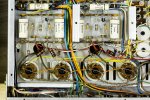
Scott-LK-72-B-9.jpg
 
Last edited:
On this forum, you will hear a lot of opinions of what the capacitors should be replaced with. Personally, I do not get into boutique capacitors costing a ton of money. I use either Orange Drop capacitors or a good quality capacitor which has a data sheet. Example is IC or Illinois Capacitors from Mouser, Newark or DigiKey etc. They are not expensive. I also carefully remove all of the lead from the capacitor being replaced from terminal lugs and tube lugs. But that is intensive and you can easily damage those lugs if you are not careful. I have decades of experience and choose to do it that way.

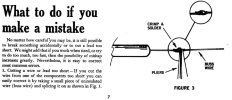
There is a very acceptable alternative. That is to cut the lead of the capacitor at the body and attach the new capacitor to the leads that are going to the tube sockets etc. You bend the old lead in a "J" hook and the new lead the same way. Crimp them together and solder. Many, many do it this way.
 
Haven't heard of that, sounds like guitar amp lingo. I would probably buy the 5% caps, just to have somewhat better control.
 
You really scored with that beauty! I had a LK-72B myself and found it to be a superb amp to play my favorite music through. Look at the size of those transformers!! With mine, I replaced the electrolytics and signal capacitors too. I really like the Mil-Spec hermetically sealed PIO, some times bypassed with teflon caps. Everybody's taste is different, but whatever you do, I'm sure you will love this amplifier!! :thumbsup:
 
Jack is correct. They also have 15 different ones in stock rated at 630 VDC as well.
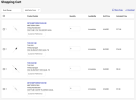
Are you saying it's better to get 630VDC instead of the original 400? I was thinking of going with the Vishay Sprague for the small electrolytics and Vishay Roederstein 5% 400VDC for the coupling caps as seen in Digikey cart below. Not sure how important it is to do the two smaller .047uF caps, but I added them to the cart. It's about $70CAD now including tax and shipping, which is pretty reasonable.

Anything else I should consider replacing right away? I'll probably order the Hayseed-Hamfest can caps if that's the best option, but they will cost about $300CAD. I've been listening to amp for about an hour now and those large caps have warmed up slightly to about 75-80 degrees. C203 is a bit warmer than the others.

Screen Shot 2024-10-27 at 6.08.05 PM.png
 
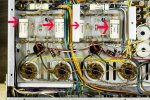
The capacitors marked with red arrows in the photo are what you will be testing.
One side should have positive DC on it, generally the side closest to the driver tube.
The end that connects to the (big) power tube should have a negative voltage on it of something like 12 to 20 volts.
If it has positive voltage on the power tube side then the cap has failed.

Test using the red probe of your dvom on dc volts setting with the black lead connected to chassis, or ground.

The advice to change them out as cheap insurance is great advice.
I'd go with the yellow Mallorys or some orange drops, because you can get real ones cheap enough from Mouser or your favorite electronics parts wholesaler...

Have fun, that Scott is a real Gem, there's not a lot left in that good of condition.
 
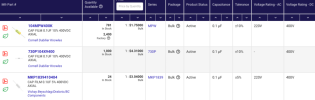
There's no reason to uprate the voltage. I believe the screen shot I posted shows all the axial polypropylene caps in the original value that Digikey has in stock right now.
I'll probably order the Hayseed-Hamfest can caps if that's the best option, but they will cost about $300CAD.
That's a lot of money for caps. Not saying they're not worth it, but I would study the various threads here about how to re-stuff the cans.

Jack
 
I would also add to the chorus to replace the ceracaps — but not for the reason so often cited. To be specific, and as KV said, I would go further and amplify the point that it will be nearly impossible to find a leaking ceracap. They just don’t leak. But — what they DO do with age — and rather regularly — is go intermittent. Same thing with the caps Fisher used throughout production of their units from about 1962 on — they don’t leak, but surely go intermittent. I’ve got one on the bench now. Sometimes the left phono preamp works, sometimes not. Just breathe on the output coupling cap from that section and it works again. Replace the ceracaps for the same reason.

Dave
 
The capacitors marked with red arrows in the photo are what you will be testing.
One side should have positive DC on it, generally the side closest to the driver tube.
The end that connects to the (big) power tube should have a negative voltage on it of something like 12 to 20 volts.
If it has positive voltage on the power tube side then the cap has failed.

Test using the red probe of your dvom on dc volts setting with the black lead connected to chassis, or ground.

The advice to change them out as cheap insurance is great advice.
I'd go with the yellow Mallorys or some orange drops, because you can get real ones cheap enough from Mouser or your favorite electronics parts wholesaler...

Have fun, that Scott is a real Gem, there's not a lot left in that good of condition.
Thanks very much for the explanation. I'll give that a try this week.
 
I'd rather not spend so much for Hayseed-Hamfest, so will do some research on re-stuffing. Thanks.
It's not that hard to do. You can carefully cut around the base and use foil tape, JB Weld, etc to put them back together, or carefully pry up the Iip on the bottom to remove the old guts and tap the lip back down when done.
There a4e a few thread that have been posted where people have taken pictures and explained how it's done. I'm sure there are YouTube videos on it too.
 
Not to beat my own drum but this thread which I compiled covers the topic of can capacitor restuffing pretty well and applies directly to the amplifier that you're working on.


Not to beat my own drum but this thread which I compiled covers the topic of can capacitor restuffing pretty well and applies directly to the amplifier that you're working on.


That is what I have been doing for years as well. I have a slight advantage in that I have a box of NOS can capacitors to extract the steel mounting ring from. These rings are very difficult to remove without damaging them sometimes. The only different thing that I do is to uncrimp the lip instead of filing it off. I wear welder's gloves to avoid hand punctures!
 
Not to beat my own drum but this thread which I compiled covers the topic of can capacitor restuffing pretty well and applies directly to the amplifier that you're working on.


That's a great thread. I'll definitely give some thought to restuffing and will see how the cost compares to buying the Hayseed-Hamfests. Any suggestions what brand or type of capacitor to use for this application and how to make sure I order caps that will all fit inside in the can?

Thanks again.
 
Back
Top Bottom