• The move to the new server is done. There are some software and database maintenance updates in process. This has us passing the hat around to help out. We appreciate any donations. Seriously, even a dollar helps. The payment page may be found here - https://www.audiokarma.org/support.html

New Project Very Early TD 124

Nice looking table, congratulations.

The early versions of the TD-124 used Nylatron main platter bushings. Problem with Nylatron is that it expands with heat. My TD-124 (Sn. 12565) utilized Nylatron bushings and would slow down as friction from the spinning main spindle created heat. The record speed would start to slow down after 1 side.
I only realized the Nylatron bushings were the cause after I fell asleep while playing a record. When I awoke, the bushings had swelled enough to actually seize the spindle. I had to wait till the morning to pull the platter.

Thorens discontinued using Nylatron and switched to sintered bronze (Oilite) bushings. Sintered bronze is porous, sucking in oil when cold and expelling it when hot. They are considered to be self lubricating.
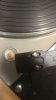
The bushing I see in your photo looks dark, which is exactly what my Nylatron bushings looked like. Sintered Bronze bushings are available for the TD-124 and are not difficult to replace. The only thing you have to check for is the O.D. of the original bushings (or the I.D. of the spindle well), there were two sizes.

All the info and parts to restore your TD124 is available on the net.

The TD124 is so straightforward... if you look at it long enough it all makes sense.

Enjoy!


Thanks, thought it looked good for it’s age…

Also really appreciate the excellent and detailed information and the time it took to provide. I’m aware of the issues with the plastic bearings, however you are the first that I’ve seen provide first hand experience about it actually happening.

Assume mine has the 17.6mm OD bearing, given that I contacted Steve Clarke directly and had a discussion about my plan to use Delrin replacements, had read he considered doing the same. He informed me that he made a set of Delrin bushings for his several years ago and that they were still functioning very well.

One other thing he mentioned, his spin down time increased dramatically when he switched from Oilite bushings. He also advised against changing out the motor bushings unless needed.

Found some current ISO 46 oil in a smaller size so I’ll be using that, along with a custom Delrin idler.

Have another project I’m committed to right now so have to finish that before the Thorens gets attention.

Any other suggestions?

Thanks again,
Andy
 
Last edited:
Andy,
Interesting, I wasn't aware Delrin bushings were available.

The original stepped pulley design is a bit tricky to adjust, it has 3 points of contact.
1. The stepped pulley spins on a ball bearing at the top of a fixed rod. Set screw(s) underneath the deck set the height of the fixed rod.
2. In addition to spinning on the ball bearing, there's some friction generated between the stepped pulley's inner shaft and the fixed rod.
3. The stepped pulley can also spin on a teflon washer between the bottom of the stepped pulley and the deck.

I use Zoom Turbine Oil everywhere except along the rod inside of the shaft. I applied a light grease to the rod.

Listening with a stethoscope I hear nothing from the deck or armboard while hand spinning the platter. The main spindle is quiet.
For the motor, I'm using the original 3 point hanging suspension design. Using headphones I can detect an audible rumble on the deck and armboard when the motor is running, even if the idler wheel is removed. I'm not sure if changing the motor suspension to the MKII design would improve what I'm hearing. I'm also not thrilled to change the design unless I'm sure it will completely remove the motor vibration. As I mentioned, the rumble is only slightly audible when listening to headphones.

I think the greatest thing about the TD124 is the removable armboard... it makes swapping tonearms a snap. The armboard is attached to the deck by 3 screws. I placed a thin (1 mm) piece of EPDM rubber between the armboard and the deck to dampen vibration. The EPDM also compresses where needed so I can adjust the armboard parallel to the platter using the three screws. Adjusting the armboard parallel to the platter is a GREAT feature.

You should probably service the E50 motor. I would advise against using a detergent oil on the sintered bronze bushings. I read the detergent suspends particles which can then clog the sintered bronze pores. While apart, examine the rotor for uneven wear. I used a laser tachometer to check the motor's rpm's as I reassembled and tightened things down.

As with everything, take your time and all will go well.

Rich
 
Rich:

Another excellent contribution…Let me make sure that my comments reference Delrin bushings aren’t misleading.

As far as I know Delrin bushings are not available for the 17.6mm shaft wells, 18mm are available. This is the same issue with Oilite, or bronze bushings, they aren’t available in 17.6mm unless special ordered, which requires a large purchase.

My intent is to make or have the 17.6mm bushings made from Delrin rod, Steve of theanalogdept also told me that pressed Delrin bushings behave almost exactly like pressed bronze bushings, the ID looses about the same amount when compressed.

Recap: 18mm OD bushings are available in Delrin or Oilite
17.6mm OD bushings have to be specially made in Delrin or Oilite

The ISO 46 oil available today is the modern equivalent to the Thorens specified ISO 46, both are turbine/hydraulic oils, neither have any additives akin to detergent motor oil.

Want to recognize your excellent noise testing methodology, very similar to my own, except my stethoscope is homemade with some rubber tubes ;)

My methods also include a test record, oscilloscope, and W&F analyzer hooked to the tonearm output. Even change the tonearm and cartridge at least once during the testing, just to make sure they aren’t inducing noise, or to ID the noise they are inducing :confused:

The motor mounts are an area of interest for me, I’ve had discussions with Steve ( @musiqlovr ) and Steve (theanalogdept) about them. Trust and respect advice from the both of them, related to 124s.

I’ll start with original design rubber, then try the gel type, also use the gel type on my Fairchild 412, very weary of springs in this application. Have seen the YouTube video produced by the spring vendor which shows a 10dB noise reduction, but this is never confirmed at the tonearm output, which has always given me pause.

Your use of grease on the stepped pulley shaft is apropos to recommendations from others, have some special bolt grease developed for competition AR rifles that’s “extremely slick” that I’m gonna try. Can’t help myself, old military bias is hard to break ;)

Did you change any of the ball bearing, if so, where, what material, and results?


Points about the arm board are taken to heart, have experimented with arm board materials extensively on my Russco Studio Pro, and so far Spanish Cedar is the winner in noise reduction but haven’t added any substrate, can’t say why as it’s an obvious choice that makes total sense, another excellent contribution….


My intent is to clean and lube everything, including motor, have to replace the steel speed selection ribbon anyways, replace motor mounts with original type material and take some baseline measurements.

Really appreciate the discussion, very detailed and interesting and informative….

Andy
 
I replaced both bearings, can't remember what material they were. Probably not the hardest material available, bearings are cheaper and easier to replace than spindles.
The main spindle bearing was replaced simply because it was old.
The bearing at the top of the stepped pulley was replaced because it had somehow become scored and was "clicking" as it turned. Not sure how it became damaged...it arrived in that condition.

I wanted to verify the accuracy of the on-deck bubble level and discovered it was inaccurate.

The 124's spindle is a little "fatter" than most, so I couldn't use a pre-drilled circular bubble level. I had a roll of electrical tape that fit perfectly over the platter mat's 45 RPM adapter when extended. An Ortofon circular bubble level on top of the tape made it easy to level the platter. After the platter was level I leveled the armboard.

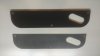
I included pix of the EPDM cushion I used between the armboard and chassis.

I recall hearing a little noise from the belt as it turned. Belts will naturally "stick" to a pulley as they stretch and constrict while turning. That issue can be fixed by "dusting" the belt with talc powder.

Talc is slippery and makes it easier for the belt to slip off from the pulley. Don't worry, it won't affect speed or wow and flutter.

Put some talc powder and the belt in a paper bowl and stir it around until the belt is evenly coated.

Make sure you use Talc powder, not cornstarch. Talc is slippery, cornstarch is not.

J&J no longer sells baby powder with talc (after they lost the lawsuit). I think Goldbond sells a pure talc powder.

20180102_161501.jpg 20180102_161333.jpg 20180102_161353.jpg 20180102_161906.jpg 20180103_010652.jpg
 

Attachments

  • 20180103_011850.jpg
    20180103_011850.jpg
    63.8 KB · Views: 8
Enjoy the discussion, will be very useful since I retain less than most, so having a reference is great…

That’s interesting about the clicking and a good point about bearing hardness.

Which belt did you end up using, and which idler?


Regards,
Andy
 
My original idler was fine and is still in service.

I never bothered trying a replacement because I read somewhere the red "O Ring" on the rim had a bump where it was joined. I didn't want to spend the money and hear a "thump" each time the rubber ring rolled across the inner platter.

The belt... I wish I could remember. Either the Thakker or OEM. It's probably in one of my older posts.

When I serviced the motor I did not use the rivets provided in the kit to secure the endplates. What a pain to line them up and punch them together. Instead, I tapped threads into the housing and screwed things together gradually to keep everything aligned.
 
Last edited:
Any quality o-ring shouldn't have "bumps" on it. Heck I'm not sure that o-rings that small are glued, I know the larger o-rings are, it's how I make them in the field.
I certainly wouldn't let that stop you from trying one.

BillWojo
 
If you're looking for recommendations, I'd suggest that you replace the bottom cap to the spindle well with something more substantial. That flimsy cap is the most egregious weak point in an otherwise bulletproof original design, IMO. I went with the bronze cap from Birdsong Audio - HUGE difference. First of all it cured a slow oil leak around the original cap and seal, but it also radically reduced friction, improving spin-down times. It's an upgrade the table deserves.

BTW, I have the idler from Italy and neither color o-ring has a seam. Perhaps there's a seam on the inner surface that could cause problems if you twisted it? Not sure. If so, with proper use it shouldn't be an issue. After first replacing my original wheel with one of the same design and continuing to struggle with its performance, I'm pleased with my Audiosilente wheel.
 
Will start with the original idler and plinth, and @Lapslah, had come to somewhat the same conclusion about the well cap and plan on that being one change I’ll make in the beginning.

Appears the Audiosilente idler has a considerable following, which would indicate a reliable alternative and any issue is probably an anomaly…. contacted my custom idler maker and he’s agreed to make one or more for the 124, will probably start with a conventional type Delrin with bronze bushing.

Appreciate all the info.

Andy
 
Any quality o-ring shouldn't have "bumps" on it. Heck I'm not sure that o-rings that small are glued, I know the larger o-rings are, it's how I make them in the field.
I certainly wouldn't let that stop you from trying one.

Bill,
You may be right. What stopped me was $88 to replace an idler that was in good condition and working fine.
Another thing about using an idler with an O-Ring...if the edges are round, I would imagine it has a reduced contact area with the stepped pulley and inner platter rim compared to the original idler with a flat edge.
s-l300.jpg


jQKnij6.gif
 
Bill,
You may be right. What stopped me was $88 to replace an idler that was in good condition and working fine.
Another thing about using an idler with an O-Ring...if the edges are round, I would imagine it has a reduced contact area with the stepped pulley and inner platter rim compared to the original idler with a flat edge.
s-l300.jpg


jQKnij6.gif

Rich, it’s not $88 by the time you get it delivered, it’s over $100:naughty:
 
BTW Rich, @heyraz what plinth are you using? Looks like an SME arm in the photos?
It's an SME 3009 Series II (Unimproved) tonearm. Love that tonearm and can't say enough good things about it. It's so well engineered, they really thought it out. Scale Model Equipment....those guys really did nice work. My arm has adjustments for everything.

I bought it a few years ago after a friend GAVE me his Grandfather's Garrard 301. Super classic table...Grease Bearing version single owner, low serial number. Original paperwork and receipt, I think it cost $95 new. Spectacular specimen but I didn't like the tonearm (Garrard TPA) or the homemade plywood plinth so I purchased the SME and started work on a new plinth.
A few months into the plinth project my friend's (low end) turntable died. I felt it was only right to return his family's heirloom.

Now I had a tonearm with no turntable.

While I had the Garrard 301, I thought the grease bearing spindle was a little too audible. I tried all different types and grades of grease but I could always hear the free platter spinning. I looked at other classic idler turntables and the TD-124 seemed like it would pair nicely with my SME. I like the belt/idler design.

The plinth I bought on the bay... It's the Ortofon style made in Switzerland. I liked how "compact" the overall design looked. I fashioned the armboard from some Maple stock I had laying around but could never get that lacquered "Glossy Black Piano" finish to my liking. So I rubbed it matte and left a pinstripe around the top corner edge. I think the slight pinstripe gives it a sort of "50's" look. It's a subtle accent.

Very satisfied with the Ortofon Style plinth. It fits in the cabinet and the overall project has gotten nothing but compliments...even from my wife. I know many swear by massive and solid plinths but I'm not dissatisfied and have never had the opportunity to compare.

I needed a small footprint to keep my turntable behind glass because I had cats. That hanging Anti-Skate weight is too irresistible for any cat.

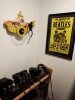
I have another Turntable. Wall art.

20220101_202058.jpg
 
It's an SME 3009 Series II (Unimproved) tonearm. Love that tonearm and can't say enough good things about it. It's so well engineered, they really thought it out. Scale Model Equipment....those guys really did nice work. My arm has adjustments for everything.

I bought it a few years ago after a friend GAVE me his Grandfather's Garrard 301. Super classic table...Grease Bearing version single owner, low serial number. Original paperwork and receipt, I think it cost $95 new. Spectacular specimen but I didn't like the tonearm (Garrard TPA) or the homemade plywood plinth so I purchased the SME and started work on a new plinth.
A few months into the plinth project my friend's (low end) turntable died. I felt it was only right to return his family's heirloom.

Now I had a tonearm with no turntable.

While I had the Garrard 301, I thought the grease bearing spindle was a little too audible. I tried all different types and grades of grease but I could always hear the free platter spinning. I looked at other classic idler turntables and the TD-124 seemed like it would pair nicely with my SME. I like the belt/idler design.

The plinth I bought on the bay... It's the Ortofon style made in Switzerland. I liked how "compact" the overall design looked. I fashioned the armboard from some Maple stock I had laying around but could never get that lacquered "Glossy Black Piano" finish to my liking. So I rubbed it matte and left a pinstripe around the top corner edge. I think the slight pinstripe gives it a sort of "50's" look. It's a subtle accent.

Very satisfied with the Ortofon Style plinth. It fits in the cabinet and the overall project has gotten nothing but compliments...even from my wife. I know many swear by massive and solid plinths but I'm not dissatisfied and have never had the opportunity to compare.

I needed a small footprint to keep my turntable behind glass because I had cats. That hanging Anti-Skate weight is too irresistible for any cat.

I have another Turntable. Wall art.

View attachment 2440034

Rich:

What a great story, enjoyed the history of your turntable journey…Giving back the Garrard was a upright thing to do, very considerate. The 301 has always been on my collection list, but that spot will go unfilled for the foreseeable future.

Have a predecessor to the 301, a Model Ta, it has the same grease bearing spindle and the same motor as the 301, it’s an interesting table and makes a fine workshop table.

Have a SME 3009 series 2 unimproved myself and yes it’s a very good arm, no telling what they would cost if made today, it’s currently on my Fairchild 412. Just did a complete rebuild of my 3009 including new wires, it’s read for several more generations.

Understand your thoughts related to the plinth, small footprint is useful, and if you’re pleased with it why change….

Just realized I used your SA100 rebuild thread extensively when rebuilding my SA100, thanks much for that:thumbsup:

Andy

edit: forgot to say, outstanding turntable art!
 
Last edited:
Rich:

What a great story, enjoyed the history of your turntable journey…Giving back the Garrard was a upright thing to do, very considerate. The 301 has always been on my collection list, but that spot will go unfilled for the foreseeable future.

Have a predecessor to the 301, a Model Ta, it has the same grease bearing spindle and the same motor as the 301, it’s an interesting table and makes a fine workshop table.

Have a SME 3009 series 2 unimproved myself and yes it’s a very good arm, no telling what they would cost if made today, it’s currently on my Fairchild 412. Just did a complete rebuild of my 3009 including new wires, it’s read for several more generations.

Understand your thoughts related to the plinth, small footprint is useful, and if you’re pleased with it why change….

Just realized I used your SA100 rebuild thread extensively when rebuilding my SA100, thanks much for that:thumbsup:

Andy

edit: forgot to say, outstanding turntable art!
Thank you,
The SA100 was a great project and I learned so much. Couldn't have done it without @dcgillespie , truly a Guru and the kind of person that makes AK great.

Good luck with your TD-124.

Rich
 
Last edited:
Another thing...
I considered another 301, but that turntable gets bolted firmly to its plinth. That's probably why more mass is necessary for a 301's plinth.

The TD-124 "floats" on rubber mushrooms... I don't think a massive plinth is as important.
 
Another thing...
I considered another 301, but that turntable gets bolted firmly to its plinth. That's probably why more mass is necessary for a 301's plinth.

The TD-124 "floats" on rubber mushrooms... I don't think a massive plinth is as important.

True - the mushrooms are necessary for the original box-type plinth. But most of us who build massive plinths for our TD124s delete the mushrooms and mount the table solidly. I actually kept the (new, soft) mushrooms with my first stacked plywood plinth, then one day I decided to see what all the hype was about and remove them. Night and day difference. I never went back.
20191024_162934.jpg
 
Night and day difference. I never went back.

Can you expand on this a bit? I have both my 124s and never considered a solid mount. I figure the folks at Thorens did such a good job engineering the table that they knew what they were doing with the mushroom isolation. In addition I like to remain as true as possible to the original design of vintage pieces. I have a 69 Firebird convertible. I can’t tell you how many people have suggested changes to make it faster and more modern. I balk at every step and kept it as original as possible. Still looks the same as the day it came from the factory. It’s just my preference.
 
Can you expand on this a bit? I have both my 124s and never considered a solid mount. I figure the folks at Thorens did such a good job engineering the table that they knew what they were doing with the mushroom isolation. In addition I like to remain as true as possible to the original design of vintage pieces. I have a 69 Firebird convertible. I can’t tell you how many people have suggested changes to make it faster and more modern. I balk at every step and kept it as original as possible. Still looks the same as the day it came from the factory. It’s just my preference.

Can’t say which is “better” the original design with the mushroom or a heavy well designed plinth without mushrooms.

One thing I’ve noticed, those that have compared the two have said the heavy plinth is only better when the mushrooms are eliminated….however not even Steve (theanalogdept), who prefers the heavy plinth without mushrooms, provides any data to support his conclusion, it’s purely subjective, and he states that. Maybe I’ve missed him or someone else providing measurements to support this view.

Will say I’m going to put this through my test methodology with the original plinth vs a heavy plinth of my design, I’ll use a test record silent track, my natural aural abilities and oscilloscope at the tonearm output/speakers to view the results and determine which one has the lowest noise floor. Admittedly this is not an SQ approach, and noise floor may or may not be important to others, it may not be high enough to worry about, or detectable with music etc….

I’m a car nut, many, many types and builds, and completely support your point of view, but if you wanted to greatly improve the brakes (say 60 to 0 stop times) on that fantastic machine, you’ll have to change the brakes….. Like I said, since you’re happy with it, no matter the reason, then you’re happy with it:)

I’ve done the same type tests with multiple tables and plinth types, more heavily weighted towards idlers and layered and/ or filled plinths, the noise floor of a machine is measurable so it just comes down to how noisy the table is and how much it can be reduced ? I’ve had people claim that changing the design adversely effects the SQ in some self defined way, and perception is like possession, it’s 9/10s of the law :rflmao:personal preference….

Another point, I’m interested in multiple arms and not worried about footprint, nor original plinth aesthetics, and I’ve had a plinth design in my head for this machine in my head for a while, so yes I’m already biased to some degree :rolleyes:

Love this hobby and the my projects that flow from it, they give me great satisfaction….

VR
Andy
 
Can you expand on this a bit? I have both my 124s and never considered a solid mount.

I'll be the first to admit that my results are based purely on listening and no scientific measurements. But what I heard made me happy, and isn't that what matters?

With that out of the way, my experience removing the mushrooms was twofold (and to restate, this was with the same massive plinth, first with, then without the mushrooms). One, which was somewhat expected but I didn't believe it until I heard it, was that the table became quieter. Lower noise floor. I could crank it up louder before hearing any noise between tracks. After all, the entire stated premise of the massive plinth, as I've always heard it, is to absorb vibration. The mushrooms create a buffer between the table and plinth so all of that mass can't do its job. I'd even go so far as to say that a massive plinth with mushrooms probably doesn't perform any better than a hollow box with mushrooms, thought it might look better.

Second, and completely unexpected, was that the slam, or PRAT, that idlers are so good at was noticeably improved. Upon hearing it, I surmised that by mounting the table solidly I made the entire platform more rigid, allowing the stylus to trace the groove more accurately. Again, this is admittedly unscientific, and just my brain trying to explain what I hear.
 
Back
Top Bottom