• The move to the new server is done. There are some software and database maintenance updates in process. This has us passing the hat around to help out. We appreciate any donations. Seriously, even a dollar helps. The payment page may be found here - https://www.audiokarma.org/support.html

New Project Very Early TD 124

Also took some time to make a couple extra arm boards, made 2, one for 9” and another for my Karmadon Gray clone, both out of Spanish Cedar.

They will help me determine which arm I’ll use where…B701B295-F8D8-4FD8-9D3F-B5D0C41BE1C0.jpeg36F8DF19-96E4-40F3-BCC8-4978BA42EEA5.jpeg
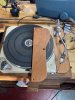
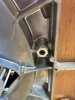
Also did some final adjustment to the clutch assembly per the service manual, very simple to adjust the 3 lock nuts/set screws, like the one above…

One note, have noticed many use gasket sealer on the shaft well end cap, I didn’t use anything but the gasket with the Audiosilente end cap and it hasn’t leaked a drop.

Still waiting on some parts so it’ll be a while before it’s torn down more.

VR,
Andy
 
no one would find fault with either one.

twiii hasn't shown up yet... :whip:

One note, have noticed many use gasket sealer on the shaft well end cap, I didn’t use anything but the gasket with the Audiosilente end cap and it hasn’t leaked a drop.

IME gasket sealer is only a band-aid when your end cap isn't true, as is often the case with the flimsy original one after so many years. You should be good to go with your new Audiosilente cap and gasket.

Also, I'm in the minority here, but I'm telling you there's no need to center the spindle in the platter. The center hole is either in the middle or it's not (it is). Separating the spindle and platter is not a problem, and letting the spindle alone settle in the well, then attaching the platter, is much easier on your seal.

Your table is looking great!
 
there's no need to center the spindle in the platter
Of course not! These guys did it for you back in the late 50's:

oule90D.jpg


Naturally, there's always some brainiac who goes on and spoils all that good work by separating the spindle from the platter without the tools to properly realign them.
 
I didn’t use anything but the gasket with the Audiosilente end cap and it hasn’t leaked a drop.
The same experience here. The AudioSilente end cap is perfect. I don't use gasket sealant but once opened (for whatever experiment), I replace the gasket with a British made 0.8mm gasket paper that I DIY with a compass cutter and a leather hole puncher. I've done it twice. No need to futz with that too much and definitely no leaks ever.
 
Of course not! These guys did it for you back in the late 50's:

oule90D.jpg


Naturally, there's always some brainiac who goes on and spoils all that good work by separating the spindle from the platter without the tools to properly realign them.

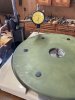
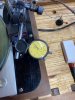
Appreciate the input guys…10B0F440-B999-464D-B278-C1725019836A.jpeg AFFBC55F-69FD-4E43-9CEB-492FBC68F2A5.jpeg Yeah, as I said didn’t think it was needed, I just wanted to see how it came out when I measured the outside, keeping in mind that the inside is the only critical machined surface. It was actually really good, about .005 at the worst point…..

Also really impressed with the spindle play, or lack thereof at the platter :thumbsup:


VR
Andy
 
Also, I'm in the minority here, but I'm telling you there's no need to center the spindle in the platter. The center hole is either in the middle or it's not (it is). Separating the spindle and platter is not a problem, and letting the spindle alone settle in the well, then attaching the platter, is much easier on your seal.

Count me in that minority. Never a problem for me separating the two and getting it back together properly and I don't have all the cool tools Andy has. ;)
 
Count me in that minority. Never a problem for me separating the two and getting it back together properly and I don't have all the cool tools Andy has. ;)

You guys always make me chuckle ;)

Have to believe that the Swiss engineers spec’d the machining to such a point that they go together within tolerances…it’s cold here today, for me anyways, moved the Thorens inside and installed the big mushrooms in the old plinth—extremely quiet.

E47080E7-CCD2-47E8-AE90-4BC964D6D852.jpeg

Took the lower cover off the motor and drilled out the rivets, was curious if it had any oil and how dirty it was…

Wished I’d taken a photo, but was too involved in the work. Not dirty at all, and oil ran out when I drilled the cover, kinda yellow but not dirty. This really surprised me as bronze leaves black deposits in my experience, now the washers looked black but not the oil.

Inside looked very good so I didn’t take the rotor out, just checked tolerances against those that Steve (theanalogdept) used, and they were very good…Cleaned the washers, re-oiled, new 2mm bearing, and used bolts and nuts and some Loctite.

Reassembled slowly turned it on tightening a little at a time and tapping with a small brass hammer. Let it run for several hours, no issues. I’ll do the top when my other parts arrive.

Have it on a selector which allows me to compare it to my Fairchild 412, Russco Studio Pro, and Denon DP 75, other tables are undergoing revisions and I can only run 3 tables on the switch box ;)

Really pleased with it, certainly a keeper :trebon:
 
Are the other tables getting jealous of the new kid in town... Love the 412. Have one and it's a keeper. No experience with the Russco but am familiar with it. The Denon is too different to compare to some extent.
 
Are the other tables getting jealous of the new kid in town... Love the 412. Have one and it's a keeper. No experience with the Russco but am familiar with it. The Denon is too different to compare to some extent.


Consider the Fairchild 412 the most underrated table of our day, it certainly wasn’t when new, but it’s like the 412s were sorta forgotten about. Of course anyone who knows tables would recommend a 750 but their price reflects that, the 412 can still be had for a few hundred dollars San a plinth and tonearm. Mine will also stay:thumbsup:

I’m a big Denon DP table fan, but there’s something about a well tuned/setup idler that makes them special:dunno:
 
Andy,
I'm not sure if you've read about this before but the aluminum top platter/mat is not flat, it dips towards the spindle.
For this reason you can't use a record weight, it locks the two platters together.
I personally don't use the clutch because I think over time it can exacerbate the dip...pushing the aluminum top platter up by the outer rim only.
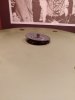
Light source behind:
20220107_202312.jpg

The dip revealed:

20220107_202349.jpg
 
Andy,
I'm not sure if you've read about this before but the aluminum top platter/mat is not flat, it dips towards the spindle.
For this reason you can't use a record weight, it locks the two platters together.
I personally don't use the clutch because I think over time it can exacerbate the dip...pushing the aluminum top platter up by the outer rim only.
Light source behind:
View attachment 2445533

The dip revealed:

View attachment 2445534


Rich:

Knew it was dipped and it has a recessed area about the size of a label, so I thought it was by design. ….your point about platter weights is a good one, might be ok if one remove the weight before engaging the brake but I’d go with your advice and just forgo the weight.

Have always found a collet clamp more useful, however it’s somewhat the same problem as it locks the plate in place and defeats the clutch if not removed first.

Not sure engaging the clutch has any I’ll effect on the plate, all the lift pressure is on the outside edge on the vertical portion.

Now you’ve got me curious, is the dip by design? If not did the dip develop from engaging the clutch?

VR
Andy
 
Curious myself...design or damage.
Whatever the cause or reason for the dip it can't be good if it affects azimuth (which is why I don't use a weight or clamp).
I would guess this dip creates a gap between the mat and record. I wonder if this gap, this lack of contact creates any resonance.
As I don't use the clutch, I cut a piece of EPDM and placed it in the dimple hoping it would level out the platter.
I think it may have helped slightly.
I've also read about people not using the aluminum platter altogether. Now I'm wondering If the aluminum platter howls when in use. I wonder If a flat mat on the cast iron platter sounds better.

Much to think about...
16416119148562631215864353411990.jpg
 
Curious myself...design or damage.
Whatever the cause or reason for the dip it can't be good if it affects azimuth (which is why I don't use a weight or clamp).
I would guess this dip creates a gap between the mat and record. I wonder if this gap, this lack of contact creates any resonance.
As I don't use the clutch, I cut a piece of EPDM and placed it in the dimple hoping it would level out the platter.
I think it may have helped slightly.
I've also read about people not using the aluminum platter altogether. Now I'm wondering If the aluminum platter howls when in use. I wonder If a flat mat on the cast iron platter sounds better.

Much to think about...
View attachment 2445692

I’ll start with a definitive answer, the aluminum platter does not howl and there’s no detectable resonance using the original mat. Had mine hooked to an oscilloscope playing tones with a test record, would have noticed any deviation, even if I had missed a slight change with the tone tracks, it would have certainly been noticeable with the silent track, there was nothing added.

Let me follow with a vague answer… Don’t know if it effect SQ. There’s many platter designs with “hollow” areas, the Russco Platter is an example, have never noticed any ill effects but its mat conforms to the platter design. Another point is the reviews of mat types by Steve at theanalogdept.
His pick of replacement mats is one that has raised areas that match the raised areas on the cast iron platter, that’s how I understand the design at least (those rubber dots are probably what keeps the aluminum from adding noise)

Steve is also adamant about using the aluminum plate and clutch as designed, he mentions it in several different posts….

None of the above answers the original question about the dip:dunno:


It’s an interesting discussion,
Andy

edit: format & spelling
 
You checked the cast iron platter with your dial indicator, I imagine it was pretty flat.
Have you taken the dial indicator to a record on the aluminum platter over the cast iron platter? Any change when the aluminum platter moves every 90° relative to the cast iron platter?

I too have a dial indicator, never thought to check these things until now.

One of the reasons I don't use the clutch is I'm pretty sure I recall my aluminum platter wasn't perfectly flat. I noticed this while setting up the clutch. All would be fine, the platter to platter orientation would change and one of the clutch pads would rub slightly. I oriented the platters for the least vertical play and left it there.

(Honestly getting too picky here. But if you're setting something up, might as well do it optimally).
 
Your correct, don’t think anyone has a completely flat aluminum plate, not to the same standard as the cast iron anyways.

Yes, checked the cast iron in several different locations, it’s very flat, but I’d bet the raised rubber areas aren’t ;) The flatness of the cast iron most likely correlates to the balance and machined tolerances of that piece?

No, didn’t check the aluminum with a dial indicator, can tell just by looking it’s not flat, but most records aren’t flat, don’t think those deviations have much effect with a good tonearm, but I could be wrong :dunno:

I’m on the fence about the clutch, not sure one way or the other, it’s a complicated conglomerate of parts to stop/start the record spinning, Russco and ROK accomplished the same in different ways that aren’t as complicated or fragile.

Even an expensive replacement plate will probably not be as flat as the cast iron….

However let me re-emphasize, there’s no detectable audible interference from the plate, and arguing SQ is fruitless, in my opinion :blah:
 
Of course not! These guys did it for you back in the late 50's:

oule90D.jpg


Naturally, there's always some brainiac who goes on and spoils all that good work by separating the spindle from the platter without the tools to properly realign them.

Quality Control to ensure that the platter was true and the hole was drilled in the middle. Nothing more.
 
I am personally interested if the new mushrooms lower the noise floor as seen on your OScope.
 
Quality Control to ensure that the platter was true and the hole was drilled in the middle. Nothing more.
Alright... run me through the phase of what happens when QC finds the platter is untrue and the hole is not in the middle. What? A 4.5Kg cast iron platter goes in the garbage? They re-drill the hole?
 
Threads like this that run through a refurb and include questions and comments from experienced Akers are the most valuable resource here. Thanks to all participants, and I don't even own an idler.

Yet.
 
Back
Top Bottom