

You are using an out of date browser. It may not display this or other websites correctly.
You should upgrade or use an alternative browser.
You should upgrade or use an alternative browser.
Newest JICO stuff
- Thread starter ghamilton
- Start date

Thomas_AA
Well-Known Member
^ How many hours on the boron? Assuming stylus profiles are identical, response differences could be attributed in part to stylus wear.
Not many hours. I made a comparison between my new boron stylus and my first boron bought in 2009, and they were not easy to differentiate although it was possible. I have not played so much with the zirconia yet but I don't thing the high Q peak will change that much over time.

JP
7480 74111110101115
Unfortunately there is a quite high Q peak around 10-12 kHz at around +5-6 dB. There is no way around this one by changing loading unless you want to drop most high frequency content.
Yup.

Mister Pig
Pigamus Maximus
In my small stable of cartridges I have a Jico Seto Hori. Its a very respectable cartridge. When i pair it with a Graham Slee Accession phono stage i find the combination to be quite capable. I use it as my casual listening combination and am definitely satisfied with it.
Cheers
Mister Pig
Cheers
Mister Pig

ripblade
Addicted Member
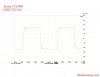
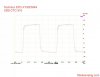
Isn't it possible that the difference here is the result of the suspension damper? Clearly the Jico rings more, but the elastomer is also newer.
Thomas_AA
Well-Known Member
In my small stable of cartridges I have a Jico Seto Hori. Its a very respectable cartridge. When i pair it with a Graham Slee Accession phono stage i find the combination to be quite capable. I use it as my casual listening combination and am definitely satisfied with it.
Cheers
Mister Pig
My JICO SAS beats the original Shure MR in terms of better channel balance, lower crosstalk and lower distortion. The mounting of the stylus and stylus quality was just better with the JICO. Perhaps Shure originals were better in the past, but the Mexico-made stylii appeared to have QC issues.
JP
7480 74111110101115
Isn't it possible that the difference here is the result of the suspension damper? Clearly the Jico rings more, but the elastomer is also newer.
In what way?
Mister Pig
Pigamus Maximus
My JICO SAS beats the original Shure MR in terms of better channel balance, lower crosstalk and lower distortion. The mounting of the stylus and stylus quality was just better with the JICO. Perhaps Shure originals were better in the past, but the Mexico-made stylii appeared to have QC issues.
The Seto Hori is a high output moving coil Jico released a couple of years ago, its not just a stylus assembly. The cartridge is odd looking, the body is made of fired porcelain, and its a heavy cartride. Despite its unusual looks, is performs well with a very nuetral presentation.
Cheers
Mister Pig
ripblade
Addicted Member
If the reduced resonance was the result of lower tip mass alone I would expect to see a quicker rise time on the leading edge. The Shure looks slower to me, suggesting that since it is lower mass, that something is acting against it....that something being a more damped suspension.In what way?
I don't know....just speculating.....

JP
7480 74111110101115
If the reduced resonance was the result of lower tip mass alone I would expect to see a quicker rise time on the leading edge. The Shure looks slower to me, suggesting that since it is lower mass, that something is acting against it....that something being a more damped suspension.
I don't know....just speculating.....
The over-shoot and ringing shows boosted HF, while the other shows what looks to me like band-limited HF. This is an interesting test record: http://fidelisanalog.com/wp-content/uploads/sites/3/2016/03/CTC-310.jpg. I don't play with it much as it's extraordinarily rare.
**EDIT - this P100CMK4 on a 1-50kHz constant-velocity sweep measures +/- 1.5dB as of ~10:30 ET today.
I just ripped a was-only-30-minutes-ago-NOS TTR-103 record with the Jico and VN5MR. Never played with the measurement methods deployed on that one before.
JP
7480 74111110101115
That Technics is the best looking one of all...the verticals are very nearly ideal. I still pick the Jico as second over the Shure. That's not to say I wouldn't pick it on actual listening...
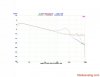
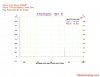
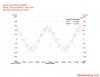
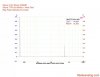
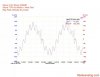
Ya but the Technics' is flat out to 50kHz while the VN5MR starts to roll-off a bit past 30kHz. Below is a comparison of all three. Note I didn't correct for the 10dB/dec slope in this one.
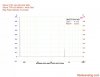
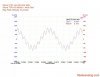
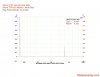
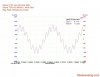

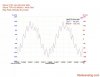
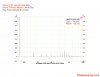
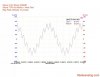

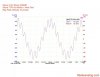
JP
7480 74111110101115
High-res images here: http://fidelisanalog.com/fablog/
Thomas_AA
Well-Known Member
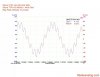
Here is the comparison where the boron is in black and the zirconia in red. This is white noise from the Elipson test record. The loading is 130 pF and 47 kOhm. As seen the zirconia has a high Q resonance but then also keeps level after the resonant peak. A bit odd and not the same behaviour of the boron rod.

My favourite loading for the boron is however 600 pF and 36 (or 33) kOhm, seen below. I do loose >16 kHz, but then I can't really hear those frequencies. The benefit is a less dip in the 2-8 kHz region and a dampened peaking. This setting gives -0.5/+2 dB up to ca 16 kHz, which is good for me. Note that the colors are switched, the boron is red and the zirconia is black. I cannot really dampen the hump in the zirconia with this loading.
If you like a bit brighter sound, you would benefit with a zirconia stylus. Tracking and distortion appears to be on par with the boron and better than my original MR stylus ever was. Now, if there only was a way to get hold of boron tube cantilevers, JICO would be able to push the resonance just a bit higher.

My favourite loading for the boron is however 600 pF and 36 (or 33) kOhm, seen below. I do loose >16 kHz, but then I can't really hear those frequencies. The benefit is a less dip in the 2-8 kHz region and a dampened peaking. This setting gives -0.5/+2 dB up to ca 16 kHz, which is good for me. Note that the colors are switched, the boron is red and the zirconia is black. I cannot really dampen the hump in the zirconia with this loading.
If you like a bit brighter sound, you would benefit with a zirconia stylus. Tracking and distortion appears to be on par with the boron and better than my original MR stylus ever was. Now, if there only was a way to get hold of boron tube cantilevers, JICO would be able to push the resonance just a bit higher.
Thomas_AA
Well-Known Member
High-res images here: http://fidelisanalog.com/fablog/
So do you make anything around this? I have not compared yet the distortion figures for the zirconia and the boron.
JP
7480 74111110101115
This is only the low frequency test - I still have to make sense of the mid and high tests. Ignoring the potential anti-skate and/or azimuth miss-adjustment, the Jico Zirconia has much lower distortion on the lower amplitude tests, but starts having trouble sooner on the higher amplitude tests. The VN5MR is more consistent overall and appears to hold its own a bit better. It's possible with better adjustment and/or a better example that the VN5MR could get through the 30 cm/sec test without gross miss-tracking, as the issue in the right channel is driving up the IMD in the left. Balance that out and we could see ~15% IMD in both channels on the 30 cm/sec test.
Tradeoffs.
Tradeoffs.
Thomas_AA
Well-Known Member
OkThis is only the low frequency test - I still have to make sense of the mid and high tests. Ignoring the potential anti-skate and/or azimuth miss-adjustment, the Jico Zirconia has much lower distortion on the lower amplitude tests, but starts having trouble sooner on the higher amplitude tests. The VN5MR is more consistent overall and appears to hold its own a bit better. It's possible with better adjustment and/or a better example that the VN5MR could get through the 30 cm/sec test without gross miss-tracking, as the issue in the right channel is driving up the IMD in the left. Balance that out and we could see ~15% IMD in both channels on the 30 cm/sec test.
Tradeoffs.
which of the IMD tracks are you using on that record? There are both left and right only, both channels and lateral/vertical. I guess these are lateral tests?
Similar threads


- Replies
- 2
- Views
- 542


