• Please note that Audiokarma will be offline briefly for updates early on Monday morning, September 28th.

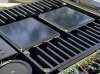
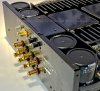
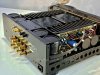
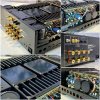
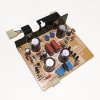
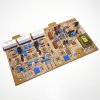
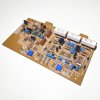
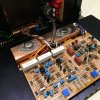
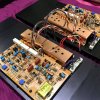
Outstanding photos of Audio Equipment

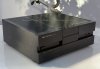
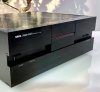
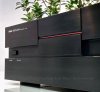
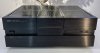
Yamaha5000

Never settle for 2nd best
How are photos of this equipment made so wonderful?
Suggested Camera, Lens, Settings of Camera, Lighting, background and ???????

EBAY 1.jpg EBAY 2.jpg EBAY 3.jpg EBAY 4.jpg EBAY 5.jpg EBAY 6.jpg EBAY 7.jpg EBAY 8.jpg EBAY 9.jpg
 
Register to hide this ad
Studio lighting is one of the primaries for this (on-camera flashes need not apply). Luck has absolutely nothing to do with any fine art photography. Everything is planned, and re-shot based on exposure and compositional experimentation.

Fine equip is a plus but one does not need the latest/greatest.
Stacking/HDR may play a role.
A tripod is mandatory.
Technique is paramount. For flat-field images, understanding diffraction-limited optics and apertures vs. paralleling the sensor with the primary plane of focus is a key.

I have never set foot into a photo studio for shooting- I am an outdoor photographer. All of what I outlined cross over between the two.
 
Studio lighting is one of the primaries for this (on-camera flashes need not apply). Luck has absolutely nothing to do with any fine art photography. Everything is planned, and re-shot based on exposure and compositional experimentation.

Fine equip is a plus but one does not need the latest/greatest.
Stacking/HDR may play a role.
A tripod is mandatory.
Technique is paramount. For flat-field images, understanding diffraction-limited optics and apertures vs. paralleling the sensor with the primary plane of focus is a key.

I have never set foot into a photo studio for shooting- I am an outdoor photographer. All of what I outlined cross over between the two.
100% correct!
I have a Nikon D5200 with the standard lens that came with it. With this lens and using auto settings I cannot get anywhere close to this quality. Ideas?
 
100% correct!
I have a Nikon D5200 with the standard lens that came with it. With this lens and using auto settings I cannot get anywhere close to this quality. Ideas?
Your restriction is not the lens- it's your sensor. Bigger (medium format, or FF 35mm), or higher pixel density sensor. Those images can be had at a 35mm/36MP sensor.
 
Your restriction is not the lens- it's your sensor. Bigger (medium format, or FF 35mm), or higher pixel density sensor. Those images can be had at a 35mm/36MP sensor.
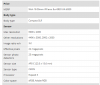
So the D5200 falls short on the 35mm/36MP sensor.
No mods available for the D5200?

upload_2022-11-1_17-52-55.png


You see, the sensors in full-frame cameras are (very rough guide) about 2 and a half times bigger than their APS-C cousins. So if the full-frame camera sensor also has two and a half times more pixels in it, then the APS-C camera is really not giving you an advantage. Both cameras in this example would be capturing the top portion of the flower with about 6 megapixels, while the full-frame camera would record a lot of extra stuff around the sides as well. So you would be able to take a picture using the full-frame camera, crop off the outside bits of it and you end up with pretty much the same as what the APS-C camera got.
 
Last edited:
100% correct!
I have a Nikon D5200 with the standard lens that came with it. With this lens and using auto settings I cannot get anywhere close to this quality. Ideas?

You did not say what kind of lighting gear you have. You do not need a lot of expensive lighting gear, but you must have some lamps separate from the camera, with some diffusers or reflectors for softer effects (can be made from cheap stuff like a disposable translucent plastic table cloth and white card stock), flags (light blockers) - pieces of cardboard will do, and some clips/clothes pins to hold stuff in place. Doesn't matter if it looks absolutely ratty, it is not in the picture.

First consideration is the setup and lighting. If it doesn't look good to your eye, it won't look good to the camera. Experiment, and be deliberate about the perspective you want. Choose your main light direction, size/distance (hardness/softness) to bring out form and texture. Do not worry about exposure at this point. You will adjust it in the camera. Add a little fill light if the shadows are too dark.
Only then worry about the camera settings to capture the image that you set the lights for, with the desired depth of field.
Worry about exposure last. Do not use automatic settings except as a quick way to determine exposure. The subject isn't going anywhere, so use a tripod and manual camera settings with as small an aperture and slow a shutter as you need, while also using minimum ISO. Still life studio shots often may use shutter settings on the order of one second or longer.

Do any of these hints help?

 
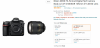
I think if I hired a professional to photo my Audio Equipment for sale would be far less expensive:

upload_2022-11-1_18-4-10.png
 
You did not say what kind of lighting gear you have. You do not need a lot of expensive lighting gear, but you must have some lamps separate from the camera, with some diffusers or reflectors for softer effects (can be made from cheap stuff like a disposable translucent plastic table cloth and white card stock), flags (light blockers) - pieces of cardboard will do, and some clips/clothes pins to hold stuff in place. Doesn't matter if it looks absolutely ratty, it is not in the picture.

First consideration is the setup and lighting. If it doesn't look good to your eye, it won't look good to the camera. Experiment, and be deliberate about the perspective you want. Choose your main light direction, size/distance (hardness/softness) to bring out form and texture. Do not worry about exposure at this point. You will adjust it in the camera. Add a little fill light if the shadows are too dark.
Only then worry about the camera settings to capture the image that you set the lights for, with the desired depth of field.
Worry about exposure last. Do not use automatic settings except as a quick way to determine exposure. The subject isn't going anywhere, so use a tripod and manual camera settings with as small an aperture and slow a shutter as you need, while also using minimum ISO. Still life studio shots often may use shutter settings on the order of one second or longer.

Do any of these hints help?
Absolutely.

I have been looking on Amazon: Not a clue if this is worth the effort
Travor Photo Studio Light Box 32x32Inch Professional Dimmable Photo Booth Shooting Tent Kit with 126 LED Lights, 4 Backdrops for Jewelry and Large Items Product Photography(13000LM, CRI95+)
 
In my opinion, any DSLR you happen to have is going to do the job (in manual mode!), the only caveat being that the camera/lens combo can zoom to fill the frame with the scene you want from the point of view (camera position) you want. Unless your goal is to make 20x30 inch prints, anything over 6 megapixels will probably be fine.
 
Absolutely.

I have been looking on Amazon: Not a clue if this is worth the effort
Travor Photo Studio Light Box 32x32Inch Professional Dimmable Photo Booth Shooting Tent Kit with 126 LED Lights, 4 Backdrops for Jewelry and Large Items Product Photography(13000LM, CRI95+)
The application of this is far too limited. It's only good for gear that will fit, and only good if you want heavily diffused light that comes from the particular direction of the provided light strips.
To photograph something like an all-black amplifier, you need harder, more directional light to bring out the shape. That's why separate lamps and diffusers are the way to start. That way you can change the direction and hardness/diffusion to match the subject.
 
Smart phone with decent lighting can get you there now.
I agree. The Auto HDR mode and clean equipment. (may still need to clean up small spots with PS or a similar program) will get you most of the way there. It also helps to have a clean background.
 
Last edited:
In my opinion, any DSLR you happen to have is going to do the job (in manual mode!), the only caveat being that the camera/lens combo can zoom to fill the frame with the scene you want from the point of view (camera position) you want. Unless your goal is to make 20x30 inch prints, anything over 6 megapixels will probably be fine.

Agree. I have made 24x36" canvas prints from my D5500/D7200 and they hold up just fine.

100% correct!
I have a Nikon D5200 with the standard lens that came with it. With this lens and using auto settings I cannot get anywhere close to this quality. Ideas?

I think your problem is Auto mode; but maybe if you post some examples we could give a better idea of what the issue is. I'd recommend F8 to F11; single point AF; most likely on a tripod.

I think if I hired a professional to photo my Audio Equipment for sale would be far less expensive:

View attachment 2703612

That is a fairly high-end portrait rig; that lens is expensive and not what I would chose for audio gear; its too long (focal length) and there is no need for a very fast lens since you will be stopping down anyway. Also I would not pay that much for new DSLR gear at this point but that's a different discussion.
 
Last edited:
Back
Top Bottom