

You are using an out of date browser. It may not display this or other websites correctly.
You should upgrade or use an alternative browser.
Pricey cables
- Thread starter Lesterbest
- Start date
- Status
- Not open for further replies.


just dave
vintage rules!
My name is Dave and....I....flip.You sir are a flipper.
Best refer to yourself as one in future threads.
Regards
Mister Pig

Sure. All my comments in post #80 relate to power cords. Something from thirty six years ago is horribly obsolete anyway.
If you'd like to hear the opinion about certain aftermarket power cords from recording professionals like Doug Sax, James Guthrie, Phil Taylor, Clayton Wood, etc. all one need is read their comments found here.
Anyone else hear listen to Pink Floyd or watch a recent movie by George Lucas?
Last edited:
DaveVoorhis
Addicted Member
As I pointed out early in this thread, his one informal test is not definitive. It is only one point of evidence in favour of the possibility that at least some high-end power cables do not affect sound. Many, many more such tests are needed in order to build a body of evidence one way or the other.... There may be fewer devices like computer based microwaves, dishwashers, refrigerators, cableboxes, etc. that spew noise into the AC found in a studio so there's less to address. Is that the same situation? I know that If had a $250k system, I would not be using a Benchmark DAC.
3. False equivalence - assuming that splitting the source signal to two DACs is exactly the same as running independently, Ever heard of a ground loop that is only evident when two devices are connected? That connecting them together doesn't share noise that may be filtered from a unit running in isolation?
However, if the effect of a $3,000 power cable is down to noise filtration, then maybe we can save about $2975 and install an EMI filter, and ground loops don't affect digital signals -- up to the point where the wiring is so bad that the digital system shuts down, unsubtly. That's one of the reasons digital systems are used, and a digital source into two DACs is identical to one in isolation.
Whilst it's reasonable to hypothesise that the A/B switching apparatus might mask the effect of the power cord, it also suggests the effect of the power cord is far more subtle than the "dramatically better 'sonic details and instrument discrimination'" claimed by its maker.
Of course, maybe that particular power cord was bogus -- perhaps unintentionally; I'm not accusing the maker of fraudulent claims -- but the article, flawed or not, certainly calls into question the validity of claims for high-end power cords, particularly as there is no known physics or electronics basis for them, outside of obvious noise filtering, sound connections, etc., that can otherwise be had for less than $100.
I find the tacit assumption -- here and elsewhere -- that high-end audio actually does what it says on the tin, and that all you have to do is listen to prove its worth, to be surprisingly gullible and deliberately ignorant of psychoacoustic effects. There are certainly legitimate manufacturers producing top quality gear at a reasonable price and that's excellent, but there are certainly shysters making ludicrous profits on equipment that does nothing, because such ripoffs appear in every profitable unregulated field -- and speaking cynically, probably most regulated ones too. I wonder why some audiophiles aren't more concerned by this.
Last edited:
The OP seems to think so.As I pointed out early in this thread, his one informal test is not definitive.
It isn't.However, if the effect of a $3,000 power cable is down to noise filtration...
Digital signals are still, however, highly affected by noise.and ground loops don't affect digital signals
Or, completely render the test irrelevant like the case of the interconnect test I referenced. Did you read that? Do you understand why it is utterly bogus?Whilst it's reasonable to hypothesise that the A/B switching apparatus might mask the effect of the power cord
Very true if you're using a Sansui receiver with Kabuki speakers.it also suggests the effect of the power cord is far more subtle than the "dramatically better 'sonic details and instrument discrimination'" claimed by its maker.
I have to smile whenever I hear such boastful claims! At least that you are aware of. Are you omniscient?particularly as there is no known physics or electronics basis for them, outside of obvious noise filtering, sound connections, etc., that can otherwise be had for less than $100.
Last edited:
Anytime I'v seen his post he thinks so.Are you omniscient?
Now, that, that's cleared up...My name is Dave and....I....flip.

Non-experiential theorists don't always know what they don't know - since actual exposure is absent.Anytime I'v seen his post he thinks so.
Last edited:

Splatter Pak
High-End Scrounger
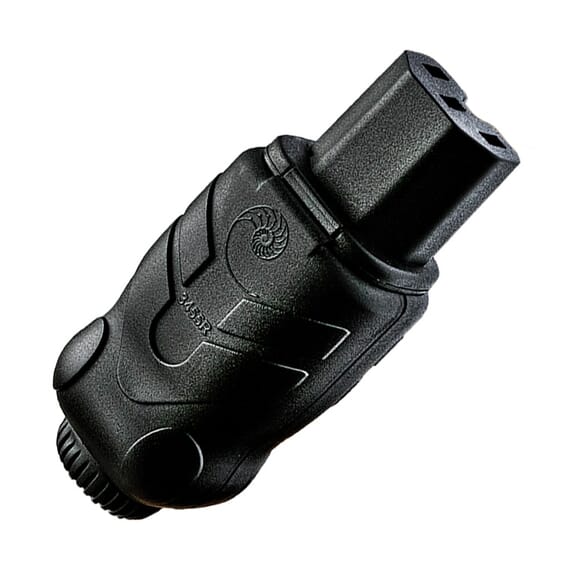
OK then, just cut a hole in the back panel, cut out the power cord, and solder the Romex to the proper place inside the unit.This approach would require a $60 IEC plug.


loopstick
Lunatic Member
OTOH non-experiential theorists don't waste a lot of time and money on fool's errands.Non-experiential theorists don't always know what they don't know - since actual exposure is absent.
Lesterbest
Super Member
Touche'OTOH non-experiential theorists don't waste a lot of time and money on fool's errands.

jeremyjustic
Analog
I guess I will throw in some of my experience.
When I had my vintage McIntosh system I did a lot of experimentation with interconnects but never power cords. With the interconnects, you could definitely hear a difference, now as many have pointed out that "difference" wasn't always positive and had nothing to do with cost. I started with free cheap cables, moved up to blue jean cables, then Kimber hero's then finally Kimber silver streaks. In that system I preferred the hero's to the much more expensive silver streaks. I posted a few threads about this a couple of years ago if anyone is interested enough to search.
I then made a major system shift and sold off most of the Mac gear and got a Nelson Pass designed Threshold s/300 amp and Threshold fet10 preamp and phonostage. With this set up I could easily change out power cords so I started looking into different cords. I wound up getting a couple of different Kimber cords, and tried them out on each component. Honestly , I didn't notice a difference between the different power cords at all. Now I have never tried out a $3000 power cord so I cant comment there but if I were to do it over again, I would get a nice sturdy, well made cord and call it a day. There are plenty of other facets of the system I could improve on and get more bang for the buck, room treatments for example.
Anyway, one thing I have learned over the years in this hobby is experimentation is part of the fun and it is important to remember to have fun!
DaveVoorhis
Addicted Member
Much of your contribution this thread seems to be thread-crapping, unlike those of us trying to discuss this contentious topic -- that has no need to be contentious, and is only contentious because of comments like yours -- in a mature, reasonable, and considered fashion.Anytime I'v seen his post he thinks so.
Is that what being a "Sponsor" earns you: the right to post thoughtless, content-free, negative, and pointlessly insulting quips?
Last edited:
DaveVoorhis
Addicted Member
Reference to Pink Floyd and George Lucas is appeal to authority, and celebrity endorsements are advertising, not evidence.If you'd like to hear the opinion about certain aftermarket power cords from recording professionals like Doug Sax, James Guthrie, Phil Taylor, Clayton Wood, etc. all one need is read their comments found here.
Anyone else hear listen to Pink Floyd or watch a recent movie by George Lucas?
Last edited:
DaveVoorhis
Addicted Member
Is that relevant?The OP seems to think so.DaveVoorhis said:As I pointed out early in this thread, his one informal test is not definitive.
I suggested that as a hypothesis, a possible explanation for why a $3,000 power lead might result in better sound than the $5 cord normally supplied with new equipment. Do you have evidence of an alternative explanation?It isn't.DaveVoorhis said:However, if the effect of a $3,000 power cable is down to noise filtration...
I don't think the original scenario suggested noise being a problem. Indeed, the possible absence of power line noise has been suggested in this thread as a possible explanation for the absence of perceived effect of the power cable.Digital signals are still, however, highly affected by noise.DaveVoorhis said:and ground loops don't affect digital signals
Yes, that's a reasonable hypothesis. As I suggested, further testing is needed. An obvious area for further research is determining whether or not -- or to what degree -- A/B switching apparatus can mask the effect being investigated using the A/B switching apparatus.Or, completely render the test irrelevant like the case of the interconnect test I referenced.DaveVoorhis said:Whilst it's reasonable to hypothesise that the A/B switching apparatus might mask the effect of the power cord
I'm not sure how that's relevant here. Waldrep didn't state specifically what he was using in his studio test outside of the DAC, though he indicates some gear was made by "Euphonix, Benchmark, Meridian, Bryston, B&W, Oppo". Is there evidence he was using a Sansui receiver with Kabuki speakers?Very true if you're using a Sansui receiver with Kabuki speakers.DaveVoorhis said:it also suggests the effect of the power cord is far more subtle than the "dramatically better 'sonic details and instrument discrimination'" claimed by its maker.
I don't know why you think I'm boasting or (presumably) claiming omniscience. It's not difficult to superficially survey the literature and find no scientific rationale for high-end power cords having an audible effect -- outside of what can easily be inferred to be the result of shielding, filtering, and good connections, and which are not costly to achieve. If you have independent evidence to the contrary, then I shall stand corrected.I have to smile whenever I hear such boastful claims! At least that you are aware of. Are you omniscient?DaveVoorhis said:particularly as there is no known physics or electronics basis for them, outside of obvious noise filtering, sound connections, etc., that can otherwise be had for less than $100.
Last edited:
loopstick
Lunatic Member
The enthusiasm for experimentation comes from both curiosity and anticipation of improvement. The subject is power cables - which for many individuals inspires very low levels of curiosity and anticipation. The enthusiasm in these cases is therefore very low - like the enthusiasm most people have for twiddling their thumbs.Anyway, one thing I have learned over the years in this hobby is experimentation is part of the fun and it is important to remember to have fun!
Much of your contribution this thread seems to be thread-crapping, unlike those of us trying to discuss this contentious topic -- that has no need to be contentious, and is only contentious because of comments like yours -- in a mature, reasonable, and considered fashion.
Is that what being a "Sponsor" earns you: the right to post thoughtless, content-free, negative, and pointlessly insulting quips?
Sorry but that's incorrect, I'v been pointing out in this troll thread, there is no debate.
If you don't want to buy aftermarket ACP cords don't, it's all subjective.
The systems people build is all subjective.
What people hear out of their system is subjective.
I'v also pointed out that the author has an agenda and is purely only expressing his "Opinion" witch is subjective.
There is NOTHING conclusive to test or debate, as the author did not state what he tested and opted to generalize on a dollar figure only. Facts are missing, if in fact the so called test was even done. You and the OP continue to push an agenda based on nothing and adamant in debating a feckless test.
I'v never said or pushed any merits one way or another, it's subjective to the ones own personal choice.
Last edited:
And miss out on the benefits when their assumptions are wrong.OTOH non-experiential theorists don't waste a lot of time and money on fool's errands.

As for me, I don't waste any money on things I haven't tried before (Ok, I'm willing to throw away a few bucks since I am both inquisitive and value the highest level of sound quality). If something works and provides sufficient value, only then do I buy it.
Last edited:
I only responded to your observation.Is that relevant?
Filtering is one thing, but there are many ways to achieve that and not all are equivalent. Current transfer also plays a role. Do you think either of those observations is debatable?Do you have evidence of an alternative explanation?
That's where real science begins - verifying the controls first. Which is rarely if ever done.An obvious area for further research is determining whether or not -- or to what degree -- A/B switching apparatus can mask the effect being investigated using the A/B switching apparatus.
Ok, I'll state the obvious: any number of ways to improve the sound quality of a system are directly proportional to its ability to resolve differences. While I don't have any $3k power cords, I wouldn't use the $1k cords used in the main system in the garage either.I'm not sure how that's relevant here.
I'll help you out. This comment reeks of someone with a superiority complex:I don't know why you think I'm boasting or (presumably) claiming omniscience.
"...particularly as there is no known physics or electronics basis for them,"
I'll repeat - that you know of. Are you confident that you know absolutely everything about the effects of power delivery cabling to audio gear? Presumably without ever having tried the products under consideration? I'll ask the following question again since it pertains to your overwhelming knowledge in the field of cables. Did you read the link I provided about the interconnect test. Surely you should be able to quickly identify why that test is bogus. Tell us why. And if you want to "cheat" and measure the effects of the test arrangement as I've done, that is perfectly fine.
Key word is "superficially". Most folks couldn't care less about high resolution audio anyway.It's not difficult to superficially survey the literature and find no scientific rationale for high-end power cords having an audible effect
You are welcome to stand wherever you please. If you do not want to explore the benefits others have experienced, that's fine by me.If you have independent evidence to the contrary, then I shall stand corrected.
Ask the professionals behind those studios why they find value in using them. I think you'll find it's the same answer as audiophiles who have tried a range of them out in their own systems. Quite frankly, I was quite surprised when I first heard the differences in a very nice system using Kimber Palladians about fifteen years ago. My reviewer friend let me borrow those three cords for a weekend to use in my system. Sure enough, they improved low level resolution and clarity in mine as well.Reference to Pink Floyd and George Lucas is appeal to authority, and celebrity endorsements are advertising, not evidence.
Today I use a mix of both aftermarket and DIY cords in the main system along with multiple dedicated lines, high grade outlets and power conditioning.
Last edited:
- Status
- Not open for further replies.
Similar threads

- Replies
- 239
- Views
- 12K


- Replies
- 5
- Views
- 354
