

You are using an out of date browser. It may not display this or other websites correctly.
You should upgrade or use an alternative browser.
You should upgrade or use an alternative browser.

Tim D
Super Member
Initially, I was thinking along the same lines. It would be relatively easy to just add a low pass filter with an inductor and cap having the same values as the high pass filter (1.0mH, 15uF). In fact that's one of the options an online calculator gave me, its called Chebychev Q=1. The Radio Shack catalogs refer to the 2 tweeters as midrange/tweeters. This could be tested on 1 speaker with no investment. Take the cap and inductor from the high pass filter on one speaker and use it for the low pass filter on the other speaker.
I'm trying to find the frequency range of the 2510Aa online short of pulling the leads and running some tones on it. I found a thread that referenced the same Nova 7b woofers and tweeters being in the Optimus 1B. http://audiokarma.org/forums/index.php?threads/rs-nova-15-and-optimus-1b-new-scores.447950/page-3
The Optimus 1B is in the same year catalogs as the Nova 7B and were a little cheaper with a fabric grill and a slightly smaller cabinet. I thought I was on to something when I found this thread, but the gist of the conversation was in finding replacement tweeters for the 2 that were fried on the author's Optimus 1B's.
Not finding any mods for the Nova 7B I did a google 'Optimus 1B Crossover Modifications'
http://the-radioshack-forum.1496864...-Crossover-And-Driver-Upgrades-td6450816.html
Not much here, other than someone replaced the 15uF caps and got an improvement.
The thread says that the woofer range is 25-300 Hz, but that must be a typo, he probably meant 25-3,000Hz. Further down on page 3 of this thread it mentions the crossover to be around 1300Hz, and also mentions it being a Chebychev Q=1 crossover. So if these values are correct the overlap between the woofer and tweeters would be 1300 to 3000. When running test tones I believe I'm hearing a larger overlap on both ends.
On this thread: http://audiokarma.org/forums/index.php?threads/realistic-nova-7b-crossover.515971/ I read that these tweeters 0705Ae will go down to 350Hz. Would my hearing a broader overlap be an indication that my caps are bad and need replacement? I'm 100% sure that all my tweeters are working because I hear them clearly at 15,000Hz. (the more I read about these tweeters the more lucky I feel at finding a set with all the drivers working)
I have the same concern - if we put a low pass filter in at the same values, we cut the woofer back to around 1300Hz, and I suspect that the two mid/tweeters aren't going to make up for that loss. Going higher, up towards 2000Hz, on both high and low pass would give some protection to those vulnerable tweeters. Videolady mentioned that the 12" Nova 8b woofers showed very good performance up to 1600Hz, so what does that say for the 10" woofers in the Nova 7B? So maybe shoot for somewhere between 1600-2000Hz.
Based on the online calculators there's more than one way to get there: Butterworth, Bessel, Linkwitz-Riley, Chebychev Q=1. Which way to go? Having no knowledge of how the cabinet and driver parameters, driver spacing (those 2 tweeters), 'lobbing' effect (lobbing? what's that), etc play into the design it would just be trial and error for me, and that could get expensive and still not hit an optimum.
Great post!!!!
We're thinking along the same lines. I too am concerned about the overlap and the woofer's breakup frequency.
If you think about it, these speakers could be working with a big handicap with the woofer running through its' breakup frequency; and the tweeters and woofer must have a nasty interference pattern. If they sound decent with the stock x-over, imagine what they would sound like if we could change the design to something more ideal?
I keep coming back to the dual tweeters, but why do that if you are going to create interference patterns due to the dual point sources? Why overlap the tweeter's frequency range with the woofer's frequency range? That must make that interference pattern worse. I'm also wondering what the impedance is in that overlap range. It must effectively parallel the tweeters with the woofer in that range. I wouldn't be surprised if the impedance drops significantly in the overlap region of the frequency range. Maybe as low as 3-4 ohms in that frequency range? All of that must impact how the speaker performs. I might have to buy some speaker measurement software and microphones. Would love to test and record all of this to see how true it is.
A couple of other comments:
It seems that the Linkwitz-Riley 2nd order filter is popular, but I can't quantify why. Perhaps some more research is in order.
What is "lobbing"? It is the sound energy mapped in 3D around a speaker. The lobes are patterns caused by the environment around the speaker such as positioning of the drivers, number of drivers and number of speakers. This comes back to my comments about interference patterns between drivers outputting the same frequency. Those patterns can represent as "lobes". Here is an example picture of a typical "lobe". The interference pattern is alternate points where the sound cancels and also where it combines/adds. The result is not desirable because it makes the speaker more dependent on positioning and it has a negative effect on the sound quality. I.e. You want to minimize interference patterns. They are impossible to eliminate, but you can easily avoid making the problem worse.
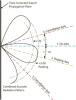
Tim D
Super Member
I own a very nice set of Nova 7b's then came across the 6b's. Like both but the 6b's ummm. May edge them out by a few hairs.
I'm not familiar with the 6B, but looking online it seems that it is an 8 inch 2-way with only a single tweeter. A simpler speaker than the 7B with dual tweeters. The midrange might be better, but I bet it doesn't have the low end that the 7B (a 10 inch 2-way) would have.

kydog
Super Member
I'm not familiar with the 6B, but looking online it seems that it is an 8 inch 2-way with only a single tweeter. A simpler speaker than the 7B with dual tweeters. The midrange might be better, but I bet it doesn't have the low end that the 7B (a 10 inch 2-way) would have.[/QUOTE
I'm not familiar with the 6B, but looking online it seems that it is an 8 inch 2-way with only a single tweeter. A simpler speaker than the 7B with dual tweeters. The midrange might be better, but I bet it doesn't have the low end that the 7B (a 10 inch 2-way) would have.
I had both paired with my Realistic STA 2200 receiver and that combo produced very nice low end to each model. The mid and tweets clarity on the 6b's stood out a few hairs above the 7b's. yes to my surprise the low end bass was not far behind compared to the larger 7b's with this particular receiver at low to moderate listening levels, The STA 2200 treat my Mach 2's 7b's & 6b's very well! They sound great all the way up the chain. With the surprise coming out of the smaller set.

JamVal
Addicted Member
In regards to the 2 midrange/tweeters on the Nova 7B. I recall skimming through the thread where videolady modded some Nova 8B's that have 2 midrange drivers and was looking to see if there is any insights that could apply to the Nova 7B. Maybe, Maybe not. The Nova 8B has two identical midrange drivers, 4 ohm each, wired in series giving an 8 ohm midrange. The Nova 7B has the 2 identical 16 ohm mid/tweeters but wired in parallel yielding 8 ohms.
Videolady made it a point in at least 2 of her replies to make sure the Mids and the tweeter had their polarity reversed or wired out of phase from the woofer. It even shows that in a wiring diagram she posted. Looking for an explanation of why; that thread is too long to read through again, but would the reason for putting the mids and tweeters out of phase have something to do with the lobbing? That comment about reversing the polarity stuck in my head as I always make sure that my speakers are connected to the amp in phase.
Videolady made it a point in at least 2 of her replies to make sure the Mids and the tweeter had their polarity reversed or wired out of phase from the woofer. It even shows that in a wiring diagram she posted. Looking for an explanation of why; that thread is too long to read through again, but would the reason for putting the mids and tweeters out of phase have something to do with the lobbing? That comment about reversing the polarity stuck in my head as I always make sure that my speakers are connected to the amp in phase.
Tim D
Super Member
In regards to the 2 midrange/tweeters on the Nova 7B. I recall skimming through the thread where videolady modded some Nova 8B's that have 2 midrange drivers and was looking to see if there is any insights that could apply to the Nova 7B. Maybe, Maybe not. The Nova 8B has two identical midrange drivers, 4 ohm each, wired in series giving an 8 ohm midrange. The Nova 7B has the 2 identical 16 ohm mid/tweeters but wired in parallel yielding 8 ohms.
Videolady made it a point in at least 2 of her replies to make sure the Mids and the tweeter had their polarity reversed or wired out of phase from the woofer. It even shows that in a wiring diagram she posted. Looking for an explanation of why; that thread is too long to read through again, but would the reason for putting the mids and tweeters out of phase have something to do with the lobbing? That comment about reversing the polarity stuck in my head as I always make sure that my speakers are connected to the amp in phase.
Hi JamVal,
The reason videolady had those tweeters wired reverse polarity is because 2nd order filters introduce a 180 degree phase shift. I.e. They are opposite phase of a speaker that has no filter. First-order filters only have 90 degrees phase shift. I'm not sure how detrimental the phase shift is in a real world speaker, but it makes sense to try to correct for it. I'll try to find time to check, but there is a possibility that these 7B's are wired that way too.
Last edited:
JamVal
Addicted Member
I just pulled a woofer from one of my 7B to verify the capacitor value. (15uF, 50v - yes) and to see if there are those plastic 'cups' over the backs of the tweeters (yes). I should have also looked at how the tweeters are connected, but it's buttoned back up now. I don't think they are wired out of phase based on the schematic you posted from 'stuart padeso'. I probably should have given that switch a cleaning while I was in there also. But I'll be back in.
I think I'm going to bale out on trying to modify the cross over. I've pretty much decided to just replace the caps, and seal things up. I know my limitations, and coming up with a new crossover design is beyond mine.
I do have a comment after looking under the hood. Nice build quality.
I think I'm going to bale out on trying to modify the cross over. I've pretty much decided to just replace the caps, and seal things up. I know my limitations, and coming up with a new crossover design is beyond mine.
I do have a comment after looking under the hood. Nice build quality.
Tim D
Super Member
I just pulled a woofer from one of my 7B to verify the capacitor value. (15uF, 50v - yes) and to see if there are those plastic 'cups' over the backs of the tweeters (yes). I should have also looked at how the tweeters are connected, but it's buttoned back up now. I don't think they are wired out of phase based on the schematic you posted from 'stuart padeso'. I probably should have given that switch a cleaning while I was in there also. But I'll be back in.
I think I'm going to bale out on trying to modify the cross over. I've pretty much decided to just replace the caps, and seal things up. I know my limitations, and coming up with a new crossover design is beyond mine.
I do have a comment after looking under the hood. Nice build quality.
Sorry to hear that you are stopping (and sorry for hijacking the thread too). You've been a great foil to bounce these ideas off. I think you've uncovered another aspect of the 7B's that would need to be explored - the polarity of the tweeters given that they are behind a 2nd order filter. Ideally, to move forward we'd need to know (measure) these drivers in the cabinet. That implies some equipment and software. I'm hoping that some pros would join in and advise at this point. I don't mind buying some software (within a budget of $100-200 if possible) and a microphone, but I don't have any experience in this area and don't know next steps.
I'd like to know the response and important frequencies for the 7B woofer and tweeters such as cutoff frequency, breakup frequency (woofer), efficiency, etc. I'd like to know the impedance range of the speakers individually and as a system too. I don't know the value of knowing the impedance range, but I have to believe that if it isn't reasonably flat/stable across the entire audible range then it must be a concern.
How about I start another thread to ask for experts to chime in on measurement software/equipment? If we get those measurements of the stock 7B's, then we will be able to quantify the limitations of the current design. Thoughts? I have 2 pair (total of 4 speakers). That would provide a lot of data to baseline what the stock speaker is doing and if there are any problems with the current design that can be improved. Then changes could also be measured as they are made.
Tim D
Super Member
Ah. Found a big thread on measuring speakers. I'll be doing some reading.......
http://audiokarma.org/forums/index.php?threads/speaker-measurement-thread.260393/
http://audiokarma.org/forums/index.php?threads/speaker-measurement-thread.260393/
JamVal
Addicted Member
Tim,
I don't think you hijacked the thread. It's been a good discussion. When I first posted this I had already skimmed through the videolady thread (Nova 8B) and got interested in what she would come up with for the 7B. Hope and pray that she's OK. I was hoping that someone else might have some ideas for the 7B.
But then again they sound quite good to me the way they are.
I don't think you hijacked the thread. It's been a good discussion. When I first posted this I had already skimmed through the videolady thread (Nova 8B) and got interested in what she would come up with for the 7B. Hope and pray that she's OK. I was hoping that someone else might have some ideas for the 7B.
But then again they sound quite good to me the way they are.

Here are some specs I collected on the 7B. Not sure where they came from.
Woofer = 2510Aa 8 Ohms 25Hz - 3KHz Nominal - 25W Music 50W Max
Tweeter = 0705Ae 16 Ohms 350Hz - 18Khz Nominal 5W Music 10W Max
Also have another doc that shows the crossover at 2000Hz and Sensitivity = 87dB.
The source was Popular Electronics June 1978.
As for mods I replaced the caps and changed the binding posts. Gave the switch a good cleaning and added a dowel from front to rear for bracing.
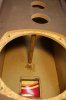
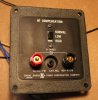
Woofer = 2510Aa 8 Ohms 25Hz - 3KHz Nominal - 25W Music 50W Max
Tweeter = 0705Ae 16 Ohms 350Hz - 18Khz Nominal 5W Music 10W Max
Also have another doc that shows the crossover at 2000Hz and Sensitivity = 87dB.
The source was Popular Electronics June 1978.
As for mods I replaced the caps and changed the binding posts. Gave the switch a good cleaning and added a dowel from front to rear for bracing.
Attachments
Tim D
Super Member
Here are some specs I collected on the 7B. Not sure where they came from.
Woofer = 2510Aa 8 Ohms 25Hz - 3KHz Nominal - 25W Music 50W Max
Tweeter = 0705Ae 16 Ohms 350Hz - 18Khz Nominal 5W Music 10W Max
Also have another doc that shows the crossover at 2000Hz and Sensitivity = 87dB.
The source was Popular Electronics June 1978.
As for mods I replaced the caps and changed the binding posts. Gave the switch a good cleaning and added a dowel from front to rear for bracing.
View attachment 806150 View attachment 806154
Great data. Knowing that helps and if we can measure the drivers we can confirm those frequency ranges. (Not believing the cross-over frequency of 2000 Hz from Popular Electronics though.) Evidence/data suggests that it is at or near 1325 Hz.
Last edited:
JamVal
Addicted Member
TPettenati, thanks for posting those values. I think everything is probably accurate except the crossover frequency, as Tim D pointed out.
I had suspected that the efficiency was below 90 as I have to turn up the volume on my 7B to get to the same level as my CS-99A which are about 93dB.
But 87dB is lower than I was hoping for. I think though it is possible to calculate the efficiency of the tweeters from what we know.
If I understand correctly, the attenuating resistor(s) in the highpass section of a second order crossover are to bring the efficiency of the tweeter to match the woofer. (I hope that is correct)
A little complication here as there are 3 settings - Low, Normal, High. On the low setting there is a 6 ohm and 2 ohm resistor in series = 8 ohm. On the high setting both resistors are bypassed. On the normal setting the 2 ohm resistor is in. So would or should we assume that the 2 ohm resistor is used to match the efficiency of the tweeter to that of the woofer? And then is there a formula to calculate what the efficiency of the tweeter is, assuming that the woofer is 87dB?
What, if any improvement, can you tell us of, after changing the caps and adding the bracing?
But, I have to tell you and Tim D, that the most amazing revelation here is that you both have essentially the same avatar!!
One in a West Coast Modern Style and the other in an East Coast Classical Style.
Proof that Geniuses think alike.
I had suspected that the efficiency was below 90 as I have to turn up the volume on my 7B to get to the same level as my CS-99A which are about 93dB.
But 87dB is lower than I was hoping for. I think though it is possible to calculate the efficiency of the tweeters from what we know.
If I understand correctly, the attenuating resistor(s) in the highpass section of a second order crossover are to bring the efficiency of the tweeter to match the woofer. (I hope that is correct)
A little complication here as there are 3 settings - Low, Normal, High. On the low setting there is a 6 ohm and 2 ohm resistor in series = 8 ohm. On the high setting both resistors are bypassed. On the normal setting the 2 ohm resistor is in. So would or should we assume that the 2 ohm resistor is used to match the efficiency of the tweeter to that of the woofer? And then is there a formula to calculate what the efficiency of the tweeter is, assuming that the woofer is 87dB?
What, if any improvement, can you tell us of, after changing the caps and adding the bracing?
But, I have to tell you and Tim D, that the most amazing revelation here is that you both have essentially the same avatar!!
One in a West Coast Modern Style and the other in an East Coast Classical Style.
Proof that Geniuses think alike.
Tim D
Super Member
TPettenati, thanks for posting those values. I think everything is probably accurate except the crossover frequency, as Tim D pointed out.
I had suspected that the efficiency was below 90 as I have to turn up the volume on my 7B to get to the same level as my CS-99A which are about 93dB.
But 87dB is lower than I was hoping for. I think though it is possible to calculate the efficiency of the tweeters from what we know.
If I understand correctly, the attenuating resistor(s) in the highpass section of a second order crossover are to bring the efficiency of the tweeter to match the woofer. (I hope that is correct)
A little complication here as there are 3 settings - Low, Normal, High. On the low setting there is a 6 ohm and 2 ohm resistor in series = 8 ohm. On the high setting both resistors are bypassed. On the normal setting the 2 ohm resistor is in. So would or should we assume that the 2 ohm resistor is used to match the efficiency of the tweeter to that of the woofer? And then is there a formula to calculate what the efficiency of the tweeter is, assuming that the woofer is 87dB?
What, if any improvement, can you tell us of, after changing the caps and adding the bracing?
But, I have to tell you and Tim D, that the most amazing revelation here is that you both have essentially the same avatar!!
One in a West Coast Modern Style and the other in an East Coast Classical Style.
Proof that Geniuses think alike.
The resistors in the circuit dissipate some of the energy as heat in the resister that would have gone to the tweeter. It has the additional impact that it will add to the impedance of the speaker above the cross-over frequency. I can't claim to know all the dynamics that has in the circuit such as interactions with the amp at the higher impedance. I.e. How does the amp behave if the speaker impedance is above or below the nominal 8 ohms? (Keeping in mind that the impedance is a function of the frequency when you are dealing with speakers or any AC circuit.) I'm sure that smarter people could comment.
"Proof that Geniuses think alike?" LOL. I'm no genius, but thanks. I'm just having fun and I have enough knowledge to be dangerous - luckily no animals will get hurt with this activity.
I'm starting to read up on measurement software. I've found a freeware package that looks interesting but daunting. I'll keep you posted.
Can't really say if either made an audible improvement. The caps had drifted a bit high but still within 20% of spec. So I usually replace them while I'm in there. The brace definitely tightened up the cabinet, as a knock on the front baffle sounds less hollow. Unfortunately I didn't do a side-by-side before and after listening test.
I listened to them for awhile and liked the sound but then they were set aside for other projects.
I listened to them for awhile and liked the sound but then they were set aside for other projects.
What, if any improvement, can you tell us of, after changing the caps and adding the bracing?
JamVal
Addicted Member
Maybe I'm getting hung up on the resistors in the 7B schematic (Post #16 on page 1 of this thread). Again, from what little I understand, resistors can attenuate the level of the tweeter in 2 cases:
1. L pad: One resistor in series, one resistor in parallel. Doing it this way will maintain the impedance of the tweeter and not effect the cross over frequency. Yes/no?
2. Resistor in series with the tweeter. Doing it this way will attenuate the tweeter, but it will change the impedance and therefore also changes the cross over frequency.
I'm not good at reading schematics, so can you tell me, looking at the schematic on post #16 of this thread - do those resistors make up an L-pad, or are they just variations of resistance in series with the tweeter based on the position (high-normal-low) of the switch. The way I'm reading it, they are simply in series.
High position has both resistors bypassed resulting in 8 ohm at the tweeter and the calculation of the crossover frequency becomes 1325Hz.
Normal position the 6 ohm resistor is bypassed(?) so just the 2 ohm is in series, changing the impedance of the tweeter to 10 ohm and the resulting cross over becomes ??? Hz
Low position both 2 and 6 ohm resistors are in series, changing the impedance of the tweeter to 16 ohm and the resulting cross over to ???? Hz.
Or am I reading the schematic wrong. If I was going to re-do this, I think I would by pass that whole attenuation portion, and put an L-pad if necessary. So don't we need to know the efficiency of the tweeters relative to the woofer to do that?
1. L pad: One resistor in series, one resistor in parallel. Doing it this way will maintain the impedance of the tweeter and not effect the cross over frequency. Yes/no?
2. Resistor in series with the tweeter. Doing it this way will attenuate the tweeter, but it will change the impedance and therefore also changes the cross over frequency.
I'm not good at reading schematics, so can you tell me, looking at the schematic on post #16 of this thread - do those resistors make up an L-pad, or are they just variations of resistance in series with the tweeter based on the position (high-normal-low) of the switch. The way I'm reading it, they are simply in series.
High position has both resistors bypassed resulting in 8 ohm at the tweeter and the calculation of the crossover frequency becomes 1325Hz.
Normal position the 6 ohm resistor is bypassed(?) so just the 2 ohm is in series, changing the impedance of the tweeter to 10 ohm and the resulting cross over becomes ??? Hz
Low position both 2 and 6 ohm resistors are in series, changing the impedance of the tweeter to 16 ohm and the resulting cross over to ???? Hz.
Or am I reading the schematic wrong. If I was going to re-do this, I think I would by pass that whole attenuation portion, and put an L-pad if necessary. So don't we need to know the efficiency of the tweeters relative to the woofer to do that?
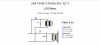
I think you are reading the schematic correctly, in that the resistors are always in series and are used for attenuation. To me almost the same thing as having a pot there, but only offering three fixed positions.
Here is a drawing I found a couple years back. The switch positions are documented incorrectly, but otherwise the positioning of components may make it easier to understand.
It should be:
Normal = position 1 (2 Ohms)
Low = position 0 (8 Ohms)
Hi = position 2 (0 Ohms)
Here is a drawing I found a couple years back. The switch positions are documented incorrectly, but otherwise the positioning of components may make it easier to understand.
It should be:
Normal = position 1 (2 Ohms)
Low = position 0 (8 Ohms)
Hi = position 2 (0 Ohms)
Attachments
Tim D
Super Member
So I've been reading up on software programs to analyze these speakers. Seems that the cost of the programs is not a problem for the hobbyist - it's the microphones that are tricky. Having a calibrated one can be pricey and determining exactly what you need in a microphone seems to be confusing (pre-amps, types, etc.) Still looking and reading. I'll keep you posted. I really want to do a new cross-over for this model, but I believe we have to measure the existing drivers before we get started to understand what we're working with.
Some programs that seem to be affordable possibilities are:
- ARTA
- TrueRTA
- HolmImpulse
- DATS
<more?>
Some programs that seem to be affordable possibilities are:
- ARTA
- TrueRTA
- HolmImpulse
- DATS
<more?>
JamVal
Addicted Member
I was trying to find just some basic information on the woofer and tweeters, but there's not much available other than what was posted in #31 above:
"Woofer = 2510Aa 8 Ohms 25Hz - 3KHz Nominal - 25W Music 50W Max
Tweeter = 0705Ae 16 Ohms 350Hz - 18Khz Nominal 5W Music 10W Max
Also have another doc that shows the crossover at 2000Hz and Sensitivity = 87dB.
The source was Popular Electronics June 1978." by TPettenati
I think the member (videolady201) that posted the mods for the Nova 8b mentioned working for a high end audio company in the Chatanooga TN area, maybe this one:
http://www.acousta-reed.com/
Imagine all the equipment and software available there!
Yesterday, I put some tung oil on the Nova 7B cabinet top where I worked on removing a water stain. Looks better, but sounds the same
"Woofer = 2510Aa 8 Ohms 25Hz - 3KHz Nominal - 25W Music 50W Max
Tweeter = 0705Ae 16 Ohms 350Hz - 18Khz Nominal 5W Music 10W Max
Also have another doc that shows the crossover at 2000Hz and Sensitivity = 87dB.
The source was Popular Electronics June 1978." by TPettenati
I think the member (videolady201) that posted the mods for the Nova 8b mentioned working for a high end audio company in the Chatanooga TN area, maybe this one:
http://www.acousta-reed.com/
Imagine all the equipment and software available there!
Yesterday, I put some tung oil on the Nova 7B cabinet top where I worked on removing a water stain. Looks better, but sounds the same