• The move to the new server is done. There are some software and database maintenance updates in process. This has us passing the hat around to help out. We appreciate any donations. Seriously, even a dollar helps. The payment page may be found here - https://www.audiokarma.org/support.html

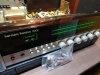
Recapping and restoring a Harman Kardon 330C

Can you tell us why the a844 and c1344 get replaced with the same transistor, the 1845? The first two are different types, pnp/npn and you have a pair of npns?

I'm baffled on this one. A KSC1845 NPN is never a good replacement for a PNP transistor, but I can't find which of the lists has it wrong. Point out the post number where I goofed and I'll fix it pronto.
 
I'm baffled on this one. A KSC1845 NPN is never a good replacement for a PNP transistor, but I can't find which of the lists has it wrong. Point out the post number where I goofed and I'll fix it pronto.
I misread the original tranny. In the post where you IDed the 1344 the next line was a 458 and yes that is correct. I read it without my glasses and guessed that since you were on the EQ board with the 1344 you had put down its compliment the 844 replacement. Oops. carry on.

Are we skipping the 844 because of the difficulty of finding a sub?
 
Power supply Q601 1 2SA844 E 512-KSA1220AYS

I misread the original tranny. In the post where you IDed the 1344 the next line was a 458 and yes that is correct. I read it without my glasses and guessed that since you were on the EQ board with the 1344 you had put down its compliment the 844 replacement. Oops. carry on.

Are we skipping the 844 because of the difficulty of finding a sub?

It's been there all along. In fact I ordered the suggested replacement for myself to have on hand.

Mark K.
 
Ah but that one is listed in PS not EQ. But at least I'm all straightened out. Thanks for that. I have some of those, too.

Interesting that it took two folks to get me pointed in the right direction on this 330c. Hope it works out.
 
Are we skipping the 844 because of the difficulty of finding a sub?

I think that's a great question.

Using Mouser and the datasheet for the 2SA844, I started looking for a suitable replacement... then realized we've already decided the replacement for the 2SC1344 was the KSC1845. So, why not look for the designed compliment to the KSC1845.

So, a Google search leads me to the KSA992 PDF because it says "compliment to the KSC1845".

http://www.mouser.com/ds/2/149/KSA992-88789.pdf

Double-checking the specs of the 2SA844 against the KSA992...Vceo, Vcbo, Vebo, and Pd are all better, so good there. Ic of the KSA992 is half (50mA) of the 2SA844 (100mA) and the fT is half, so you'd have to check how much current will flow through before saying "yes, KSA992 is OK here" and we'd need to know the application is 100 MHz or less, but we're talking audio signal here so that part is OK.

So, KSA992 is OK, maybe, but is there a better low-noise audio frequency small signal PNP that definitely fits here?

The KSA708 is a compliment to a general purpose device, the KSC1008, do that doesn't seem ideal

That leaves the KSA1013, the KSA931, and the KSA916. The gain on these is much lower than the KSC1845, so if we were looking for complimentary pairs, I'd say "revisit the KSC1845 decision" but that would loose you the low-noise design. Or I'd say "revisit your current requirements and, if possible, choose the KSA992 if you don't need 100 mA."

In our case, the matching compliments (for the EQ board) isn't critical, so I'd go with a KSC1845 to replace the 2SC1344 and with a KSA992 to replace the 2SA844.

 
I misread the original tranny. In the post where you IDed the 1344 the next line was a 458 and yes that is correct. I read it without my glasses and guessed that since you were on the EQ board with the 1344 you had put down its compliment the 844 replacement. Oops. carry on.

Are we skipping the 844 because of the difficulty of finding a sub?

KSA1015 is the closest substitute, I think.
 
KSA1015 is the closest substitute, I think.

The KSA1015 is spec'ed at -50V and the 2SA844 (at least the datasheet I found) spec'ed it at -55V. In many applications you may only need -50V and the KSA1015 would be fine.

I haven't looked closely at the achematic to guess at the application needs, so I searched on Mouser for -55V and higher only.
 
Hi Doug,

Can you tell me how well your restorations work? Have you been able to compare them with unrestored units that are to factory specifications?

I have two units, one of them has very, very low mileage and I cannot distinguish them in a blind test, except by the faulty phono stage of the second one which seems that has been used more frequently.

The reason I am asking the above questions is, because I have spent more than a hundred hours, believe it or not, looking at spreadsheets in order to pick the right components. The devices specified in the technical manual have hfe of 500+ while the KSC1845FTA you use have lower hfe. Based on reports from others and my experience with the components I bought, the current stock at Mouser has hfe around 320-370 max.
 
Hi Doug,

Can you tell me how well your restorations work? Have you been able to compare them with unrestored units that are to factory specifications?

I have two units, one of them has very, very low mileage and I cannot distinguish them in a blind test, except by the faulty phono stage of the second one which seems that has been used more frequently.

The reason I am asking the above questions is, because I have spent more than a hundred hours, believe it or not, looking at spreadsheets in order to pick the right components. The devices specified in the technical manual have hfe of 500+ while the KSC1845FTA you use have lower hfe. Based on reports from others and my experience with the components I bought, the current stock at Mouser has hfe around 320-370 max.

Understanding this is purely subjective, my experience has been:

  1. Recapping makes a big difference
  2. Using low leakage Nichicon KL electrolytic caps and WIMA or Panasonic metalized polyester or polypropylene film caps where possible make a medium-sized difference
  3. Swapping the OEM small signal transistors for modern low noise ones (e.g. KSC1845, BC5xxx, etc.) makes a very noticeable lowering of the background noise. The hfe difference between OEM small signal and modem devices doesn't seem to matter. My final-restoration 330A and 330B units are putting out slightly more final watts before clipping at lower THD.
  4. Swapping the mediocre-tolerance carbon composition resistors for low noise CCF or very low noise CMF or RN resistors really drop the background noise significantly.
And I'm old and have questionable ears.
 
Understanding this is purely subjective, my experience has been:

  1. Recapping makes a big difference
  2. Using low leakage Nichicon KL electrolytic caps and WIMA or Panasonic metalized polyester or polypropylene film caps where possible make a medium-sized difference
  3. Swapping the OEM small signal transistors for modern low noise ones (e.g. KSC1845, BC5xxx, etc.) makes a very noticeable lowering of the background noise. The hfe difference between OEM small signal and modem devices doesn't seem to matter. My final-restoration 330A and 330B units are putting out slightly more final watts before clipping at lower THD.
  4. Swapping the mediocre-tolerance carbon composition resistors for low noise CCF or very low noise CMF or RN resistors really drop the background noise significantly.
And I'm old and have questionable ears.
Thank you for your reply, Doug.

According to your questionable ears...Which device improved the sound reproduction better, the KSC1845 or the BC5XX?...:)
 
KSA1015 is the closest substitute, I think.

I believe that the KSA1015 is the compliment to the KSC1815, which IIRC is a lower voltage, higher current capability relative to the KSC1845. Is it okay to mix the "compliments" that ON/Fairchild recommends for these? Asking out of curiosity more than anything.
 
The datasheet on the KSC1815 from OnSemi definitely lists it as the NPN compliment to the PNP KSA1015.

The 2015 datasheet (still Fairchild) for KSA1015 lists the as the PNP compliment to their KSC1815. And this particular datasheet says it has a NF noise factor of 0.5 dB typical and 6.0 dB max at 100 Hz. So, it's definitely low noise.

I don't know enough about electronics to confidently answer your question. They are similar-specs NPN vs PNP, so they would certainly work in spots where you need a PNP and a NPN. I think you'd have to plot the operating curves to tell if they were (very) complimentary or not.

You've got a great question. I hope some smarter-than-me Ak'ers will chime in here and educate us.
 
@avionic might have some insight. :)

I ask because during a restore of a turntable I was looking up transistor subs, and the recommended replacement for the PNP in my circuit was the 992 but the most commonly recommended NPN for the transistor in my circuit was the 1815. So I didn't know if it would be better to go with the recommended sub for the PNP or switch to the compliment to the 1815 to keep things consistent.

Cheers,
Nathan
 
I believe that the KSA1015 is the compliment to the KSC1815, which IIRC is a lower voltage, higher current capability relative to the KSC1845. Is it okay to mix the "compliments" that ON/Fairchild recommends for these? Asking out of curiosity more than anything.
True if you are looking for an exact substitute, but the value of the rail voltages of this receiver is 28.5V, which means that the KSA1015 gives you a healthy 42% margin when it comes to this parameter. Unfortunately, when I suggested its use, I did not look at the schematic, but went only by the description in this thread. There are other parameters to be considered and I no longer think that this transistor is a good substitute. If you are looking for complimentary pairs, BC550C/560C would be your first choice. There are better NOS parts, but they are much more expensive. I do not know what your budget is, but you need to buy extra in order to match the hfe values for the differential pairs in the power amplifier.

In essence: Dont try to find an exact match for the device you are replacing. Instead, try to find a device that best works for your application.

Hope this helps.

Soundork
 
Last edited:
Hello! Great thread. I just picked up this beautiful 330c last week. It had intermittent sound/fuzz issues. Cleaned up 95% of my static background to a point it's no longer even noticeable with some contact cleaner, deoxit and faderlube. I recommend everyone do this first, then set *idle current, and after that, go about replacing all electrolytic caps and anything else that may be needed before going on a parts ordering binge. You may be surprised how much clearer the sound will become just by cleaning all the switches in the buttons and dials. You can potentially save time and money by doing this first on any refurb. Of course, there will be times when components other than capacitors may have become leaky or failed altogether, but usually this saves time and gets the unit closer to sounding its best in short order. I'm almost done with the recap, just need to finish the phono board. I used a combo of Chemi-cons for the power section and Silmic II's and Panasonic FR (upgraded Panasonic FMs) for everything else and some films for a couple, small value polarized electrolytics that didn't need to be polarized electrolytics to begin with. Of course, you can also upgrade the ceramics which has already been mentioned and should be pretty straightforward. This is probably the one additional thing I may consider. But, can anyone offer any targeted advice as to which ceramics to replace and on which boards? There are so many and there is no point in replacing all of them when so many are only used for grounding and not directly tied into the audio path.

*idle current adjust: Set function to "aux", volume all the way down, tone controls set at middle. Using DC voltmeter, measure across leads of R428, then set current to 10mV by turning VR402 pot, on other channel, measure across leads of R427 and obtain 10mV by turning VR401 pot.

h_k 300cb.jpg
 
Last edited:
can anyone offer any targeted advice as to which ceramics to replace and on which boards?

It sounds like you've already got your own reasons and your plan for what to replace and where. Once you've decided which ceramic caps you want or need to replace, MLCC (multi layer ceramic caps) with a C0G NP0 dielectric are supposedly the best ceramics for audio.
 
Thanks! I just recapped the phono board. All electros beside the 2 main power caps have now been replaced. I will be replacing these as well, just didn't have any on-hand like everything else. For now I am happy where it's at. I recently started building up stock of the better MLCC and NPO caps as well, but going to leave the original ones in place for now. After a point everything can become sterile and boring with too much precision or resolution. I enjoy a little distortion now and again.

The biggest change for me after recap was the lower bottom end really became much more fleshed-out and controlled and everything just sounds even more natural and clean than before, which is hard to believe. More dynamism, power on demand and clean, warm sound.
 
Guys for the life of me why does everybody think deoixit will cure all....the reason why you have scratchy controls because there is DC around and the block caps are leaking! don't keep spraying this crap..it will eventually ruin the conductivity of the controls or switches with this nice green goop like substance ....DONT DO IT ...I am speaking from experience as a electronics tech
 
Guys for the life of me why does everybody think deoixit will cure all....the reason why you have scratchy controls because there is DC around and the block caps are leaking! don't keep spraying this crap..it will eventually ruin the conductivity of the controls or switches with this nice green goop like substance ....DONT DO IT ...I am speaking from experience as a electronics tech
Hello! Deoxit will not cure everything. In my instance and due to the age of the unit, metal-to-metal contacts become oxidized and cleaning the switches instantly improves all connections and cleaned up the signal in all aspects. It's important not too leave anything visibly wet I suppose, but I've never had any issue with that problem and just use an air duster at the very end to blow off any residual or moist switches.

There's been times when I could not get the switch working properly after just cleaning it with contact cleaner, but after using the deoxit after the contact cleaner I'm able to get more silent switches working this way.

Also since cleaning the switches is an absolute necessity, just using contact cleaner alone which is completely evaporative does not lubricate anything, dries out the "feel" of the dial on some of the old rotary switches. That said, contact cleaner alone works miracles most of the time, most everywhere it is used, and can be used as the first (and possibly last) way to clean switches depending on results.
 
Back
Top Bottom