
You are using an out of date browser. It may not display this or other websites correctly.
You should upgrade or use an alternative browser.
You should upgrade or use an alternative browser.
Rectilinear
- Thread starter ohiomike
- Start date
Yeah, I agree with you about the Lowboy comments, and your understanding of this model is the same as mine. Mostly, I posted the blurb to offer someone's opinion about the IIIa (which I've never seen) which is contrary to the opinion stated in post #14. I also agree that Njord's site is a terrific resource for trying to figure out the various models.I am not sure that blurb is trustworthy.

quiet
Addicted Member
Not sure where I found this blurb, but interesting nonetheless. Some of it is similar to info already included here, and some of it is different. Rectilinear info is generally pretty scarce and often conflicting, and it's hard to pin down the specific dates and all of the minor variants.
View attachment 1381459
I don't know who wrote that. I've run up on a lot of info for the 111's. You have to pick through it to put the pieces together.
According to Hirsch, negligible difference was found in sound quality between the original IIIs and the 1972 Lowboys.
http://sportsbil.com/stereo/rectilinear-db/lowboy-review-hirsch-2-1972.pdf
http://sportsbil.com/stereo/rectilinear-db/lowboy-review-hirsch-2-1972.pdf

Pimpsta763
Member
I have a few variations on the III model. The highboy with the smaller port and two pots on the back, later with the larger ports and two pots on the back, and the IIIa picture included. The IIIa does not sound bad but it's different than the quality of the previous models. The tweeters were peerless but the mid was a pioneer and woofer was a eminence. Thanks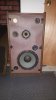

quiet
Addicted Member
When would you speculate that 111a was made?I have a few variations on the III model. The highboy with the smaller port and two pots on the back, later with the larger ports and two pots on the back, and the IIIa picture included. The IIIa does not sound bad but it's different than the quality of the previous models. The tweeters were peerless but the mid was a pioneer and woofer was a eminence. ThanksView attachment 1381775
Pimpsta763
Member
It would really be a guess. The person I bought them from had the later 3" port IIIs and the IIIa with a pioneer TX/SA-9100 so thinking 74-76 time frame. I am at work now and have some original documents, there might be a date on the paperwork that came with the sale. Thanks
Thx, that might be the first time I've seen the IIIa.....and still never seen a IIIb. Too bad the Phillips mid was ditched, and the cabinet (vinyl?) seems to be a victim of cost cutting.I have a few variations on the III model
Attached is parts list from 1976 which includes mention of IIIa and IIIb models. Also attached is pic of two early versions of the III.


I have a schematic, but its an adobe file and I cannot figure how to post it here.This is a pleasant discussion of the Rectilinear line-up of speakers - - all of the original models that I have experienced have been well-built and excellent loudspeakers with gorgeous veneer. These days they still fly under the radar and often represent good value for vintage speakers. Too bad they used the Roman numerals for model designations - - it's like trying to identify Super Bowls.
I've read about and viewed pics of the various iterations of the Rect-III, but not sure I've ever seen an official schematic. Can someone explain how the tweeter and super tweeter arrangement works? Do the two different small Peerless drivers cover separate frequency ranges or is there a substantial overlap? Do they each have their own associated cap value, or do they share the same single cap?
"same"?....perhaps, but how about the possibility of "better". Not sure why this would be your first thought without auditioning them. Don't you think the design team thought they were making an improvement with the subsequent gen 2 version?
I enjoyed reading the OP's original write-up, but it failed to mention one of my favorite things: the odd variety of grille cloth fabrics that Rectilinear employed. Also, any company history should always give a nod to some of the notable names involved in the early years, particularly Jon Dahlquist and Richard Shahinian.
Mine is on the leftThx, that might be the first time I've seen the IIIa.....and still never seen a IIIb. Too bad the Phillips mid was ditched, and the cabinet (vinyl?) seems to be a victim of cost cutting.
Attached is parts list from 1976 which includes mention of IIIa and IIIb models. Also attached is pic of two early versions of the III.
View attachment 1381942
View attachment 1381951
Pimpsta763
Member
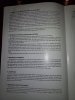
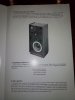
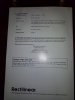
Sorry no dates but here is the manual for any one intrested.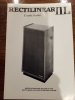

I had some empty Rectilinear 7's for a while, I had plans. I'd planned on getting the drivers along with the cabinets. But the seller was convinced he was going to get rich and wouldn't come down from his million dollar price tag. "No way man, these are rare!" They never sold, so he offered me the empty cabinets for free. I offered to buy the drivers for a reasonable price. But no, he wanted to make his fortune on ebay. The drivers were rare! I watched the auctions and he ended up getting less than I offered. Plus he ended up having to box everything up and ship them, instead of throwing them in the back of my truck. It's too bad, I would have really liked to have heard the 7's. I think I still have the grill badges.
Biggles
Biggles

Can someone explain how the tweeter and super tweeter arrangement works? Do the two different small Peerless drivers cover separate frequency ranges or is there a substantial overlap? Do they each have their own associated cap value, or do they share the same single cap?
All four of them go through one 2.2 uF cap, so they cover the same range. They are wired series/parallel so they present an 8 ohm-ish load. I forget if the larger ones are wired in series together or if they are mixed.
Thanks, I sort of figured this since I've never seen a Rect III crossover with a third capacitor, but if the four small tweets consist of two different drivers, isn't it logical that maybe the smallest ones reach a little higher Hz?All four of them go through one 2.2 uF cap, so they cover the same range.
Thx for posting....here is the manual...
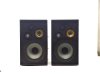
Great story, and yes they are somewhat rare, but almost nobody wants the last dregs of the Rectilinear company from when they were just running on fumes, despite the notion that some of them were probably very good speakers. In your hands, these oddballs would have emerged as a fully respectable loudspeaker product, but the "brand" was dead by the time the Rect-7 was born. I cannot recall what the R-7 looked like (I need to consult Njord's archive), but here are two pics of another lost warrior, the Rectilinear 5 and 5a.I had some empty Rectilinear 7's for a while....

Attachments

Singapore Times
IIIa Oct 1975 review
http://sportsbil.com/stereo/rectilinear-db/iiia-review-1975.pdf
IIIa Oct 1975 review
http://sportsbil.com/stereo/rectilinear-db/iiia-review-1975.pdf

Stevedel
Active Member
Thanks for the thread, Ohiomike.
Back in "the day" I had, and still have, a pair of Mini III's. I spent many hours listening to a friends III's powered by a MC2100. Always lusted for a pair.
Found a pair with rust/brown grill cloth on E-bay about 5-6 years ago (same as my Mini III grill cloth).
I have, and plan to own other speakers, but the III's will never leave my living room.
Back in "the day" I had, and still have, a pair of Mini III's. I spent many hours listening to a friends III's powered by a MC2100. Always lusted for a pair.
Found a pair with rust/brown grill cloth on E-bay about 5-6 years ago (same as my Mini III grill cloth).
I have, and plan to own other speakers, but the III's will never leave my living room.