• The move to the new server is done. There are some software and database maintenance updates in process. This has us passing the hat around to help out. We appreciate any donations. Seriously, even a dollar helps. The payment page may be found here - https://www.audiokarma.org/support.html

Rectilinear

How do the originals do in small rooms?
I had these in my workshop doing the typical repairs- grill cloth, sanding/finishing and new caps. That room is about 10x14. They image so well and present fine details of the music that they don't need to be loud. Obviously, their size is impressive, but these are not boomy - they disappear so to speak.
 
I had these in my workshop doing the typical repairs- grill cloth, sanding/finishing and new caps. That room is about 10x14. They image so well and present fine details of the music that they don't need to be loud. Obviously, their size is impressive, but these are not boomy - they disappear so to speak.
I agree. I have mine in a room about the same size, and they seem to fill it well without having to push the volume up.
 
I believe I'm going to attempt replacing the caps and such. Never done it, but these might be a good place to start. Problem will be finding the right parts n pieces I would think.....
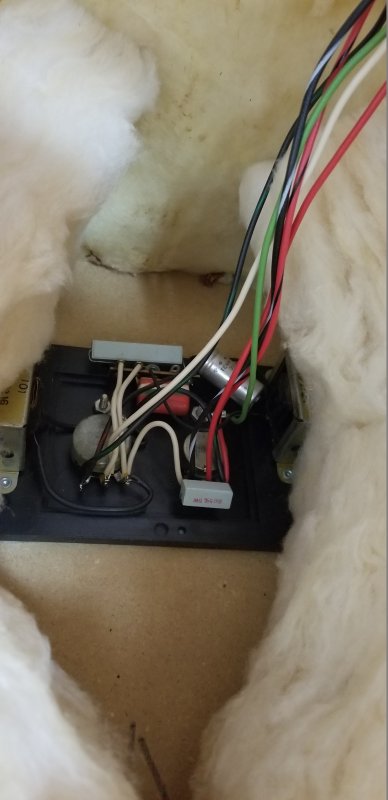
I believe there were three (or maybe four?) versions of the Rect-III, so if/when you can, please post some pics of your specimens: front (drivers), rear (terminals) and inside (crossover), with cap values noted. The cap values may have varied a bit between these versions, but you should have no trouble at all finding suitable replacements if you look through some of the usual sources: Parts Express, Madisound, Parts Connexion, etc. With the large 12-inch woofer removed, you can at least get your hands inside the cabinet to access the crossover. Good luck.
 
With the large 12-inch woofer removed, you can at least get your hands inside the cabinet to access the crossover.

No can do and not needed anyway. The woofers are mounted to the inside of the driver board by screws on the inside and T-nuts on the outside. That means you can only remove the woofer from the inside. However, Rectilinear made it even easier to get inside the cabs by making the entire driver board removable. It's just attached with screws. That's why you see pictures of renovations like this:

IMG_0975.jpg

This makes the Rects obviously really easy to work on. The crossover is mounted to the back of the enclosure with a couple screws. Pull it out and rebuilt on your worktable. Just label your wires, draw a diagram, and take a few cell phone pictures before you start pulling wires off the crossover, lest you have to try to figure it out later (not impossible certainly, but completely unnecessary).
 
Last edited:
Problem will be finding the right parts n pieces I would think.....

If you're just looking for replacement caps, you will have no problem finding what you need, they are common. If you're talking about replacement drivers, that's a different story.
 
I will be looking for help as I go along. Need to clear my work surface so I can lay this out on it.
 
Duh, of course..... I knew this and stoopid me just wasn't thinking. This makes re-cap all the more tempting to do as a first project.

I figured that you did, I just wanted to set the record straight for the OP and others. Indeed, the R III is the ideal recapping first project. The Xover is simple and accessible, just 2 caps to be replaced and they are fairly standard. Of course, there is a debate about what the value of one of the caps is for the early models, but you'd do fine no matter which camp you decide to follow.

The real IIIs (pre-vinyl decline era) are also a dream to refinish. The veneer is nice and takes a sanding well. As long as the drivers are all working, the Rectilinear III is a great rehab-able speaker that is really worth it. I paid a whopping $40 for mine and I wouldn't sell them for anything.

OP - search on here for this speaker and my posts. Somewhere I posted my drawing of the xover for the '68s (similar to most). I can't put my finger on it now. It will help you when you open up yours are look at the xovers.
 
For what passes for market prices now, this is a great deal. It's one speaker that sounds good all the time.

Some speakers require getting used to, some tire the ear after a short time, but some sound good with at least most music all the time.

Someday I will be able to compare mine to AR3a's, which are now in the same location both awaiting recapping and new surrounds in the AR. We'll see about the price/performance differences between them.
 
I have seen several 'interpretations' of the Xovers. I cannot yet verify any of them, and one I know is just wrong. When I do the recapping then I will draw it out and post here.
I did that for the Mini III crossovers I bought, if I could just find the diagram. I also did that for the Xa, but something seems wrong (maybe just wired wrong). I don't think I've done that yet for the XIIs I bought recently. And I will do that for the IIIs. Patience; not everything is at this location.
 
OK, I located some pics. My crossover diagram:

upload_2018-2-4_20-19-28.png

The actual crossover from 1968:

upload_2018-2-4_20-20-14.png

My recapped crossover with (expensive, overkill) Clarity Cap PX caps:

upload_2018-2-4_20-20-52.png

What the back of the driver board looks like when you remove it from the enclosure:

upload_2018-2-4_20-23-34.png
 
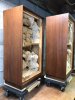
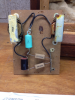
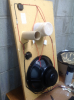
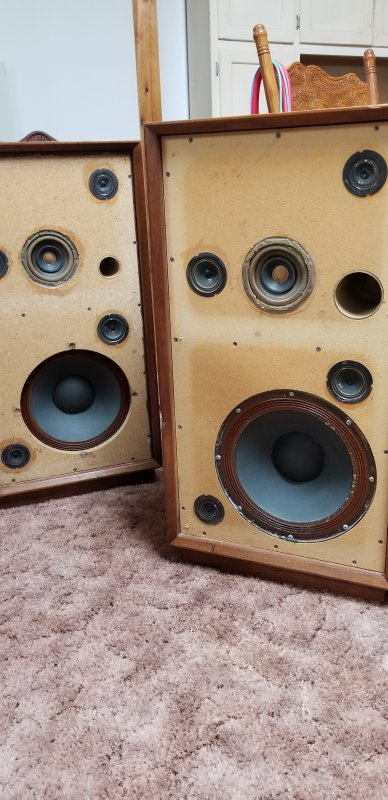
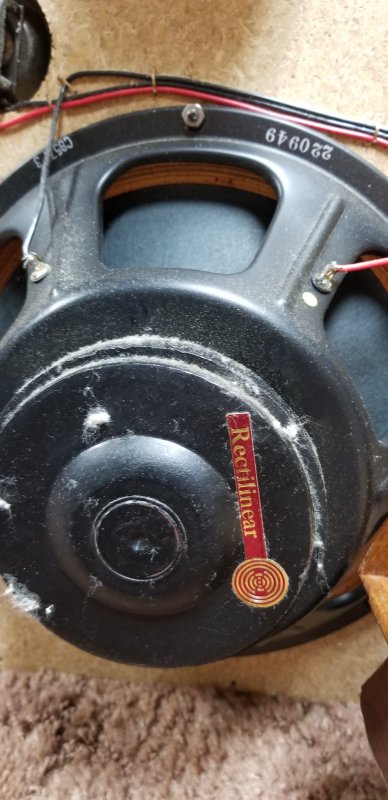
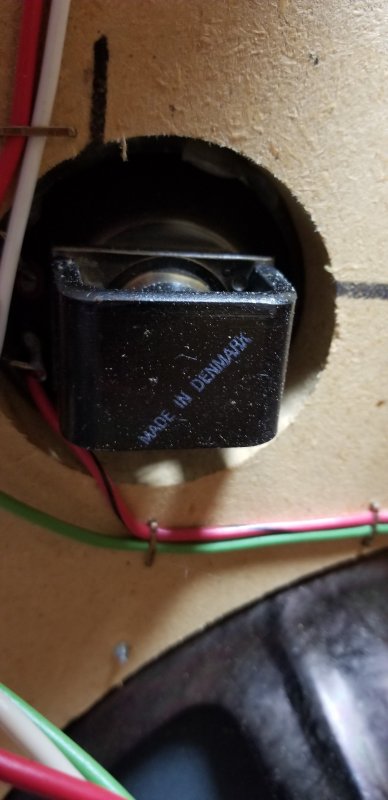
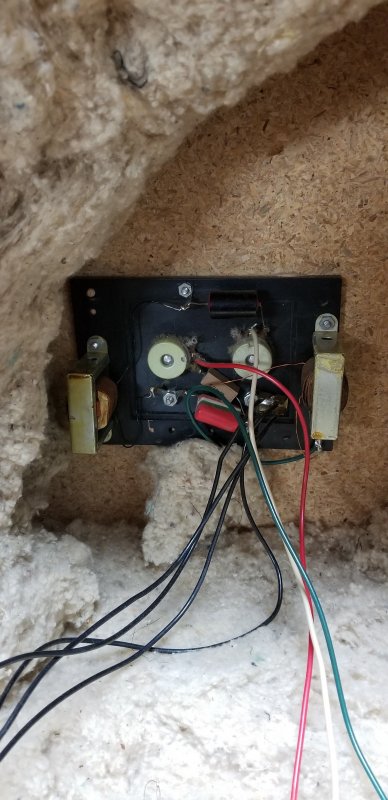
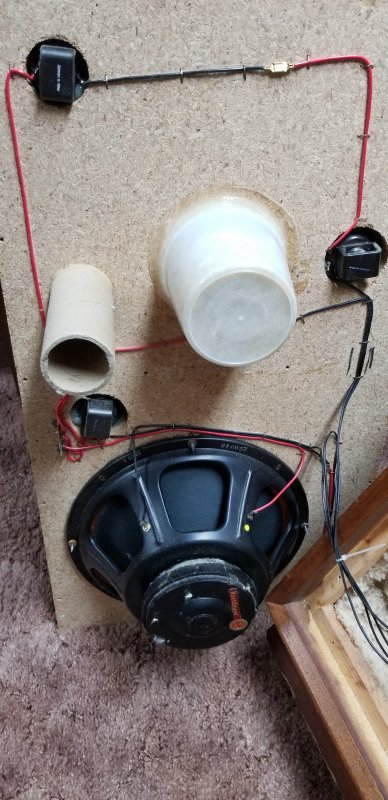
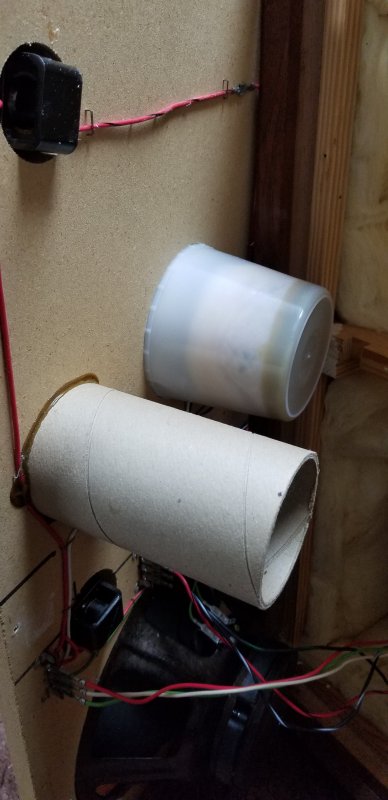
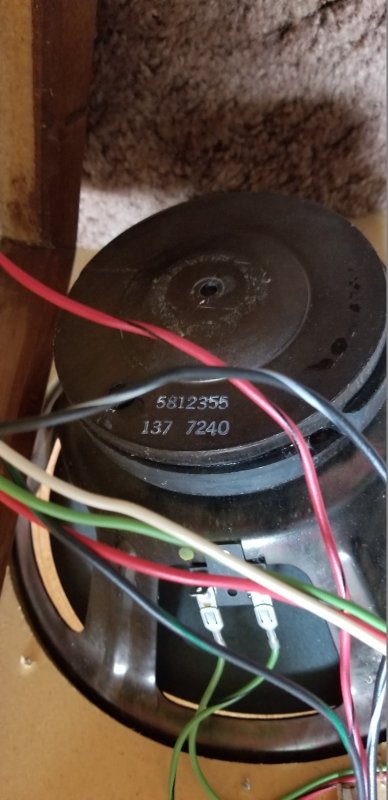
Pardon the pic alignment, I am not very good at this, but anyway, notice the difference in the insulation, the size of the tube and the differences in the control board. Also the woofers, one has the Rectilinear sticker on it, the other does not although both appear to be original in the pic in the previous pic. And honestly, they do sound a bit different. Hard to tell , when hooked up, whether all the tweets are working, but in all both speakers sound pretty good, albeit different from my older Highboys. I'm guessing these new additions are from the mid to later 70's? Now I'm not sure I should mess with them, I honestly thought I'd get inside them and find some obvious need.

What to do, what to do....

 
To verify if the tweeters are working, use a paper towel or toilet paper roll. Hold one end to the driver and the other end to your ear. The tube will block most of the sound other than what is coming from the driver.
 
To verify if the tweeters are working, use a paper towel or toilet paper roll. Hold one end to the driver and the other end to your ear. The tube will block most of the sound other than what is coming from the driver.
Excellent! Thanks. How do you check the caps to see if they are within tolerances?
 
Excellent! Thanks. How do you check the caps to see if they are within tolerances?

I don't bother testing caps. If they are old electrolytic caps such as in Rectilinear III, I replace them. You still have to remove them to test, so might as well put in new caps instead of old ones. I used Dayton and Audyne caps in my Lowboys. They were not expensive. I am happy with how the speakers sound.
 
All of that looks totally original - - it's just that your two cabinets display some of the small differences found in the variations (i.e. port tube size). Also it looks like one of your woofers has four screws while the other has eight. The RH woofer has a date code from 1972. LH speaker has cellulose fill, while RH has fiberglass.

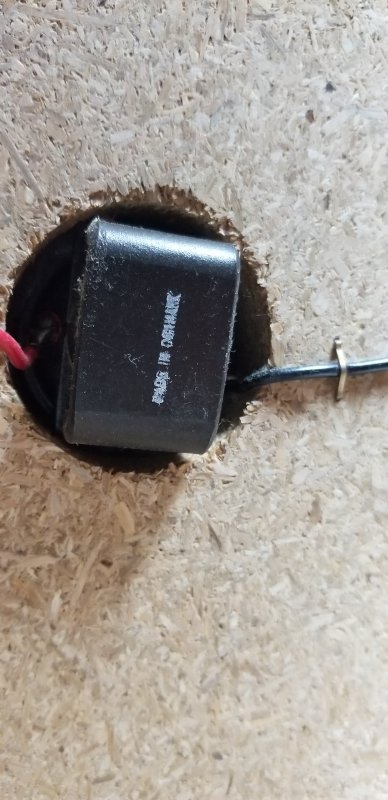
I agree with RTally about caps - - you might as well replace them all. The colorful tweeter caps are known as Mullard "tropical fish" caps, and those are most likely 2.2uF values. The mid caps are probably 60uF but could be 90uF - - you'll need to confirm.
 
Are there studs holding the control boards on? Just remove the nuts on all of them? A couple appear to also be holding parts on the board.....
 
Back
Top Bottom