• The move to the new server is done. There are some software and database maintenance updates in process. This has us passing the hat around to help out. We appreciate any donations. Seriously, even a dollar helps. The payment page may be found here - https://www.audiokarma.org/support.html

Replacing Klipsch Midrange Diaphragms wi

I have had these titanium mids and tweets for about six months, and have listened to them almost every day. I have concluded that they are a little shrill for my taste. I gave Bob Crites a call and he told me to pull this thread back up to the top.


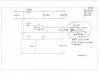
The schematic is for a Heresy II but will work with a Forte I because the tweeter circuit is the same in both.
 

Attachments

  • heresy II crossover upgrade.jpg
    heresy II crossover upgrade.jpg
    41.5 KB · Views: 165
Last edited:
did you install the gaskets which came (or came with all mine) with the ti diaphragms? Is your crossover stock? If so change out the caps in the tweeter section for new good ones. I have used a lot of Bob's ti tweeter diaphragms and they are not shrill so I would suggest you look for the cause. don't throw the baby out with the bath water. Disconnect the tweeters and see if the edge you hear is not in fact the mids. Hope this helps. Best regards Moray James.
 
I take this one at a time

The new mid diaphragms did not come with gaskets. I reused the old ones.

Crossovers have german c-core xfmrs, Mundorf SGO mids, Solen pollys tweets.

The problem is the Ti mids roll off at 7.4k which is higher than where the tweets start at 6k.
I'm not thowing anything out.
This is a low pass addition to the mid circuit to stop the overlap with the tweeters.
 
Ok I somehow got the impression the edge was a tweeter related thing. If you include Bob's network (Klipsch's network) then things should be perfect for you. Best regards Moray James.
 
Based on the "Rehabbing KLF-30" thread I ordered some titanium midrange diaphrams from Simply Speakers for my KLF-30's.

I'm gonna try them first without the crossover mod since the majority seem to think that it's good enough that way. My question is that if the 7k range turns out to sound too hot for my taste, would cutting that frequency with my digital EQ (DEQ2496) be logical in this case?

I'm second guessing my purchase now based on some of the comments saying the midrange may have just been "louder"....and that can leave the impression that it is "better". I suppose I'll find out soon enough in a few days when they arrive.

I'm just not a 'midrange' guy. Maybe it's because I've never heard 'good' midrange. I don't know but I'm ready to give this a try since I 'scoop out' the mids with my EQ somewhat to compensate for the poor sounding mids in my KLF-30's. In this manner I can't say they sound bad, in fact I think they sound very good....but I'm curious to see if they can sound better.:scratch2:
 
Titanium midrange in forte 1

Just installed these a couple days ago.
Already had the titanium tweeters from Crites Speakers installed,
If you haven't done this yet do it!!
My fortes sound fantastic a MAJOR improvement.
For the record I am using munsonic k-stack crossovers that popbumber made for me I see no need for any other mods.

The only thing better is corner horns
 
Titanium way to bright

I have now had the chance to critically listen for days.
I have went back to Bob Crites midrange much smoother and no harshness.
The titanium can be good with some music but are to bright and harsh overall.
 
Did you install the recommended bandpass filter to tame the mids? The titanium diaphragms are lighter than the phenolic, and therefore efficiency goes up on the squawker.

-D
 
The ti diaphragms do take time to burn in and the harder and longer you play them the better. Best regards Moray James.
 
The titanium can be good with some music but are to bright and harsh overall.

Since installing the ti mids in my KLF-30's these speakers play with a clarity and smoothness like never before.

It's been my understanding...and experience, that a better speaker as well as gear will make a good recording sound that much better and a bad recording that much worse. That is somewhat what I've experienced with the ti mids but generally they have made everything sound better.

I did not get the bandpass mod but did however find it necessary to make a 3db cut in the 7k range with my digital EQ and could not be happier. Between the ti mids and ti tweeters and with the addition of the port mod that Moray James suggested I'm listening to a whole new speaker...a much better speaker.
 
I did not get the bandpass mod but did however find it necessary to make a 3db cut in the 7k range with my digital EQ and could not be happier. Between the ti mids and ti tweeters and with the addition of the port mod that Moray James suggested I'm listening to a whole new speaker...a much better speaker.

This would work as well. Changing the midrange diaphragm for a lighter one without making any corresponding changes to the crossover / general frequency response is going to have unintended effects.

-D

p.s. I went the route of replacing all the drivers / diaphragms for Heresy III spec, and then went with an ALK crossover tweaked especially for the Heresy III - the results are fantastic.
 
The ti diaphragms do take time to burn in and the harder and longer you play them the better.

It sure seems that way to me. I'm hesitant to make this claim because you have to take into consideration that your ears are just getting used to the new sound.....but wow, these mids just seem to get smoother and smoother with clarity and detail I've never heard come close with the stock, or even the Crites upgraded ones I tried a couple years ago.
 
I thought I'd throw in my $.02.

I'm running Chorus Is. Upstream gear includes a Mac Pro music server, a Schiit Modi DAC, a highly modded Magnavox 93 series amp with Eico HF86 OTs, Van Alstine DH-101 Redux preamp, and an Onkyo Integra DX 708 CDP.

The Choruses have custom crossovers built by me that adhere to the original design but have upgraded components; Jantzen 15 AWG air core inductors, Mills 1% resistors, and Dayton metalized film 1% audio caps. I installed the Crites titanium tweeters a while ago.

I decided to give the Klipsch titanium mids a shot (PN 127122). Borrowing from the KP 250 crossover design and advice from other Klipsch enthusiasts, I went ahead and and built the piggy-back low pass filters. I used a 1.5 uF capacitor in parallel and a .5 mH 15 AWG Jantzen air core inductor in series on the negative side. Yes. I realize I have the inductor running to the side labeled + in the photo below. I fixed that before it was installed. :music:

Screen%20Shot%202015-07-09%20at%204.55.23%20PM_zpsjuiuetif.png


Installing the diaphragms was simple.

I was on the border regarding adding the LPF to the midrange. The K-79 tweeter in the Chorus I has a 3rd order high pass filter that is published at 7kHz. It uses a pair of 2 uH caps in series, split in parallel by a 160 uH inductor. Oddly, the math here doesn't support a 7 kHz high pass filter point at 8 ohms. Of course, I have no clue what the impedance of the K-79 driver is doing in the viciinty of 7 kHz, but, I wouldn't be shocked if the roll off point for the HPF started above 7kHz. As we all know, the phenolic driver drops off like a rock above 6 kHz where the titanium midrange driver increases slightly in output in the between 6 kHz and 7 kHz before dropping off quickly above 7 kHz. This led me to question the necessity of the LPF in the midrange circuit for the Chorus I.

I went ahead with the installation of the low pass filters in the midrange circuit. An audible seam existed between the midrange driver and tweeter. Imaging was greatly reduced. Detail was improved, but, at the sacrifice of dynamics and musicality.

I removed the filter in one speaker and put on some mono tunes that I'm familiar with. Toggling the balance from L to R was very telling. The speaker without the low pass filter on the titanium midrange was more open and seemed to integrate a bit better with the other drivers. Musicality was still lacking, however. Not sure if I'll keep these or go back to phenolic.

After several hours of listening I am unable to discern if there is any constructive interference occurring between the tweeter and midrange drivers without the midrange filters added in; if that 3-6 dB hump exists, both my ears and my SPL meter are unable to detect it. Perhaps the rolloff of the tweeters in the Chorus Is complements the natural roll off of the titanium drivers well.

Another note: Without being able to perform further testing and ideally modeling the crossover / driver interactions in MATLAB, finding the correct phasing (and polarity, by implication) is nothing more than trial and error. This alone was enough for me to second guess adding the filters.

Your mileage my vary.

Happy listening!

 
Last edited:
Its as easy as this, and yes Bob has a small board that you can add.

Set12, do you still have the missing image if what I'm assuming is your band pass network. Based on the diagrams, I'm assuming I would need
a 4 mH inductor http://www.parts-express.com/jantzen-audio-40mh-18-awg-air-core-inductor-crossover-coil--255-280
A 1.5 uF capacitor http://www.soniccraft.com/product_info.php/gen-sonicap-15-uf-200vdc-p-417
With the inductor running on the negative side.

And question is the band pass network technically needed? Ie other than rounding out the sound, is it a must have to prevent damage when using the Ti Mids?
 
And question is the band pass network technically needed? Ie other than rounding out the sound, is it a must have to prevent damage when using the Ti Mids?

It has nothing to do with protecting the titanium dome on the midrange, its strictly about flattening out the frequency response of the speakers, which would otherwise have a hump where the titanium midrange overlaps the tweeter.

-D
 
I have a question. Why would you want to operate the midrange above the linear capability of the driver. If the unit rolls off steeply at 7.0 HZ, why would you use a crossover above 4 kHz at 12 db per octave. If you were apply 10 watts to the driver at 4 khz, then the driver would be receiving around about 1/2 watt at 7 kHz and thats about 100 db and easily heard and how the driver handles that power above its designed powering frequency could be quite nasty. I am always amazed how designers sometimes operate their drivers right to and beyond the power handling capability of the driver.
 
Alright; old thread, dumb question. Isnt it possible to bring the crossover point of the Ti mid down to 6k by changing the value of the caps/coils in the mid circuit? thereby eliminating the need for more components in the circuit?
 
Alright; old thread, dumb question. Isnt it possible to bring the crossover point of the Ti mid down to 6k by changing the value of the caps/coils in the mid circuit? thereby eliminating the need for more components in the circuit?
Unlike some people, who know not of whence they speak, the Acoutic/Mass Rolloff of a driver takes care of itself just fine, since power is automatically/inherently reduced at higher frequencies. It's the low end of the bandwidth you have to worry about for higher excursion, distortion, and burnout.
 
Unlike some people, who know not of whence they speak, the Acoutic/Mass Rolloff of a driver takes care of itself just fine, since power is automatically/inherently reduced at higher frequencies. It's the low end of the bandwidth you have to worry about for higher excursion, distortion, and burnout.
Thx Claude, very helpful. But since im starting from scratch, wouldnt it be best to optimize the xo point? Or is that really hard to do. Sorry, im in the weeds here..
 
Thx Claude, very helpful. But since im starting from scratch, wouldnt it be best to optimize the xo point? Or is that really hard to do. Sorry, im in the weeds here..
The horn itself has 3 order rolloff, so only a first Order capacitor is-
required to work in concert with that. You can just blend the tweeter with the natural midrange rolloff. When I had my 3 &way, setup with my Quarter Pie bass horns, the K402/K1133 with a b&c DE-250 were crossed at 400 and 4,000 Hz. respectively with only a Single Capacitor on each of the midrange and tweeter Drivers. It sounded fantastic, as all pure horn systems do!
 
Back
Top Bottom