

You are using an out of date browser. It may not display this or other websites correctly.
You should upgrade or use an alternative browser.
You should upgrade or use an alternative browser.
Tech availability
- Thread starter quiet
- Start date
Register to hide this ad

Blue Shadow
Waiting for Vintage Gear from this century
it will decrease as the techs doing work for the last 40 years retire. No one is teaching vintage electronics in schools of any kind these days. too many things weighing against an increase in trained, qualified techs.
There will be an increase in recappers folks that dive in with a soldering iron on any unit they like and is over 10 years old. It is a hobby and that is the way the hobbyist can get intimate with the gear. He will not be doing the evaluation of the use of different components in a circuit to pick the best substitute part, just soldering in something that may or may not work. but it will function. How well it works, we'll never know without fully equipped electronics testing lab that many solder slingers don't have. Our gear is doomed.
There will be an increase in recappers folks that dive in with a soldering iron on any unit they like and is over 10 years old. It is a hobby and that is the way the hobbyist can get intimate with the gear. He will not be doing the evaluation of the use of different components in a circuit to pick the best substitute part, just soldering in something that may or may not work. but it will function. How well it works, we'll never know without fully equipped electronics testing lab that many solder slingers don't have. Our gear is doomed.
Last edited:

quiet
Addicted Member
Know that it just not what I want to hear. I wanted to hear that the rise in vintage popularity is attracting new techs. But no. So it appears the only units to be properly repaired will be the choice ones worth the big tech fees. Well, I have a Heath oscilloscope. I plan to get a good multimeter, signal generator, power supply, solder station, vari-arc... What else am I going to need just to stand a chance? At 60 am I to old to learn?
DaveVoorhis
Addicted Member
Universities and colleges still teach relevant electronics skills and theory, but interest in vintage gear is primarily driven by nostalgia and fashion so it's inherently self-limiting. As us nostalgists die off, and as fashion changes, there will be -- and already are -- few opportunities even for techs interested in vintage gear to make a living repairing it, and that means limited (and expensive) repair opportunities for the relatively small number of people that will join the vintage audio hobby in the future.Know that it just not what I want to hear. I wanted to hear that the rise in vintage popularity is attracting new techs. But no.
Depending on where you are and what you can do, that may represent a problem, or it may represent an opportunity.
You're never too old to learn as long as you're committed to learning, but as I discovered in my mid-40s, the biggest obstacle to doing the kind of electronics work I did as a teenager was my aging eyesight. I now wear varifocals, which are necessary but annoying. Multiple bench lights and a magnifier are necessary to work on modern gear, and are helpful with vintage solid-state gear. Tube/valve gear I can still see from across the room.So it appears the only units to be properly repaired will be the choice ones worth the big tech fees. Well, I have a Heath oscilloscope. I plan to get a good multimeter, signal generator, power supply, solder station, vari-arc... What else am I going to need just to stand a chance? At 60 am I to old to learn?

Last edited:
Blue Shadow
Waiting for Vintage Gear from this century
Do you know how to figure out a circuit to confidently make these statements?
These are a couple statements made as to why two replacement transistors were selected instead of just throwing in ones that might work. Old school in more ways than one of circuit design training and experience being used to actually fix gear and not just throw a bucket of caps at the victim. And the caps are equally well thought out and properly selected. At your age maybe there is some cheap college courses you can take to start the learning.
Q2 position is a darlington drive element, and thus higher collector current could happen,
Q3 position is a feedback element and gain is better than drive in this location.
These are a couple statements made as to why two replacement transistors were selected instead of just throwing in ones that might work. Old school in more ways than one of circuit design training and experience being used to actually fix gear and not just throw a bucket of caps at the victim. And the caps are equally well thought out and properly selected. At your age maybe there is some cheap college courses you can take to start the learning.
quiet
Addicted Member
I had hoped that the younger crowd would see the difference between yesterdays metal, glass and wood from todays plastic as they have other vintage items. And maybe they have. But I see repairing a 1970 Chevy is a completely different ball game than a vintage receiver. It looks like the problem is going to boil down to shipping cost, which will prevent sending a unit out to a vintage repair facility, so none will exist. I think I could learn to repair them but I would never have the valuable experience needed to predict the outcome of unobtainable parts substitution. It appears the thing to do is replace failed receivers in their entirety and enjoy.


Local point of service will be hit or miss depending on the talent available. Leaving internet as the place in the future.
The majority of new gear built in the last twenty thirty years is throwaway. Not worth fixing when problems arise. Just who will spend $150 on fixing a 10 year old Surround sound or flat screen? Even willing to pay a diagnostic fee?
Not enough to keep brick and mortar stores doors open.
Most of the consumers just buy a new unit, toss the old.
When I was in collage and working in a CB shop there were at least five others in the area. Not to mention the TV repairman/shop making house calls. It is even getting hard to have a computer worked on. Other then BB's walk in, independent tech's workout of their home.
Barney
The majority of new gear built in the last twenty thirty years is throwaway. Not worth fixing when problems arise. Just who will spend $150 on fixing a 10 year old Surround sound or flat screen? Even willing to pay a diagnostic fee?
Not enough to keep brick and mortar stores doors open.
Most of the consumers just buy a new unit, toss the old.
When I was in collage and working in a CB shop there were at least five others in the area. Not to mention the TV repairman/shop making house calls. It is even getting hard to have a computer worked on. Other then BB's walk in, independent tech's workout of their home.
Barney
I'm thinking that the options for getting vintage equipment serviced will diminish in the coming years as older techs retire. I'm 71 and have been working on electronics since I was a teen. I still service vintage electronic equipment, but I'm seeing the demand for repairs dropping off as the younger generation doesn't seem to care as much about quality audio equipment and high fidelity sound. They do have home theater set ups, but most of the equipment produced in recent years is difficult to service due to everything going to modules and surface mount technology which runs up the repair cost. Add to that, most of the newer audio equipment is being produced in China and is priced to be replaced and not repaired every few years with something newer with more bells and whistles.
Blue Shadow
Waiting for Vintage Gear from this century
This dire outlook for the future repair of the vintage gear seems to make the comment (a different complete thread) that a full recap is the correct course of action once a unit is repaired. A recap can keep a failing cap from taking out other components, some not replaceable. The fact that it might give the unit another 30 years of nearly trouble free use is a bonus and maybe by then there will be some selected interest in keeping these units alive by the next generations. A couple/few repair shops opening up to replace the hundreds that have closed.

There are no real reliable or remotely fast techs that I could find in the Nashville area, and that is what drove me to start learning how to repair/restore vintage audio gear. I am a younger member at 30, and even though my understanding of electronics theory and testing is still rudimentary, I am continually learning how to improve my process. Most of this learning is from reading this forum, electronics books, and just getting my hands on equipment. I know it's never perfect, but it's still rewarding to restore something that was broken so that it can be used again to make music.
Current manufacturers are also starting to produce a wider range of hifi audio gear these days it seems like to keep up with increased demand, so I think younger folks who want to get a real stereo will probably gravitate towards new gear anyways that they don't have to futz with, while vintage remains a niche.
Current manufacturers are also starting to produce a wider range of hifi audio gear these days it seems like to keep up with increased demand, so I think younger folks who want to get a real stereo will probably gravitate towards new gear anyways that they don't have to futz with, while vintage remains a niche.

I'm glad to have learned of StereoRehab from this site. Casper went way over the top explaining why he shouldn't take my cash to repair three different, old, items. They would do the job, but didn't recommend it. Having a passing knowledge of audio electronics, I never repaired the equipment in the first place, feeling technology had marched too far to make it worth my time. Now, I don't have the kind of time to restore 20 & 40 year old stuff, so I inquired with AR. Too bad they aren't located closer to Green Bay, WI - home of the Packers - America's REAL football team. Just wait for this season!
Last edited:
quiet
Addicted Member
If the vintage stuff is not at the yard sale or thrifts any more then where is it? Is this an indication it is getting some love somewhere? Does this mean it will become a piece of art to decorate the house and never to play again when it fails in the hands of who ever is holding on to it? I would drive several hours to drop off and retrieve several units at one time for repair with a months long wait for pickup but I would not ship units back and forth across the country with the cost and risk of damage what it is.

Universities and colleges still teach relevant electronics skills and theory, but interest in vintage gear is primarily driven by nostalgia and fashion so it's inherently self-limiting. As us nostalgists die off, and as fashion changes, there will be -- and already are -- few opportunities even for techs interested in vintage gear to make a living repairing it, and that means limited (and expensive) repair opportunities for the relatively small number of people that will join the vintage audio hobby in the future.
Depending on where you are and what you can do, that may represent a problem, or it may represent an opportunity.
You're never too old to learn as long as you're committed to learning, but as I discovered in my mid-40s, the biggest obstacle to doing the kind of electronics work I did as a teenager was my aging eyesight. I now wear varifocals, which are necessary but annoying. Multiple bench lights and a magnifier are necessary to work on modern gear, and are helpful with vintage solid-state gear. Tube/valve gear I can still see from across the room.
I graduated from the electronics program at our local community college in 2004, the class behind me ('05) was the second to the last. In the county where I live (pop. ~100K) there are two places to have electronics repaired, the one that I run from an outbuilding on my property, and one in town. I pretty much only work on late '60s to early 2000s solid state home audio gear (and loudspeaker repair), the one in town pretty much only does warranty service and TV repair.
Twenty years ago, there were five shops in town. Thirty years ago, more like ten.
There are still a few shops left in Portland, OR, about an hour away. The work I've seen coming from many of them is disappointing to say the least.
It's a dying art.


ConradH
Lunatic Member
Doing vintage audio is a labor of love. There's little money to be made, at least not that I've found, being a bit on the slow and cautious side. You need some years of persistent study to make good choices and repair things without shotgunning it. You need test equipment and a place to work. You need even more test equipment if you want to do alignments. And more study. I know few young people that have an interest, and even fewer (zero?) that want to invest the time. I haven't taken on anything new in quite a while, it taking most of my energy just to do a regular job and keep my head above water. That head above water thing seemed a lot easier a few decades ago. I worked twice the hours and it seemed I had twice the free time to build speakers and play with audio. No matter what nonsense they spout about the economy, it was a heck of a lot better in this area 30 years ago than it's been in the last decade or so. If I can actually retire before I die, and the body still functions, I'd like to service at least a few more Sansui and other nice things, but right now it's tough to fit it in.
quiet
Addicted Member
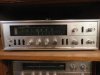
I would like for you to retire NOW. This Sansui works needs some love, tiny right channel humDoing vintage audio is a labor of love. There's little money to be made, at least not that I've found, being a bit on the slow and cautious side. You need some years of persistent study to make good choices and repair things without shotgunning it. You need test equipment and a place to work. You need even more test equipment if you want to do alignments. And more study. I know few young people that have an interest, and even fewer (zero?) that want to invest the time. I haven't taken on anything new in quite a while, it taking most of my energy just to do a regular job and keep my head above water. That head above water thing seemed a lot easier a few decades ago. I worked twice the hours and it seemed I had twice the free time to build speakers and play with audio. No matter what nonsense they spout about the economy, it was a heck of a lot better in this area 30 years ago than it's been in the last decade or so. If I can actually retire before I die, and the body still functions, I'd like to service at least a few more Sansui and other nice things, but right now it's tough to fit it in.

OMGCat!
Super Member
Old school, component level repairmen have been dying out for many years with not too many people taking their place.
I went to tech school back in the 90's for industrial electronics and used to tinker around a bit on my friends pro gear but within the last few years have bought a bunch of test equipment and spent a ton of time reading books, watching repair videos on YouTube and reading here so I could fix my own stuff. Not that I'm any kind of Echowars or even in the same ballpark but I know my way around a schematic and have been able to fix a few with no schematic available just because I could see what the topology was and where the likely failure points would be.
This has also allowed me to take a few paying jobs just to keep me sharp in between my own projects but after all is said and done I probably make about $5 an hour on those. I don't mind as I find it relaxing but I don't know how I'd be able to run a business without chasing most customers out the door with repair costs unless I was doing the absolute bare minimum to get the thing to make sound again and go away.
I went to tech school back in the 90's for industrial electronics and used to tinker around a bit on my friends pro gear but within the last few years have bought a bunch of test equipment and spent a ton of time reading books, watching repair videos on YouTube and reading here so I could fix my own stuff. Not that I'm any kind of Echowars or even in the same ballpark but I know my way around a schematic and have been able to fix a few with no schematic available just because I could see what the topology was and where the likely failure points would be.
This has also allowed me to take a few paying jobs just to keep me sharp in between my own projects but after all is said and done I probably make about $5 an hour on those. I don't mind as I find it relaxing but I don't know how I'd be able to run a business without chasing most customers out the door with repair costs unless I was doing the absolute bare minimum to get the thing to make sound again and go away.

It is ok not to be on the same league of the gurus here, go for it.I think I could learn to repair them but I would never have the valuable experience needed to predict the outcome of unobtainable parts substitution
This piece from @ConradH is AWESOME, just in case you haven't see it.
http://www.conradhoffman.com/troubleshoottut.htm
Last edited:

Lack of shops that do vintage (none) and experience with a shop when vintage wasn't vintage and a desire to learn led me to learn.
7-8-9 years now? still learning.
fixed a boat load of gear including the SX-6000 that the shop couldn't fix back in the early 80s.
there is little money in it. most people think $100 is too much for $500 worth of time and parts.
enjoy them while they work.
7-8-9 years now? still learning.
fixed a boat load of gear including the SX-6000 that the shop couldn't fix back in the early 80s.
there is little money in it. most people think $100 is too much for $500 worth of time and parts.
enjoy them while they work.
Similar threads


- Replies
- 58
- Views
- 20K
