

You are using an out of date browser. It may not display this or other websites correctly.
You should upgrade or use an alternative browser.
You should upgrade or use an alternative browser.
THE MC 240: ACHIEVING MAXIMUM PERFORMANCE FROM AN ICONIC DESIGN
- Thread starter dcgillespie
- Start date

I would offer two comments to the discussion:
1. If you eliminate the input stage to provide for a balanced drive into the phase inverter, and then employ a balanced push-pull NFB scheme in the 240, about the only way that could practically be done would be to used balanced NFB from the low impedance secondary load winding (grounding the 4Ω tap and then using the Com and 16Ω taps for NFB ala ARC style. I suppose it could also be done using the balanced 600Ω winding as well, but that may not be as effective since that is a primary winding. Either way, the inverter stage would have to be maintained as a balanced input gain stage not only as a point for reinserting the NFB, but also because significant gain will be lost eliminating the unbalanced input stage. A 12AT7 might be appropriate as a balanced input stage. It would basically be a major rework of the design but still, the approach could likely be pulled off, although I'm not sure to what gain.
I have used balanced push-pull NFB very effectively in my rework of both the Fisher SA-300, and the Heath W-5M, with full power 1 kHz THD down easily as low as the 240 at its full power output level, if not lower, so it can be a very effective performance enhancing tool. The beauty of it is that distortion is not just lowered by the feedback factor as is usually the case, but by the square of the feedback factor, due to the push-pull arrangement.
2. I have heard the poor 12AU7 linearity claims (bashing?) for years and the theoretically higher distortion levels that produces, and there is no doubt that curves for other tubes of similar application intent show them to be more linear devices. But in practice -- where it really counts -- I've never seen all the negative press the tube gets play out in any significant way, if at all. Changing out a 12AU7 tube for other tubes can often be done rather easily, and (sometimes) results in slightly lower measured distortion -- but if anything, that's due to the slight increase in OLG other tubes produce, rather than vast improvements other tubes display in linearity. My 2 cents worth anyway.........
Dave
1. If you eliminate the input stage to provide for a balanced drive into the phase inverter, and then employ a balanced push-pull NFB scheme in the 240, about the only way that could practically be done would be to used balanced NFB from the low impedance secondary load winding (grounding the 4Ω tap and then using the Com and 16Ω taps for NFB ala ARC style. I suppose it could also be done using the balanced 600Ω winding as well, but that may not be as effective since that is a primary winding. Either way, the inverter stage would have to be maintained as a balanced input gain stage not only as a point for reinserting the NFB, but also because significant gain will be lost eliminating the unbalanced input stage. A 12AT7 might be appropriate as a balanced input stage. It would basically be a major rework of the design but still, the approach could likely be pulled off, although I'm not sure to what gain.
I have used balanced push-pull NFB very effectively in my rework of both the Fisher SA-300, and the Heath W-5M, with full power 1 kHz THD down easily as low as the 240 at its full power output level, if not lower, so it can be a very effective performance enhancing tool. The beauty of it is that distortion is not just lowered by the feedback factor as is usually the case, but by the square of the feedback factor, due to the push-pull arrangement.
2. I have heard the poor 12AU7 linearity claims (bashing?) for years and the theoretically higher distortion levels that produces, and there is no doubt that curves for other tubes of similar application intent show them to be more linear devices. But in practice -- where it really counts -- I've never seen all the negative press the tube gets play out in any significant way, if at all. Changing out a 12AU7 tube for other tubes can often be done rather easily, and (sometimes) results in slightly lower measured distortion -- but if anything, that's due to the slight increase in OLG other tubes produce, rather than vast improvements other tubes display in linearity. My 2 cents worth anyway.........
Dave
Thanks, I’ve seen this. But there was a write up of German university McIntosh remake project using toroidal bifilar wound UC transformers (from vanderveen) achieving performance in both power and distortion better than original designFood for thought: http://www.tubebooks.org/books/lockhart.pdf
Thanks Dave, this exactly the practical experience/observation I am hoping for… that the maths work out to be a distortion reduction by the square of feedback factor.I have used balanced push-pull NFB very effectively in my rework of both the Fisher SA-300, and the Heath W-5M, with full power 1 kHz THD down easily as low as the 240 at its full power output level, if not lower, so it can be a very effective performance enhancing tool. The beauty of it is that distortion is not just lowered by the feedback factor as is usually the case, but by the square of the feedback factor, due to the push-pull arrangement.
I am not too worried about the loss in gain since for my purpose I will rely on the 6Vpp(peak2peak) XLR
As for the 12AU7, maybe I should elaborate that I’m not necessarily looking for a more linear tube but the criteria being that a different tube/driver could possibly offer better distortion that possibly partially cancels out with power stage, especially at lower wattage of the 10mW to 1W range
I surmised that's exactly what Heath did in their design of the W-5M -- they over-biased the driver stage saying the value of cathode resistor chosen provided a reduction in IM distortion. My testing showed that the resistor value used didn't provide any improved performance of the driver stage itself (in fact it reduced it), but together with the output stage, did provide a compensating effect to return lower overall distortion from the two cascaded stages.
You can find my write up on my Fisher SA-300 work here:
My work with the Heath W-5M is here:
Dave
You can find my write up on my Fisher SA-300 work here:

I may get a whole lot of blow-back on this one, but here goes: I've never been particularly fond of the Fisher SA-300. Besides the SA-1000, it was the last of the high performance stand alone stereo basic amplifiers Fisher produced, serving as big brother to the SA-100 during its five year run. But whereas the measures taken to achieve high performance in the SA-100 and SA-1000 all work together in harmony to achieve that end goal, those applied to the SA-300 more resemble management of medication side effects, where one medication is taken to address the side effects of another...
- dcgillespie
- Replies: 50
- Forum: Fisher

My work with the Heath W-5M is here:
INTRODUCTION
Much has been written about these amplifiers ranging from their wonderful sound, to restoration needs, to their transformer failures. I’ve long been familiar with the W-5, with my first contact over 40 years ago when I was gifted one by a family member who built it in 1958. It included the larger Peerless 16458 output transformer, and after an initial checkup, still proved to run acceptably well at the time. Having only one however, it’s been in storage ever since. I always remembered it though as a piece where Heath really started stepping out on its own. A few years ago, I...
Much has been written about these amplifiers ranging from their wonderful sound, to restoration needs, to their transformer failures. I’ve long been familiar with the W-5, with my first contact over 40 years ago when I was gifted one by a family member who built it in 1958. It included the larger Peerless 16458 output transformer, and after an initial checkup, still proved to run acceptably well at the time. Having only one however, it’s been in storage ever since. I always remembered it though as a piece where Heath really started stepping out on its own. A few years ago, I...
- dcgillespie
- Replies: 237
- Forum: Tube Audio
Dave

probably comes from charts like thisI have heard the poor 12AU7 linearity claims (bashing?) for years and the theoretically higher distortion levels that produces, and there is no doubt that curves for other tubes of similar application intent show them to be more linear devices. But in practice -- where it really counts -- I've never seen all the negative press the tube gets play out in any significant way, if at all.
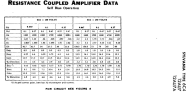
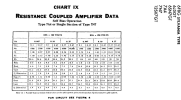
The % distortion is roughly half with the 6SN7 (6CG7 should be the same) but it really only applies in the example circuit. Real-world may be another story entirely.

tubelectron
Super Member
If I had a Mac Tube to own, it would be an MC240 - in Export 240V version though... 
T
T
The final domestic version of the MC240 employed a dual primary winding power transformer that could be configured for either 120 or 240 volt operation, 50 or 60 Hz.
Dave
Dave
BTW between the MC240 and MC225 which one has lower distortion numbers in the 100mW to 1W range?The final domestic version of the MC240 employed a dual primary winding power transformer that could be configured for either 120 or 240 volt operation, 50 or 60 Hz.
Dave

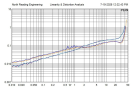
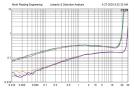
FWIW, here are some linearity and distortion analyses from North Reading Engineering for a 225 and a 240. The 240 is my own. Both received the same treatment. Mine uses its original McIntosh-branded tubes in this test, though there is one JJ-branded 12au7 I intend to replace.BTW between the MC240 and MC225 which one has lower distortion numbers in the 100mW to 1W range?
MC240
MC225
tubelectron
Super Member
The final domestic version of the MC240 employed a dual primary winding power transformer that could be configured for either 120 or 240 volt operation, 50 or 60 Hz.
Dave
Thanks @dcgillespie ! Unfortunately, all the MC240 That I saw for sale were 120V, with external step-down Xfo...
That said, maybe their owners never attempted or even knew that the possibility of 120/240V could be present on their amp ?
T
Thanks, what’s the difference between the top and bottom curves in each of the two graphs? Left vs right channel? Or different output taps ie 8ohm vs 16Ohm?FWIW, here are some linearity and distortion analyses from North Reading Engineering for a 225 and a 240. The 240 is my own. Both received the same treatment. Mine uses its original McIntosh-branded tubes in this test, though there is one JJ-branded 12au7 I intend to replace.
MC240
View attachment 3818771
MC225
View attachment 3818772
To me, the full power distortion looks high on those graphs, indicating full rated power distortion levels of 1% for both amplifiers which does not meet Mac's performance ratings for the amplifiers, and the 240 struggling to put out much of anything over 40 watts at that distortion level, which is highly unusual. With both amplifiers testing the same, is this equipment measurement error?
Agree that it would be nice to know what the six individual graphs (only 5 for the 240?) represent in terms of test conditions.
Dave
Agree that it would be nice to know what the six individual graphs (only 5 for the 240?) represent in terms of test conditions.
Dave
This is what I found on his site, but I can’t tell which is which..
Distortion- % Total Harmonic Distortion (%THD) versus output power
Linearity- A plot of signal voltage IN versus signal voltage OUT (straight line relationship to max. input level of amp expected)
Bandwidth (Swept-Sine)- A plot of output power as a function of frequency
Bandwidth (FFT)- A plot of output power that highlights troubles at specific frequencies across the amplifier bandwidth
Distortion- % Total Harmonic Distortion (%THD) versus output power
Linearity- A plot of signal voltage IN versus signal voltage OUT (straight line relationship to max. input level of amp expected)
Bandwidth (Swept-Sine)- A plot of output power as a function of frequency
Bandwidth (FFT)- A plot of output power that highlights troubles at specific frequencies across the amplifier bandwidth
BTW between the MC240 and MC225 which one has lower distortion numbers in the 100mW to 1W range?
JMO, but think you are trying to split hairs. I highly doubt you could hear the difference between .01% THD and .1% THD at those power levels.
Both are really nice amps. I have a couple copies of both as well as most of the other tube MACS. If you have moderately efficient speakers either of these amps should drive them.
The MC225 is probably my favorite sounding MAC amp. Have also tried running both as monoblocks. A lot of the magic is gone. Especially with the 225.


I've heard that the 225 does lose the magic in mono configuaration, but I've loved using my 240's as mono's. Just amazing running Martin Logan ESL's.JMO, but think you are trying to split hairs. I highly doubt you could hear the difference between .01% THD and .1% THD at those power levels.
Both are really nice amps. I have a couple copies of both as well as most of the other tube MACS. If you have moderately efficient speakers either of these amps should drive them.
The MC225 is probably my favorite sounding MAC amp. Have also tried running both as monoblocks. A lot of the magic is gone. Especially with the 225.
I downloaded a copy a while back. Unfortunately the actual schematics are in a different document and I can’t find it. The file is 4Mb is there away to upload a copy here?Where can I find the write-up above of the MC60 using the vanderveen UC transformer?

The final version, with the 120/240V power transformer can be identified by its lack of a voltage switch on the face of the unit. All previous versions have a slide-switch to choose 115v/125v.Thanks @dcgillespie ! Unfortunately, all the MC240 That I saw for sale were 120V, with external step-down Xfo...
That said, maybe their owners never attempted or even knew that the possibility of 120/240V could be present on their amp ?
T