• Please note that Audiokarma will be offline briefly for updates early on Monday morning, September 28th.

The new budget speaker king?

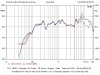
Plugged port, 3.0 uF, and off-axis response.

The hole appears, at 4.3 kHz. ;)

Note that red and green are the two units I have, one ported and one blocked. The response anomalies are identical in both.... :yes:

:scratch2: Then what is the port tube doing? And what does 30* off axis mean?

I guess the anomalies are related to the volume of the box. Although if you plugged the tube from the inside of the speaker that should have changed. :headscrat Ok, my head hurts.
 
:scratch2: Then what is the port tube doing? And what does 30* off axis mean?
I would need to do a different sort of measurement to show it more accurately, but some indication of what the port is doing appears at the bottom end of the graph, the red (ported) versus the others (blocked).

Re: Off-axis: Unless the speakers are toed-in and thus aimed at the listening position, we don't typically listen on-axis, i.e., perpendicular to the baffle face, rather, at some angle askew. The frequency response is different, according to the dispersion characteristics of the drivers.

Here, a huge (10 dB) notch appears in the upper mid/high frequency response, which tells us something about how the woofer is designed and performing.

I'll confirm that by testing the other unit under the same conditions, and using a different measurement method, as well.... :yes:
 
I would need to do a different sort of measurement to show it more accurately, but some indication of what the port is doing appears at the bottom end of the graph, the red (ported) versus the others (blocked).

It honestly doesn't look like it is doing much (then again what do I know).

Re: Off-axis: Unless the speakers are toed-in and thus aimed at the listening position, we don't typically listen on-axis, i.e., perpendicular to the baffle face, rather, at some angle askew. The frequency response is different, according to the dispersion characteristics of the drivers.

Here, a huge (10 dB) notch appears in the upper mid/high frequency response, which tells us something about how the woofer is designed and performing.

So I wasn't imagining the sound change when I would move around. I couldn't place it but something sounded different every time I moved my head directly in front of the one speaker or the other. :scratch2: so what causes that?
 
I THINK that's the hole in the response others are perceiving, but boosting the VHF response (Cyan) only exacerbates it, as I suggested earlier.

What causes it is what I said, the dispersion characteristics of the drivers. The beamwidth narrows with higher frequency. Also, for any given driver diameter, there is a frequency limit to pistonic operation. Above that, the response is produced by cone breakup, which is a major reason tweeters are smaller than woofers, and mids intermediate between them in size.

I did get the insulation, so I'll be installing that next. Let's see how much of this is coming from internal reflections and standing waves inside the cabinet.... :yes:
 
I THINK that's the hole in the response others are perceiving, but boosting the VHF response only exacerbates it, as I suggested earlier.

What causes it is what I said, the dispersion characteristics of the drivers. The beamwidth narrows with higher frequency. Also, for any given driver diameter, there is a frequency limit to pistonic operation. Above that, the response is produced by cone breakup, which is a major reason tweeters are smaller than woofers, and mids intermediate between them in size.

I did get the insulation, so I'll be installing that next. Let's see how much of this is coming from internal reflections and standing waves inside the cabinet.... :yes:

So what these speakers really need then is a mid range driver of a bigger tweeter. Or maybe a smaller woofer. Yeah I am interested in seing what the dampening does.
 
Zilch, did you take an on axis measurement? I have mine toed in facing the listener, little over 6 feet apart and 4 feet from the back wall. Listening chair is ~11 feet from either speaker.
 
Zilch, did you take an on axis measurement? I have mine toed in facing the listener, little over 6 feet apart and 4 feet from the back wall. Listening chair is ~11 feet from either speaker.

On axis is just the regular one, I think that would be the red one.
 
Except woofer nearfield, all measurements on-axis with tweeter, unless otherwise stated....
 
I picked a pair of these up today. I am really surprised how good they sound. No where near as good as my Primus', but for $15 I am happy. I need to figure out how to recap them, so hopefully that improve them further. Should be good for a dorm room setup if I can find a decent receiver (ie cheap) to pair them with. My dad was so impressed he wants to go out and get a pair tomorrow just to have around in case.
 
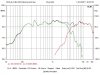
Damped

With 1" fiberglass, they do sound better, but all of the fundamental issues remain.

Yes, with 10 dB of boost at 8 kHz, they are "bright."

Cyan is port plugged internally, black is external, after damping.

[Time to AutoEQ.... :yes: ]
 

Attachments

  • Damped.jpg
    Damped.jpg
    57.5 KB · Views: 89
  • Presidian Damping.jpg
    Presidian Damping.jpg
    53.8 KB · Views: 62
All Done With It Now

ZilchMod Presidian:
 

Attachments

  • ZilchMod Presidian.jpg
    ZilchMod Presidian.jpg
    53.1 KB · Views: 291
Just for those of us who don't speak the lingo as well, what have you done to the stock pair to achieve "Zilch Modded" status?

BTW, thanks for all of the effort from you guys with the bigger brains.
 
Yeah....

Just for those of us who don't speak the lingo as well, what have you done to the stock pair to achieve "Zilch Modded" status?

BTW, thanks for all of the effort from you guys with the bigger brains.

Enquiring minds want to know.....:thmbsp:
 
Ah......

Looks like an inductor found its way into the system...

So you added a little low pass action, and dealt with the woofer breakdown at high frequencies? The kicker is, how do they sound? If true, care to share the inductor value?
 
:scratch2: Comparing curves, looks like 12 dB/oct drop at around 3500 or so on the woofer (comparing the 4-5K peak) wonder if it's 6 or 12 dB electrical? The tweeter's sporting a 3.3 µF cap. Am I close?

Either way, Zilchifying them did good things to the curve :thmbsp: - how do they sound?
 
That new graph looks nice. What did you do to it? threaten it with some sort of torture if it didn't clean up its act?
 
Looks like an inductor found its way into the system...
Two, actually. ;)

That woofer is doing nothing but trash talk above 4 kHz in the stock design, as was variously indicated in the curves posted earlier in the thread. The woofer is the problem, how it was used to accomplish minimum system cost, not the tweeter. There's no point pretending it's a full-range driver that could put Fostex, Lowther, et al. out of business. I yanked it down hard two-pole with 1 mH and 6.8 uF.

The filterless tweeter measurements revealed a competent tweeter that would play down to, uhmm, 4 kHz. That's near its cutoff, so I chose where to actually do it according to the curve (look for the "knee" there,) and used two-pole on it, as well, 4.7 uF and 0.5 mH. Its power-handling capacity is unknown, but it's ~4 dB more efficient than the lowpassed woofer, so I've padded it down accordingly; it's getting but ~40% of full power.

As shown in the resultant frequency response, these are now playing +/- 2 dB, and they sound like mini-monitors. The off-axis response is very much improved, as well. I used Solens, so they have a pleasant "crispness" to them; with Daytons, they'd be a bit more mellow. I don't think I'd try to rock the house with these until we find out more about the capacity of the tweeter. As mentioned earlier, Tang Band is the backup should we smoke them.

I like the bass with the port closed, actually; it reaches a little lower, and with boundary reinforcement, it sounds even better. R/S advertised them as "Good midrange sound," their way of saying they need subs. Yes, they do, either way. The regular price was $39.99 the pair according to the printed tag attached to mine.

It was late when I completed this, obviously. I'll draw up the schematic and post some additional measurements later today. The mods are $20 - $25 per speaker, depending upon component choices; less if you happen have some of the parts laying around like most certifiable AKers.... :thmbsp:

 
So, what I'm hearing....

...is that these sound pretty good for cheap a$$ 15 clam speakers, right? Total investment perhaps $60 for all new parts, and less for someone like me with several bags of spare parts lying around...

*puts on troublemaker hat*

The big question is, How do they compare to the JBL's you mentioned in the earlier part of the thread, and is the measured frequency response now superior to said speaker, complements of Zilch Engineering and Associates???...:D
 
Unless and until upgraded, Presidian is about on par with the variety of junque compact system speakers AK thrift-store scroungers routinely pass up for even less money.

At $15, a pair of Baby Advent IIs in need of refoam is probably a better buy.

JBL Control 1s are the industry standard mini-monitor. It's very likely the drivers are higher quality and have lower distortion than the Presidians.

Judging from the response curves, I might be giving them a little tweak or two themselves:

http://www.jblpro.com/pub/obsolete/control_1aw.pdf

http://www.jblproservice.com/pdf/Control Series/Control 1WH.pdf
 
Back
Top Bottom