• The move to the new server is done. There are some software and database maintenance updates in process. This has us passing the hat around to help out. We appreciate any donations. Seriously, even a dollar helps. The payment page may be found here - https://www.audiokarma.org/support.html

The V15 RS. Is it really a V15 or just a rebadged M97xE?

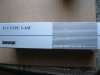
You are absolutely positive they are not the V15VxMR? Could you post a pic or scan of the box or literature?

Double checked before posting. MEXICO appears above the pins.

Have just one box:

 

Attachments

  • Picture.jpg
    Picture.jpg
    88.1 KB · Views: 89
According to Shure’s FAQ section, where people can ask questions about various cartridges, the V15 RS is exactly the same as…..an M111HE:yikes: (2009 answer to a query about which styli would fit). To quote them, "The V15-RS was equivalent to the Shure M111." So now you know, straight from the people who built them.

As a result, the N111HE stylus is a perfect fit, assuming you can find one. A lower spec stylus is the N111E, slightly higher is the NE97HE, and the best one available is the VN5MR from the V15 Type V (or equivalent Jico one).

Excuse me for taking this with a bit of a grain of salt...

The N111HE uses the thick shank as per the rest of the M series.... the VN5MR is a narrow shank same as the V15III/IV/V - yes you can insert one into the M111HE - but it is a loose fit - and according to Shure the magnet pole locations are slightly different.

Now if you were to tell me that the VN5xMR was a perfect fit, I would find this much more believable! - it is a "fat shank" stylus- same as all the M series cartridges.... hence one wonders at the relationship between the M series (possibly including the V15RS) and the V15Vx series.

Does anyone know the inductance of the M111HE and the V15RS?

bye for now

David
 
You may be right, David – as I don’t own a V15 RS I can’t comment on what fits and what doesn't, apart from reporting on what they say.

They did advise someone that “The N97xE stylus does NOT fit the V15-RS body.” However, that seems to contradict others on here, who say it will. The fact that the NE97HE stylus fits should indicate that the N97xE stylus should fit, although according to Shure because the N97xE magnets are in a different position to earlier N97 styli, they don't work properly, having a high frequency roll-off when you swap them. Maybe that's why the VN5MR stylus, and not the VN5xMR, is the recommended one. Perhaps although it's loose, it has the magnets in the right place, and so a bit of shimming to hold it securely in the V15RS body gains an acceptable result?:D

My range includes V15VMR, V15V-P, M97xE and M91ED, so I’m aware that the M97xE stylus doesn’t fit the V15V bodies due to the thicker shank. I must admit that cross-referencing some of their supposed fits leaves one very confused.:dunno:
 
Does anyone know the inductance of the M111HE and the V15RS?

bye for now

David

The published inductance for the M111HE is 360mH and the V15RS is 425mH. Not the same.
Again, the V15RS and the V15xMR have the same published DC resistance and AC impedance values.
I measured the impedance of the V15RS and V15xMR inductors and it is the same. I posted the results earlier in this thread. The measurements are so close that any difference between the two can be attributed to production tolerance.
 
V15VxMR vs V15VxSAS

With the help of Empirlvr, a V15Vx cartridge was measured with pink noise tracks, and the results were plotted.

The modelled LCR response (Inductance, Capacitance, Resistance) was deducted from the measured response to provide a "delta" - this delta is a mix of magnetic efficiency (or inefficiency) and variances from the "perfect" model.

The plot quite clearly exposes the effect of the cantilever resonances - the peaks at the high end.

The measurement track maxed out at 27kHz - so for the V15VxMR we can see it rising, but we don't know where that rise ends. (for the V15VMR Shure published a resonant frequency spec of 35kHz - I have never seen published specs for the V15VxMR)

The V15VxSAS has a resonance peak at 20k and a secondary further up (it is still rising at 27k - it may have reached the peak or may be rising further - this is unknown)
The influence of that resonance is noticeable as low as 10kHz, where for the xMR it appears to kick in at around 15kHz... (for the xMR the effect is negligible under 20k, for the sas somewhere around 12-15k)

This means that a V15VxSAS is more likely to provide a neutral/flat frequency response than an xMR....
But the question of phase response remains ... if the cantilever resonance is primarily a minimum phase phenomenon - then the cantilever phase and the electrical phase will balance each other out and the result will be linear phase.
(on principle I look on this with suspicion - two wrongs seldom make a right....)

bye for now

David
 

Attachments

  • V15Vxmr vs V15VxSAS delta.png
    V15Vxmr vs V15VxSAS delta.png
    65.2 KB · Views: 61
Last edited:
With the help of Empirlvr, a V15Vx cartridge was measured with pink noise tracks, and the results were plotted.

The modelled LCR response (Inductance, Capacitance, Resistance) was deducted from the measured response to provide a "delta" - this delta is a mix of magnetic efficiency (or inefficiency) and variances from the "perfect" model.

The plot quite clearly exposes the effect of the cantilever resonances - the peaks at the high end.

The measurement track maxed out at 27kHz - so for the V15VxMR we can see it rising, but we don't know where that rise ends. (for the V15VMR Shure published a resonant frequency spec of 35kHz - I have never seen published specs for the V15VxMR)

The SAS has a resonance peak at 20k and a secondary further up (it is still rising at 27k - it may have reached the peak or may be rising further - this is unknown)
The influence of that resonance is noticeable as low as 10kHz, where for the MR it appears to kick in at around 15kHz... (for the MR the effect is negligible under 20k, for the sas somewhere around 12-15k)

This means that a SAS is more likely to provide a neutral/flat frequency response than an MR....
But the question of phase response remains ... if the cantilever resonance is primarily a minimum phase phenomenon - then the cantilever phase and the electrical phase will balance each other out and the result will be linear phase.
(on principle I look on this with suspicion - two wrongs seldom make a right....)

bye for now

David

I'm glad I was able to help. :yes:

One thing though, I think you need to be clearer when you talk about the OEM stylus. I feel you should refer to the xMR stylus as that...xMR, not MR, as the MR and xMR were not quite the same beast, either in innards or stylus. They may be close, but in the interests of being as scientifically disciplined as possible and to avoid confusion for the comparison you just did, it should be made explicit at every mention that it was the xMR stylus that was tested, not the MR.

Thanks ... both for the work in measuring and for the suggestion - I have edited my post and changed the MR's to xMR, also the SAS to V15VxSAS to differentiate it from the M97xESAS (which I need to add to the mix & posting... shortly!)
 
Just to muddy up the waters some more, this thread at the Steve Hoffman forum suggests that the V15-RS, V15 ProS, and VST-III cartridges were all the same, with the VST-III-P (which I own, so this came up on a search for that model number) being the p-mount version of the cartridge.
 
What size shank does the VST-III-p have?
And what is its inductance?

These two parameters in combination appear to be the best "easy" indication of what a body is!

I have:

V15V-P (same inductance and shank type as the V15V)

V15HR-P same shank as V15Vx or M series with 520mH inductance
appears to be a notch up on the standard M series... several shure P-mount bodies have inductances in that range, but I have yet to hear of a 1/2" body with that inductance?
 
The shank is the larger size, same as my N110E and N104E stylii, but the cantilever is the thin wall beryllium. I've got no way to measure inductance, and it isn't in the specifications.
 
Hmm similar to the V15HR-P - the shank is large, with beryllium cantilever...
So the styli are at V15 quality levels

The question is then which generator/body is behind the marketing codes...

And how different is that generator to the M111/110/105/104/99/97/94/92 and the prestige series 1200HRP/1000e/800e/500

Which comes down to inductance and magnet/pole locations
 
Just to tidy up some of the loose threads (bad pun intended) of the last page of this thread:

If the inductance of the M111HE body really was 360mH, that would put it in the same league as a V15V; it would require a cantilever of comparable quality. = Not likely. I suspect a typo.

The VST III, billed as a cost-reduced version of the V15V, is indeed the same cartridge as the V15RS and takes the same now-discontinued replacement stylus, the VNSE3HE. The VST III showed up in the audio magazines in 1988 and the V15RS first hit RS (Radio Shack) in the 1989 catalog (ie, it became available in the fall of '88). The VST III-P is the brushless p-mount version (I have one) and has the same electrical characteristics as my V15RS bodies, and takes the same styli.

Side note: The VST-III was infamously described on Shure's customer "help" website in 2002 as "...very similar to the V15III performance. [sic]". The Shure rep went on to claim the M97xE was an "upgrade". This created confusion that's lasted to this day.
 
Last edited:
Of course.
It could also have been an honest flub. V15 III, VST III-- The names look alike; they must be related, right?
 
Last edited:
I have not held or measured an M111.... but I do have a V15HRP, and various other members of the p-mount branch of the shure family...

360mH just does not make sense looking at the family tree...

I would love to have one to measure... my guess would be 520mH
 
If the M111E and the M111HE used the same body, then the Shure/Realistic RXT6 is most probably the same body too. My RXT6 measures... are you seated and strapped in? 700mH. I too have never seen/handled/probed an M111HE, so this is not proof.
 
Last edited:
Side note: The VST-III was infamously described on Shure's customer "help" website in 2002 as "...very similar to the V15III performance. [sic]". The Shure rep went on to claim the M97xE was an "upgrade". This created confusion that's lasted to this day.

If you've had a chance to compare the sound of the V15 III with the VST III, what gross dissimilarities did you hear? The customer asking the question asked specifically for a comparison of the VST III with the V15 line. Which V15 would you have said the VST III is most similar to in performance?

The VST III and V15 III at least have the same rated trackability at 400 Hz, though the VST III needs an extra 1/4 gram of tracking force to achieve it (the M97xE has better rated trackability than either). Trackability may not be as important as Shure claims, but it could have been part of the basis for the Shure employee to make the VSTIII/V15III comparison.

All I can say with respect to the VSTIII/M97xE comparison is that I've owned both and used them in the same system, and the M97xE is a much more engaging cartridge to listen to, with noticeably better dynamics, timing, and resolution.

The only "confusion" I've seen regarding the answer from Shure comes from people who dismiss their information as either mistaken or fraudulant without providing sound reasons or proof. I'm not saying that the people who write answers for Shure's customer help database can't make a mistake, but the manufacturer's representatives carry a lot more weight with me than the unsubstantiated allegations of unknown persons on a hobby forum, especially when Shure's advice is borne out by my own experience with their products (also not "proof" that Shure is right, but when what I hear confirms their statements, I tend to trust them more).
 
Back
Top Bottom