• The move to the new server is done. There are some software and database maintenance updates in process. This has us passing the hat around to help out. We appreciate any donations. Seriously, even a dollar helps. The payment page may be found here - https://www.audiokarma.org/support.html

Turntable Isolation platforms?

Perhaps a steel can, with half an inch or so folded back away from itself, to double up the strength, and cut accurately to sit level. Technically proven to only function with BEER cans. Three required but buy six in case of mistakes.
 
Last edited:
Perhaps a steel can, with half an inch or so folded back away from itself, to double up the strength, and cut accurately to sit level. Technically proven to only function with BEER cans. Three required but buy six in case of mistakes.

oh geez, now it sounds like we're trying to smoke crack. Oh, wait...

Maybe we should refer to this version as the 'Winehouse':D
 
this is all very well but I cannot find those concave cups anywhere! :tears: Not anywhere that will ship to the UK anyway.

Tablespoons with the handles cut off would work better than wood cups. I think wood balls pressed into wood cups by the weight of a TT would just cause the cellulose fibers to lock into each other

If I were going to try this type of decoupling, I'd definitely use steel balls and spoon heads. Check out eBay seller toolsupply for large diameter ball bearings. (I have no affiliation) You'd probably have to glue the spoon heads to a flat surface, like a square of MDF though.
 
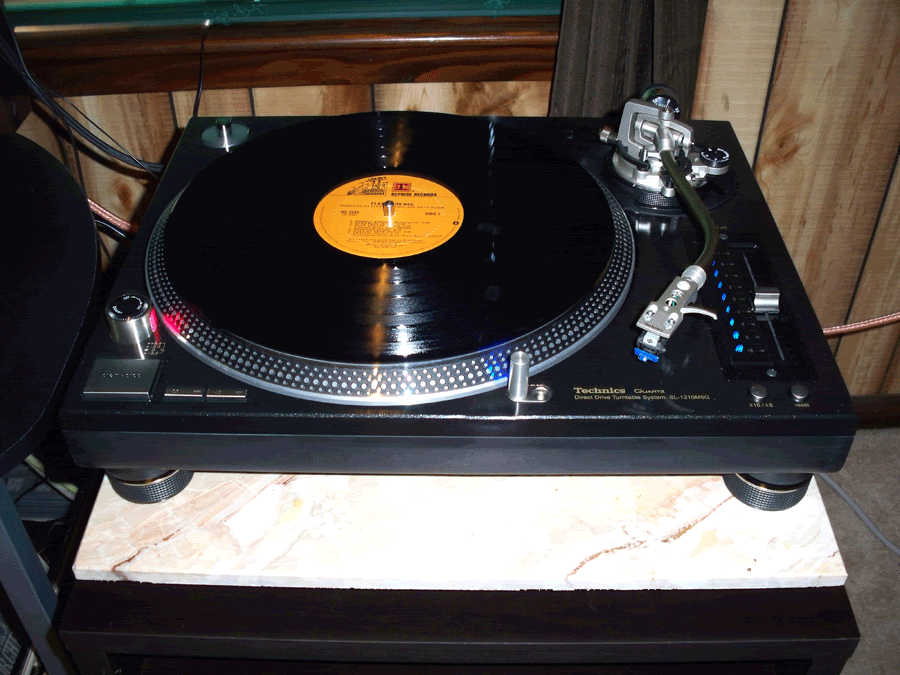
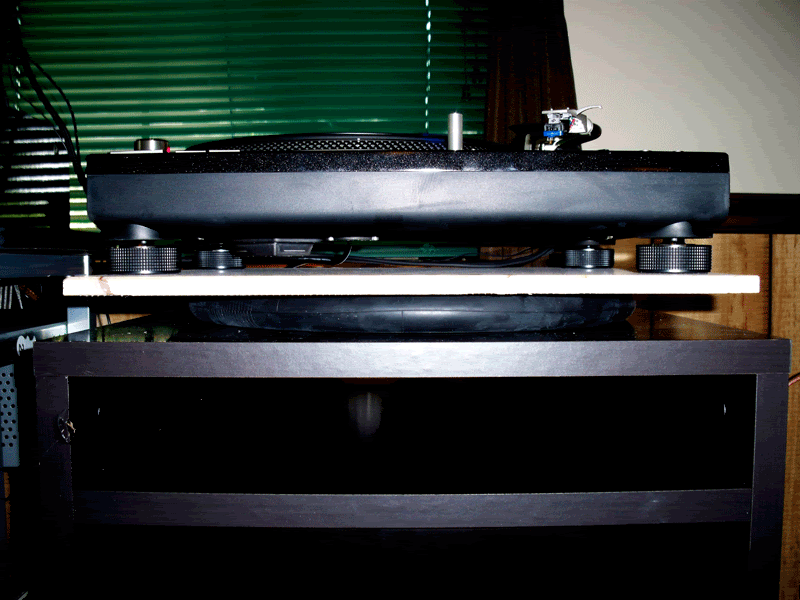
Easy does it! This works great for me!

TT.gif


TT2.gif
 
Beautiful! I can not recommend enough adding the cup/bearings isolation in combination with the inner tube setup you've already got. They really go hand in hand...
 
This has been discussed ad nauseum in the Steve Hoffman hardware forum.

High mass boards, blocks, cement or marble blocks, sand boxes are NOT, I repeat, NOT the way to go for turntable isolation. You're just raising the amount of resonating mass that needs isolation. All the folks who specialize in professional isolation products agree with this. A light rigid board resting on an inner tube is a MUCH better bet, or a shelf that is of the floor.

Try this: get 3/4" or 1" plywood board cut from scrap to be slightly larger than your TT.

Set this board on an 12" or 16" inner tube inflated just enough to support the board and your TT, off the shelf, this will be around 10 PSI. Put a straw under the inner tube so that it does not seal against the board from vacuum and cause a mid-bass hump.
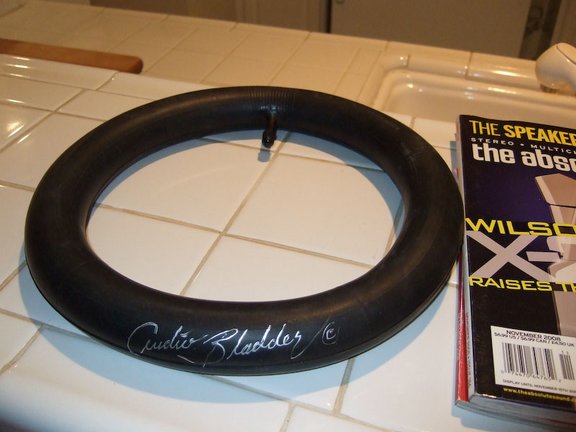
AudioBladder.jpg


On top of the plywood board, place a 25mm or 1" marble or ball bearing into a concave plastic furniture cup.
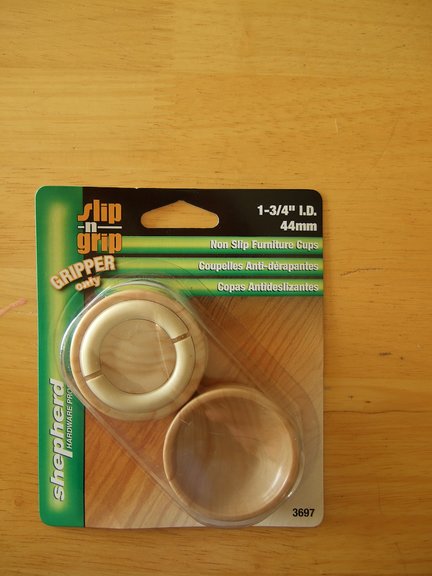
Block2_3.jpg


This is shown with wooden balls, but marbles or steel ball bearings are much better. You can use one or two cups per ball depending on what is required to raise the stock TT feet off the shelf.
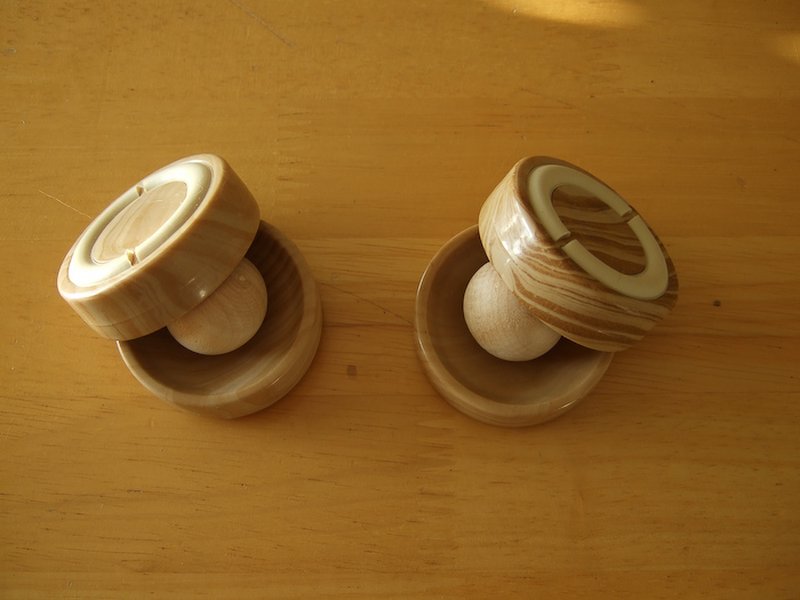
Package_3.jpg


Use three of these under your turntable so that there is no possibilty of rocking or wobble (you can't rock a tripod). These will act as "roller blocks" and isolate your TT from seismic rotational and horizontal resonances.

The inner tube under the board acts as a low pass filter for vertical seismic resonances in the 3-15 Hz range. Using both together will provide a marked improvement in the sound from your TT in all regards: air, open-ness, transparency, imaging, detail, etc.
Here you can see the inner tube under a 1" maple board and the homemade roller blocks under my Rega.
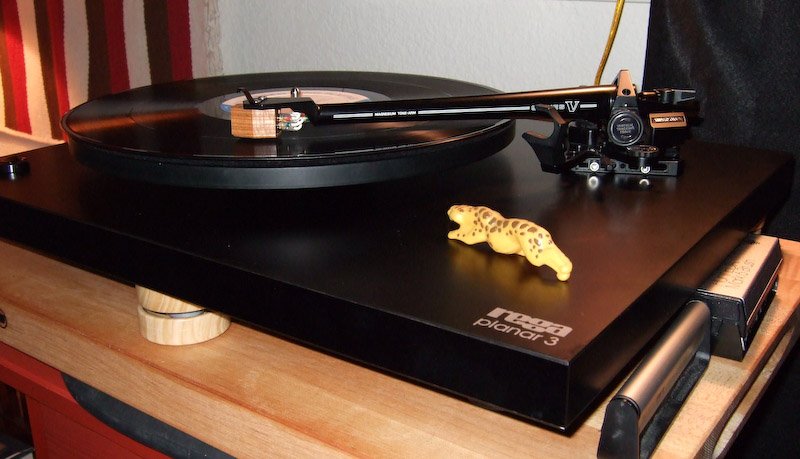
SME_V%20and%20Rega-2.jpg


You should also put this setup under your amp, preamp, integrated for even more improvements. The improvements this will make in your system is NOT subtle.

Here is a shot showing this setup under my Conrad-Johnson Premier 11A power amp.
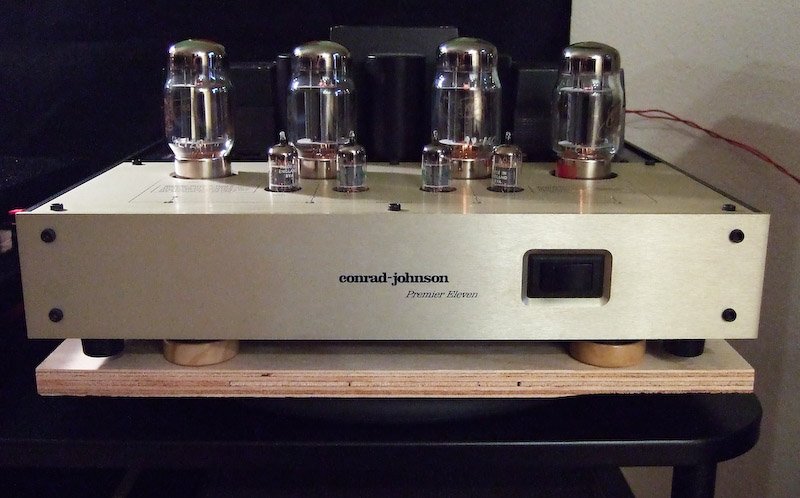
BoardsNBlocks-3.jpg


Search in the Steve Hoffman audio hardware forum for "inner tube", "Barry Diament" for many, many examples and much discussion of this technique.

What do you mean put a straw under the inner tube? Can you explain please?
Thanks
 
What do you mean put a straw under the inner tube? Can you explain please?
Thanks
I believe he means you should lay a common drinking straw under one portion of the rubber tube to provide a pressure relief, so that the weight of the turntable and board doesn't seal the air pocket inside the tube and provide an "air spring" effect.

edit: I'm considering doing this myself with a 15" x 18" x 3/4" thick piece of aspen under the table. Would there be any advantage (or disadvantage) to doubling the boards (glued) into a 1.5" thickness?
 
Last edited:
Just found a set of these:
DSCF4480.jpg


They look to be at least 20 years old but immacculate. Anyone have experience with them?

I'm currently using sorbothane hemispheres under my Technics SL1300 which do a semi-decent job of isolating the turntable. A too flexible floor is the primary culprit I think. Or shouldn't that matter?
 
I've read through the inner tube and ball bearing isolation with much interest. Those that are isolating amps this way seem to be using tube amps. Would solid state benefit from the same isolation?

I had a friend who repaired TV's and VCR's. I remember one day we were working on my VCR and he "tapped" one of the circuit boards. The result was an audible thump through the speakers even though there are no accoustic pickups in a VCR, only magnetic. He said something about accoustic resonance through the components. I've never quite figured out how accoustic resonance can affet solid state, but perhaps there are benefits to isolating?
 
Plexiglass

Just used 4-audioquest sorbsthane Q feet under a sheet of 1 inch plexiglass with 1/4 in cork on top followed by a second layer of 1 inch plexiglass them the table, will Q feet under the table have Any added value?
 
It is a b*tch trying to pour sand through the opening in an innertube. The guy who thought of this must have the patience of Job. :D
 
Balifly,
Thanks for the tip on the marble boards. I just ordered one for my Music Hall TT. Damn thing weighs over 19 pounds.
If it doesn't work out there, I will try it elsewhere in my system. For what little it cost, as a last resort, I can always give it to my wife for it's intended kitchen purpose. :D

Carl, did the mapleshade brass footers not work out?
 
You might find some interesting info as to how broadcast turntables were installed in radio stations and recording studios. I'd rate these installations as the gold standard for turntables. After that you have the sand box, wall shelves or maybe a heavy/solid counter/cabinet attached to a wall. Also if you can find one the original Lead Baloon turntable stand. A couple more to consider, the Cotter and VPI plinths.
 
I ordered 4 of the Sorbo vibration pads and put them under the top shelf of my rack. Inexpensive and works well.

Mike

iso.jpg
 
Back
Top Bottom