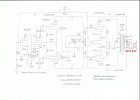
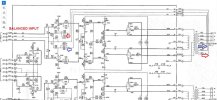
That's a tough question for me to answer because for me, there's a number of different issues involved. For example, which is better from a sonic standpoint? Or which is better from a measured performance standpoint? Circuit design standpoint? And are you talking about their original stock design, or modified? Because I've been involved in all of these aspects of these amplifiers, a simple question like which do I prefer doesn't easily generate an easy answer.
From a sonic standpoint, I need more time to assess the modified W-5, but it is certainly special sounding -- notably so right off the bat. But honestly, the W-2, W-3AM, and W5 -- all in modified form -- sound really excellent, so I could easily live with any of them once modified from a sonic standpoint. I don't have the ability to perform any true double blind testing to really test for any true sonic differences, but from extended listening I've already done with the modified W-2 and W-3, and now what I am starting to gather the W-5, they are all really excellent.
But the measured performance and circuit design elements play into my preference thoughts as well. So when you mix all of this together, my thought process would take this route:
In stock form the W-5 is out for me, because I know of the potential damage it's doing to itself with every application of power. That leaves the W-2 and W-3AM. In stock form, the W-2 is at best barely stable, so it's out too, leaving the W-3AM as my preference in stock form. It also has the turnoff pulse, but with a more robust output transformer, it's more of a Timex watch in this case, so the W-3AM gets the nod.
In modified form however, things get turned upside down. The W-3AM has the least desirable HF transient and load stability of the bunch when all three output taps are considered. The W-2 has wonderful HF transient and good load stability regardless of output configuration, but with the HF power loss, while the modified W-5 now has wonderful HF transient stability, zero HF power loss, and absolute stability. Load stability is hugely important to me, producing (I think) one of the most audible differences between amplifiers of marginal, and exceptional load stability capability.
The only way in which the modified W-2 and W-3AM have better measured performance than the modified W-5 is they have lower 20 Hz distortion, but the W-5 produces more 20 Hz power than the other two, so this advantage isn't as much of an advantage as it may seem, and goes completely away at 25 Hz or greater.
Then there's the issue of the 50% tap versus the genuine UL specification, versus the partially cathode coupled output stages. In the 6L6 class of tubes, I don't know that there was ever a transformer developed of true UL specifications with individual 4, 8, and 16 Ohm output leads, that had a flat power response with low distortion, identical supersonic performance on each tap, would allow for absolute stability, and could produce an extended frequency response down no more than 1 db at 40 kHz or greater, and could produce a flat top 10 kHz square wave. In all of my experience, I only know of only a very few transformers that are capable of that level of performance. One is the Dynaco A-470 transformer in the Dynaco ST-70 (for EL34 tubes), the unbelievably stellar Peerless UL transformer in the Heath W-6 series (for 6550 tubes), and of course McIntosh and 1980s and later ARC transformers. There may be others of this capability, but they don't readily come to mind.
Ultimately, because of my direct work with 3 partially cathode couple output stage applications (and knowledge of a 4th), I am rather quickly coming to the opinion that this type of output stage is capable of better performance than a tapped screen or UL specification output stage is because it inherently produces much less distortion, is easier to drive, and is easier on the tubes as well. But of course, that mode of operation is only possible with an output transformer that has individual 4, 8, and 16 Ohm output leads, and that has identical HF performance at each output tap. The Acro transformer gets automatically ruled out of this type operation, as any attempt to do so will only result in a power oscillator. The early Peerless transformers won't work either because only one output impedance is available at any one time. In this regard then, the W-5 transformer really shines.
When all of this is considered then, and with what I now know, I prefer the modified W-5M, followed by the modified W-2M, with the modified W-3 bringing up the rear. Don't get me wrong. The modified W-3 is a very good amplifier, and I'm hardly ready to part with mine. But if you ask me which I prefer, then because of all the issues cited, the modified W-5 rather handily takes the top spot. At this point it is at least as good as the other two are audibly, likely better, and does all of the measured elements better as well with the exception of the 20 Hz caveat mentioned, which I can easily live with.
I hope this helps!
Dave