• The move to the new server is done. There are some software and database maintenance updates in process. This has us passing the hat around to help out. We appreciate any donations. Seriously, even a dollar helps. The payment page may be found here - https://www.audiokarma.org/support.html

Vintage Turntables: Time to Throw in the Towel?

0ADF12AD-8CE7-4907-A613-89563557405C.jpeg 558492D6-ACAF-4B3F-9A7F-912B3F642285.jpeg AEA81A15-4E19-4E7B-8C0E-EA89DCCD46D7.jpeg B29B65A6-7D9F-4129-AD69-F794E33D20CA.jpeg 5E263D64-25BE-401D-A9B5-01843F8D5392.jpeg

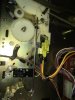
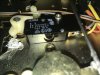
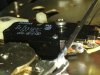
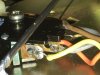
OK so I opened up the JVC again and took some pics of the switch. First of all, the wires (yellow, gray, orange) do appear to be soldered to the switch. I'm wondering, would there be a good way to replace the switch without soldering? Or, if soldering is required, does anyone have any recommendations for soldering irons? I see ones on the Home Depot website for as little as $10--would something like that be good enough for what I'm trying to do? I've never soldered anything before (if that wasn't obvious!) but I'm interested in learning how.

Now, in terms of switches: the exact part that JVC (QSM1V01-002) specifies is currently unavailable via Encompass, but they say it's supposed to be back in stock in a few weeks. I'm wondering, do I need to get that exact item, or are there other switches that will work? A reply from "Mizuno Takahashi" on this page (http://thevintagehifishack.com/1977-jvc-jl-a40-professional-turntable-for-both-stereo-quadraphonic/) recommends the following (https://uk.rs-online.com/web/p/microswitches/8046234/), which is called "SPDT Push Button Microswitch, 16 A @ 250 V ac". A Google search for "16 A 250 V AC switch" returns many things that look similar to what's in my turntable. However, I notice some of them are 15A, some are 3A, some have "HP" on them, some don't...as you can see from my pictures, the switch that's currently on the turntable is 3A 250V AC (also 5A 125 V AC). Does this mean that a switch rated at 3 or more amperes/250 V AC should be fine?

Thanks again.
 
All three of the vintage turntables I've owned over the past 5 years (1 belt drive and 2 DDs) have had speed issues, and I have never been able to get the strobes locked in and perfectly still. Using the RPM phone app with the strobe at its most stable always reveals the platter is moving a little too fast or slow, and with some nontrivial wow/flutter.

I get that these are 40-45 year old machines and they may be a bit wonky. And I suppose the .14% W/F reading I get on my entry-level early '80s Technics is still better than, say, the current Fluance tables which only promise .2% brand new.

Am I just being too picky? There are a few videos on YouTube like this, where people say they're locking in the speed but you can still clearly see the strobe dots moving (near the end of video):


This makes me think that perhaps I'm expecting too much. OTOH I have seen, wth my own eyes, tables where the lights are rock solid and don't move at all. Is this just the difference between a cheaper vintage table and something more pricey?

Everyone says that if you're on a budget, it's better to get an old turntable than any of the new ones, but I'm starting to wonder. I guess my question is: is there anyone out there who has a basic vintage deck with none of these speed problems, or do they just come with the territory?

Thanks!

-Stephen


Just saw this thread - man, hate getting to threads late, conversation moves fast and probably is beyond what I have to say on the matter - have posted re: my experience but I want to re-post/tell it again.


1.- Started with vintage tables, DD and belt. No issues on the DD ones, speed or otherwise; had speed issues on the belt one. These were affordable turntables. Technics SL-23 (belt), Pioneer PL-400 and Technics SL-D3 for the DD ones.
2.- Started to get worried about not only possible issues, but also about unobtanium if repair was needed
3.- Got a relatively affordable new, modern turntable from one of the European most well known vendors. It was defective.
4.- Afraid of manufacturing issues, instead of replacing with the same, returned and replace with one from 'the other' vendor. My freaking luck, defective too.
5. Decided to go to modern, mass produced. AT-LP1240. Rock solid. It even received cartridges that were more expensive than the turntable! Worked great.
6.- Got the upgrade itch. No reason just wanted to move up. Considered, again, the belt driven modern turntables that the audiophiles love. Given my experience, decided against it, went again with modern, mass produced.
7. - So got a Pioneer PLX-1000 and an AT-LP7 - got both just to evaluate and in the end kept both! :D
8.- Extremely happy with both of them. Again, selection of cartridges, some of them more expensive than the actual turntable!

Some notes

So yes, my preference is biased in favour of modern electronics. However, there exists also some bias against them. Not sure where your WF number for the Fluance comes from, but as per

https://www.fluance.com/rt85w-refer...rntable-natural-walnut#content-Specifications

it is actually 0.07%

There is an idea that vintage ( and modern belt driven tables) will offer better specs for the money. Will leave the conclusions as an exercise to the reader.

But consider this. Take for example the LP-1240 - WF in https://www.audio-technica.com/en-us/at-lp1240-usb is "<0.1%" - lots of comments ensue on the crappiness of Chinese manufactured turntables. BUT - then, there are measurements out there - commissioned by an Australian Hi-Fi magazine to an outside lab, if I remember correctly, wish I had the link - that measured it at very acceptable 0.05% OR SOMETHING LIKE THAT - don't hold my feet to the fire, the point is that the spec is decent.

How? well - Well it looks like when commenting, people ignore the "<" sign on the spec. LESS than - lots less. I do assume that what they list is a theoretical high value and given the price point, while they stay in the ballpark of good performance, cannot promise a specific number. That's OK, in my mind.


So, yes you can be very happy with relatively inexpensive modern electronics. Specially the AT-LP7 and the PLX-1000 - they are no slouches. I have no issue putting expensive cartridges. Some people say "super good turntable (and expensive! :D ) with lesser cartridge" > "ok turntable with good cartridge". Personally I disagree. IMHO a better cartridge is a better cartridge, what matters in sound are transducers (as long as properly matched). YMMV of course. So yeah I am as happy as Philip Glass in a non-denominational winter celebration! :D

BUT! :D

All that said, I pine once in a while for a beautiful vintage table - specially some the 80s DDs from Denon, Kenwood, Sansui and others. Not only those are beautiful, I do believe they are the non-plus-ultra of turntable design, perfected just as CD was about to take over the world. I do get the itch of selling something just to get them. But going back to the SL-D3 or PL-400? nah. Modern, easily serviced wins IMHO. To be fair, the D3 and the PL400, rock solid speed as measured by their own strobe.


Apologies - I know I am gonna read the rest of the thread and will notice that conversation has moved on, I am repeating what others said, etc. But, well, wanted to have say.

thnx!

v

 
View attachment 2096996 View attachment 2096997 View attachment 2096998 View attachment 2096999 View attachment 2097000

OK so I opened up the JVC again and took some pics of the switch. First of all, the wires (yellow, gray, orange) do appear to be soldered to the switch. I'm wondering, would there be a good way to replace the switch without soldering? Or, if soldering is required, does anyone have any recommendations for soldering irons? I see ones on the Home Depot website for as little as $10--would something like that be good enough for what I'm trying to do? I've never soldered anything before (if that wasn't obvious!) but I'm interested in learning how.

Now, in terms of switches: the exact part that JVC (QSM1V01-002) specifies is currently unavailable via Encompass, but they say it's supposed to be back in stock in a few weeks. I'm wondering, do I need to get that exact item, or are there other switches that will work? A reply from "Mizuno Takahashi" on this page (http://thevintagehifishack.com/1977-jvc-jl-a40-professional-turntable-for-both-stereo-quadraphonic/) recommends the following (https://uk.rs-online.com/web/p/microswitches/8046234/), which is called "SPDT Push Button Microswitch, 16 A @ 250 V ac". A Google search for "16 A 250 V AC switch" returns many things that look similar to what's in my turntable. However, I notice some of them are 15A, some are 3A, some have "HP" on them, some don't...as you can see from my pictures, the switch that's currently on the turntable is 3A 250V AC (also 5A 125 V AC). Does this mean that a switch rated at 3 or more amperes/250 V AC should be fine?

Thanks again.
@BillWojo, I meant to tag you in the above.
 
I would wait for the JVC specific switch. I think its a special version/form factor. Solder some connectors onto the wires, less chance of doing damage if your new to soldering. Are there any AKers in your area that could help you?

BillWojo
 
I would wait for the JVC specific switch. I think its a special version/form factor. Solder some connectors onto the wires, less chance of doing damage if your new to soldering. Are there any AKers in your area that could help you?

BillWojo
So I ordered the JVC switch, which as I said is out of stock. I'm really hoping it's only temporarily out of stock, since I've looked around and that part doesn't seem to be available anywhere else. I may try to contact the vendor and see if they can tell me.

Anyway, I guess I'll check back in here if and when I get it, and in the meantime I'll figure out what I want to do about soldering.
 
As it’s been stated already, you can save money by getting and older/vintage turntable. Another aspect I really enjoy though is learning the history behind the tables. What did a specific turntable have that was brand new during that time? What’s the manufacturing history? All of this greatly interests me, so having something with a cool background adds to the appeal to me.
 
@cmnparlance

I have a TT with similar problem.. Although it is not a JVC but it is a DD TT.
It helps to have good switches (reliable contacts) but The problem behind the switch (in my case) is not the switch but some electronics...

I was able to make the problem more prominent By playing arround with values of components.. I also was able to make the problem less.

Since I want to make a point with this TT I'm willing to fight Hell and High Water to solv the problem..As I did with many other proble this TT had.
I Pinpointed the problem towards tolerance in components.
Resistor can go out of tolerance also IC's are known to do that as wel as Caps of all kinds...

Since The manufacture had specific properties in mind, he selected IC's and transistors with additional properties.. The replacement component market often cannot come up with these "just a little better" components... just the regular run of the mill is all what they can come up with...

SO in my case I have to correct on that problem... I had to replace many components Including he motor to get the TT running again..So I'm out of sync with the component tolerance...I also already replaced resistors (for Metal film) and Adjustment potentiometers and now I'm looking in replaceing the Polypropuleen caps on the motor driver board with High spec types also polyporps... And a very small adjustment in value of the coil balance circuit..

This should correct my problem but it is and was no easy walk in the park...

I give you... these are not standard repairs... so I hope for you replacing the switch will do the trick....
If not... Next thing is download the Serivce manual...and re-adjust the Motor drive board... This is not and easy job whitout the proper equipment and understanding what needs to be adjusted.

I know this does not help you to solv this problem...but I hope it gives you courage to keep on trouble shooting, even beyond economical bouderies..
 
I would wait for the JVC specific switch. I think its a special version/form factor. Solder some connectors onto the wires, less chance of doing damage if your new to soldering. Are there any AKers in your area that could help you?

BillWojo
Just got an email that my order was canceled by Encompass, because of course the switch is now discontinued. Seems strange that the last remaining stock of a part for a 45 year old turntable would sell out exactly at the time I need one, but it is what it is. I remember there were something like 8 in stock (according to the website) a few weeks ago when I first checked, so now I'm kicking myself for dawdling.

Anyway, I'm wondering if it's worth trying a third party switch? There are lots of them out there that *look* similar to the old switch, for example this:

https://www.amazon.com/gp/product/B07KNP57H9/ref=ox_sc_act_title_1?smid=A1THAZDOWP300U&psc=1

Would something like that theoretically work? I'll need to measure the old switch, but it looks like it's the same size--but are there other specs or factors that I'd need to consider?
 
Wellll if that is the "sort of switch" They are readely availeble...

Just run of the mill microswitches... so if it not going to be on stock... place make a picture of the original... and post it so we can help to find a great replacement...
 
Wellll if that is the "sort of switch" They are readely availeble...

Just run of the mill microswitches... so if it not going to be on stock... place make a picture of the original... and post it so we can help to find a great replacement...
See my post #223 above for some pics I look of the switch. If you are unable to see them or need more pics, let me know. Thank you.
 
As it’s been stated already, you can save money by getting and older/vintage turntable. Another aspect I really enjoy though is learning the history behind the tables. What did a specific turntable have that was brand new during that time? What’s the manufacturing history? All of this greatly interests me, so having something with a cool background adds to the appeal to me.
All of that appeals to me too, as well as the aesthetics of the old gear. And I do agree that in theory, one can actually save money at the same time. All of that is the reason I’m drawn to vintage gear.

But what I've found--as described in my posts here--is that vintage equipment often needs some work to get it back to good working order. And that work frequently requires expertise and tools beyond what the layperson (such as me) has, OR hiring a professional to perform servicing--which, if you can even find someone to do that work anymore, can get expensive very quickly.

I've read many, many forum comments where people assert that old, quality direct drive turntables rarely have serious issues that can't be solved by cleaning pots and lubing. However, that simply hasn't been my experience. Once you get into things like caps, chips, switches, etc., and the prospect of spending hours and days doing research, tracking down parts online, troubleshooting, and all the rest, the idea of just spending a few hundred bucks to get something mediocre but brand new starts to be a lot more appealing.

Finally, where I live it's pretty much impossible to find a good quality vintage turntable, in reasonably good condition, for less than $200. Add to that a new stylus/cartridge, plus whatever servicing or repairs may be needed, and you're getting close to the cost of a half-decent new table.

Maybe I've just been unlucky? But I feel like sometimes online posters paint too rosy a picture of the vintage gear landscape as it currently exists.
 
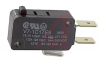
upload_2021-1-20_20-14-10.png Does this look similar?

I bet radio shack have the kind of Micro Switches With extra protectors whitout.. Sometimes the connections are a bit different... but the function is the same and so are the mouting holes..
 
I've lost track - why do you think the switch in the JVC is bad? That's the main power switch and it wouldn't have anything to do with the platter speed. If the turntable turns on, it's good.
 
View attachment 2103619 Does this look similar?

I bet radio shack have the kind of Micro Switches With extra protectors whitout.. Sometimes the connections are a bit different... but the function is the same and so are the mouting holes..
Yes, the current switch in the table looks like that except it doesn't have that prong at the bottom. I think there are three wires that connect to the switch (you can see the yellow, orange, and gray in my pics) and it looks they all connect on the right side of the switch, so maybe there are three prongs on that side, instead of two on the side and one below? I'll need to look at the table again.

If that's the case, could those three wires be connected to the three prongs on the switch you pictured?
 
I've lost track - why do you think the switch in the JVC is bad? That's the main power switch and it wouldn't have anything to do with the platter speed. If the turntable turns on, it's good.
The issue with the JVC is the speed wavers--not a huge amount, but the strobe light moves to one side and then sort of lurches back; it's impossible to get it to sit still.

The switch in question is the 33/45 selector switch, and there have been suggestions here and elsewhere online that these switches can go bad over time and cause speed problems. I don't think it is the main power switch for the unit, unless I'm mistaken?
 
Yes those switches can go bad but it is only after replacing that you know for sure..
As far as I can see your switch also has 3 connections..

So okee..lets switch (no pun intended) to a earlier post of you..
And that work frequently requires expertise and tools beyond what the layperson (such as me) has, OR hiring a professional to perform servicing--which, if you can even find someone to do that work anymore, can get expensive very quickly.

Maybe I've just been unlucky? But I feel like sometimes online posters paint too rosy a picture of the vintage gear landscape as it currently exists


First of al... yes some Vintage gear lovers can paint rosy pictures... But...(this is the hard part) They are willing to put in time and effort to learn skills. (or they are "grown naturely")

What I mean You are thinking about ditching a very nice TT because maybe a 2 dollar switch is kaput ... That does not make sens to me...
Really it is not hard to buy a 10 dollar fine soldering iron...a 4 dollar 4 mm thick, small roll of 60/40 Soldering (with core) wire and a 20 dollar simple measuring device.

Ask arround in you neighbourhood for that youngster or better yet that grumpy oldtimer who is happy and willing to learn you the basics. It really is not that hard.
I gues ones you learned to use a computer.... it is not much harder... really!
Ones the smoke or Sodering Fumes clear you might find yours self writing a succes storie in rosy language here on AK!

Stupid question.... What is your location? Europe? USA? Canada?
 

Attachments

  • upload_2021-1-20_20-48-29.png
    upload_2021-1-20_20-48-29.png
    263.1 KB · Views: 1
Back
Top Bottom