• The move to the new server is done. There are some software and database maintenance updates in process. This has us passing the hat around to help out. We appreciate any donations. Seriously, even a dollar helps. The payment page may be found here - https://www.audiokarma.org/support.html

What are these?

mmcc

Well-Known Member
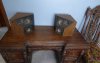
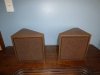
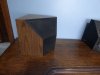
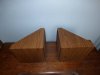
These are for sale near me. Seller says there are no markings on them.

Any guesses as to what they are?

Speakers1.jpg Speakers2.jpg Speakers3.jpg Speakers4.jpg
 
Register to hide this ad
Couple of CTS 4.5" mid/woofs and a tweet on the rear, and looks like a possible full range or woofer on the front. Hmmm . . . . I can see several applications for them, but no earthly idea of their origin. They do not look like home-builds.

GeeDeeEmm
 
Those 4.5" drivers look like the CTS XS-510 used in the original Bose 901, they do not
sound good without EQ but if you like the form factor they could be replaced.

They were also used 4 on each side in a corner placed speaker in Popular Electronics in April 1970. Page 43 here: http://www.americanradiohistory.com/Archive-Poptronics/70s/1970/Poptronics-1970-04.pdf

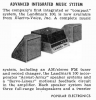
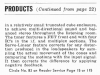
The bottom of page 22 and top of page 24 of that Popular Electronics shows an Electro-Voice Landmark 100 compact system with speakers that look similar (if you were to turn them on their side).

EV Landmark 100 pg 22.png EV Landmark 100 pg 24.png
 
The cabinet should minimize any internal standing waves. I'm not a vintage collector but have a few favorites I've kept over the years. What is the protocol for something like this, restore to original, or improve with more current drivers? The 4" drivers have improved greatly over the years.
 
Interesting there was a servo control circuit. The small cabinet should produce a lot more bass with the original amp powering it.

CTS sold a lot of drivers but it's interesting that, at the very same time (1970), Louis W. Erath was building LWE feedback speakers in Houston using CTS drivers. Maybe it was just a thing around that time.
 
Interesting there was a servo control circuit. The small cabinet should produce a lot more bass with the original amp powering it.

CTS sold a lot of drivers but it's interesting that, at the very same time (1970), Louis W. Erath was building LWE feedback speakers in Houston using CTS drivers. Maybe it was just a thing around that time.
Interesting to note, too, that despite the fact that CTS supplied drivers to some of the major loudspeaker companies of the 1960s-70s, loudspeakers merit barely a mention in their company history:

https://www.ctscorp.com/company/history/

GeeDeeEmm
 
Back
Top Bottom