• The move to the new server is done. There are some software and database maintenance updates in process. This has us passing the hat around to help out. We appreciate any donations. Seriously, even a dollar helps. The payment page may be found here - https://www.audiokarma.org/support.html

Why Recap Speakers and When?

You can try some nice polypropylenes to see what you think -- I tried it with some Old Advents and the top sounded too hot.[/QUOTE]

Greetings All, I just finished a recap and recoil? of a pair of 1975 Large Advent Utility's. For some background they sounded OK at low watt levels, 1/2 watt or so but crank them up higher and the music blended into into a mush is my best description.Also what I would agree with as a too hot mid range.

So after researching all about cap soakage,leakage, DF,DA,ESR, ESL, Polar, Non Polar, Mylar,Electrolytic,Polypropylene,
Teflon,Metal Polyprop,PIO, Film and foil, Solens, Mundorfs, Sonicraft, Auricaps, house brands, Jantzens, Kimbers, and all that I decided on using Solen MPP's from PE.

And also changing out the ferrite core inductor in series with the woofer with an air coil of the same value and DCR as the original. Also from PE. And what I also did to cool off the hot mids was to change the 3 ohm sand resistor in series with the tweeter with a 5 ohm Mills resistor that according to my calculations should lower the voltage to the tweeter by 2 db or so.

Well, after the parts swap to say the change was startling would be an understatement. No more mush at higher levels and the mids were much more balanced to the low end. I heard instruments that I had no idea were there.

You won't hear any Audiophool drivel from me about lifting veils and such but I just heard good clear music coming out of my vintage Advent's. My guess is that the old Electrolytics had some awful DA in the 10 percent range or more. Probably what I described as mushy sound as the cause. They checked out at the labeled capacitance but thats as good as I can test them.

So the combo of better caps, reduced drive to the tweets and an air core woof inductor made a substantial increase in my enjoyment of these old gals. As many wiser heads have said here and elsewhere, get rid of them Electros and slap in some good caps of your favorite flavor. My choice may not be your choice so YMMV.

And as a final comment I would have to say the different parts did not change the voicing of the Advents just cleared it throat, sorry....

Marcus
 
Reading all this tells me that when I need to recap my KEFs I'll be sticking with OEM types: a 10μF 100wvdc polarized electrolytic and a 4.7μF 100wvdc non-polarized electrolytic. I don't need the "brighter" treble that comes with polys or film types.
Tom
 
Reading all this tells me that when I need to recap my KEFs I'll be sticking with OEM types: a 10μF 100wvdc polarized electrolytic and a 4.7μF 100wvdc non-polarized electrolytic. I don't need the "brighter" treble that comes with polys or film types.
Tom

Your choice of new NPE's may also yield a brighter treble. It all depends on how much the old one's ESR drifted upward. If the old cap's ESR rose well above 1/2 ohm, good quality new NPE's will most likely be significantly lower and thus allow more voltage to the tweeter.
The important thing to remember here is restoring the original ESR will result in restoring the original SPL output of the tweeter. That can happen with most any type of cap. Additionally, the choice of NPE types will inevetably lead to the same inherent deterioration in future years as occured with your current ones. Thus, I tend to favor film types for there inherent long term stability when recapping xovers for my customers.
I think Signal-Dude did a good job with his careful selection of cost-effective, components.
 
Thanks signal-dude for some interesting comments that I will remember when I finally get around to the second phase of altering my old Tannoys. Old guys my age here in Japan are of the opinion that you should build a shrine for these things, then venerate and leave them untouched forever. If that had become my religion, I'd have abandoned or sold them off years ago.
 
hello,

i've recently acquired some 25-30 year old homebrew speakers. they've got good bass, decent mids as well, but not enough highs. after reading this thread i figured they needed a recap, so i recapped one of them but to be honest i don't hear any difference. i was hoping someone here could tell me if there's something else that might be causing this.
now these aren't exactly sophisticated homebrews, so i guess tweaking won't turn them into anything spectacular, but since they were free i figured i'd be a good learning oppurtunity. so that when i run into something good that needs repairing i'll know (a bit) what i'm doing.
right. so only one of the drivers is labeled properly:
woofer: wharfedale 3010, 6 ohm DC, 25 cm/9"
mid: only says 3/ 13 or possibly 73 / 5 , 12.5 cm/5"
tweeter: only says "made in england", it has a clear purple plastic dome, one inch across.
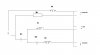
i've also attached the crossover:
R1= 3.3 ohms
C1= was 6 uF 50 V, replaced with 6.8 uF 100V
C2= was 25 uF 50 V, replaced with 22 uF 100V
I1= 0.5 mH
I2= 4.0 mH
I3= 0.3 mH

i'm not exactly an electronics expert, but does the crossover wiring mean that that resistor (R1) is the thing limiting output to the tweeter? is it safe to replace it with a lower rated one and thus give the tweeter more power?
thanks in advance, hope the AK experts can help me out
 

Attachments

  • crossover copy.jpg
    crossover copy.jpg
    48.4 KB · Views: 207
This might be the subject of a new thread, and I recommend that you start one for the most effective response. There are some really knowlegable people in AK who may help you with this as a learning project, and in the process help others like myself.

I cannot help you much if at all here. But here are a few things to think about as you prepare to start your new thread: Try to identify as best you can the three drivers used. Then try to get as much if any detail in the way of specifications — even if you don't understand them. Hopefully, these speakers were assembled with some rational consideration as to the engineering and compatability of the drivers, cabinet and Xover circuit. There is a LOT of stuff to engineer in a 3-way speaker, and something really satisfactory is very rarely the product of good luck. Just speaking for myself: if I were thinking of a ground up homebrew, I think that I would be sticking to a single driver design — something that has attracted some intense interest and devoted fans.

Good luck, and I'll be waiting to see what replies you get ... here or ... there.
 
thanks for the response lorne. so can i just move this message or do i need to repost it? guess i'll just repost it anyway...
as for the engineering design, i don't have a clue where to start myself but i've the feeling these speakers aren't terribly advanced. they're mounted in a simple rectangle box, vibration damping inside consists of egg carton and glasswool (that's what we call in holland, not sure about the translation; the stuff looks like what's used in sleeping bags) and the mid's isolated from the rest by fitting it in a cardboard tube stuffed with dark cloth/fibrelike subsance
 
Hi: I'd just repost with a subject line like "HELP with strange speakers please." Try to take some photos. Someone will probably recognise the drivers if you can't lift any description from the units. If there are any ports, you note where they are or put them up as pics. If you need any help putting up attachments (pics), write me a private message and I'll help you. BTW, I think that Americans know 'glasswool' as fiberglass, and perhaps the British have come to use that term as well. In Canada during the 1950's, we used both the word glasswool and fibreglass.
 
I have an 8 page study report, which, IMHO, answers those questions.
****snip****
Unfornately, the file size exceeds the AK limit for a .pdf file. Thus, anyone interested in a copy is welcome to contact me directly and I will gladly send a copy directly to you.

I would me interested in the PDF file. I can also host it on my server if others want to download it. My email address is salb203 at optonline dot net.

Thanks,
Sal
 
My question however isn't answered in any of the posts. At what point does a speaker need to be re-capped? How many years after original purchase? How long in storage without any use before it's time to re-cap? Do the caps last longer if the speaker hasn't been played, or if it's been in constant use?

Thanks for the help!

In an ideal world, the answer would be, "when testing in an anechoic chamber shows that the frequency response has significantly changed from the original specs." If you don't have access to an anechoic chamber (and how many of us do?), there are some times when the need is fairly obvious, such as there's no sound coming from the mid or high drivers even though the drivers test ok, or even though there is sound, your speakers sound "muddy" and nobody else who has them say they sound that way. If that happens, I'd open up one of the cabinets and start testing caps, and if they test bad install replacements that are as close to the originals as I can get. I'm not inclined to try to out-think the original designers, and if replacing caps that went bad after 20 years with ones that aren't "better" means I might be back in there in another 20 years, I can live with that.
 
I'm not inclined to try to out-think the original designers, and if replacing caps that went bad after 20 years with ones that aren't "better" means I might be back in there in another 20 years, I can live with that.
As limited as I am, I'm inclined to 'out-think' the original designers. You might think of it as the DUH! factor. Why would I want to assume that an electrolytic capacitor, which certainly must have been deteriorating even after a mere seven years stint of duty, is a more enviable device than a film capacitor, which is naturally more suited to the environment of a crossover network in every way? And why would I want to retain the same electrolytic caps in place for another thirteen years, simply because some committee of engineers signed off on a project after the bean counters had finished with the per/unit costs. DUH! Electrolytic caps are just NOT the correct part for the application! And don’t you think that the engineers knew that when they designed the speaker?

And OK, so what if the voicing changes? Well, in some cases it will be an improvement. In some cases a film cap may not be an improvement over a fresh electrolytic type. In other cases, there may even be a substantial and distasteful change. Should the latter be the case, the enthusiast faces the choice of either tuning the balance of his/her system to suit the newly voiced speaker, or reverting to the electrolytic capacitor complement and replacing them MUCH more frequently than every twenty years.

Electrolytic caps deteriorate on the shelf! And they do not get any fresher in a network that dishes out VAC all day either! Barring cost, the engineering limitations of the electrolytic capacitor make them second choice for speaker networks. And waiting for them to fail is akin to a death watch. For some period of time, a function of life is noticeable but diminishing and fading into oblivion. If capacitors were worth the price of a Formula One racing engine, there may be a point to holding on. But they aren't — and there isn't!

I have done enough of these change-outs to satisfy myself in these matters. Some change-outs provide more or less ... this and that. But in the end, they were all worth while. In some cases the results were transformational in terms of sound. Virtually all were provident of some increased emotional involvement with the music.

Each to his/her own. If it makes no difference to your ears ... well then forget it. I have 60 year old hearing (tested to be average for my age), and these differences still seem obvious to me.

My interest in responding to the post above rests on this: older speakers may be a resource for retaining an experience ... a sensibility that belongs to an alternate experience of sound reproduction that is passing into history along with two channel analog recording. If these units are just allowed to decay, their essential worth my be under appreciated. They may become increasingly discarded as featureless lumps of particle board and iron.

I believe that there are millions of nice speakers out there ready for those of us who have tight budgets. These old speakers can provide us with great performances that can enhance our lives. Far too many of us cannot afford $1,000, $1,500, $2,000 for a pair of new speakers — many of which cannot be said to hold there own in terms of materials and build with SOME of the older products. I own three sets of speakers that years ago cost a significant amount of money. I bought all three for a small fraction of their original cost. Just one example is a pair of Sansui speakers I have recapped with film caps — SP-G88's — a purely Japanese domestic, 3-way, transmission line speaker with double layer carbon fibre woofer and mid, and titanium tweeter. These are not ancient speakers, but new film caps transformed them into something special from something just acceptable and interesting. I have to admit that the addition of some NOS Richard Allen tweeters boosted them into being distinguished performers — for a fraction of what it would cost to get something of equal performance today. But I dare say that all would have not been discovered had I retained the big film-cap bypassed electrolytic caps that were the original parts. These speakers are big, ugly, and heavy — real WAF negatives. But, besides a set of Magnaplanars that I lived with for three years, they are the best I’ve ever had — after new film caps.

My question however isn't answered in any of the posts. [1] At what point does a speaker need to be re-capped? [2] How many years after original purchase? [3] How long in storage without any use before it's time to re-cap? [4] Do the caps last longer if the speaker hasn't been played, or if it's been in constant use?
(1)
If you have electrolytic caps installed in your network, I'd replace them within seven years. Many audio people will not use an electrolytic cap that has been sitting on the shelf unused for seven years. (But, see #4) Yes, they will work, but possibly not at their optimum design value. An electrolytic capacitor in a crossover network may be considered to be even at greater hazard than a shelf item as it has not been blessed with the VDC that this design enjoys, but may have exerienced more stress from heat. (See a post by a previous contributor.)

(2)
I'd look to seven years as in #1.

(3)
I'd look to seven years as in #1

(4)
Unless I have a gross misunderstanding, I'd say that it does not make much difference. But because crossover electrolytics are often larger and very robust specimens, they may resist idleness and use in a VAC environment longer than their minature polarized and non-polarized cousins. But, if we take a sloping away from optimal performance as a determinative, changing out electrolytic caps within a seven year period is a safe bet.

Newcomers are free to chose from these varying points of view. I have arrived at the last 4 points in my reply to Scorpion by way of a collation of many, many readings and opinions offered by more astute enthisiasts and professionals. It is up to readers to decide if I have done my work properly. And that is what we are about here at AK. I think this ... some one else thinks that. And science intervenes and has a firm guiding hand on the impartial, cogent observer. You readers be yer own judge — of course!
 
As limited as I am, I'm inclined to 'out-think' the original designers. You might think of it as the DUH! factor. Why would I want to assume that an electrolytic capacitor, which certainly must have been deteriorating even after a mere seven years stint of duty, is a more enviable device than a film capacitor, which is naturally more suited to the environment of a crossover network in every way?

I was referring to speakers that did not suffer measurable cap failure until well into their 20's or older. And I have tested caps of various types in 50-year old speakers that still met original specs. Some vintage gear was just better designed and built than others.

I am not saying I would leave caps that test as failed in place because they are "original," merely that I would not change out original caps in a high-value classic speaker on a knee-jerk basis merely because they are old without testing them first. Age is certainly a reasonable basis on which to presume that all the caps should be tested.

I agree with you that it would probably be worthwhile to try to out-think the designers of a speaker that showed signs of failure after only seven years. The possibility that a speaker may re-voice due to component changes is certainly less undesirable than a speaker that doesn't work at all, and if the speakers were of questionable worth to begin with and were obtained cheaply, there is probably nothing to lose by experimenting. But I would be more likely to just assume that the rest of the unit was designed and built with similar poor quality and replace the entire POS ASAP after that before something else blows. YMMV.
 
And I have tested caps of various types in 50-year old speakers that still met original specs. Some vintage gear was just better designed and built than others.
Very interesting, and I for one am taking note. If you have any good pics of such an old network with the caps showing up nicely, I'd like to see them. Also, would you please post details of how you tested the caps, and what instrument you used. I'm also interested if there were any tests involving actual signals, or were the tests for measured capacitance only? Best ... LORNE
 
I was referring to speakers that did not suffer measurable cap failure until well into their 20's or older. And I have tested caps of various types in 50-year old speakers that still met original specs. Some vintage gear was just better designed and built than others.

I am not saying I would leave caps that test as failed in place because they are "original," merely that I would not change out original caps in a high-value classic speaker on a knee-jerk basis merely because they are old without testing them first. Age is certainly a reasonable basis on which to presume that all the caps should be tested.

I agree with you that it would probably be worthwhile to try to out-think the designers of a speaker that showed signs of failure after only seven years. The possibility that a speaker may re-voice due to component changes is certainly less undesirable than a speaker that doesn't work at all, and if the speakers were of questionable worth to begin with and were obtained cheaply, there is probably nothing to lose by experimenting. But I would be more likely to just assume that the rest of the unit was designed and built with similar poor quality and replace the entire POS ASAP after that before something else blows. YMMV.

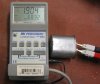
I think most 20 year old caps (perhaps even some caps that are 30 or more years old) will meet their original specs for capacitance if that is all you are measuring for. But, in my experience, it is rare to find caps older than 20 years in crossovers that measure good for ESR (Equivalent Series Resistance).

I will attach a picture of a bad cap. This one came out of a Klipsch crossover that was about 25 years old. Notice the top number. That is capacitance. The cap is a 2 uF so, the reading is pretty good. Now look at the bottom number. That one is ESR and reads about 68 ohms. So, with 68 ohms series resistance, almost no signal was going to get through this cap. Unless you can measure ESR, you are for the most part just wasting your time if you go through a bunch of crossover caps just testing for capacitance.

Bob Crites
 

Attachments

  • badcap.jpg
    badcap.jpg
    81.5 KB · Views: 161
Very interesting, and I for one am taking note. If you have any good pics of such an old network with the caps showing up nicely, I'd like to see them. Also, would you please post details of how you tested the caps, and what instrument you used. I'm also interested if there were any tests involving actual signals, or were the tests for measured capacitance only? Best ... LORNE

If I'd known at the time that I might have a use for such pics someday I'd have taken them. :)

I've repaired/restored about a dozen pairs of speakers over the past 40 years or so, most of them ARs of different types, with a few KLHs, some private label boxes of unknown parentage and one JBL Ranger Paragon thrown in for variety. So my experience probably doesn't qualify as any kind of statistical sampling.

Test instruments varied from handheld VOMs with capacitance settings to really expensive stuff I had no idea how to use (someone else did the testing and I just helped).

In all the cases, the caps were tested because somebody (not necessarily me) thought there was something not quite right about the sound that might have been caused by bad caps, and the caps were either removed or just temporarily desoldered at one lead. Testing was for capacitance only. The only "signal testing" involved in most was with the ears of the same person who originally thought there was a problem, except for the JBL, which got tested and retested several times in an actual anechoic chamber.

Patterns of failure: the most bad caps were from the private label speakers (no surprise there). AR and KLH cap states seemed to correspond fairly well to the condition of the rest of the box (battered boxes, bad caps, babied boxes, good caps). The caps in the JBL, which was about 25 years old at the time, were bang on spec, not surprising since it had been meticulously maintained and had not been moved from its spot in a university alumni center (the same school where the anechoic chamber was) since the day it had been delivered. Didn't find one thing wrong with that one.

The only conclusion I can draw from my experiences is that the odds of any component in a speaker being bad depend on (a) original choice of components, (b) original build workmanship and (c) the kind of treatment the unit receives in use. Nothing surprising there, right?
 
Unless you can measure ESR, you are for the most part just wasting your time if you go through a bunch of crossover caps just testing for capacitance.

Possibly, but if little or no signal is getting through the cap you ought to be able to tell something's wrong just by listening. I don't even bother to test the caps unless my ears make me think there's something wrong.
 
Possibly, but if little or no signal is getting through the cap you ought to be able to tell something's wrong just by listening. I don't even bother to test the caps unless my ears make me think there's something wrong.

Most old electrolytic crossover caps I test have ranged from 0.5 to over 1 ohm ESR. That's higher than they should be and, most likely were when new. That drifting gently softens the tweeter's output over time so it's hardly noticed, if at all.
However, when new caps with ESR'rs near or at 0 ohms are installed and the speaker fired up, the owner immediately notices a change, because it is a step change rather than a gradual one.
The question arises, at what point in the gradually escalating ESR curve is it time to replace old NPE caps? I don't think there is any hard and fast rule. My choice is >= 0.5 ohms. YMMV
 
Most old electrolytic crossover caps I test have ranged from 0.5 to over 1 ohm ESR. That's higher than they should be and, most likely were when new. That drifting gently softens the tweeter's output over time so it's hardly noticed, if at all.
However, when new caps with ESR'rs near or at 0 ohms are installed and the speaker fired up, the owner immediately notices a change, because it is a step change rather than a gradual one.
The question arises, at what point in the gradually escalating ESR curve is it time to replace old NPE caps? I don't think there is any hard and fast rule. My choice is >= 0.5 ohms. YMMV

I think your choice of >= 0.5 ohms is a good value to declare bad. That seems to be the value that almost anyone will think of as an improvement in clarity at least when the cap is replaced. The crossovers I rebuild most often do not use any electrolytic caps, so this increase in ESR is not limited to electrolytics. I find that almost every film and foil cap in crossovers from the 70s has an ESR of around 0.5 to 1.0 ohms. Also, if the filter is a higher order, the values of ESR for each cap in series adds and replacement makes an even larger difference to the listener. I like to see ESR in new caps at a value of 0.05 ohms or lower and usually see that value at less than 0.03 in quality polypropylene caps.

Bob Crites
 
One thing that ought to be taken into account when replacing caps in crossovers with film caps is capacitor current. Most cap manufacturers publish the maximum current in their data sheets. Unfortunately, calculating the current involves a little differential calculus which is going to put a few folks off. You can get a rough idea by calculating the impedance of the cap and using Ohms law to find the current. For instance, my crossovers have 61µF caps at the bass end so I use 13 x 4.7µF in parallel so that I don't exceed the cap current.

Bryan
 
Back
Top Bottom