• The move to the new server is done. There are some software and database maintenance updates in process. This has us passing the hat around to help out. We appreciate any donations. Seriously, even a dollar helps. The payment page may be found here - https://www.audiokarma.org/support.html

Why the hell won’t they give us meters?

Not that this a poll or anything, but I love meters. And the loudness button! Maybe it’s because I grew up living in apartments and small houses and always listened at a low level. I think I needed the loudness boost to make the music sound good.

Anyway, yea for meters!
 
Never in fifty years found any use for them on audio gear other than a convenience for setting bias. A VOM works just as well.

Amplifiers in three systems are either nearly or completely out of sight so I'd never see them anyway. ;)

I find my ears do quite well for determining balance, optimum levels and onset of clipping.
 
It is curious that the more you spend, the more likely you are to get meters, so the audiophile crowd obviously values them.
Except for Mac, I don't see this as true. Audio Note, Mark Levison, Audio Research, Krell.. no meters. Okay Pass Labs has meters..
 
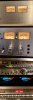
How about meters on a preamp? My SAE Mark 1M has some. They don't really do much except look pretty. Even though they are adjustable with two settings, they hardly move unless I really crank it, or turn the gain down on my amp. Although my current amp does not have gain adjustments.

IMG_20140526_194405_550.jpg
 

Thanks, just shows you that they don't have to be expensive. I'm sure you can buy even better ones for less than $100. My original point was that they used to incorporate them on midfi gear and now, when you do see them they appear mostly on more expensive equipment. It would be interesting for one of the majors (Yamaha, Denon Marantz etal) to try them on one of their mid price models ala a retro design to see if they sell.
 
I always get a bang out of people when they say Mac meters don't give much use full information. The amps with the older meters you could easily see a 1 or 2 db imbalance issue. If your amps are larger than the rating of your speakers which is very common now days they give you an idea when you should take your foot off the gas pedal . Kind of similar to your speedometer. Keeps you from blowing up drivers. They will also reveal the dynamics of the music you are listen, too and when there fore to further back off the controls or maybe allow you to add a bit more. Seeing recordings where the dynamic range is over 50 db is surprising to a lot of folks. Also when playing pop music seeing the meters barely move more than 6 db is quite revealing also. They can reveal other things too. Tonal imbalance, and in conjunction with the Power Guard lights when you have it just turned up to damn loud. They also reveal that your speakers can be dynamically challenged and should be replaced with more efficient speakers. This is especially true when you see the meters barely moving and yet you don't hear anything. The same thing could be true when you have blown a driver and haven't realized it. Sometimes woofers won't function at very low levels having been compromised and the meters will reveal this. They will also reveal when you have your speakers connected out of phase. See the needles pump with the bass and you don't hear the bass you know you have an issue. Polarity most likely.

If you have balanced your system left to right and the meters are not equal you personally have an issue, your speakers do or speakers are not placed symmetrically and should be. AS my speakers are not placed symmetrically and I use room equalization to correct the issue my meters reveal that in the bass region the left channel requires 4 to 6 db more power depending on the type of bass line being performed.

You can also see when the recording engineers have pushed the recording levels so hard limiting is present and to much compression is being used also. The MC 3500 was famous for being rated at 350 watts but capable of 490 watts before clipping. During live concerts it wasn't unusual to see the 3500 meters go to +1.5 db and the meter lamps start to dim telling you were right on the edge before clipping would take place. Unlike the SS amps that when pushed hard clipped easily and could be heard if the drivers didn't fail first. The 3500 gave you a warning. With digital recordings being the rage today the meters display has been widened from 25 db to 60 db so closer examination is required today to see some issues. I prefer meters on top of each other. having mono amps stacked for instance. Its easier to see small differences in meter reading for me. I also loved when meters worked up and down and were placed very close together mirroring each other. Similar to the level columns placed side by side on my MPI_4. Maximum performance indicator and large advanced mixing consoles. Mcintosh 8207 and 7106 are famous for their vertical column meters.

All that said I leave my meters off with familiar music. New performances always get metered for the initial audition. When I suspect something is wrong the meters get turned on. Keeps me from having to drag out the test equipment.
Wow, not really a meter guy, but I don't mind LED clipping lights.
Your comment about getting more efficient speakers was interesting. In my experience, less efficient speakers sound better, especially on the bottom end. You get much tighter and deeper bass from a smaller enclosures. I'll gladly buy a bigger amplifier.
 
Useful, accurate metering never was cheap. Yamaha, Denon, and Marantz can't offer metering which is useful most likely because they're very price point brands. Want this, you have to pay for it. And go higher end to get it or outboard. I would favor instead those three, building their integrated amplifiers without LCD displays, without IC chips, or common ones for essential functions, and no Surface Mount construction. Build them with discrete transistors. Put some quality back into them.
 
You're about the only person I've seen here that owns Ashly amps other than me.. You wouldn't happen to know anyone that works on them would you?

I've got one that one channel seems to be slightly distorted on. Had a friend look at it. Even though he can build an amp, he's not too versed in pro amps, and couldn't find the issue.. I'm hoping there's not a bad transistor..

There are a few of us on the forum that use Ashly amps. A couple of the Altec boys got me into them.

Right now I have 17 pro amps (I think). It’s 7 Ashly’s, a couple Haflers, and a single SCS. The rest of the amps are not mosfet.

I don’t know anyone who repairs them. If they were newer maybe Ashly would? But I’m sure it would be expensive.
 
Useful, accurate metering never was cheap. Yamaha, Denon, and Marantz can't offer metering which is useful most likely because they're very price point brands. Want this, you have to pay for it. And go higher end to get it or outboard. I would favor instead those three, building their integrated amplifiers without LCD displays, without IC chips, or common ones for essential functions, and no Surface Mount construction. Build them with discrete transistors. Put some quality back into them.
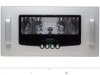
Ok, I will settle for the meters on inexpensive receivers of the 70s even if they are not that accurate. Yamaha sells this amp for $7,900 and I'm sure the owners like the meters. They also sell several other amps ranging from $300 to $800 that have no meters. All I'm suggesting is maybe they could make one with meters for say $900 for those of us who like the look. I have to agree with your points on better build quality for those who can afford them.Yamaha.jpg
 
Last edited:
Back
Top Bottom