

You are using an out of date browser. It may not display this or other websites correctly.
You should upgrade or use an alternative browser.
You should upgrade or use an alternative browser.
Zilch's AK Design Collaborative - Econowave Speaker
- Thread starter Zilch
- Start date

The Selenium 220TI's were on wholesale for $26.88!!! Not sure they still are....
DC
I have them in my cart and the price is $43.66 now.

That's pretty much how I see it, as well.I've observed from personal experience and the posting here and elsewhere that the world is ear-hole deep in well-built crappy sounding speakers by big-name as well as no-name makers that desperately need this treatment along with aged and abused examples of otherwise decent speakers with burned-up/dead unobtanium stock upper-range drivers.
[I get thrashed quite a bit for sayin' that, tho....
 ]
]
Pio1980
AK Member
The Selenium 220TI's were on wholesale for $26.88!!! Not sure they still are....
DC
When was that?

Duffinator
Spin The Black Circle
I haven't seen much of that lately.[I get thrashed quite a bit for sayin' that, tho....


dc270
Now Off the Reservation
When was that?
They still are if you get the wholesale pricing! Plus $8.58 for both to TX
http://www.parts-express.com/pe/sho...70&FTR=264-270 &CFID=805587&CFTOKEN=71674794
DC
They still are if you get the wholesale pricing! Plus $8.58 for both to TX
http://www.parts-express.com/pe/sho...70&FTR=264-270 &CFID=805587&CFTOKEN=71674794
DC
That link is still showing $43.66 ea.
How would us non dealres go about getting the wholesale price?

Paratima
E'Wavin'
Read here: http://www.pewholesale.com/
Places like this generally require a guaranteed minimum level of ordering.
Places like this generally require a guaranteed minimum level of ordering.
Read here: http://www.pewholesale.com/
Places like this generally require a guaranteed minimum level of ordering.
Thanks. I saw this at the bottom of the application page
* Requests for application will NOT be processed without faxed copy of business license information.
Double ACK
Well.....PE has pushed the I core inductor back to the 5th of Jan.
Well.....PE has pushed the I core inductor back to the 5th of Jan.

skywave-rider
Slumming in Akihabara
Hope you Michigan guys are OK for power.
Doesn't sound good in the news.
Doesn't sound good in the news.
skywave-rider
Slumming in Akihabara
Hahaha.

Vestigial appendages.
JK.
Vestigial appendages.
JK.

skywave-rider
Slumming in Akihabara
Eminence APT Driver
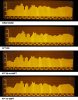
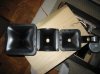
RTA of Eminence APT driver on standard E'Wave crossover:
First on Crites Tweeter (APT 50 on Crites horn -- made for Klipsch Heritage series to replace K-77 or T35.)
Next on APT200, integral driver horn assembly:
http://www.parts-express.com/wizards/searchResults.cfm?searchFilter=eminence+apt&FTR=&search_type=main&WebPage_ID=3&x=0&y=0
Then APT 50, using APT 200 screw on adapter, with 6x6 PT.
Finally APT 50 ...with 8x8 PT.
The crites tweeter, so small, actually sounds good, as does the APT 200. The top end is cleaner in all instances when compared to the 18 Sound HD120.
The APT on 6x6 is very good.
My Heresies sacrificed for the experiment. So I'll listen to this on 6x6PT for a while, but it's not permanent. Crites tweeters go back into Klipsch, and the 6x6 will be installed along with 18Sound HD120; it's pretty good too; they get donated to the school radio station.
PS: My measurement mic has a few dB hump centered at 10kHz.


RTA of Eminence APT driver on standard E'Wave crossover:
First on Crites Tweeter (APT 50 on Crites horn -- made for Klipsch Heritage series to replace K-77 or T35.)
Next on APT200, integral driver horn assembly:
http://www.parts-express.com/wizards/searchResults.cfm?searchFilter=eminence+apt&FTR=&search_type=main&WebPage_ID=3&x=0&y=0
Then APT 50, using APT 200 screw on adapter, with 6x6 PT.
Finally APT 50 ...with 8x8 PT.
The crites tweeter, so small, actually sounds good, as does the APT 200. The top end is cleaner in all instances when compared to the 18 Sound HD120.
The APT on 6x6 is very good.
My Heresies sacrificed for the experiment. So I'll listen to this on 6x6PT for a while, but it's not permanent. Crites tweeters go back into Klipsch, and the 6x6 will be installed along with 18Sound HD120; it's pretty good too; they get donated to the school radio station.
PS: My measurement mic has a few dB hump centered at 10kHz.
Attachments
You are probably already aware of this, but using the JBL 2225H (and 2235H) I discovered JBL's habit of having some woofers move positively (outward)
with the signal is applied to the black post of the woofer. The hot lead from your crossover should be connected to the black post.
Correct orientation will give better bass response. When I first attached the Ewave crossover to the 4647 cabinet, the bass was disappointing. Moving the crossover's hot lead to the black woofer post restored the bass.
Just a heads up,
Russellc
Hey Russell, yes, I remember your post on this and wired mine accordingly. The bass sounds so right with this connection that I am not even going to mess with them. I don't know if I would have the foresight to connect the woofers this way if the bass doesn't sound right. Thanks.
Man, I have been listening to this set up the past few days and if you are still on the fence on this project, get on with it!!! At first, I was afraid that the highs from the Selenium will kill my hearing like the highs from the Heresy and Altec Bolero (though the tweeter level is crudely adjustable). But no, the high is nice and smooth in my loft style bedroom. Time to get rid of some speakers.
It is possible to generate a very wide sweet spot using asymmetric horns. Read up on Project Everest (I), S2600 and S3100.
There's a review on S2600 in one of the LHF threads that explains it succintly. Link it here if you come across it, please.
Buyers didn't get it, basically, and JBL opted to sell them center channel speakers, instead....
Wow. I learn something every day that I drop in here. Thanks Zilch.
I came across these two reviews, though I'm not sure if either is the one to which you were referring:
New Speakers in Da' House- JBL S2600
JBL 4430 vs S3100 vs S2600 in home
The picture on the LHF explain asymmetric horn theory well. Many have said that the sweet spot of waveguide/horn speakers such as the Econowaves can be widened by toing-in the speakers such that they cross an imaginary point "in front" of the listener.
All of this leads me to conclude that accurate imaging results when the audio signal from left and right channels arrives at the listening position according to (at least) three theretical aspects:
1. frequency response must be the same (including any reflections)
2. amplitude must be the same
3. arrival time must be the same
It has been observed that signals that are the same in frequency response and that arrive within a relatively small time window, ten(?) milliseconds or so, are combined by our brains into a single sound. So, for practical purposes we might be able to ignore distance differences to each of the two speakers for listeners who are not equidistant from the speakers in a home listening environment.
These asymmetric horns, project Everest I, and the other comments from folks on various fora suggest that when sound arrives in equal amplitude (#2) as well as equal frequency response (#1), good imaging is achieved. Project Everest and these asymmetric horns apparently were an attempt to have output vary with distance off-axis, so that for a listener positioned more directly in front of one speaker would have that speaker's sound attenuated to a level that would match, in level, the sound coming from the speaker that is further away.
If this is all right, then this is very exciting because it tells us that there is a mathematical solution that optimizes imaging for situations where there is more than one listener. Using the off-axis SPL level and the various distances that folks are from the speakers, we can adjust the amount of toe-in or even overall toe-angle in order to put the sweet spot on the listeners.
It would seem the asymmetric horns attempt to accomplish level matching without having to adjust the speaker angle depending on where the listeners in the room are. Brilliant.
Are S2600 horns available?
How do the Everest I/S2600 style asymmetric horns compare with Econowave for the equidistant listener?
Do the asymmetrics create any other problems, such as with the reflected sound that makes them undesirable?

dnewma04
The Healer
It would seem the asymmetric horns attempt to accomplish level matching without having to adjust the speaker angle depending on where the listeners in the room are. Brilliant.
Toeing in waveguides like the PTs or the previously discussed Summas, accomplishes the same goal. The everests were "toed-in" while facing straight forward. There would not need to be speaker angle adjustments for listeners once the setup is done properly, initially.