• The move to the new server is done. There are some software and database maintenance updates in process. This has us passing the hat around to help out. We appreciate any donations. Seriously, even a dollar helps. The payment page may be found here - https://www.audiokarma.org/support.html

Zilch's AK Design Collaborative - Econowave Speaker

I think I used 10 watt resistors in the compensation end of the crossover, and even at loud as hell home levels, were barely warm.
The voltage drives I just posted illustrate the difference between the woofer and compression driver.

Generally, the latter is down 15 dbV, and worst case, at the VHF, where there's very little energy to begin with, 6 dB.... :yes:
 
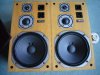
Yamaha NS-690 Econowave. Some direction, please.

Cosmos kindly has provided T/S parameters for the NS-690II woofer on page #271.
vas=2.718, spl=88db/1W/1M, R(e)=5.865ohms, F(s)=37.68Hz, Q(ts)=0.511, Q(es)=0.5501, Q(ms)=7.178, L(e)=1.134.
Using stock cabinet, any suggestions regarding above specs for the low-pass? Keep it at 1.2KHz? or just "play it by ear"?
 

Attachments

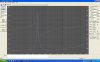
  • Yamaha%20JA-3109%20Woofer%20Tester.jpg
    Yamaha%20JA-3109%20Woofer%20Tester.jpg
    80.2 KB · Views: 36
  • 690.jpg
    690.jpg
    92.6 KB · Views: 43
I use high-power resistors for Zobels because they take almost as much a beating as the woofers do at frequencies near crossover. If you're using a SET amp, no big deal but if not, do yourself a favor and get a large resistor for the Zobel.

The peak you seen in the woofer's transfer curve of the graphs Zilch posted yesterday are what these things remove, and the power levels can be pretty high. See page 66 of the Speaker Document on my website to get an idea of the power dissipated by the Zobel resistor.

You can get a 100 watt non-inductive resistor for about 15 bucks at Parts Express. That's what I use. I include one of those with every crossover. It's really not that expensive and makes sure it stays nice and cool, even when you're sending the speakers a decent amount of power.

You guys like to crank 'em sometimes, right? :)
 
Last edited:
Cosmos kindly has provided T/S parameters for the NS-690II woofer on page #271.
vas=2.718, spl=88db/1W/1M, R(e)=5.865ohms, F(s)=37.68Hz, Q(ts)=0.511, Q(es)=0.5501, Q(ms)=7.178, L(e)=1.134.
Using stock cabinet, any suggestions regarding above specs for the low-pass? Keep it at 1.2KHz? or just "play it by ear"?


Unfortunately, t/s parameters are only really useful for predicting low frequency behavior in a particular box. The only thing on there that would potentially give you an idea of high freq performance is the Le but it's low enough that it shouldn't be a determining factor. What you need is a frequency response plot.
 
The peak you seen in the woofer's transfer curve of the graphs Zilch posted yesterday are what these things remove, and the power levels can be pretty high.

These peaks?

490611860_mJUpN-L.jpg


Am I right in thinking that the optimum value of the resistor in the Zobel would vary with woofer impedance? I am using a very close cousin to your crossover, but with values adjusted for a 16 ohm woofer (Altec 515E). Then someone loaned me a pair of JBL LE15B with a measured Re of about 3.4 ohms. Last night I altered the value of L2 and C2, but I think the zobel resistor should be adjusted too. It didn't occur to me till I read your post, but I was getting some "shout" at the upper end of the LF, and figured I just needed to adjust the slope with C2. Now I'm wondering about that resistor, which is 16R in my case... I've got enough 10W 16R to parallel 3 or 4 for this application.

The woofer is in a giant backloaded horn, and I've got huge SPL with a little SE 845 power. I'm not worried about power levels.

BTW, I'm using a 2" constant directivity horn with JBL 2441. It's the non-econo version of the EWG two-way. But the zobel value WRT woofer impedance is a straight EWG question anyway, eh?

 
Am I right in thinking that the optimum value of the resistor in the Zobel would vary with woofer impedance?
Yes, generally. They are calculated using the impedance and Le. They may also be determined empirically.

HOWEVER, they are also filter elements, and may deviate from the calculated values for any given woofer and design. :yes:

Note to readers: Those are NOT frequency response curves Tubino has circled there, rather, the lowpass filter transfer function....
 
Last edited:
I have found that Zobels are fairly wide tolerance devices, and as much as 25% change is usually OK. However, I also found that the expected values of C = Le/Re² and R = 1.25Re are not usually the best values to use. When I measure a system acoustically, the capacitance value is sometimes wrong, even as much as 3x too big. It can provide more damping than is actually required, or I suppose in some cases, it may allow too much peaking.

I usually start with a capacitor value multiple of 10uF, close to the textbook predicted value. Similarly, the resistor I choose is a multiple of 8Ω closest to the textbook predicted value. I then use acoustic measurements to find the actual capacitor that gives best response. Like I said above, sometimes that value is 1/2 or even 1/3 the expected amount. Once I've found the right value, I know that some value shifts are OK, often as much as 25%.
 
Those peaks are what the Zobel is designed to remove. If you have a woofer that has begun to rolloff strongly, then that amount of peaking may help boost its output, perhaps to "span the gap" so to speak. But generally, you don't want a peak in the transfer function, again, unless there is a hole there you're trying to fill.

Check out the "Crossover Electronics 101" documents. They show that peak. At the seminar, we listen to speakers with circuits like that. You can really hear it.

By the way, you won't see a peak if your woofer circuity has only a series coil. This only happens with underdamped filters second-order or higher. Usually you want a higher-order crossover in speakers like these, but it is still worth noting that it can't happen in woofer circuits with no capacitance.

These peaks?

490611860_mJUpN-L.jpg


Am I right in thinking that the optimum value of the resistor in the Zobel would vary with woofer impedance? I am using a very close cousin to your crossover, but with values adjusted for a 16 ohm woofer (Altec 515E). Then someone loaned me a pair of JBL LE15B with a measured Re of about 3.4 ohms. Last night I altered the value of L2 and C2, but I think the zobel resistor should be adjusted too. It didn't occur to me till I read your post, but I was getting some "shout" at the upper end of the LF, and figured I just needed to adjust the slope with C2. Now I'm wondering about that resistor, which is 16R in my case... I've got enough 10W 16R to parallel 3 or 4 for this application.

The woofer is in a giant backloaded horn, and I've got huge SPL with a little SE 845 power. I'm not worried about power levels.

BTW, I'm using a 2" constant directivity horn with JBL 2441. It's the non-econo version of the EWG two-way. But the zobel value WRT woofer impedance is a straight EWG question anyway, eh?
 
FIY, Also remember Dave, that LE is about .5 high as that was the old WT3 setup. :)

Unfortunately, t/s parameters are only really useful for predicting low frequency behavior in a particular box. The only thing on there that would potentially give you an idea of high freq performance is the Le but it's low enough that it shouldn't be a determining factor. What you need is a frequency response plot.
 
One for the Zilchster(unless someone else knows)...

I have a some friends who are interested in my Ewaves for pa purposes(which would allow me to step up to a megawave:yes:). I have the LE14A and D220ti combo and am curious what the power handling would be for this setup with the 3.8 cu ft. cabinet? I assume a slightly smaller cabinet with higher Fs would give higher power handling?
 
JBL did not use LE14A (or any LE14s, for that matter) in any PA cabinets.

Build with 2206H or 2226H for that.... :yes:
 
Unfortunately, t/s parameters are only really useful for predicting low frequency behavior in a particular box. The only thing on there that would potentially give you an idea of high freq performance is the Le but it's low enough that it shouldn't be a determining factor. What you need is a frequency response plot.
Thank you for the response.
 
Thanks, Wayne, for crossover help. Also D220 in stock at PE

Wayne, thanks for your help explaining the zobels and more. I really appreciate it.

Selenium D220Ti-8 1" Titanium Horn Driver 8 Ohm 1-3/8"-18, part 264-270, is now in stock at Parts Express.

I found a second pair of Stromberg-Carlson Slimline 12" red cone drivers hiding in my basement. I might do the 0.5 thing on my OB, with the "new" woofer right under the first 12".
 
The voltage drives I just posted illustrate the difference between the woofer and compression driver.

Generally, the latter is down 15 dbV, and worst case, at the VHF, where there's very little energy to begin with, 6 dB.... :yes:

I never thought to feel if the zobel resistor is getting warm. The wife's at work today, I'll give it a work out and see. Wayne's choice of resistor looks tough and inexpensive enough to be safe. I'm going to look and see what values are available. Since they are dummy loads, I suppose they might only be available in 8 Ohms. I have the most powerful amp I own hooked up, only 150 watts but that should work.:music::naughty:

Russellc
 
Last edited:
I'm not posting final values 'til it's done; not sure about it playing this low, but I've certainly filled in the hole. :dunno:

I've got to run the impedance and transfer function, and Spice it to verify.

Also need to see how it plays with a couple of woofs here.... :yes:

Very eager to hear what you suggest changing for DE250 drivers!
 
Very eager to hear what you suggest changing for DE250 drivers!
C1 = 6.8 uF
L1 = 0.8 mH

I calculate the resonance frequency of that combination at 2.158 kHz.

The acoustic crossover w/LE 14A occurs at 1.450 Hz, slightly lower than the Seleniums, but within the range Wayne suggests is acceptable based upon his use of them in Pi Speakers.

They are more sensitive than the Seleniums, so use the standard low-sensitivity HF compensation filter for them with LE14A, and the attenuation balances at mid rotation of the L-pad.

900ss picked up his pair yesterday after we listened to them and deemed them "Good." They use the Selenium throat adapters from Parts Express and the standard E'Waveguide.

Dayton 6.8 uF is too long to fit on the PC board directly, but either Jantzen or Solen are compatible.

Despite being slightly larger than our standard 0.6 mH L1, the Jantzen 20 Ga. 0.8 mH fits neatly.

Once I have a pair of my own, I may do more, but for now, that's our DE-250 baseline.... :yes:
 
Zilch is so modest - what I heard sounded great. I also got a chance to hear the Indignia - it just might be my next project.:thmbsp:Those that are putting the DE 250 together with LE 14A are in for a treat. I believe their was also a slight change for the LE 14a cross over.
900ss picked up his pair yesterday after we listened to them and deemed them "Good."
:yes:
 
Back
Top Bottom