• The move to the new server is done. There are some software and database maintenance updates in process. This has us passing the hat around to help out. We appreciate any donations. Seriously, even a dollar helps. The payment page may be found here - https://www.audiokarma.org/support.html

Zilch's AK Design Collaborative - Econowave Speaker

OK guys we know Earl has some messed up views and has issues with his round horns
but I believe it's not good to continue this further and suggest we leave it alone as it
just doesn't seem to good an idea to keep this up on an open forum.

I agree people need to know about these issues so they can make there own informed
decisions on whether to persue his approch but he's not here to defend and we've got
the info, no need to go any futher an stir things up over here no?

I am neither a promotor nor detractor of his ideas just don't want this to turn into Gedlee
bashing 101 over here on AK. (Not saying it is Gedlee bashing 101 at the moment) :)
 
I've learned a great deal from these arguments.
Nothing wrong with people making points; can't recall reading anything personal erupting from this.

For me, directivity, baffle spacing, nulls, and axial response concepts are fascinating and I hope I can effectively incorporate good conceptual design in these areas into my little DIY tinkerings.

:thmbsp:
 
I agree the info is great, but I think we can still do it without bringing in all of the Gedlee
stuff. As I said he's not here to defend an these things can get out of hand rather quickly.
The next thing we know the thread is locked down when/if it does get out of hand anyway.

Just my thoughts, carry on. :)
 
I agree, absolutely. There are some forums where things get way out of hand.

Personally, I respect Earl Geddes efforts a great deal. In particular, I think his attention to the catenary flare is significant, and that's where he should get credit. This flare is probably the best shape to use because it limits internal reflections and provides constant directivity, simultaneously.

The thing is, that's where it ends for me. The use of round horns is problematic because of their unnecessarily wide vertical pattern and their geometery prevents close spacing, which results in narrow vertical null angles.

I think it is important to demonstrate this.

I would not use a round horn in a loudspeaker designed for uniform directivity. The possible benefits of the caternary OS flare are far outshadowed by the terrible power response created by narrow null angles. The narrower the arc of constructive summing, the more energy is destructive, the more the total power response is off. That's the whole goal of the matched-directivity design, to make flat power response using constant directivity, which creates a uniform reverberent field. So the round horn is a deal breaker, and being catenary doesn't help this case.

These things aren't necessarily mutually exclusive, by the way. Do not tie the reduction of transverse modes to round horns. The feature that is important to the reduction of transverse waves is smoothness of the flare, not roundness of the mouth. The whole idea is just to radius the throat to flare transition with a minimum surface curve rather than a sharp edge. There is no requirement that the horn be round. You can have reduced transverse modes AND wider nulls angles simply by using an asymmetrical flare with the requisite flare contour.
 
OK, I really don't know what you guys are talking about, but that is ok as I have always just trusted my ears. But, something Dnewma04 just said made me think of this....I am building my EWGs using the ESS AMT 1C, as you all know, SO.....would there be any benefit to replacing the Passive Radiato (which is the exact same dimentions as the PR) with another ESS woofer in dipole configuration? Just a thought. Cheers. p.s. hope to have my xovers done tonight.
 
This thread just gets more and more interesting. Thanks everyone.

[I jus' click buttons here.... ;) ]
Based upon what I have read form you, you are being modest.

BTW, do you have the height, width and flange thickness of the Ewaves? Thought I might Sketchup some ideas this (long) weekend.
 
The thing is, that's where it ends for me. The use of round horns is problematic because of their unnecessarily wide vertical pattern and their geometery prevents close spacing, which results in narrow vertical null angles.

.

Wayne is there ever a good use of a round horn in your oppinion?

I know a lot of people love the big round wooden Edger horn, I heard a pair once and
playing female vocals at moderate volume was some of the best musical reproduction
I've heard, truly outstanding, but turn it up or play complicated music and the system
just fell apart but when it worked dam was it nice!
 
Wayne is there ever a good use of a round horn in your oppinion?

Not in a speaker designed for uniform directivity with drivers vertically stacked on a baffle.

They are pretty though. And you can make them easily. A good round horn can be made on a lathe.

Some speakers don't attempt to provide even power response. Their design goal is limited to on-axis listening, and owners of speakers like that often like to use room treatment in an attempt to reduce all reflections. That's because with that kind of speaker, off-axis sound has poor spectral balance, so the reverberent field also has poor spectral balance. If you have a speaker like that, you want to reduce the reverberent field. Of course, that can be sort of unnatural sounding, which is one reason why people chose speakers that have flat power response. That's the subject of this thread.

You mentioned Edgar horns. Bruce Edgar likes to use tractrix horns exclusively. That flare shape produces collapsing directivity, so a loudspeaker with this kind of horn wouldn't produce flat power response unless on-axis response were equalized non-flat. If you measure off-axis, there are wide differences in amplitude response. So the off-axis nulls are of little consequence. There's a lot of off-axis ripple anyway.

But if your goal is to provide uniform power response and the drivers are stacked vertically, I'd suggest an asymmetrical horn will probably provide better performance. You'll definitely be able to make the null angles further apart and reduce HF at wide vertical angles. That's the reason for the shape of the typical 90x40 flare.
 
I agree, absolutely. There are some forums where things get way out of hand.

Personally, I respect Earl Geddes efforts a great deal. In particular, I think his attention to the catenary flare is significant, and that's where he should get credit. This flare is probably the best shape to use because it limits internal reflections and provides constant directivity, simultaneously.

The thing is, that's where it ends for me. The use of round horns is problematic because of their unnecessarily wide vertical pattern and their geometery prevents close spacing, which results in narrow vertical null angles.

I think it is important to demonstrate this.

I would not use a round horn in a loudspeaker designed for uniform directivity. The possible benefits of the caternary OS flare are far outshadowed by the terrible power response created by narrow null angles. The narrower the arc of constructive summing, the more energy is destructive, the more the total power response is off. That's the whole goal of the matched-directivity design, to make flat power response using constant directivity, which creates a uniform reverberent field. So the round horn is a deal breaker, and being catenary doesn't help this case.


What is the audible effect of destructive energy when listening from within the area where the power response is correct? In other words, if you have speakers with a null at -7.5 degree and you are listening at + 7.5 degrees or 15 degrees above that point, what is the audible impact of that null?
 
I think Earl is hypothesizing here. I don't believe he ever made a PS horn, or elliptical mouth horn of any flare shape. As I recall, in 2005, the only horn he had made was the round OS horns he is currently promoting. Those were reasonably new for him at the time, maybe a year or two, tops.
Bauman did, apparently.

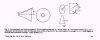
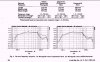
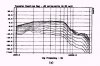
Here's the elliptical asymmetric:

attachment.php

attachment.php

attachment.php

Horizontal polars in 5° increments 0° - 50°.

Full paper download here:

http://baseportal.de/cgi-bin/basepo...dio/download&cmd=list&range=0,20&cmd=all&Id=3
 

Attachments

  • Geddes Elliptical A.jpg
    Geddes Elliptical A.jpg
    25.3 KB · Views: 312
  • Geddes Elliptical B.jpg
    Geddes Elliptical B.jpg
    71.8 KB · Views: 306
  • Geddes Elliptical C.jpg
    Geddes Elliptical C.jpg
    53.1 KB · Views: 308
Excellent question, David, good point.

Would you put together a system with dipoles arranged such that the nulls were 7.5° from the forward axis?

Would the effect be audible if not listening at that point?
Would you own any sort of loudspeaker with nulls 7.5° from the forward axis?
Yes, absolutely. I heard Earl's speakers and what I heard was one of the 2-3 best sound systems I've ever encountered. It did everything well. There was no horn sound, the soundstage was excellent, details came through perfectly, there was no harhness. Moving around the room a bit didn't show the typical room issues with nulls and high pressure lobes. It was simply outstanding.
If you made a DIY speaker and, if after measuring and finding nulls at 7.5° from the forward axis, would you stop there and call it done?

Possibly? Impossible to answer without more information.
If you wrote a thesis defending your doctorate of a loudspeaker like this, would you expect an "A" grade?

Again, impossible to project. I would never expect anything, I would hope that I would work hard enough to deserve whatever I deserved. If within the scope of the project, excellent vertical off axis response was a concern, then maybe I wouldn't expect an A. With no scope, there is no answer for you.
Maybe in high school or at an associates level community college?

You allow your personal distaste for Geddes cloud your judgement and covering it up with "I have all the respect in the world for Geddes, aside from......" comes off poorly and doesn't hide your feelings. You two obviously both know what your doing, it's readily apparent. It's also readily apparent that the two of you have different concepts of what is "most" important. Instead of saying a 7.5 degree null is objectionable, show us why it's objectionable and why it's more audible than a host of other issues.

I'm open minded. I don't think the Summas are the end all, but saying they are non-competitive is a joke and in my mind, it's tough not reading your posts without a great deal of skepticism.
 
Nope.

[Am I a bad person? :dunno: ]


Nah, just wondering if you'd listen to other speakers in a non-optimum, non-recommended method and cast judgement upon the design, or if that is simply done towards Summas because Geddes comes off as an arrogant and pompous bastard? He dismissed your waveguides as being not the greatest thing in the world and since, you have taken little shots at his design whenever possible. Maybe, be a man and take the higher ground?

The subtle (and not so subtle) Geddes bashing makes me embarrassed for some of the people in this thread.
 
This business about lobing makes me glad that the majority of my work is involving concentric/coaxial designs. At least there's no asymmetric off-axis behavior. And with a good enough horn flare in the center, the crossover frequency can be made low enough to not have much of a lobe at all...

But, that said... I'm not knocking what Geddes, Wayne, Zilch or any other folks have done. The proof is in the pudding... and there's some amazingly good sounding stuff, that's been the result of this research.

It's just that concentric seems to be the most "elegant" solution, in my thoughts...

Regards,
Gordon.
 
The woofer and waveguide are in control below and above the crossover region, respectively.

Seems to me it would be desireable for the transition to be a smooth one, i.e., without big ol' notches within the vertical dispersion "window."

I assume vertical power response matters, too, that being the point of locating the nulls in conformity with the vertical beamwidth.... :yes:
 
Nah, just wondering if you'd listen to other speakers in a non-optimum, non-recommended method and cast judgement upon the design, or if that is simply done towards Summas because Geddes comes off as an arrogant and pompous bastard? He dismissed your waveguides as being not the greatest thing in the world and since, you have taken little shots at his design whenever possible. Maybe, be a man and take the higher ground?

The subtle (and not so subtle) Geddes bashing makes me embarrassed for some of the people in this thread.

You know, I was the one who brought up the JBL wave guide on the DIY forum. Geddes jumped in and first said it was impossible that JBL had such a wave guide at the suggested price. Never mind I was talking about something I had in my living room, not a figment of my imagination.

He then proceeded to bash it in every way possible, even after his own testing showed it bested his in several areas. Perhaps he should have taken the higher ground.

Geddes has likely forgotten more than I will ever know about horn design, but watching people blindly following him has all the grace of animals going to the trough, and that embarrases me. It is apparent that those involved with this project have fundamentally different ideas than Geddes does, and there is nothing wrong with that.

Now, back to wave guiding and all the other positive things that have sprung from this project, please! Nothing wrong with comparing his work to the ideas here and on Audioroundtable's Pi forum, I am finding it very educational.


Russellc
 
The subtle (and not so subtle) Geddes bashing makes me embarrassed for some of the people in this thread.
I view it as discussing the comparative merits of competing design approaches. Does that go to the designer's purpose and motivations? Of course it does, particularly in the present instance; it's virtually impossible to leave that out of it.

I stand up for EconoWave. Does this mean I am biased? No more so, certainly, than Geddes is regarding his products.

When I point out that E'wave meets Geddes's performance criteria while his design does not, even according to his own measurement data, does this comprise "Bashing?" Am I a bad person for suggesting that Markus measure the verticals over there? Not on either count in my book, nope....
 
Back
Top Bottom