

You are using an out of date browser. It may not display this or other websites correctly.
You should upgrade or use an alternative browser.
You should upgrade or use an alternative browser.
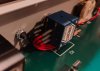

mondialfan
Well-Known Member
That pot arrived very quickly.
Very nice job on the install, the owner should really appreciate your clean work.

KNielsen
Well-Known Member
Thanks a lot for the nice wordsThat pot arrived very quickly.
Very nice job on the install, the owner should really appreciate your clean work.

Gotta love FedEX! Very fast and good service..
I can't post my video of the o.scope from zero to full volume at 1Vrms (wrong file format). But the lines are dead straight
Problem solved
EDIT: HERE IS A LINK TO THE O.SCOPE VID
https://photos.app.goo.gl/WCimcsc15Ss3W99V7
Lines are violent/yellow
Regards
Last edited:
Brentec AV
New Member
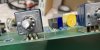
Thanks for your help Mondialfan. ordered pot from Parts Express, came in two days. Built up some silver solder "posts" to make up for the diminutive leads of the new unit.
KNielsen
Well-Known Member
I thought about doing the same thing to connect the pot. I ended up with the wire solution, to avoid stress on the solderings Vs extra pinouts that is solid connected to a pot that might handle some stress nevertheless when mounted on the chassisThanks for your help Mondialfan. ordered pot from Parts Express, came in two days. Built up some silver solder "posts" to make up for the diminutive leads of the new unit.
View attachment 2824665
KNielsen
Well-Known Member
Just for the fun, it's Saturday
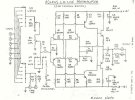
I had a pile of 10.000uf/40V KEMET ALC80 in my office, and decided to ditch the Nichicon LKG 8.200uf/35V I had installed due to the better specs form the ALC80's.
While the LS11 preamp was apart I also added 2x220uf/35V Nichicon FG across the KEMET's in the PSU, all bypassed with 2x 2.2uf/250V Panasonic ECWF(a) at the bottom of the board.
At the diodebridge I added 4x 0.1uf/250V Panasonic ECWF(a). I think these did good in my poweramplifier, so why not try in the LS11. It can easily be reversed again!
Also, I spotted a small overshoot in my current sources: 1.32VDC and 1.33VDC across 4.87Kohm equals 271μA and 273μA. Not a big overshoot, but replace the four 4.87Kohm with 5Kohm's to end up with a more normal ~266μA. I do have 5.23Kohm in stock witch would do ~252μA. Both rails are equal to or slight above 18VDC, so I think ~254μA is a bit to lean..
Finally, the volumepot had begun to "scratch" now and then, so the balancepot and volumepot was cleaned and relubed.
-Sadly my doughty is watching a movie right now, so listing impressions must wait till later, but a nice lazy Saturday in "my office" with a soldering iron
Good weekend


I had a pile of 10.000uf/40V KEMET ALC80 in my office, and decided to ditch the Nichicon LKG 8.200uf/35V I had installed due to the better specs form the ALC80's.
While the LS11 preamp was apart I also added 2x220uf/35V Nichicon FG across the KEMET's in the PSU, all bypassed with 2x 2.2uf/250V Panasonic ECWF(a) at the bottom of the board.
At the diodebridge I added 4x 0.1uf/250V Panasonic ECWF(a). I think these did good in my poweramplifier, so why not try in the LS11. It can easily be reversed again!
Also, I spotted a small overshoot in my current sources: 1.32VDC and 1.33VDC across 4.87Kohm equals 271μA and 273μA. Not a big overshoot, but replace the four 4.87Kohm with 5Kohm's to end up with a more normal ~266μA. I do have 5.23Kohm in stock witch would do ~252μA. Both rails are equal to or slight above 18VDC, so I think ~254μA is a bit to lean..
Finally, the volumepot had begun to "scratch" now and then, so the balancepot and volumepot was cleaned and relubed.
-Sadly my doughty is watching a movie right now, so listing impressions must wait till later, but a nice lazy Saturday in "my office" with a soldering iron
Good weekend
Last edited:
KNielsen
Well-Known Member
Definitely a more relaxed soundstage.
I did test the KEMET's alone before I did the other things stated above and didn't like the heights.. I think it's far better now, but also think that the "mods" coupled with the LKG's might be even better.
After all it's only a 10VA, so with my poor knowledge 10.000uf pr channel might be overdoing things without upping the VA? Initially the preamp needs somewhat 4VA so......??
But it's the best sound I've managed from my LS11 yet, very comfortable and an enormous amount of details.
I have a Japanese/Chinese(??) digital track with some noise added to the background by the artist. An absolute joy how it's presented, one of those moments where one looks a second time on the artist played just to verify that it really is the right track that I've heard a thousand times before. Wow
EDIT: The hole idea of skipping the LKG was due to the fact that most "audio grade" parts is becoming obsolete, also the LKG. So my latest Mouser search only involves parts that's NOT branded as audiophile for future trails. Might be worth it!
I did test the KEMET's alone before I did the other things stated above and didn't like the heights.. I think it's far better now, but also think that the "mods" coupled with the LKG's might be even better.
After all it's only a 10VA, so with my poor knowledge 10.000uf pr channel might be overdoing things without upping the VA? Initially the preamp needs somewhat 4VA so......??
But it's the best sound I've managed from my LS11 yet, very comfortable and an enormous amount of details.
I have a Japanese/Chinese(??) digital track with some noise added to the background by the artist. An absolute joy how it's presented, one of those moments where one looks a second time on the artist played just to verify that it really is the right track that I've heard a thousand times before. Wow
EDIT: The hole idea of skipping the LKG was due to the fact that most "audio grade" parts is becoming obsolete, also the LKG. So my latest Mouser search only involves parts that's NOT branded as audiophile for future trails. Might be worth it!
Last edited:
KNielsen
Well-Known Member
The volumepot still makes a minor pop now and then after cleaning. Compared to the NOBEL-pots, having the original ALPS at the table the ALPS seams cheap(!) although many use them and find them good.
I decided not to spend more time on this one and looked online for the "Blue Velvet"-series witch were out of stock, so I ordered a 20K TKD CP2-601 as replacement.
 www.hificollective.co.uk

I decided not to spend more time on this one and looked online for the "Blue Velvet"-series witch were out of stock, so I ordered a 20K TKD CP2-601 as replacement.
TKD (Ko-on) 2CP-601 20K dual log taper potentiometer | HIFICollective
TKD (Ko-on) 2CP-601 20K dual log taper potentiometer
Last edited:
mondialfan
Well-Known Member
Q: The Acurus preamps lineup has no BIAS adjustment like most Aragon's, would slight lower value at R16/17 benefit the Acurus to increase BIAS?
What is the optimal BIAS in Aragon btw?
Lowering the value of R16/R17 will not affect the bias in the Acurus to any significant degree. You'd need to cut the trace between the gates of Q7/Q8 and put a variable resistor there using a very low value of 100ohms or so. However I do not recommend this. The jfet's will conduct with the gate and source at the same potential so they're essentially a normally ON device. They have an IDSS value that they will idle at given the DC rail voltage at the Drain with no voltage at their gate. This is generally the given bias current with no adjustment to the gate voltage. I've not seen a preamp design with jfet's at the output that allowed adjustment of the bias current. The mosfet's that Mondial used in the Aragon pre's are an enhancement mode device so they're normally off and it requires a voltage at the gate to turn them on and raising this voltage will give more bias current.
There's a big problem with cutting the trace and adding a potentiometer on the Acurus pre's. In the LS11/RL11 the output k389/j109 jfet pairs are only rated for 400mW Pd (Power dissipation) or 200mW each individual jfet. If you calculate the power dissipated you'll find that the k389/j109's are already idling at around 40 - 60% of their rated Pd. For a long life is generally preferred to keep the Pd at 50% or less is generally preferred. Turning this bias current up will almost certainly result in shorter device life due to running hotter. The K147/J72 jfet's in the L10 fare a little better in that they're rated for 650mW for the output device, but I think its still a bad idea here as well.
The mosfet used in the Aragon pre's is a TO-220 device rated for 15W Pd, which is massive overkill for its purpose in that preamp. Thus you can run very high bias currents that are not possible in the Acurus preamps without fear of losing longevity in the output device. Even then I do not think that running more than 30mA in the Aragon's has any audible benefit, I have generally begun setting the bias around 25mA when I work on them. In comparison, the Acurus pre's are generally 10 -12mA of output stage bias, some of the earlier L10's may be as low as 7 - 8mA.
I'd recommend that if you really feel that you need the additional bias current in the output stage then you should sell the Acurus and buy an Aragon preamp.
mondialfan
Well-Known Member
The volumepot still makes a minor pop now and then after cleaning. Compared to the NOBEL-pots, having the original ALPS at the table the ALPS seams cheap(!) although many use them and find them good.
I decided not to spend more time on this one and looked online for the "Blue Velvet"-series witch were out of stock, so I ordered a 20K TKD CP2-601 as replacement.
View attachment 2998905TKD (Ko-on) 2CP-601 20K dual log taper potentiometer | HIFICollective
TKD (Ko-on) 2CP-601 20K dual log taper potentiometer
I've heard good things about TKD but never tried one myself, so I'll be interested in what you think of them.
KNielsen
Well-Known Member
I'll post my feelings/findingsI've heard good things about TKD but never tried one myself, so I'll be interested in what you think of them.

Pio1980
AK Member
The plastic films are supposed to be excellent.I've heard good things about TKD but never tried one myself, so I'll be interested in what you think of them.
KNielsen
Well-Known Member
Great answer. I measured around in the LS11 and found the mA-values quite small. Nevertheless your post answers why. I did try to find some heatsinks that'll fit the jfet's but didn't succeed. Initially I'll rest my case, they run at about maximum 34°C at normal listeninglevels witch is ok, but I'm not that fond of burning them in the chase of high BIASLowering the value of R16/R17 will not affect the bias in the Acurus to any significant degree. You'd need to cut the trace between the gates of Q7/Q8 and put a variable resistor there using a very low value of 100ohms or so. However I do not recommend this. The jfet's will conduct with the gate and source at the same potential so they're essentially a normally ON device. They have an IDSS value that they will idle at given the DC rail voltage at the Drain with no voltage at their gate. This is generally the given bias current with no adjustment to the gate voltage. I've not seen a preamp design with jfet's at the output that allowed adjustment of the bias current. The mosfet's that Mondial used in the Aragon pre's are an enhancement mode device so they're normally off and it requires a voltage at the gate to turn them on and raising this voltage will give more bias current.
There's a big problem with cutting the trace and adding a potentiometer on the Acurus pre's. In the LS11/RL11 the output k389/j109 jfet pairs are only rated for 400mW Pd (Power dissipation) or 200mW each individual jfet. If you calculate the power dissipated you'll find that the k389/j109's are already idling at around 40 - 60% of their rated Pd. For a long life is generally preferred to keep the Pd at 50% or less is generally preferred. Turning this bias current up will almost certainly result in shorter device life due to running hotter. The K147/J72 jfet's in the L10 fare a little better in that they're rated for 650mW for the output device, but I think its still a bad idea here as well.
The mosfet used in the Aragon pre's is a TO-220 device rated for 15W Pd, which is massive overkill for its purpose in that preamp. Thus you can run very high bias currents that are not possible in the Acurus preamps without fear of losing longevity in the output device. Even then I do not think that running more than 30mA in the Aragon's has any audible benefit, I have generally begun setting the bias around 25mA when I work on them. In comparison, the Acurus pre's are generally 10 -12mA of output stage bias, some of the earlier L10's may be as low as 7 - 8mA.
I'd recommend that if you really feel that you need the additional bias current in the output stage then you should sell the Acurus and buy an Aragon preamp.
 I'll pass
Last edited:
KNielsen
Well-Known Member
@mondialfan Earlier today I did lower the values R15/16 (LS11) just a bit to test with a couple of 1Kohm in parallel on the back to the 221ohm giving 182ohms afterwards. This raised the mA at the Toshiba's from 2.7 to about 3.3-3.4mA region. Cannot hear any difference, and as you stated it didn't change the BIAS
Pio1980
AK Member
What do you basically do to upgrade L10?Lowering the value of R16/R17 will not affect the bias in the Acurus to any significant degree. You'd need to cut the trace between the gates of Q7/Q8 and put a variable resistor there using a very low value of 100ohms or so. However I do not recommend this. The jfet's will conduct with the gate and source at the same potential so they're essentially a normally ON device. They have an IDSS value that they will idle at given the DC rail voltage at the Drain with no voltage at their gate. This is generally the given bias current with no adjustment to the gate voltage. I've not seen a preamp design with jfet's at the output that allowed adjustment of the bias current. The mosfet's that Mondial used in the Aragon pre's are an enhancement mode device so they're normally off and it requires a voltage at the gate to turn them on and raising this voltage will give more bias current.
There's a big problem with cutting the trace and adding a potentiometer on the Acurus pre's. In the LS11/RL11 the output k389/j109 jfet pairs are only rated for 400mW Pd (Power dissipation) or 200mW each individual jfet. If you calculate the power dissipated you'll find that the k389/j109's are already idling at around 40 - 60% of their rated Pd. For a long life is generally preferred to keep the Pd at 50% or less is generally preferred. Turning this bias current up will almost certainly result in shorter device life due to running hotter. The K147/J72 jfet's in the L10 fare a little better in that they're rated for 650mW for the output device, but I think its still a bad idea here as well.
The mosfet used in the Aragon pre's is a TO-220 device rated for 15W Pd, which is massive overkill for its purpose in that preamp. Thus you can run very high bias currents that are not possible in the Acurus preamps without fear of losing longevity in the output device. Even then I do not think that running more than 30mA in the Aragon's has any audible benefit, I have generally begun setting the bias around 25mA when I work on them. In comparison, the Acurus pre's are generally 10 -12mA of output stage bias, some of the earlier L10's may be as low as 7 - 8mA.
I'd recommend that if you really feel that you need the additional bias current in the output stage then you should sell the Acurus and buy an Aragon preamp.
KNielsen
Well-Known Member
Last call, I just skipped the flimsy 0.1uf as bypass on the 1mF (C2/C3) and added 4x 2.2uf ECWF(a) instead... This tamed the last pronounced "s" on the heights, lovely
And of cause rewinded my 182ohms to 221 again!
I think that's is for now. Waiting for the TKD as for next up project
@Pio1980
Regarding upgrades:
The PSU is by many seen as the weakest part of the Acurus lineup. Mainly low capacitance at the main filtercaps and a transformer that just barely keeps up is the reason for this debate. The regulated PSU itself is quite good and can be left as is, or do an external PSU of your choice with the railvoltage in mind of course.
If internal PSU; finding a suitable 10VA will do wonders, but to my understanding you cannot change this without some drilling in the PCB for the new bigger transformer to fit.
-As for the two e.caps (filtercaps), I would settle between 6800-8200uf pr e.cap with the better transformer installed. I do believe that the now almost obsolete Nichicon LKG-series will give you the most "sound" without having to much work with bypass caps afterwards. But I do tend to add some 1.0-2.7uf/100-250V across each e.cap.. Just make sure they'll fit underneath as space quickly becomes quite tight between PCB and the chassis floor.
-You could go even further and change the standard 1A diodes in the bridge rectifier.
2A ultra fast soft recovery types are available; how audioble this trick is you'll deside, but can easily be performed while soldering.
-Besides that, I designed my own add-on PCB's for a constant current source (CCS) inspired by @mondialfan as he already did the same approach. The μA to aim for in the CCS is roughly mentioned in post#48, but it really depends on the unit at hand where the railvoltage can vary a bit.
-As you can see in my LS11 I also did change the yellow 10uf filmcaps to ClarityCap of same value. I think this improved the midrange, but this may be very subjective!
There are other aspects depending on model, but these mentioned above are normally the most performed, and I would think the transformer as a standalone upgrade is money well spend, giving the preamp some air to breath and instant wider soundstage.
Regards
And of cause rewinded my 182ohms to 221 again!
I think that's is for now. Waiting for the TKD as for next up project
@Pio1980
Regarding upgrades:
The PSU is by many seen as the weakest part of the Acurus lineup. Mainly low capacitance at the main filtercaps and a transformer that just barely keeps up is the reason for this debate. The regulated PSU itself is quite good and can be left as is, or do an external PSU of your choice with the railvoltage in mind of course.
If internal PSU; finding a suitable 10VA will do wonders, but to my understanding you cannot change this without some drilling in the PCB for the new bigger transformer to fit.
-As for the two e.caps (filtercaps), I would settle between 6800-8200uf pr e.cap with the better transformer installed. I do believe that the now almost obsolete Nichicon LKG-series will give you the most "sound" without having to much work with bypass caps afterwards. But I do tend to add some 1.0-2.7uf/100-250V across each e.cap.. Just make sure they'll fit underneath as space quickly becomes quite tight between PCB and the chassis floor.
-You could go even further and change the standard 1A diodes in the bridge rectifier.
2A ultra fast soft recovery types are available; how audioble this trick is you'll deside, but can easily be performed while soldering.
-Besides that, I designed my own add-on PCB's for a constant current source (CCS) inspired by @mondialfan as he already did the same approach. The μA to aim for in the CCS is roughly mentioned in post#48, but it really depends on the unit at hand where the railvoltage can vary a bit.
-As you can see in my LS11 I also did change the yellow 10uf filmcaps to ClarityCap of same value. I think this improved the midrange, but this may be very subjective!
There are other aspects depending on model, but these mentioned above are normally the most performed, and I would think the transformer as a standalone upgrade is money well spend, giving the preamp some air to breath and instant wider soundstage.
Regards
Last edited:
KNielsen
Well-Known Member
@mondialfan I did a measurement of the ripple before the regulated circuit.
Came out approx ±50mV.. I tried with the 220uf I had added across the 8.200uf's and put a resistor in between of what I had of RN60's in parallel to form a 1watt resistor, it ended up 291ohm. So 291ohm to 220uf to ground...
I didn't see any difference on the oscope afterwards...
An RC-snubber in its simplest form; R and C.. Is this for taming the ripple or am I off?
I skipped the Kemet 10.000uf.... to much for the 10VA
Came out approx ±50mV.. I tried with the 220uf I had added across the 8.200uf's and put a resistor in between of what I had of RN60's in parallel to form a 1watt resistor, it ended up 291ohm. So 291ohm to 220uf to ground...
I didn't see any difference on the oscope afterwards...
An RC-snubber in its simplest form; R and C.. Is this for taming the ripple or am I off?
I skipped the Kemet 10.000uf.... to much for the 10VA
Last edited:
mondialfan
Well-Known Member
You have something connected improperly. A CRC filter with a 291 ohm resistor in the current path should produce probably 8 to 9 volts drop across it in the Acurus pre. What was the DCV measured across the resistor in the filter?
This is too much resistance for an RC filter in this pre. You're going to drop too much voltage prior to the regulators and lose regulation. Try 25 to 30 ohms.
This is too much resistance for an RC filter in this pre. You're going to drop too much voltage prior to the regulators and lose regulation. Try 25 to 30 ohms.