• The move to the new server is done. There are some software and database maintenance updates in process. This has us passing the hat around to help out. We appreciate any donations. Seriously, even a dollar helps. The payment page may be found here - https://www.audiokarma.org/support.html

Class A Watts ?

Big caps in a preamp mean very small hum, particularly with low level inputs.
Along with improved transparency and dynamic punch.

The REF10 runs 285 volt rails because it uses tubes, which -- depending on the type of tube -- in typical tube amplifier circuits runs anywhere from several hundred (typical) to several thousand (power amplifier) volts on the tube plates.
My point is that the energy storage is comparable between the two since it is determined by the square of the rails. Op amp based preamps run 5-18V. Discrete SS 25-35V. Actually, the ARC has more when you do the math.

This is an internal view of a fairly typical solid-state Class A preamplifier
As Forest Gump would say, "Dinky is as dinky does."
 
Last edited by a moderator:
Along with improved transparency and dynamic punch. Imagine what you will.

My point is that the energy storage is comparable between the two since it is determined by the square of the rails. Op amp based preamps run 5-18V. Discrete SS 25-35V. Actually, the ARC has more when you do the math.

As Forest Gump would say, "Dinky is as dinky does."
We've been through this before. A preamplifier is not swinging around 200 volts at amps of current into a low impedance load like a power amplifier. A preamplifier is swinging up to (roughly) two volts at milliamps of current into a high impedance load. That doesn't require vast current reserves or energy storage. It does require low noise.
 
Back in the old days class B and class AB amps had crossover distortion changing from the positive to the negative and back. , where Class A amps didn't. Todays and designs to come along in the 70's that one issue was pretty well controlled. Class A amps can drive very low impedances if they have a strong power supply enough devices and adequate cooling. It was an important issue when paneled speakers impedances could down close to one ohm, which really compromise other classes of amps. Today amps will tell you what they can handle, if not look else where. Crown and Mcintosh made amps with out transformers and autoformers in the 70's that could drive below 4 ohms even approaching below 2 ohms. The issues with Crown was keeping them cool and making sure the wall receptacle had more that 15 amps and didn't sag below 120 VAC. Mac started building other models with 2 ohms taps on their autoformers for SS amps. They even have two ohm taps on some models of their tube amps. today. Later Mac SS amps with autoformers can drive a 2 to 1 mis match and still meet specs. IN other words you can drive a 1 ohm load from the 2 ohm tap and still meet specs. Class D amps have really improved over the years, but as far trying to compete with other classes of amps for low distortion, signal to noise and other parameters they are still 10 to 15 years behind the best Class A and B and AB amps. Speaker impedance isn't constant so if your speakers dip below their rating significantly, better class A designs do provide up to 100 % more power than they are rated when necessary. Where lesser well amps designed amps with inferior cooling, heat sinking and current protection will fail miserably. So in that case a Class A Amp can put out more current and there fore more power where other classes might fail. Doesn't mean they will. Nothing is written in stone.
 
Moderation Note:

This thread was going along fine until a few folks decided to engage in seeing who could urinate the farthest. Such contributions of dubious value have been stripped out. Some content of otherwise marginal value may have gone out also, in the interest of expedience. A couple of folks have been barred from further participation in this thread, as they have demonstrated, here and typically elsewhere, that they cannot participate without tossing copious quantities of snot in as a necessary supplement.

This thread has been re-opened for business, on a probationary basis. I won't be repeating this amount of effort in here tonight. More of this stuff and I'll just close this thread and move on to activities of a more enjoyable nature.

Good grief!
Rich P
 
Last edited:
It's well-known that bias circuits don't track the junction temperature of output transistors very well and there's a time lag.

That's why Luxman uses LED bias, apparently there faster, My L-530 has 6 red led's per driver board.
I don't know if they make a difference or not, but they do look cool. :cool:
LED Bias Luxman.PNG


Note: I posted this before reading the above moderator note and have not read this whole thread.
If I'm off topic, I apologize.
 
Last edited:
That's why Luxman uses LED bias, apparently there faster, My L-530 has five red led's per driver board.
I don't know if they make a difference or not, but they do look cool. :cool:
View attachment 1749379
Note: I posted this before reading the above moderator note and have not read this whole thread.
If I'm off topic, I apologize.
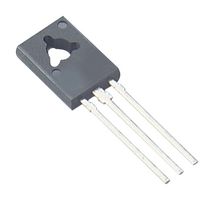
I don't think those LEDs are being used for thermal tracking because diodes for thermal tracking have to have good thermal contact with the power transistors or their heatsink, which is why TO126 package transistors are often used.
GE3TO126-40.jpg

Bias voltages are required in a variety of circuits and LEDs are useful for that, but not for thermal tracking.

Yes, I need to work on my reading comprehension.
I know what you're talking about now, Luxman didn't glue LED's to the sinks :rolleyes: They are used in the bias circuit.

100_2913.JPG
 
Please help me understand?

Back in the old days class B and class AB amps

What is your distinction between Class AB and Class B?

had crossover distortion changing from the positive to the negative and back. , where Class A amps didn't. Todays and designs to come along in the 70's that one issue was pretty well controlled.

If the problem of crossover distortion has been solved for the past 40 years, then what is the advantage to class A?

Class A amps can drive very low impedances if they have a strong power supply enough devices and adequate cooling. It was an important issue when paneled speakers impedances could down close to one ohm, which really compromise other classes of amps.

But power supply, output devices, and cooling are important for all the other amp classes, and given enough the other classes can drive low impedances as well. With the dissipation requirements and low efficiency of class A amps, their performance is even more dependent on these things than other classes of amps. All else equal, most of the time a class A amp is running on a smaller safety margin.

The issues with Crown was keeping them cool and making sure the wall receptacle had more that 15 amps and didn't sag below 120 VAC.

A sufficiently low impedance line supply and adequate cooling are necessary for *any* amp to make its rated power, how were these unique to Crown?

Class D amps have really improved over the years, but as far trying to compete with other classes of amps for low distortion, signal to noise and other parameters they are still 10 to 15 years behind the best Class A and B and AB amps.

How have class A/B/AB designs advanced significantly in the past 10-15 years?

Speaker impedance isn't constant so if your speakers dip below their rating significantly, better class A designs do provide up to 100 % more power than they are rated when necessary.

Sounds like those class A designs are simply underrated? Which is odd, because a class A design is usually a struggle to survive idling without catching fire.

Where lesser well amps designed amps with inferior cooling, heat sinking and current protection will fail miserably. So in that case a Class A Amp can put out more current and there fore more power where other classes might fail.

That doesn't make much sense. An amp design just needs whatever heatsink, cooling, and protection is necessary. Class A amps inherently require relatively more heatsink and cooling, because they are dissipating maximum heat when idling. A class AB, G/H, or D amp will be dissipating very little at that point. A class A amp will run at maximum efficiency when it's driven into hard clipping to the point of making square waves- but that's true of the other classes as well.

Doesn't mean they will. Nothing is written in stone.

But yet you say:

Today amps will tell you what they can handle, if not look else where.

So if a class A amp can put out twice its rated power, one should look elsewhere?

 
I feel the need to point out that there are two kinds of class A amp. Class A comes in single ended and complimentary. Only class A can realize a single ended topology, and single ended topologies are widely regarded as having the best euphonic distortion of an topology. That would be one thing that no class AB amp can do.

In the complimentary camp, it's possible to build a much lower distortion amp in class A than possible with class AB, assuming the same rigors of matching parts are applied. Complementary parts in class A tend to, at the very least, mitigate distortion because one transistor will work to reduce the opposite part's nonlinearity. If the parts are as closely matched as must be done in class AB, you get excellent distortion cancelation with hardly any feedback. Even without matching output devices you still get low distortion. Pass Labs doesn't even bother matching p an n channel parts, the concept works that well.
 
Not necessarily (regardless of the amp's class) but...

Why does a Brand X "30W" amp seem more powerful than a Brand Y 30W amp?

Duh! Because Brand X is actually a 130W amp. LOL.

Kind of like audio myth #whatever where really good amps can double their power when halving the resistance. This isn't electrically possible but can easily be done on paper by listing the higher resistance power as half of the lower. You get the added audio cred of having an amp that was rated x/channel at 8ohms when it can really do more! Looks great in print.
 
Kind of like audio myth #whatever where really good amps can double their power when halving the resistance. This isn't electrically possible but can easily be done on paper by listing the higher resistance power as half of the lower. You get the added audio cred of having an amp that was rated x/channel at 8ohms when it can really do more! Looks great in print.

My McCormack is like that, underrated at 100wpc at 8ohms so it can "double-down" into 4ohms.
 
I'd like to point out that this "double down" jazz that gets trotted out as the hallmark of a good amp is only true of voltage source amps, and it's mostly a measure of the power supply. Power source amps, like pretty much every SS amp McIntosh has ever made, will put the same power into just about any impedance, and a good current source amp will reduce it's power into a lower impedance.
 
Back
Top Bottom