• The move to the new server is done. There are some software and database maintenance updates in process. This has us passing the hat around to help out. We appreciate any donations. Seriously, even a dollar helps. The payment page may be found here - https://www.audiokarma.org/support.html

Econowave Help Needed

Let me offer another opinion about the bottom end of the D230Ti. Zaph puts a SEAS 1" dome
tweeter on a small horn here and claims that it can be used down to 1KHz, he even includes
distortion measurements and because of the horn gain distortion is low:

We have to remember that at home listening, even very loud, is probably at >20dB below even small
venue PA work. So what won't work for PA might work at home.

Distortion at LF is about the volume displacement (VD) of the driver, the dome surface area times Xmax.
The D230Ti is a 1.4" dome, bigger than the SEAS, but we don't know the Xmax. Fs will impact the
frequency response but there are other factors, the popular Selenium doesn't do very well on the
JBL 6x12" at the low end from a FR perspective but people still use it there.
I wish that we had the Fs and Xmax numbers for all of these drivers but it is rarely given.
I was surprised that this data is given for the Peerless CD drivers and they have fairly large VD.
PA drivers typically have low Xmax to maximize efficiency so if a company is just going after SPL numbers
they'll give the driver very low Xmax which is not good for the low end performance.

I think that the D230Ti might surprise us, are you able to measure impedance - do you have a voltmeter?
You have the drivers and horn, so you _could_ do the measurement with our guidance - even SPL with
an RTA on your phone.

 
Note also here that the small 1" dome JBL 2414 driver gets down, well below 2KHz on the H6512 WG:

I actually have a 2414 and can check the voice coil gap height and top plate thickness to compute Xmax.
I would not try to use the 2414 down to 1.2K but 1.5 to 1.8 for home use is probably fine.

Some people fear using a tweeter/CD down to the Fs of the driver but the acoustical/mechanical rolloff
can be used to provide part of the XO design so that a 2nd order electrical filter combined with it can
sometimes provide an overall 4th order rolloff.

EarlK had pointed out to us that the 1" dome JBL 2414, or a minor variation on it, is used in the JBL Studio 590
commercial home product. And if you look here it is crossed at 1.5 KHz:
 
Here, MTG takes a $11 .75" tweeter, 3D prints a plate to mount it to a small horn, and gets excellent
performance down below 2KHz, he even measures distortion and it is very good:

That small horn has excellent pattern control down to 1.8 KHz, I'm impressed.

He sent me the .stl file and I can also print the mounting plate.
 
Last edited:
This is the design by MTG that introduced us to the D230Ti, and he also uses a very small, cheap, GRS woofer,
the end result is quite impressive including distortion measurements. He puts the D230Ti on a small
nice performing WG and crosses just below 2K, so with the larger horn let's see how much lower it
will go. This is certainly worth reading:
 
Let me offer another opinion about the bottom end of the D230Ti. Zaph puts a SEAS 1" dome
tweeter on a small horn here and claims that it can be used down to 1KHz, he even includes
distortion measurements and because of the horn gain distortion is low:

We have to remember that at home listening, even very loud, is probably at >20dB below even small
venue PA work. So what won't work for PA might work at home.

Distortion at LF is about the volume displacement (VD) of the driver, the dome surface area times Xmax.
The D230Ti is a 1.4" dome, bigger than the SEAS, but we don't know the Xmax. Fs will impact the
frequency response but there are other factors, the popular Selenium doesn't do very well on the
JBL 6x12" at the low end from a FR perspective but people still use it there.
I wish that we had the Fs and Xmax numbers for all of these drivers but it is rarely given.
I was surprised that this data is given for the Peerless CD drivers and they have fairly large VD.
PA drivers typically have low Xmax to maximize efficiency so if a company is just going after SPL numbers
they'll give the driver very low Xmax which is not good for the low end performance.

I think that the D230Ti might surprise us, are you able to measure impedance - do you have a voltmeter?
You have the drivers and horn, so you _could_ do the measurement with our guidance - even SPL with
an RTA on your phone.
i do have a voltmeter, I'll try to make some time to measure at lunch or this evening.
 
@Pete B

Thanks for the reminder about MTG's econo-projects ( I had forgotten that he's already well trodden the path in making these inexpensive GRS woofers work ).

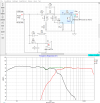
Last night I did some work on a crossover for the GRS 12" and the H6512 ( using the Peerless DFM-2535 with an added thread-adapter ).
- I used the blended//average of 4 polar responses ( as given by GRS//Parts-Express ).

It turned out much better than I expected ( I forced an @ 1500hz crossover point within Xsim ). There's even a bit a Baffle Step Compensation in this network.
- C5 + R5 are currently not used ( they form a mild notch filter ) >> but do offer a little bit of smoothing in the crossover region once connected if needed ( in the reality of an actual build ) .

I'll want to see if the PRV 230Ti//H6512 combo will respond as well to the force-fed hammering once they get here.

Peerless DFM-2535 on H6512 + GRS-12PT_ 2024-08-08_.png


@loaded

Parts Express has a very liberal return policy. You could buy both the tens & the twelves and simply return your least favourite pair.

:)
 
Last edited:
@Pete B

Thanks for the reminder about MTG's econo projects ( I had forgotten that he's already trodden the path of making these inexpensive GRS woofers work ).

Last night I did work on a crossover for the GRS 12" and the H6512 ( using the Peerless DFM-2535 with an added thread-adapter ).
- I used the blended//average of 4 polar responses ( as given by GRS//Parts-Express ).

It turned out better than I expected ( I forced an @ 1500hz crossover point within Xsim ). There's even a bit a Baffle Step Compensation in this network.
- C5 + R5 are currently not used ( they form a mild notch filter ) >> but do offer a little bit of smoothing in the crossover region once connected if needed ( in the reality of an actual build ) .

I'll want to see if the PRV 230Ti//H6512 combo will respond as well to the force-fed hammering once they get here.

View attachment 3269736


@loaded

Parts Express has a very liberal return policy. You could buy both the tens & the twelves and simply return your least favourite pair.

:)
Nice! Hope the D230ti can match, or even better that.
 
Nice, excellent work EarlK! These GRS woofers look like amazing bargains they even have
some copper in the gap. Many thanks to Earl, this is going to be an excellent addition to the
Econowave family.

I still vote for a 12 or 15" woofer since this concept works better with a large woofer that
beams at the top end of the range so that the coverage is a closer match to the target
coverage pattern. Read Earl's Summa white paper, and if interested my "Why Waveguide
Speakers" to understand:

Geddes' paper is attached to post #2 in that thread.
 
Nice, excellent work EarlK! These GRS woofers look like amazing bargains they even have
some copper in the gap. Many thanks to Earl, this is going to be an excellent addition to the
Econowave family.

I still vote for a 12 or 15" woofer since this concept works better with a large woofer that
beams at the top end of the range so that the coverage is a closer match to the target
coverage pattern. Read Earl's Summa white paper, and if interested my "Why Waveguide
Speakers" to understand:

Geddes' paper is attached to post #2 in that thread.
12's are preferred, 15's would be awesome but doubt the D230ti's would work well with them?
 
We won't know until someone measures them, if you wanted to cross low say down to
1 to 1.2KHz there might have been better choices for horns, I think you'll be fine as is
with a 12" or 15". If you're forced to cross a 15" at 1.5K it may not be ideal but also not
bad for a first build. But you also say that you don't want a huge box so perhaps the
12" is the best way to go. I have bass simulations of the GRS 15" that I'm going to post
today, will also do the 12" today if I have the time.
 
Anyway to get that CD to play nice with a DC380-8 15"

Maybe.

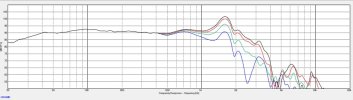
The graph for the DC380-8 shows a typical response "bump" right before the upper end rolloff:

dayton_dc380-8_graph.jpg

This can sometimes be dealt with, by staggering the crossover points, between woofer and horn- what's known as "gapping" the crossover, so that the lowpass is at a lower frequency than the highpass. Normally, this would leave a "gap" in the response- but in this case- the woofer peak would negate that.

The Econowave crossover is effectively about 1500Hz or so. That's fine for the highpass for the horn. BUT- the woofer has to be dealt with a bit differently, to get rid of the peaking at rolloff. In this case- a second-order lowpass with a Zobel, probably about 800Hz, could work well. Though the crossover is rolling off at 12dB/oct. above 800Hz- the peaking- which looks to be roughly 12dB/oct. itself- would "cancel out" the crossover rolloff, until about 1500-1600 Hz or so- where the woofer response starts to roll off, itself. Probably close enough to blend with the E-wave horn and highpass.

In this case- a low pass section consisting of about a 3mH choke and a 12uf cap, combined with a Zobel of about 8 ohms and 50uf across the driver, SHOULD just about flatten out the response of the woofer, to about 1500Hz. Use that with the standard E-wave highpass, and you'll probably have a decent starting point for tweaking. If there needs to be a further reduction in energy from the woofer between 800 and 1600Hz- a smaller value Zobel resistor can be used (down to as low as 4.7 ohm should be fine, if it makes it sound better). Given the nature of the phase response of the combined woofer and low-pass- it might be necessary to experiment with trying the horn at both in-phase and inverted polarity, to see which one blends better.

Naturally- there's always a bit of compromise, in off-axis response on a big woofer run this high in frequency- but, I've heard some pretty darn good systems done this way, with similar 15" woofers, despite that fact...

Regards,
Gordon.
 
Last edited:
Maybe.

The graph for the DC380-8 shows a typical response "bump" right before the upper end rolloff:

View attachment 3270040

This can sometimes be dealt with, by staggering the crossover points, between woofer and horn- what's known as "gapping" the crossover, so that the lowpass is at a lower frequency than the highpass. Normally, this would leave a "gap" in the response- but in this case- the woofer peak would negate that.

The Econowave crossover is effectively about 1500Hz or so. That's fine for the highpass for the horn. BUT- the woofer has to be dealt with a bit differently, to get rid of the peaking at rolloff. In this case- a second-order lowpass with a Zobel, probably about 800Hz, could work well. Though the crossover is rolling off at 12dB/oct. above 800Hz- the peaking- which looks to be roughly 12dB/oct. itself- would "cancel out" the crossover rolloff, until about 1500-1600 Hz or so- where the woofer response starts to roll off, itself. Probably close enough to blend with the E-wave horn and highpass.

In this case- a low pass section consisting of about a 3mH choke and a 12uf cap, combined with a Zobel of about 8 ohms and 50uf across the driver, SHOULD just about flatten out the response of the woofer, to about 1500Hz. Use that with the standard E-wave highpass, and you'll probably have a decent starting point for tweaking. If there needs to be a further reduction in energy from the woofer between 800 and 1600Hz- a smaller value Zobel resistor can be used (down to as low as 4.7 ohm should be fine, if it makes it sound better). Given the nature of the phase response of the combined woofer and low-pass- it might be necessary to experiment with trying the horn at both in-phase and inverted polarity, to see which one blends better.

Naturally- there's always a bit of compromise, in off-axis response on a big woofer run this high in frequency- but, I've heard some pretty darn good systems done this way, with similar 15" woofers, despite that fact...

Regards,
Gordon.
Thanks Gordon, I can actively play with the crossover via bi-amping, and try the zobel network out. Do you think your approach is preferable to crossing the woofer lower and the tweeter a tad higher using a midrange driver as a "filler" driver" (just enough to flatten out the trough)? I have some older Jensen sealed back midranges I could play with .
 
Thanks Gordon, I can actively play with the crossover via bi-amping, and try the zobel network out. Do you think your approach is preferable to crossing the woofer lower and the tweeter a tad higher using a midrange driver as a "filler" driver" (just enough to flatten out the trough)? I have some older Jensen sealed back midranges I could play with .

A filler driver will definitely be more complicated- but, it depends on how much you're willing to tinker...

If you're bi-amping- you may not need the Zobel. The Zobel just makes a passive crossover work correctly. The woofer impedance cannot upset an active crossover, before a power amp.

You will want to make sure that the electronic crossover has the capability to provide a second-order (12dB/oct.) Linkwitz-Riley alignment (Q = 0.5).

Also, if you're using an active crossover on the high frequency drivers- you will also need an EQ, to replace the shelf filtering that the E-Wave crossover does. It effectively reduces the output of the horn below 10KHz, to effectively boost the output above 10KHz.

Regards,
Gordon.
 
@EarlK nice work in post #46, amazing how flat you got the horn response and also the woofer.
@loaded, this looks very good but the only thing to note is that because these GRS woofers
have extended deep bass the efficiency is not that high. Still, an honest 90 dB/w is well above
the typical 86 dB/w for most HiFi speakers. And we should note that many companies lie about
efficiency, many claiming high 90s to 100 or more are just full of it. Klipsch, Infinity, etc. usually
you have to knock 5 or more dB off of their claims.
 
I would be okay with a real 90db sensitivity... I like the idea of not running a sub and I don't listen too loud, 85db on the high side.
 
@loaded

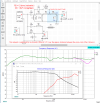
My d230Ti drivers arrived and I measured one on a H6512 ( then proceeded to create a crossover ).

Here's my kick-at-the-can ( & not actually owning the GRS woofers means there's quite a lot of speculation baked into this design > so use at your own peril ).

NOTE: ( the bit of purple trace ) ; This is the HF response when L2 is omitted.
- FYI, parts C2 + L2 form a PEQ boost filter ( centered at @ 12K ) with about 5db of lift ( observable in the next pic, within the "Electrical-Response" window ).
- It's an uncommon filter to find within any eWave project since it really requires that the user owns an LCR meter to measure ( & use ) the exact values required.

PRV 230ti+H6512+GRS-12PT_modC_2024-08-12_.png

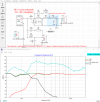
Here's a closer look at mostly the crossover region ( note the 3.5" requirement for offset between the 2 drivers voice-coil regions ).

The teal-colored trace is the raw response of the d230Ti on the H6512 ( windowed at around 5ms to clean up some contaminating reflections ).
- I show it to illustrate the big HF hole that required the PEQ ( boost-filter ).
- I was happy to see how quite "flat" the combo was between 2K to 5K ( typically, other drivers with this horn have more ripple in this area ).

The crossover point ( @ 1550hz is right at the lowest possible point for this driver/horn combo ).

PRV 230ti+H6512+GRS-12PT_modC_stretched-HF_2024-08-11_.png


Also, here's the .mdat file ( zipped ) so that you can play with it some in XSim ( as a learning opportunity ).

:)
 

Attachments

Last edited:
Excellent work EarlK... that's a pretty straight line! thanks for the Zip, I'll take a stab but I don't think there is anyway I am improving on that design of yours. I am glad you put a variable L Pad in there as I was going to ask how best to implement that as I wanted to install on my Ewaves.
 
Back
Top Bottom