• Please note that Audiokarma will be offline briefly for updates early on Monday morning, September 28th.

EPI 100/Smaller Advent Comparison?

I have never been able to understand some audiophiles' willingness to give up true low bass for a supposedly more extended high end.

If one considers the whole audio spectrum, the lack of anything below, say, 50 Hz, makes a speaker just another average speaker as far as I'm concerned.

High fidelity means to reproduce all of it, after all.

I'll take the Advents.

Doug
 
If you measure the Advent you will find it's high end to be flat out to 18 KHZ or so. The EPI does sound brighter, I suspect it rises a few DB at the extreme high end. The KLH 6 is an example of a rolled off speaker.
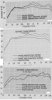
I'm certainly not seeing "flat out to 18 kHz or so" in these measurements by CBS Labs for High Fidelity magazine:

attachment.php


Originally posted here, Jackfish has yet to tell us what the three charts are:

http://audiokarma.org/forums/showthread.php?p=1679375#post1679375

You guys seem to enjoy going on and on about subjective listening impressions, but there's much more of substance to be concluded from actual data. Find it, post it, and let's discuss it.

We learned more about HPM-100s from our group discussion of the published response curves than was ever discovered in "I love 'em" vs. "I hate 'em" threads.... :yes:
 

Attachments

  • _Temp1.jpg
    _Temp1.jpg
    46.5 KB · Views: 162
Looks flat out to 17 khz unless I am missing something. And that is the hemispheric response. That is also the oldest revision of the tweeter.
 
Looks flat out to 17 khz unless I am missing something. And that is the hemispheric response. That is also the oldest revision of the tweeter.
I don't know. Measure.

Average front hemispheric response rolls off above 10 kHz there, and it's down 10 dB at 20 kHz.

Jackfish posted those to illustrate exaggerated midrange (~1 kHz) in large Advents, top. It's unclear what the bottom two charts are.... :dunno:
 
I am looking at the data you supplied it shows the +- 3.5 db 50 - 17 khz. You have to set your 0 reference by splitting down the middle.
 
While I am normally a big fan of statistics and measurement when it comes to acoustics (I used to work in a hearing aid factory where our testing methods and equipment had to meet stringent standards), a lot of people here may not have the ability or facilities to measure and interpret the various response characteristics to come to any meaningful conclusion.

Sometimes subjectiveness is all that's available.

Although I get very suspicious of some subjectiveness too :^)

Doug
 
I am looking at the data you supplied it shows the +- 3.5 db 50 - 17 khz. You have to set your 0 reference by splitting down the middle.
We're not looking at the same line, apparently. Remember that the horizontal scale is logarithmic; it'd be a stretch to say it's making 15 kHz at -3.5 dB.

We can debate whether we call it wimpy bass or exaggerated mids, but the VHF is clearly not "flat."

While I am normally a big fan of statistics and measurement when it comes to acoustics (I used to work in a hearing aid factory where our testing methods and equipment had to meet stringent standards), a lot of people here may not have the ability or facilities to measure and interpret the various response characteristics to come to any meaningful conclusion.
Well, let's kick it up a notch here, then. Does the top set of curves tell YOU how Large Advents might sound?

What does this have to do with Small Advents? Grateful has told us they are designed to sound the same:

There is essentially no difference in sound between the Large and Smaller Advent. They were designed to have exactly the same sound including the same low end.
So, until someone finds and posts the actual curves for Small Advents, that's the best we have to objectively characterize their sound.

It'd be good to see them for EPI 100s for comparison, of course.... :yes:
 
I would suspect the thick black plot of the lower chart is an average of on-axis and off axis response with the switch in the extended position. In other words power response in a hemisphere in front of the speaker. I suspect the 3 curves are different settings of the high freq switch normal, decrease and increase. If i remember correctly these curves were taken from a defective pre production sample of the Original Large Advent. I beleive the crossover was corrected after these curves were generated. I see the lower curve making it to 17khz. That is the extended position. It's setting was designed to be compatible with wider range sources that were just coming on the market. Those sources were Dolby B cassette and reel to reel and quieter vinyl. That stuff was state of the art in 1971. The extended position was designed to broaden the high range extension out another 1/2 octave but not raise it's output above the 1 khz level. Many listeners on these forums think the switch is defective but if you listen to a noisy program you will hear a slight rise in the hiss in the extended position. Recordings have a greater sense of harmonics and airyness in the extended position. That is the only setting to use IMHO with modern noiseless digital recordings.
 
It would be far more useful if the full context of those curves was available.

How far away was the mic. measuring the on-axis response?

Yes, which iteration were these Advents?

Which curve would represent the response most likely heard from a typical listening position? I doubt it would be the on-axis response.

After listening to Advents for many years, I say there is no way that there is realistically an almost 10 dB rise at that frequency at normal listening positions. Maybe with your ear right in front of the tweeter.

Doug
 
Which curve would represent the response most likely heard from a typical listening position? I doubt it would be the on-axis response.
If you were listening nearfield, on-axis would be the one, but average front hemispherical would be more representative of typical listening, I would say.

RayW might tell us more about the nuances of curve representation and interpretation....
 
If you were listening nearfield, on-axis would be the one, but average front hemispherical would be more representative of typical listening, I would say.

I would generally agree with this as long as by near field you mean, say, within three feet.

Where the heck did they make measurements for the average omnidirectional response anyway? Doesn't that imply that some of them were behind the speakers? :D

Doug
 
Back
Top Bottom