

You are using an out of date browser. It may not display this or other websites correctly.
You should upgrade or use an alternative browser.
You should upgrade or use an alternative browser.
heathkit w-5m renovations [boondoggle edition] quantum vacuum deep dive
- Thread starter sae-7125
- Start date


sae-7125
Super Member
quick side distraction, brimar 12au7 related:

interesting to note anode and cathode resistances

vs supply voltages
some example circuits, last four pages of the pdf spec sheet.
in regards to v1/v2 optimization, and greater focus on v1 470r cathode resistor adjustment.
interesting to note anode and cathode resistances
vs supply voltages
some example circuits, last four pages of the pdf spec sheet.
in regards to v1/v2 optimization, and greater focus on v1 470r cathode resistor adjustment.
sae-7125
Super Member

What are equivalents for 12au7, 12at7 and 12ax7 tubes? - Backert Labs tube preamps
Discover the equivalent tube types for the most popular preamp tubes here on the Backert Labs Preamp Blog
 backertlabs.com
more rolling options to explore, jan 5814 vs jj ecc802s (new production) vs ...

sae-7125
Super Member

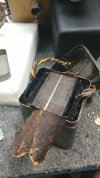
txf removed from its tin can, screwdriver has seen better days and needs cleaning now.
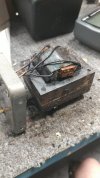
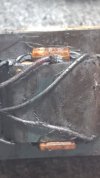
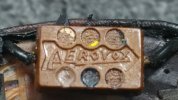
removing the last few chunks of tar reveals some caps, mentioned in a different forum.
Unpotted Peerless 16309 OPT from Heath W5m
I unpotted one of my broken Peerless 16309 OPTs. The smaller of the two OPTs seen in the W-5m. See the attached pictures. A few observations: 1. The transformer core is relatively tiny for a 20watt amplifier. 3"x2.5"x1.5" . A lot of these OPTs fail and I wonder if it is a thermal problem...

sae-7125
Super Member
i will see what can be done to better document/photograph the specifics requested above, cap values and connections plus lamination measurements.
also wondering about the level of quality/build variation of power magnetics around the earlier 50's. even though the ww2 rationing of materials would have ended prior to the w-5m public release.

 www.nps.gov

 engineersatwar.ww2.imeche.org
i would guess that resources became more abundant by 1950 state side even though there is mention that the uk didnt adjust until 1954.
either way lots of data to collect at the bench today.
also wondering about the level of quality/build variation of power magnetics around the earlier 50's. even though the ww2 rationing of materials would have ended prior to the w-5m public release.
Material Drives on the World War II Home Front (U.S. National Park Service)
Material Drives on the World War II Home Front
www.nps.gov
Electricity rationing
In January 1940 the British government introduced food rationing gradually over several years. Unlike food it was hoped that fuel would be used economically with voluntary rationing of lights, fire…
engineersatwar.ww2.imeche.org
i would guess that resources became more abundant by 1950 state side even though there is mention that the uk didnt adjust until 1954.
either way lots of data to collect at the bench today.


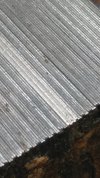

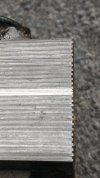
I counted 6 layers of the nickle lams. Are these laminations nickle-iron alloys and if so what? I assume they are not pure nickle.
I also wondered why they are arranged in a single group/stripe in the middle of the laminations rather than dispersed. The purpose of the nickle-iron lams I think is to enhance low-level performance, due to the higher (than iron laminates) permeability at low magnetization levels.
I also wondered why they are arranged in a single group/stripe in the middle of the laminations rather than dispersed. The purpose of the nickle-iron lams I think is to enhance low-level performance, due to the higher (than iron laminates) permeability at low magnetization levels.
sae-7125
Super Member

Nickel Electrical Lamination
Nickel laminations are good for input, output, audio signal, inductors, crossover networks, DC bias bridging, chopper, control converter, differential, filament, IF, instrument, electronic, computer modems, communications, specialty transformers and chokes and precision motors. EDCOR uses only...
 edcorusa.com

Transformer Laminations - Thomas and Skinner
Product Transformer Laminations For nearly a century, Thomas & Skinner has produced GOES and NOES transformer laminations, setting the industry standard in quality, precision, and performance. From our early beginnings in the 1920’s, supplying laminations to the emerging radio industry, we have...
 www.thomas-skinner.com
Nickel Iron — laminations or tape wound | Butler Winding
 www.butlerwinding.com
sae-7125
Super Member
*high nickel content datasheet

 matlefflerschulman.com
dave mentioned the 16309 got into trouble quickly below 30hz at slightly above 20w. nickel construction seems to saturate quickly near its breaking point, over-saturation of flux density.
Iron Logic: Transformer Theory Applied to Mastering | Mat Leffler-Schulman Mastering — Mat Leffler-Schulman Mastering — Mastering Engineer
A practitioner-level deep dive into how transformer physics shape tone in mastering — B-H curves, impedance loading, core materials, and the Big Crunch box in practice.
matlefflerschulman.com
dave mentioned the 16309 got into trouble quickly below 30hz at slightly above 20w. nickel construction seems to saturate quickly near its breaking point, over-saturation of flux density.