Daev, is a nice guy. Many, many years ago he got one of my HH Scott 340 Bs running.Per Daev Roehr's Scott alignment guide, page 49: Scott FM tuners don’t actually use a balanced 300 ohm input; one side of the antenna lead is grounded.
000-book-hhscotttuner alignment.book


You are using an out of date browser. It may not display this or other websites correctly.
You should upgrade or use an alternative browser.
You should upgrade or use an alternative browser.
HH Scott Owners Thread
- Thread starter RS Steve
- Start date
These amps are considered 'rare' or at least not commonly found. Nice score !!Got lucky today. Unfortunately, one bad output tube.
"Mr. Foster Blair," what was his AK handle??? Sad to hear of this passing.I was looking through my old correspondence and found the following from Mr. Foster Blair, the Scott expert who passed away last year. I had sent him a 370 for repair. I wanted to share what he wrote for the use of the community:
"The tuner arrived on Monday and I was able to test and do a very minor readjustment of the 38KHz coil on the multiplex section to get it back into alignment. The Scott 370 and LT 111 tuners were HHScott’s answer to a lower cost tuner employing three compactron tubes as a means to reduce the parts count. When they are working properly, they sound great. Unfortunately achieving the proper alignment is very tricky and can be easily knocked out of alignment by shipping stress and vibration. The most vulnerable part is the shorter of the two transformer cans on the multiplex section. After I aligned it, your unit was sounding great. I listened to it for about three hours with no problems. If however, the problem recurs probably due to shipping induced vibration, readjustment of the 38KHz coil is very easy using a standard hex cross section tuning tool inserted into the top of the transformer. I only had to move the slug a few degrees to get it back into alignment. If the unit starts to give you a burbling sound in stereo, you insert the tool into the top of the transformer and ever so slightly rotate the slug in one direction. If it fixes the problem carefully remove the hex tool straight out of the transformer being careful not to change (i.e. rotate) the slug position. If the sound got worse, rotate the tool in the opposite direction until the burbling stops and you get a stable stereo image, then remove the tool."

Thanks Dave, and I have read your 272 thread a few times now. I'm sure I'll hit you up for a parts list and/or some advice along the way.Congratulations! These 272 amps are probably the top-of-the-line integrated offerings by Scott (alongside maybe the 296) and are based on the EL34 power pentode. They have more knobs (controls) than just about any other Scott offering. They are powerful and sound very good. I've restored a couple of these, one of which I own (picture). I need to get it back in the listening room (very challenging to carry around at over 50 lb weight).
Yours does look unmolested. The two I did were not (one was really hacked up) and I have a couple of threads you can find by searching in this forum. It was worth it to me and the guy who owned the other one I did. If you have it gone over (which you probably should), there are quite a few things to look for, not least of which is potential heat damage. The amp has four EL34's, two 5U4GB rectifiers, and two 20W power resistors all in a row behind the (huge) output transformers and that throws a lot of heat back there, particularly on an amp run in a cabinet.
It also has a bunch (six) of can filter electrolytic caps that ought to be replaced. Good luck with your prize! They are fine amps and pretty rare.
Dave
View attachment 3729894

I learned of him from the tuner site, Tuner Information Center - Vintage Stereo Tuners. I believe he worked with Mapleshade, but also operated his own service repairing Scott gear. I see a member here with the username @fjblair . The time stamps seem to match, but I don't know whether that username belonged to him. He was a good guy; RIP."Mr. Foster Blair," what was his AK handle??? Sad to hear of this passing.

Does anyone know if the TR 12-2 output transformers in the 272 and 290 are electrically equivalent to the TR 12-4 in the 250? In the 250 they lay down so maybe that is the reason for the different suffix but perhaps there is more difference.

I expect this is mentioned in one of Dave451's threads, but IMHO at least the CERACAPs that couple to the output tube grids should be replaced. Don't want to risk any DC leakage in those positions.Underneath the 272. It looks untouched?

kvflyer
Super Member
I know that there are some who absolutely like an HH Scott amplifier to be totally original. I have a 222D that was totally original and I had to replace the selenium bias/filament supply. But it still has the American Radionics Ceracap capacitors. Why leave them in?I expect this is mentioned in one of Dave451's threads, but IMHO at least the CERACAPs that couple to the output tube grids should be replaced. Don't want to risk any DC leakage in those positions.
I have worked on a lot of Scott tube equipment. Stuff from the late 50s will usually have paper capacitors and to not replace them is asking for trouble (not to mention the amplifier probably won't work!). Later 60s Ceracaps may be "DiFilm" or paper/Mylar construction. They usually don't leak. But I have found a lot of them that, when tested, out of circuit on a capacitor checker, not the little box thing. Rather a capacitor bridge that has an eye tube and can check for leakage at the working voltage. I have found some that when tested, the edges of the eye tube are fuzzy, not crisp and clean. It was explained that it is an issue with dissipation, probably similar to high ESR.
So, it's a crap shoot. If you want an amplifier that is a daily driver with good USA or European tubes, you might want to do just that; replace at least the coupling capacitors to the output tubes.

Not to mention the TD-124 and R2R in the same GORGEOUS console! I was eyeballing the same listing.Got lucky today. Unfortunately, one bad output tube.
KVFlyer is right ! He is a resident HH Scott expert for sure ! Do it right and enjoy the amp for years !I know that there are some who absolutely like an HH Scott amplifier to be totally original. I have a 222D that was totally original and I had to replace the selenium bias/filament supply. But it still has the American Radionics Ceracap capacitors. Why leave them in?
I have worked on a lot of Scott tube equipment. Stuff from the late 50s will usually have paper capacitors and to not replace them is asking for trouble (not to mention the amplifier probably won't work!). Later 60s Ceracaps may be "DiFilm" or paper/Mylar construction. They usually don't leak. But I have found a lot of them that, when tested, out of circuit on a capacitor checker, not the little box thing. Rather a capacitor bridge that has an eye tube and can check for leakage at the working voltage. I have found some that when tested, the edges of the eye tube are fuzzy, not crisp and clean. It was explained that it is an issue with dissipation, probably similar to high ESR.
So, it's a crap shoot. If you want an amplifier that is a daily driver with good USA or European tubes, you might want to do just that; replace at least the coupling capacitors to the output tubes.
I had my HH Scott 380 restored 100% (by another tech) years ago and it is reliable and sounds excellent. One of two tube 'amps' that I have kept due to down siszing.


SWL3600
Super Member
Same here. I did a major purge a few years ago and made damn sure to keep my three 222c's. Love the sound of those units.KVFlyer is right ! He is a resident HH Scott expert for sure ! Do it right and enjoy the amp for years !
I had my HH Scott 380 restored 100% (by another tech) years ago and it is reliable and sounds excellent. One of two tube 'amps' that I have kept due to down siszing.

tubelectron
Super Member
I had a SCOTT 222C some years ago, in perfect condition and restored with a custom power 230/240V 50Hz transformer...
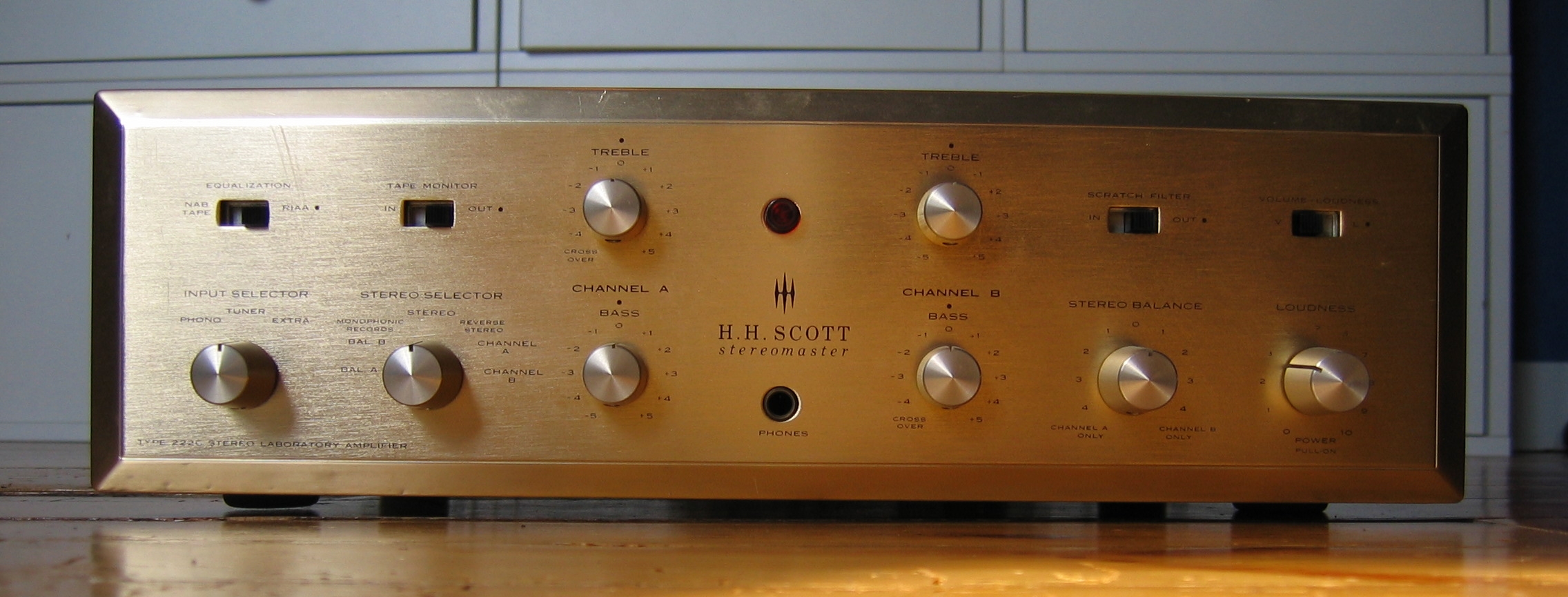
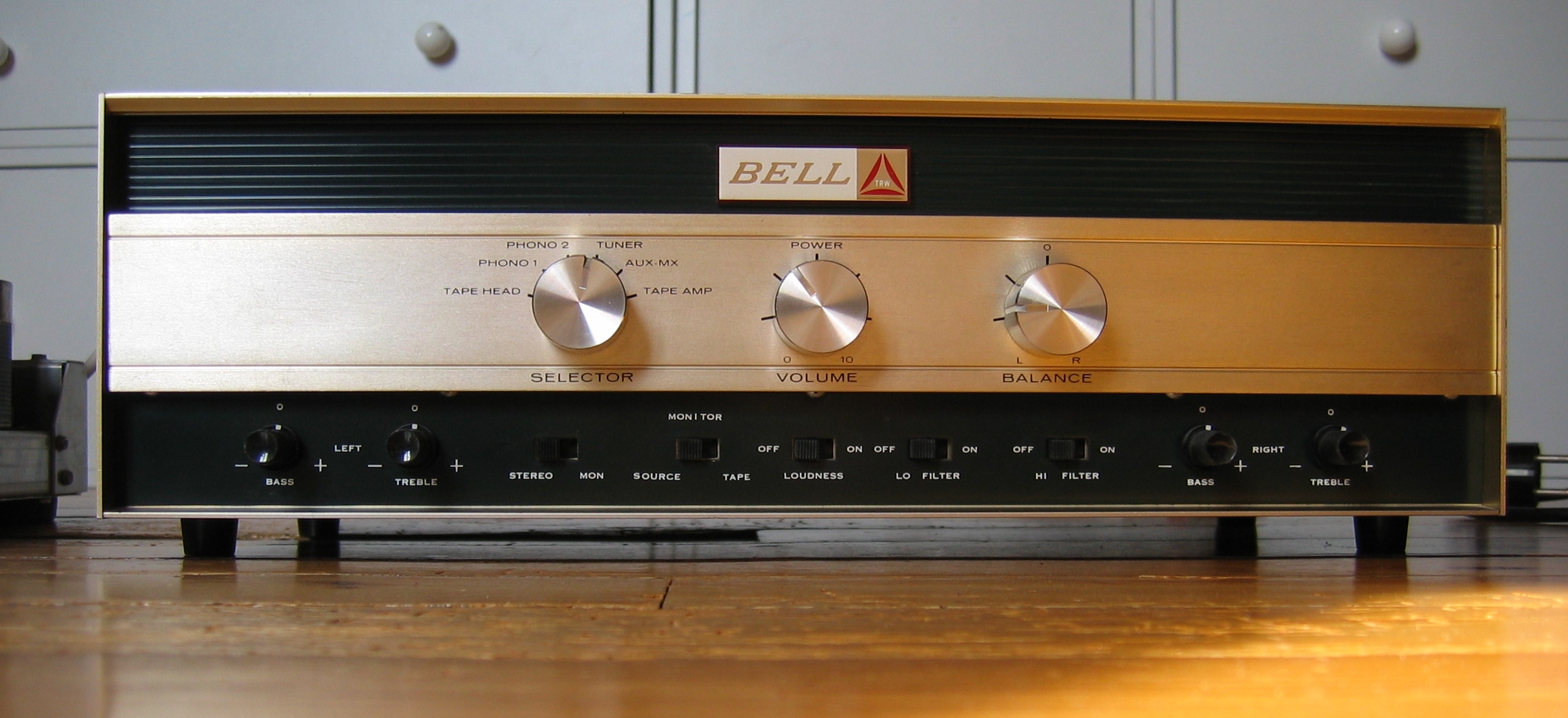
Inexplicably, it sounded dry and flat ! I finally (and somewhat idiotely too ) sold it, much prefering the tone of my less valued BELL 2420, which is still here...
T
Inexplicably, it sounded dry and flat ! I finally (and somewhat idiotely too
) sold it, much prefering the tone of my less valued BELL 2420, which is still here...
T

Dandy
Addicted Member
I had a SCOTT 222C some years ago, in perfect condition and restored with a custom power 230/240V 50Hz transformer...
View attachment 3738768
Inexplicably, it sounded dry and flat ! I finally (and somewhat idiotely too
T
I
I also have a 222C amplifier that I've carefully restored. It still has the stock US power transformer, so I use a drop down transformer. I have tried hard to love it, but like you I find the sound rather dull, compared with many other similar EL84 amplifiers that I have. I plan to see what the transformers sound like without all the preamp 'laboratory' circuitry, but I have often been tempted to sell it. The only thing that stops me is knowing that I'll never find another one that I can afford in the UK!I had a SCOTT 222C some years ago, in perfect condition and restored with a custom power 230/240V 50Hz transformer...
View attachment 3738768
Inexplicably, it sounded dry and flat ! I finally (and somewhat idiotely too
T

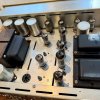
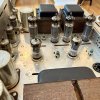
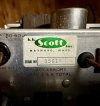
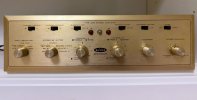
HH Scott 299 first edition from 1958, serial no. 5610.
I certainly did not need another HH Scott integrated tube amp; this is my fourth, but it was within 20 miles on FBM, and the price seemed right. The faceplate is very good, but it has some oxidation, and a few letters have rubbed off. It does have a slight red/copper hue to the gold anodization, which also made it more desirable to me, and I’m a sucker for the solid aluminum knobs. So, $300 seemed like a fair price as the tubes all looked original and a quick check underneath found it to be unmolested.
Upon further examination when I got it home, the output tubes are four Amperex EL84s (rX3), all made in Sittard, the Netherlands in Sep-58 (X81), with D-getters and 3 slots in the plates - these are considered rare and valuable. The pre-amp tubes are two Telefunken 12AX7s, both made in W. Germany in Oct-58 (qa). The tone control tubes are two 12AX7A HH Scott-branded, but made by Raytheon in the USA. The phase inverter/driver tubes are HH Scott-branded Amperex ECF80 (395), made in Sittard, the Netherlands in Sep-58 (+81). The rectifier tube has off-gassed. An article in VTV Issue #12 confirms, "The output tubes were originally Amerex Buggle Boy EL84s made in Holland."
My questions are: why did HH Scott spec 7189 output tubes on the first edition 299 at 350 volts at the plates (per the schematic), then use EL84s with a recommended plate voltage of 300, and I assume cutting the bias back is a good solution here?
I certainly did not need another HH Scott integrated tube amp; this is my fourth, but it was within 20 miles on FBM, and the price seemed right. The faceplate is very good, but it has some oxidation, and a few letters have rubbed off. It does have a slight red/copper hue to the gold anodization, which also made it more desirable to me, and I’m a sucker for the solid aluminum knobs. So, $300 seemed like a fair price as the tubes all looked original and a quick check underneath found it to be unmolested.
Upon further examination when I got it home, the output tubes are four Amperex EL84s (rX3), all made in Sittard, the Netherlands in Sep-58 (X81), with D-getters and 3 slots in the plates - these are considered rare and valuable. The pre-amp tubes are two Telefunken 12AX7s, both made in W. Germany in Oct-58 (qa). The tone control tubes are two 12AX7A HH Scott-branded, but made by Raytheon in the USA. The phase inverter/driver tubes are HH Scott-branded Amperex ECF80 (395), made in Sittard, the Netherlands in Sep-58 (+81). The rectifier tube has off-gassed. An article in VTV Issue #12 confirms, "The output tubes were originally Amerex Buggle Boy EL84s made in Holland."
My questions are: why did HH Scott spec 7189 output tubes on the first edition 299 at 350 volts at the plates (per the schematic), then use EL84s with a recommended plate voltage of 300, and I assume cutting the bias back is a good solution here?
Attachments



I don't think there will be a definitive answer to this, since there's probably no one left alive that actually worked there and actually knows. Thus 'conjecture' is all I can offer. That said, I think the probable answer here is the usual: Cost considerations, availability, and profit while retaining a target reliability factor. I think the EL84s back in the day were MUCH more robust than later versions, making them viable options if not exactly equal. Yea, they pushed em some, but they seemingly held up to it as wittnessed by many still in circuit and playing today! Cooling them off with a lower bias is not a bad idea, particularly if using something like modern JJ versions. AF output may suffer a bit, but probably not enough to warrant any real complaints. If so, then go find a 299c, d, or a 233!!

knockbill
Lunatic Member
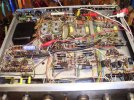
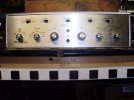
Recently found this HH Scott thread, as I couldn't believe there wasn't one in the AK Manufacturers Forum section,,, I started a rebuild thread in the tube forum,,, "Scott LK-48B"
This is my first Scott as I always wanted one!!!
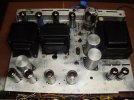
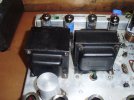
Here's a couple pics of progress so far,,, Its running at lower line voltage with 6BQ5s and a 5R4 rectifier, as I continue to gather missing parts,,, its sounding good so far and still needs some caps/resistors I will get at our big radio show in a couple weeks...Its also needs a matching TRA 8-5-1 OPT,,
as it came with one jap replacement that sounds ok but not a correct match... Here's the rebuild thread, with "as found" pics.. https://audiokarma.org/forums/threads/scott-lk-48b.1106952/
Thanks
This is my first Scott as I always wanted one!!!
Here's a couple pics of progress so far,,, Its running at lower line voltage with 6BQ5s and a 5R4 rectifier, as I continue to gather missing parts,,, its sounding good so far and still needs some caps/resistors I will get at our big radio show in a couple weeks...Its also needs a matching TRA 8-5-1 OPT,,
as it came with one jap replacement that sounds ok but not a correct match... Here's the rebuild thread, with "as found" pics.. https://audiokarma.org/forums/threads/scott-lk-48b.1106952/
Thanks
Attachments
KB, I think you're gonna love it! Lots of options on the OPTs, as I'm sure you know. Wish I could help, but the only iron I have in this caliber is from Fisher & Heath, and in 'pairs' for future builds. That said, both of those make great subs in the Scott units, but best done in pairs. OE Scott OPTs do show up from time to time, and if I see anything I'll gladly let you know! Good luck with it, it looks great so far.... nice job!! WC