

You are using an out of date browser. It may not display this or other websites correctly.
You should upgrade or use an alternative browser.
You should upgrade or use an alternative browser.
JVC QL-?? owners thread
- Thread starter BillWojo
- Start date

Snuck
Active Member
Just received my UA-7082 in good shape. Very glad to see it.
However, it have a small sagging starting, I was wondering if a drop of glue at the top of the rubber would fix it because I won't have time to repair the rubber before a long time. The rubber is still in one piece and show no external signs of wear.
All I need now is a separate tonearm pod to hear it whenever I'll be free. I think to craft one myself. According to Victor documents (and they know a thing or two), all tonearms are subjects to mismatched vibrations with the turntable even if they are on the same plinth. To avoid it, the tonearm needs physical link as some Micro Seiki and later high-end Victors does. However, they explained that well-made plinths and bases kinda counter those issues.
However, it have a small sagging starting, I was wondering if a drop of glue at the top of the rubber would fix it because I won't have time to repair the rubber before a long time. The rubber is still in one piece and show no external signs of wear.
All I need now is a separate tonearm pod to hear it whenever I'll be free. I think to craft one myself. According to Victor documents (and they know a thing or two), all tonearms are subjects to mismatched vibrations with the turntable even if they are on the same plinth. To avoid it, the tonearm needs physical link as some Micro Seiki and later high-end Victors does. However, they explained that well-made plinths and bases kinda counter those issues.
Snuck
Active Member
On the QL-A75 and A-95, there is an external piece binding the turntable to the tonearm base.
They considered that the plinth have its own vibrations without the binding.
The plinths for TT-101 to 61 are a bit different and maybe they didn't discover it yet or considered it to be harmful. A lot of Victor work was designed to focus on vibrations or issues that could temper the sound even so there was resonances and vibrations allowed monitored by their engineers and computers. Maybe they were simply stronger than the others models. The earlier DD from Victor even had an aluminum tonearm base plate instead of 1975s plinths. They were also low profile with a custom range of accessories including upgraded feet instead of rubber factories ones.
They considered that the plinth have its own vibrations without the binding.
The plinths for TT-101 to 61 are a bit different and maybe they didn't discover it yet or considered it to be harmful. A lot of Victor work was designed to focus on vibrations or issues that could temper the sound even so there was resonances and vibrations allowed monitored by their engineers and computers. Maybe they were simply stronger than the others models. The earlier DD from Victor even had an aluminum tonearm base plate instead of 1975s plinths. They were also low profile with a custom range of accessories including upgraded feet instead of rubber factories ones.

BillWojo
Addicted Member
The Victors with the constrained layer base didn't need a brace to tied the tonearm and motor drive together. That base is pretty massive. It also used anywhere from 1 to 3 armboards. Each armboard is a piece of constrained layer wood, simialar to plywood that is 19mm or 3/4" thick and securly attached to the plinth with 4 socket head cap screws.
On my 2 armboard plinth I machined custom armboards out of 3/4" aluminum plate with easy to change aluminum inserts that allow me to change arms complete in just a few minutes. Look earlier in this thread for complete details.
BillWojo
On my 2 armboard plinth I machined custom armboards out of 3/4" aluminum plate with easy to change aluminum inserts that allow me to change arms complete in just a few minutes. Look earlier in this thread for complete details.
BillWojo

Hi, I fixed my droop on the counterweight using a homemade grommet / washer of sorts. If you search on droop here I explain what I did and have pics as well. It took alot of work taking the tonearm apart, but well worth it. I also had a bad wire so I put new wires thru the tonearm as well. Good luck.It will definitely be better. My counter weight arm sags bad. It's close to touching the tonearm base.
Snuck
Active Member
Yes, on the ql-a7. I readed the post and started to do mine as well. However, 7082 tonearm is a little different and mine just had the largest rubber which was starting to show weakness.
Therefore, I had to cut down the three others rubbers which were in quite good shape despite the age. When the rubbers are good, it's quite a pita to achieve.
The brass part is still screwed, I am gonna try later to unscrew it, I used some product to help to unscrew it as brutal strength worked to no avail. I don't see how people could remove the top collar from the brass on some pictures as the shapes clearly prevent it.
If 5045 is harder to change, I can't imagine it. Even though it must be easier to remove 7045/7082 rubbers when they are dead.


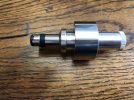
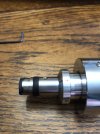
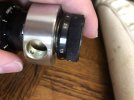
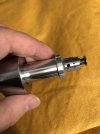
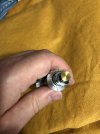
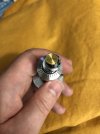
Therefore, I had to cut down the three others rubbers which were in quite good shape despite the age. When the rubbers are good, it's quite a pita to achieve.
The brass part is still screwed, I am gonna try later to unscrew it, I used some product to help to unscrew it as brutal strength worked to no avail. I don't see how people could remove the top collar from the brass on some pictures as the shapes clearly prevent it.
If 5045 is harder to change, I can't imagine it. Even though it must be easier to remove 7045/7082 rubbers when they are dead.
Snuck
Active Member
I had a bit of sagging on the visible rubber, but I regret I took it down as internals rubbers were perfectly fine despite a bad alignment of the collar with the time.
I am gonna purchase a set of rubbers to replace the three rubbers. I can mesure the two of the back, but the one doing a joint with the tonearm will requires that I mesure the inside of the collar.
I think it was still factory rubbers as the inside collars one had special square cuts.

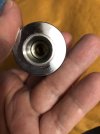
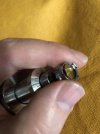

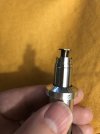
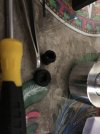
I am wondering if it wouldn't be much easier to actually buy some rubbers, make a side cut with a stiletto, and insert them inside.
I am gonna purchase a set of rubbers to replace the three rubbers. I can mesure the two of the back, but the one doing a joint with the tonearm will requires that I mesure the inside of the collar.
I think it was still factory rubbers as the inside collars one had special square cuts.
I am wondering if it wouldn't be much easier to actually buy some rubbers, make a side cut with a stiletto, and insert them inside.
Last edited:
Snuck
Active Member
That looks like it now that you say it. It was kinda full of a special glue in the brass section and few others places, making it harder to move, never saw any mention of it.
However, as I can't mold it, I gotta make it in several ones including a top head reworked to manage the squares. I am gonna see if I go for urethanes or not, I checked prices and it's about 28 euros per part in my country. I won't go for urethane for the top model with the square crown as I can't rework it.
I am glad it's over and removed the glue for the next dismantle.
Can't wait to finally listen to it.
However, as I can't mold it, I gotta make it in several ones including a top head reworked to manage the squares. I am gonna see if I go for urethanes or not, I checked prices and it's about 28 euros per part in my country. I won't go for urethane for the top model with the square crown as I can't rework it.
I am glad it's over and removed the glue for the next dismantle.
Can't wait to finally listen to it.
willholmania
New Member
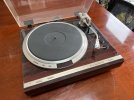
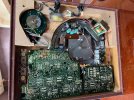
I recently took a chance on this Victor QL-Y7. When it arrived the platter would start to spin but then stop again. The series of switches along the front panel seemed erratic so I squirted them with contact cleaner, whereupon the whole thing stoped working completely. I managed to get one of the switches apart, and the little metal contacts at the bottom were corroded, so I cleaned them up but it made no difference. Sticking a meter across them (removed from the PCB) reveals the resistance when energised ranges from 200 to 400Ω. I figured they were shot, pulled them out and replaced them with new parts, albeit of an entirely different design.
I've replaced most of the electrolytics in the deck now (just waiting for a couple I didn't have). Some of the larger main supply ones were toast.
The platter now turns again as soon as the turntable is powered up, but none of the switches do anything. The two on the motor unit itself, which select 33 or 45rpm, are touch switches which apparently rely on capacitance to work (except they too are unresponsive). I'm assuming the ones on the front panel aren't, as they're plastic, but the fact that the little nipple inside them that bridges the gap between the two metal contacts is made of a rubbery material is making me wonder whether there's something odd about these switches. Does anyone know what the score is with them? I might reinstate them, having now cleaned them all (they're a fiddle to get apart).
I've replaced most of the electrolytics in the deck now (just waiting for a couple I didn't have). Some of the larger main supply ones were toast.
The platter now turns again as soon as the turntable is powered up, but none of the switches do anything. The two on the motor unit itself, which select 33 or 45rpm, are touch switches which apparently rely on capacitance to work (except they too are unresponsive). I'm assuming the ones on the front panel aren't, as they're plastic, but the fact that the little nipple inside them that bridges the gap between the two metal contacts is made of a rubbery material is making me wonder whether there's something odd about these switches. Does anyone know what the score is with them? I might reinstate them, having now cleaned them all (they're a fiddle to get apart).
Attachments

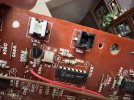
willholmania
New Member
Thanks - I'll have a watch.
This is a great video of a different model. He troubleshoots it and gets is working. Skip to minute 26 if you want to go directly to the switch disassembly and replacement.

best-groove
Active Member
are touch switches which apparently rely on capacitance to work
Have you tried pressing the buttons with a damp or wet finger?
Check if the buttons work with this method.
willholmania
New Member
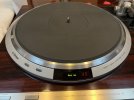
willholmania
New Member
They're not conductive, unlike the ones on the drive unit itself. It seems the circuit somehow took exception to switches that read 0Ω when closed, rather than the 200-400Ω of the originals.Have you tried pressing the buttons with a damp or wet finger?
Check if the buttons work with this method.
best-groove
Active Member
It seems the circuit somehow took exception to switches that read 0Ω when closed, rather than the 200-400Ω of the originals.
well.