• The move to the new server is done. There are some software and database maintenance updates in process. This has us passing the hat around to help out. We appreciate any donations. Seriously, even a dollar helps. The payment page may be found here - https://www.audiokarma.org/support.html

Prefered Glue for surrounds

Mod Podge "Gloss" IS a PVA based material with other additives, one of which appears to be propylene glycol (antifreeze).

I checked my samples by applying a "blob" of each on a piece of teflon with a polished surface so that it would NOT adhere. Then I placed a small piece of cardstock on part of each blob to give it a handle. I also drew out a part of the blob to provide a sample that went from thick to thin in cross-section. Each of the three that I mentioned above remained similarly flexible but, again, it's kind of subjective ... none of them cracked or were brittle enough to break regardless of how thin or thick the sample was in cross section.

How was penetration into the cardstock? Be curious to see how it does on a paper cone vs aileens.
 
i am wondering what do you guys think is the best glue to redo surrounds??
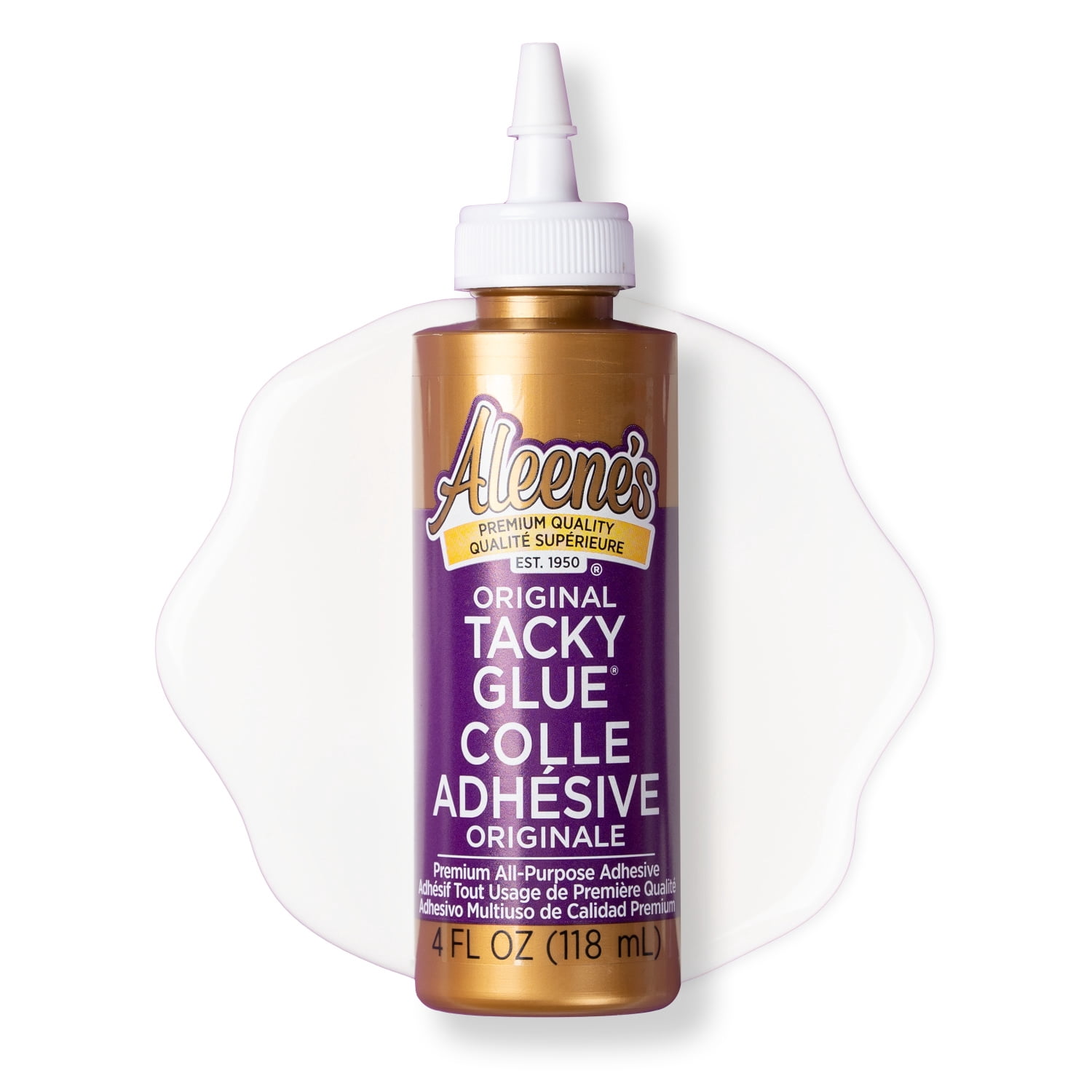
Aleene's Tacky Glue has worked wonders for me. The texture is similar to carpenters glue and it cleans up easily and dries clear and flexible.

Available at Michaels, Walmart, Amazon etc.

 
RE: loudnoises question above - Mod Podge seems to do well with absorption into paper products. Word has it one of its original purposes was to glue up jigsaw puzzles upon completion. I think the name alludes to it's common useage for a crafting thing called "decoupage" (Podge) where one glues paper cutouts and whatnots to jars, boxes and other cutsie thangs. The "Gloss" stuff can be used both to adhere these whatnots as well as coat them for a protective finish.

CAVEAT! The "Mod Podge" name seems to be used on a variety of similar and not-so-similar products to the "Gloss" version that I'm referring to here.
 
Work got busy and has now died down, so I finally have a chance to get back to this. Thank you to everyone who responded.

@outlawmws, thank you for listing the steps to properly use the glue.

For those who told me to stop fretting and just go with white glue, sorry, but my mind doesn’t work like that. That’s why I posted a detailed explanation and questions. I’m convinced by facts, data, and evidence, not just “take my word for it.”

I decided to post the questions to AI (Google’s Gemini, specifically), and here are the (abbreviated) responses I got. Hopefully others will find this helpful.

1. Solvent-Based Glues and Prop 65 Warnings: No, there are no specialty solvent-based or butyl-rubber-based speaker adhesives that are free of California Proposition 65 warnings.
2. VOC Dissipation Post-Cure: Yes, once the solvent-based glue achieves a full cure (typically 48 to 72 hours), the carrier VOCs completely evaporate and dissipate.
3. PVA Glues and Fs (Free-Air Resonance) Measurements: Virtually all standard PVA (polyvinyl acetate) glues will slightly elevate a speaker's Fs relative to solvent-based alternatives, but this rarely impacts subwoofer performance. (It elaborated it would only affect the Fs about 1Hz, which wouldn't even be noticeable.)

When I pressed it for data on point 3 to back up its claims and finally checked out the articles it linked to (such as this Alibaba article that recommended Aleene’s only be used for temporary light-duty cone patches), I found some errors in what it had said. Once I pointed them out, Gemini realized it had hallucinated about some points, and gave some corrected info, but some of that turned out to be incorrect as well. This happened several more times, where it would say one thing, but when I checked its claims in a different Gemini session, it would say the opposite. That’s why I came here to ask some humans. No doubt AI will keep getting better, but as of today one needs to check its claims before running with its recommendations.

After much research with both AI and forums, I found a different potential issue with using a PVA glue. The woofer cone in the PS-1000 is allegedly made of polypropylene. Something like Aleene’s for sure works great on paper and cloth, but there is debate when it comes to using it on polypropylene. Many swear by it, others say the surround peeled off. One poster said, “Adhesives don't actually chemically bond to [polypropylene], but depend on a mechanical ‘fit’ at the near-molecular level. It is also hydrophobic, so tends to repel water-based products.”

Gemini said, “Polypropylene is non-porous; water-based glues can't chemically bite into them, relying purely on mechanical surface tension, so the solution is to scuff the mounting lip of the Paradigm's plastic cone with fine sandpaper to give the water-based glue something to physically grip onto.” So it sounds like the key is to thoroughly remove the old adhesive and then properly prepare the surface of the cone.

One person found Aleene's Turbo Tacky Glue to be easier to work with because it set up and dried faster than the regular Aleene’s. But either way, it’s important to allow a full 24 to 48-hour cure time before blasting the subwoofer.

So although using a solvent-based glue sounds like it’s better suited for a polypropylene woofer like mine, I live in an apartment and therefore can’t leave it outside for two days while it dries and the VOCs dissipate. So Aleene’s it is! (And for those who told me that in the first place, this is the process I had to go through to accept that recommendation.)

For those who have used Aleene’s, have you found the need to keep finger-pressing the surround to the cone while the glue dries for 10-15 min? Any other tips?

 
For those who have used Aleene’s, have you found the need to keep finger-pressing the surround to the cone while the glue dries for 10-15 min? Any other tips?

I use the 1.5V battery trick to move the cone up or down on the glue. this is after its sets up for 7 in (more if its humid or cold...)This is after I bond it to the metal rim of the speaker basket. that part I use very small spring clamps I bought for the purpose (they are like 1" with dipped tips). having a bit of glue on a test pies helps you gauge it its getting tacky or still liquid.

just reverse polarity on the battery if the cone is going in the wrong direction.

On the Gorilla wood glue test It does dry flexible. so thats good; but its not clear - sort of a yellow-brown.
 
Seems like the "wood glue" name implies "aliphatic resin" which seems to dry less flexibly. At least that's what I've noticed. Doesn't appear to be "PVA" type glue. Didn't take Chemistry classes in school. Boy, did I miss out!
 
Work got busy and has now died down, so I finally have a chance to get back to this. Thank you to everyone who responded.

@outlawmws, thank you for listing the steps to properly use the glue.

For those who told me to stop fretting and just go with white glue, sorry, but my mind doesn’t work like that. That’s why I posted a detailed explanation and questions. I’m convinced by facts, data, and evidence, not just “take my word for it.”

I decided to post the questions to AI (Google’s Gemini, specifically), and here are the (abbreviated) responses I got. Hopefully others will find this helpful.

1. Solvent-Based Glues and Prop 65 Warnings: No, there are no specialty solvent-based or butyl-rubber-based speaker adhesives that are free of California Proposition 65 warnings.
2. VOC Dissipation Post-Cure: Yes, once the solvent-based glue achieves a full cure (typically 48 to 72 hours), the carrier VOCs completely evaporate and dissipate.
3. PVA Glues and Fs (Free-Air Resonance) Measurements: Virtually all standard PVA (polyvinyl acetate) glues will slightly elevate a speaker's Fs relative to solvent-based alternatives, but this rarely impacts subwoofer performance. (It elaborated it would only affect the Fs about 1Hz, which wouldn't even be noticeable.)

When I pressed it for data on point 3 to back up its claims and finally checked out the articles it linked to (such as this Alibaba article that recommended Aleene’s only be used for temporary light-duty cone patches), I found some errors in what it had said. Once I pointed them out, Gemini realized it had hallucinated about some points, and gave some corrected info, but some of that turned out to be incorrect as well. This happened several more times, where it would say one thing, but when I checked its claims in a different Gemini session, it would say the opposite. That’s why I came here to ask some humans. No doubt AI will keep getting better, but as of today one needs to check its claims before running with its recommendations.

After much research with both AI and forums, I found a different potential issue with using a PVA glue. The woofer cone in the PS-1000 is allegedly made of polypropylene. Something like Aleene’s for sure works great on paper and cloth, but there is debate when it comes to using it on polypropylene. Many swear by it, others say the surround peeled off. One poster said, “Adhesives don't actually chemically bond to [polypropylene], but depend on a mechanical ‘fit’ at the near-molecular level. It is also hydrophobic, so tends to repel water-based products.”

Gemini said, “Polypropylene is non-porous; water-based glues can't chemically bite into them, relying purely on mechanical surface tension, so the solution is to scuff the mounting lip of the Paradigm's plastic cone with fine sandpaper to give the water-based glue something to physically grip onto.” So it sounds like the key is to thoroughly remove the old adhesive and then properly prepare the surface of the cone.

One person found Aleene's Turbo Tacky Glue to be easier to work with because it set up and dried faster than the regular Aleene’s. But either way, it’s important to allow a full 24 to 48-hour cure time before blasting the subwoofer.

So although using a solvent-based glue sounds like it’s better suited for a polypropylene woofer like mine, I live in an apartment and therefore can’t leave it outside for two days while it dries and the VOCs dissipate. So Aleene’s it is! (And for those who told me that in the first place, this is the process I had to go through to accept that recommendation.)

For those who have used Aleene’s, have you found the need to keep finger-pressing the surround to the cone while the glue dries for 10-15 min? Any other tips?
I've never seen anyone overthink the glue for a foam surround to this degree. Just go buy some Aileen's Tacky Glue already and get the job done.
 
Aleene's Tacky Glue has worked wonders for me. The texture is similar to carpenters glue and it cleans up easily and dries clear and flexible.

Available at Michaels, Walmart, Amazon etc.


I've never seen anyone overthink the glue for a foam surround to this degree. Just go buy some Aileen's Tacky Glue already and get the job done.

I also recommend Aileen's tacky glue.
 
Back
Top Bottom