bhundu
Addicted Member
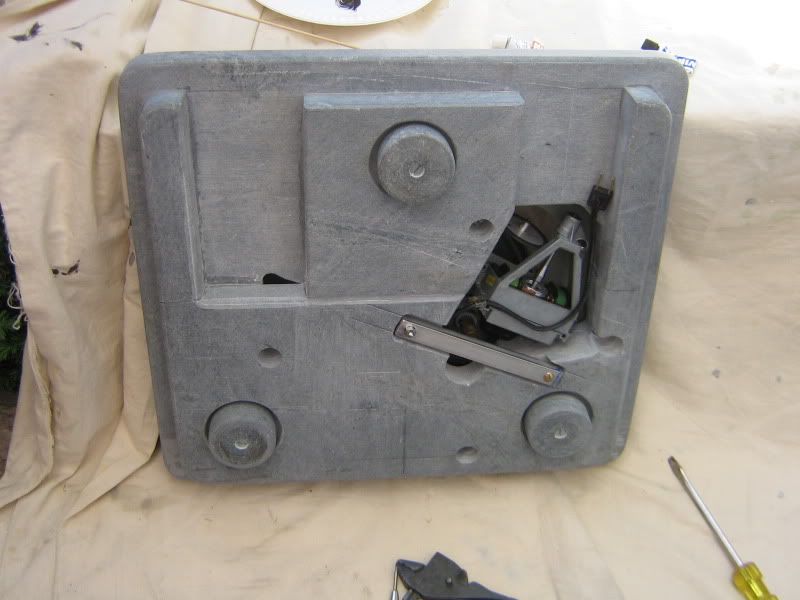
Hmm. I only mentioned dampening the platter as that was the main noise I was getting from the idler wheel on it. It had an audible knock and whir. It was isolated down to this wheel/platter cause by process of elimination. Unfortunately I can't say whether the idler sand-down or the platter dampening was the better. I didn't test in between.
Remind me if I don't post an image of the cork dampenened platter on the BSR. All the time while working on it, I was thinking "why am I wasting my time on this". It was a very rewarding experience in the end and I got a chance to apply previously learned techniques to a new table without any internet instruction.
That last sentance is a lie. There was a decent basic BSR service vid posted on youtube by an Aussie guy. Thanks Aussie Mate!
The bearing lubricant is something I'd like to talk about.
I've read that the reason for an idlers attack is a powerful motor and a slightly resistant bearing (grease). The argument was explained by a car being towed with the brake slightly on, verus a car being towed with no brake (belt drive). On a belt drive the front car travells at the same speed, but as the hills and valleys approach there is taughtness and loosenes on the towing rope. One sitting in the towed car may experience a bit for lurching and stalling while going down the hills and up the valleys.
The good idlers have one thing going for them. A massive torquey motor. Suppossedly the slight drag using grease on the bearing keeps that pulling rope tight all through the mountain range, and gets that up front attack.
Thoughts?
Last edited: