


You are using an out of date browser. It may not display this or other websites correctly.
You should upgrade or use an alternative browser.
You should upgrade or use an alternative browser.
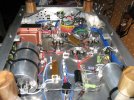
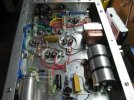
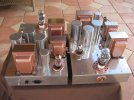
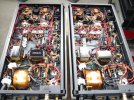
Show us the neatest point-to-point wiring
- Thread starter davidro
- Start date

Lavane
Lunatic Member
Very nice. But get rid of those JJ rectifier tubes! I had two fail in two different amplifiers, one being my 300B SET. Both 5AR4's rectifiers had low hours and I don't listen at loud levels.Build my 300B monos back in 2008. Can’t remember all the details, I studied for months, so don’t ask.
Yeah, I guess it's time to start using those NOS I have been saving.

They just need to be tamed and then they comply very nicely.Very nice. But get rid of those JJ rectifier tubes! I had two fail in two different amplifiers, one being my 300B SET. Both 5AR4's rectifiers had low hours and I don't listen at loud levels.

Bill Ferris
Lunatic Member
Yep, good ole Fender amp wiring!

When doing wiring and soldering, I pull the eyelet tagboards slightly off the chassis. It makes life easier for me.Used eyelet board on three small amps just because I had bought a strip of it. So I wanted to use it up. It's easy enough to use, but for repair turret board is easier to work with.


Are you referring to source impedance or something else? It would be nice to have another source that would work reliably.They just need to be tamed and then they comply very nicely.
Thanks,
John
That's what I suspected. Many power transformers have quite low source source numbers and sometimes the load side cap values are not according to the data sheet limits. I've done many PSUD sims where the estimated source resistance is pretty low and it is fairly easy to calculate after a couple of resistance measurements. The GE datasheet for the 5AR4 has chart III showing the required minimum source resistance based on supply RMS voltage per plate for a capacitor input filter. A Mullard spec sheet shows similar data in table form. I doubt it is looked at very often. Some resistance between the transformer and the plates would correct this issue without changing the DC output voltage very much or compromising the current available from the supply. Even though the old stock rectifiers are tough, this spec is in all the old datasheets.
I've done extensive testing of the JJ 5AR4 with Rt and although USA &European NOS 5AR4's will stand-up to lower than recommended Rt, the JJ will not. However, as indicated, if Rt and the 1st filter cap are heeded, the JJ5AR4 seems to work fine as designed.That's what I suspected. Many power transformers have quite low source source numbers and sometimes the load side cap values are not according to the data sheet limits. I've done many PSUD sims where the estimated source resistance is pretty low and it is fairly easy to calculate after a couple of resistance measurements. The GE datasheet for the 5AR4 has chart III showing the required minimum source resistance based on supply RMS voltage per plate for a capacitor input filter. A Mullard spec sheet shows similar data in table form. I doubt it is looked at very often. Some resistance between the transformer and the plates would correct this issue without changing the DC output voltage very much or compromising the current available from the supply. Even though the old stock rectifiers are tough, this spec is in all the old datasheets.
If you use Duncan's Power Supply Designer, it is an easy matter to make primary and secondary DCR transformers measurements and input them into PSD. With the touch of a keystroke you can see your Rt and it is accurate.
Lastly and equally important is using two 1N4007 diodes or similar in series with the plates. Since the cost of these diodes is so minimal and everyone seems to have these in their stash of parts, I don't ding it as a negative.
Last edited:
Lavane
Lunatic Member
I did this with my ST-70 after loosing a JJ 5AR4. Still, after loosing two of them, I'll never use a other.I've done extensive testing of the JJ 5AR4 with Rt and although USA &European NOS 5AR4's will stand-up to lower than recommended Rt, the JJ will not. However, as indicated, if Rt and the 1st filter cap are heeded, the JJ5AR4 seems to work fine as designed.
If you use Duncan's Power Supply Designer, it is an easy matter to make primary and secondary DCR transformers measurements and input them into PSD. With the touch of a keystroke you can see your Rt and it is accurate.
Lastly and equally important is using two 1N4007 diodes or similar in series with the plates. Since the cost of these diodes is so minimal and everyone seems to have these in their stash of parts, I don't ding it as a negative.
The SS diodes, the added resistance in the HV leads to bring up the source resistance, or both?I did this with my ST-70 after loosing a JJ 5AR4. Still, after loosing two of them, I'll never use a other.

Bill Ferris
Lunatic Member
Those amps were even rough/stressing on the original at that time 5AR4/GZ34 rectifier tubes if full power bench testing, or just cranking them up for sustained periods of time, not including the concerns about the mildly undersized power transformer.I did this with my ST-70 after loosing a JJ 5AR4. Still, after loosing two of them, I'll never use a other.
I started converting the ST-70s brought to me in 1977 for service, to SS rectification, and when I moved from Miami FL. back up here in 1983, my friends who still owned them told me their SS rectified/modified St-70 amps were remaining issue free and the power transformer seem to them to operate cooler (no surprise) while in use without the needless 3 amp rectifier tubes filament current draw.
Lavane
Lunatic Member
The other JJ 5AR4 I lost was in my 300B SET amp. It only had a few hours on it as well.Those amps were even rough/stressing on the original at that time 5AR4/GZ34 rectifier tubes if full power bench testing, or just cranking them up for sustained periods of time, not including the concerns about the mildly undersized power transformer.
I started converting the ST-70s brought to me in 1977 for service, to SS rectification, and when I moved from Miami FL. back up here in 1983, my friends who still owned them told me their SS rectified/modified St-70 amps were remaining issue free and the power transformer seem to them to operate cooler (no surprise) while in use without the needless 3 amp rectifier tubes filament current draw.
I understand tye ST-70's are hard on the 5AR4, but still, it should have lasted more than a couple hours playing at low volumes. I replaced it with a brown base TAD and it's been trouble free. I've thought about just using the same Coppertop SS rectifier that I'm using in my M-125 mono blocks. If this 5AR4 ever fails I'll do that.
Bill Ferris
Lunatic Member
I would not recommend their tube emulator version (the version with the built in voltage dropping resistor) of the copper top, unless they have improved it, as my friend had nothing but failure problems 4 yrs. ago with his that he was using in his (2) VTA 120 mono blocks, until I suggested he order and try the straight (no internal voltage dropping resistor) Yellow Jacket brand plugin one, that I bought and only use for variac`ing up tube rectifer`d amps on my bench during trouble shooting.The other JJ 5AR4 I lost was in my 300B SET amp. It only had a few hours on it as well.
I understand tye ST-70's are hard on the 5AR4, but still, it should have lasted more than a couple hours playing at low volumes. I replaced it with a brown base TAD and it's been trouble free. I've thought about just using the same Coppertop SS rectifier that I'm using in my M-125 mono blocks. If this 5AR4 ever fails I'll do that.
He (my bass guitar playing friend) didn`t experience any more VTA-120 power supply rectification issues with those purchased new factory assembled amps afterwards, and still uses them cranked up sustained daily.
Lavane
Lunatic Member
So far no problems with the Coppertop's with the dropping resistor and thermistor. I've had them in the amps for a.couple years now.I would not recommend their tube emulator version (the version with the built in voltage dropping resistor) of the copper top, unless they have improved it, as my friend had nothing but failure problems 4 yrs. ago with his that he was using in his (2) VTA 120 mono blocks, until I suggested he order and try the straight (no internal voltage dropping resistor) Yellow Jacket brand plugin one, that I bought and only use for variac`ing up tube rectifer`d amps on my bench during trouble shooting.
He (my bass guitar playing friend) didn`t experience any more VTA-120 power supply rectification issues with those purchased new factory assembled amps afterwards, and still uses them cranked up sustained daily.
I did read something about the quality of soldering inside had dropped right after the company changed hands for awhile I think it was. The two I have are holding up so far. If one ever fails I have a couple octal sockets with just diodes inside I use for testing as well. I can always use. I saw an old post on another site where someone removed the cap of one of those Coppertop rectifiers with the resistors and drilled 3 or 4 holes around rhe top and bottom for cooling of rhe resistors. I keep meaning to do that and maybe replace the CL-80 thermistor's with CL-90's.
From what I read concerning the construction of these rectifiers, the soldering up of the resistors and thermistor had gotten sloppy along with the springs that hold the resistors against the cover weren't placed properly and shorts could occur. There was a picture of how they were assembled and it wasn't pretty. Of course I found this out after I had bought and used the rectifiers. That post was at leased over 5 years ago though.

My first attempt at being "Hiwatt" like. DR201 clone
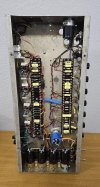
Oh, if you're not familiar with BC Audio you should have a look at his amps. He used to actually build one in his NAMM booth back in the day.
 www.bcaudio.com
BC Audio | Hand Crafted Performance
Hand crafted performance all-tube non-clone guitar amps. Recipient of Guitar Player's EDITORS' PICK award, Premier Guitar's PREMIER GEAR award and Vintage Guitar's VG APPROVED GEAR award. Founded in 2009 by award-winning guitarist and tube amp master builder Bruce Clement, who has been wielding...
www.bcaudio.com
Similar threads


- Replies
- 19
- Views
- 9K


