

You are using an out of date browser. It may not display this or other websites correctly.
You should upgrade or use an alternative browser.
You should upgrade or use an alternative browser.
thoughts on super tweeters
- Thread starter invaderzim
- Start date

Poultrygeist
Lunatic Member
The airiness is what appealed to me.
The impedance would worry me though, especially with a tube amp. I hadn't thought about it but I don't think there is any way around ending up with much lower impedance.
Or would the lower impedance only apply at higher frequencies where the power is lower and not be as big of a deal?
Tweeter Impedance is a non issue for me. They're such as easy load my flea watt tube amps don't even know they're there.
Poultrygeist
Lunatic Member
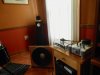
The Fostex drivers in these Frugal Horns play high enough but the Neo 3's add that touch of air on top and re-enforce the highs. Some overlap is ok in my book if the quality of the tweets and main drivers is comparable. Trial and error is how I determine which value cap to use to block the LF.
Poultrygeist
Lunatic Member
I once owned a pair of Zu Omens which feature super tweeters that come in so high you almost need bat ears to hear them. I think the supers were there more for marketing purposes as most folks won't rush out and buy a pair of full range single driver speakers.


invaderzim
Super Member
If your hearing drops off at 14/16K, what benefit are you going to get with a tweeter that plays to say, 25K??
I'm not familiar with how hearing goes when it goes. Does it typically just stop at a specific range or does it get weaker as it gets near to that range? If it gets weaker then I'd think having more highs near that range could help make those frequencies better heard. These can go down as low as 8K so in theory they could be adjusted to boost the range that you can still hear.

SaSi
Seriously Illogical
I think it's a useless thing.
I mean, there was the Cambridge R50 (for example) with a T27 and a coles super tweeter. The T27 has a frequency range up to 40kHz. I know it does. I once used it in my apartment veranda to scare pigeons away using a 30kHz frequency I could not hear. What would be the reason for a super tweeter on a system with a half decent tweeter? We already complain that the midrange - tweeter spacing generates audible artifacts to the point that coaxial drivers are considered superior. Why then implement a tweeter - super tweeter spacing and half the ill effects? Or is it there are none because nothing audible comes out of them? A placebo effect perhaps?
I mean, there was the Cambridge R50 (for example) with a T27 and a coles super tweeter. The T27 has a frequency range up to 40kHz. I know it does. I once used it in my apartment veranda to scare pigeons away using a 30kHz frequency I could not hear. What would be the reason for a super tweeter on a system with a half decent tweeter? We already complain that the midrange - tweeter spacing generates audible artifacts to the point that coaxial drivers are considered superior. Why then implement a tweeter - super tweeter spacing and half the ill effects? Or is it there are none because nothing audible comes out of them? A placebo effect perhaps?

Sound waves have a way of reinforcing other frequencies around them that make the sum of the parts superior to the parts alone.
This could be mankinds natural mechanism to keep males from running away or abandoning their mates as they age..I know my hearing for the frequency that my wife's voice is at is fading.


CopperWizard
Super Member
I was watching a youtube video about repairing an ultrasonic cleaner. It had six ultrasonic "speakers" working at 40kHz. Ultrasonic supertweeters! Maybe it would dislodge some of the wax ear build-up resulting in better high frequency pickup. Or not.
If anyone is into small engine repair, this guy's videos are fabulous...
If anyone is into small engine repair, this guy's videos are fabulous...
Last edited:

Coytee
Super Member
'm not familiar with how hearing goes when it goes. Does it typically just stop at a specific range or does it get weaker as it gets near to that range? If it gets weaker then I'd think having more highs near that range could help make those frequencies better heard. These can go down as low as 8K so in theory they could be adjusted to boost the range that you can still hear.
I'm not an audiologist (or whatever they're called) I know that maybe 10 years ago, Terry DeWick came by my place to hear some horns. He brought some of his test equipment. (room certainly is/was NOT tuned.... )
Anyway, I don't recall if it was 14K or 16K, I just know that once his graph hit one of them, the room was essentially dead silent but what was weird was seeing the graph continue its rise to say, 18K (I forget how high it went)
It was clear using that as the testing method, my hearing stopped at what I think was 14K.
Since everything beyond that was literally dead silent, I just have to wonder the benefits.
See post #28I'm not an audiologist (or whatever they're called) I know that maybe 10 years ago, Terry DeWick came by my place to hear some horns. He brought some of his test equipment. (room certainly is/was NOT tuned.... )
Anyway, I don't recall if it was 14K or 16K, I just know that once his graph hit one of them, the room was essentially dead silent but what was weird was seeing the graph continue its rise to say, 18K (I forget how high it went)
It was clear using that as the testing method, my hearing stopped at what I think was 14K.
Since everything beyond that was literally dead silent, I just have to wonder the benefits.

mhardy6647
Lunatic Member
I am a big fan of supertweeters, crossed in very high (10k or even 20 kHz) but first order (i.e., - 6 dB/octave slope), so there's still plenty of output in the audible range, and using an L-pad (variable or fixed) to attenuate to a subtle but value-added effect 
My application is probably rather different than the OP's though -- low power amplification and high-sensitivity loudspeakers, using horn treble drivers with limited HF output and dispersion. A good, sensitive, 'super' tweeter can be helpful.
I used Fostex T90A horns for a long time, but have in the past year or so switched to B&C DE35 'supertweeters' The former really do have signifcant ultrasonic output, but the latter really do not. Still, they do what I want them to, and sound very good (IMO) doing so.
 DSC_6840 by Mark Hardy, on Flickr
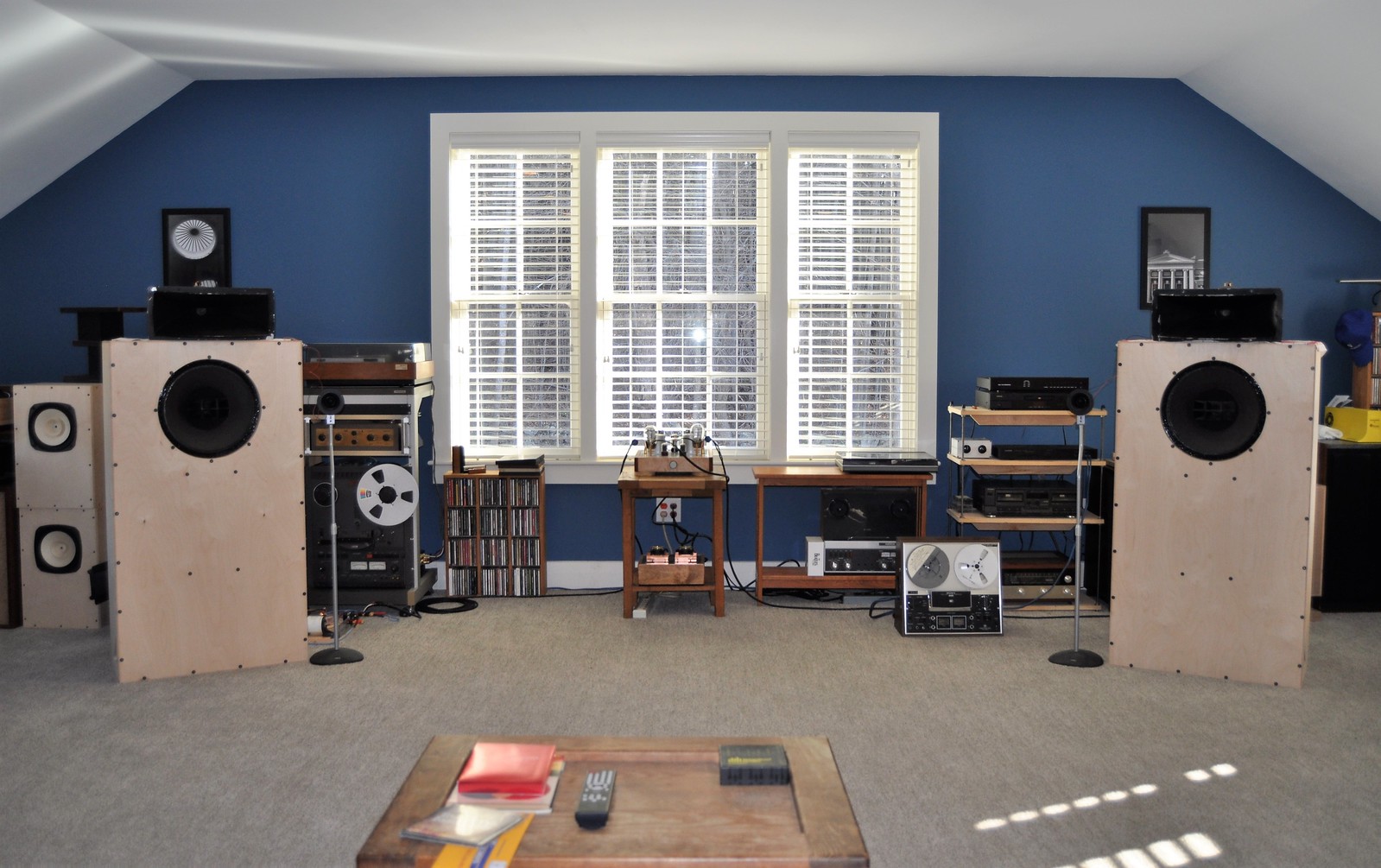 DSC_9976 (3) by Mark Hardy, on Flickr
(one may see the DE35s mounted on little Sanus stands to the inside of the two Frankenaltecs in the photo above)
T90A: https://www.madisoundspeakerstore.com/bullet-tweeters/fostex-t90a-top-mount-horn-super-tweeter/
DE35: https://www.parts-express.com/bc-de35-neodymium-mylar-bullet-tweeter--294-580
My application is probably rather different than the OP's though -- low power amplification and high-sensitivity loudspeakers, using horn treble drivers with limited HF output and dispersion. A good, sensitive, 'super' tweeter can be helpful.
I used Fostex T90A horns for a long time, but have in the past year or so switched to B&C DE35 'supertweeters' The former really do have signifcant ultrasonic output, but the latter really do not. Still, they do what I want them to, and sound very good (IMO) doing so.
DSC_6840 by Mark Hardy, on FlickrDSC_9976 (3) by Mark Hardy, on Flickr(one may see the DE35s mounted on little Sanus stands to the inside of the two Frankenaltecs in the photo above)
T90A: https://www.madisoundspeakerstore.com/bullet-tweeters/fostex-t90a-top-mount-horn-super-tweeter/
DE35: https://www.parts-express.com/bc-de35-neodymium-mylar-bullet-tweeter--294-580
Poultrygeist
Lunatic Member
I was disappointed with the DE35's and returned them to PE. In my system the less expensive Eminence ASD1001 proved to be a better choice.
SynergyI was disappointed with the DE35's and returned them to PE. In my system the less expensive Eminence ASD1001 proved to be a better choice.

dogwan
Dogwan
I remember reading a paper a couple years back (wish I could find it again) and the premise was that Super Tweeters could have a positive impact on the frequency range of the tweeter due to harmonics. So even though they might come in higher than most of our(s) hearing, they helped clean up and reinforce the upper ends of the frequencies we can hear.
Anecdotally, my experience with the super tweeters on my AudioAnalyst M8's is that they really help cymbals have a realistic shimmer. The tweeter is the ubiquitous Peerless K010DT which i've heard in many applications and it never sounded as good as it does in this setup. The Supertweeter is a weird Matsushita peizo bullet horn I think and it cuts in at 15khz (iirc). I also have a pair of IMF "The Studio" with the Coles 4001 super tweeter and they sounded spectacular before I tore them down for a complete restore.
I'm sure it's like everything else in our hobby, it likely comes down to implementation. Just slapping a super tweeter on a previously engineered design may or may not be a complete success. However, if it was incorporated into the design I have no doubt that it's worth it even if they come in above our hearing range.
BTW, I'm a former cabinet maker and as much care as I took in the shop to protect my hearing it's now down to about 10.5 to 11khz where I can't hear anything above that depending on which ear. What I can hear still sounds better if it's reinforced above my own personal cutoff.
Anecdotally, my experience with the super tweeters on my AudioAnalyst M8's is that they really help cymbals have a realistic shimmer. The tweeter is the ubiquitous Peerless K010DT which i've heard in many applications and it never sounded as good as it does in this setup. The Supertweeter is a weird Matsushita peizo bullet horn I think and it cuts in at 15khz (iirc). I also have a pair of IMF "The Studio" with the Coles 4001 super tweeter and they sounded spectacular before I tore them down for a complete restore.
I'm sure it's like everything else in our hobby, it likely comes down to implementation. Just slapping a super tweeter on a previously engineered design may or may not be a complete success. However, if it was incorporated into the design I have no doubt that it's worth it even if they come in above our hearing range.
BTW, I'm a former cabinet maker and as much care as I took in the shop to protect my hearing it's now down to about 10.5 to 11khz where I can't hear anything above that depending on which ear. What I can hear still sounds better if it's reinforced above my own personal cutoff.
But realize this is how hearing aids work to correct for deficiency in certain frequencies, often the higher ones.I'm not an audiologist (or whatever they're called) I know that maybe 10 years ago, Terry DeWick came by my place to hear some horns. He brought some of his test equipment. (room certainly is/was NOT tuned.... )
Anyway, I don't recall if it was 14K or 16K, I just know that once his graph hit one of them, the room was essentially dead silent but what was weird was seeing the graph continue its rise to say, 18K (I forget how high it went)
It was clear using that as the testing method, my hearing stopped at what I think was 14K.
Since everything beyond that was literally dead silent, I just have to wonder the benefits.
It could be that your hearing didn't just suddenly stop at 14khz but tapered off so quickly after that, so you took it that nothing past 14k could have been heard, but maybe it was just not loud enough for you to hear. Having a super tweeter using some forms of eq or peq that could turn up just those frequencies that you or I are deficient in is what I was talking about.


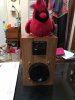
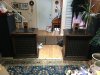
I built a pair of small boxes to sit on top of my Heathkit 2 ways to add JBL 2405 Slot superTweeter to the mix -
Gave me sizzle on the top freqs, but also filled in the upper mids as well.
Crossover contains an LPad to bring them in just a wee bit -
of course, the JBLs run $300-600 in the used market.

Gave me sizzle on the top freqs, but also filled in the upper mids as well.
Crossover contains an LPad to bring them in just a wee bit -
of course, the JBLs run $300-600 in the used market.
Last edited:
bowtie427ss
Lunatic Member
Harmonics.If your hearing drops off at 14/16K, what benefit are you going to get with a tweeter that plays to say, 25K??
Harmonics that your brain uses to psycho-acoustically fill in what your ears might miss.
Similar threads

- Replies
- 29
- Views
- 3K


- Replies
- 67
- Views
- 8K


