• The move to the new server is done. There are some software and database maintenance updates in process. This has us passing the hat around to help out. We appreciate any donations. Seriously, even a dollar helps. The payment page may be found here - https://www.audiokarma.org/support.html

Tonearm for Denon DL-103

Some actual measurements proving that the medium compliance (standard) DL-103 requires a medium mass tonearm:

8.8Hz (13g effective mass tonearm, un-named)
9Hz (15g effective mass tonearm - Denon DP-1200)
10Hz (12.5g effective mass tonearm, un-named)
12Hz (6g effective mass tonearm - SME Series III). This probably isn't advisable, and a heavier tonearm of at least 10g would be better, but it proves the DL-103's compliance is not as low as some people wrongly guess.

An arm mass of between 10 and 18g should give a perfect resonance (and hence the correct sound). Much heavier than that will probably push the resonance into the warp frequency range below 8Hz, giving poor sound. Around 12.5-15g seems to be absolutely perfect, based on these measurements.

Other opinions (from those who've measured them) of the perfect arm match for the DL-103:

hi-fi magazine of long standing (>50 years): 15g effective tonearm mass perfect
hi-fi magazine of long standing (>40 years): medium effective tonearm masses, 9-15g recommended (another reviewer from the same magazine recommended 6-15g, based on a different review)
German hi-fi magazine: medium effective tonearm mass recommended (i.e. 10-20g eff. mass)

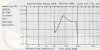
See below for a resonance measurement of the DL-103 in the 15g effective mass Denon DP-1200 (it's probably just below 9Hz, but I've rounded it up to 9Hz in the figures above).

Denon DL-103 in DP-1200 tonearm.jpg
 
^ ^ ^

All of the above are just fine if you rely on measurements and base your recommendations on things like "opinions", "should give", "probably", "seems to be". But you're not going to get the most out of that cartridge by sticking to those limitations.

Does anyone TRULY know what the actual compliance of the DL-103 cartridge is? It looks like the measurement monkeys think they know, but when you look for actual figures they are all over the place! Multiply the Denon-specified of 5@100Hz by what to get a figure that can then be used with the compliance calculators that are found on various websites on the 'net? Multiply by anywhere between 1.5 and 2.0? That's certainly going to give you an exact figure to work with, won't it?:rolleyes:

Do you even have a 103 equipped 'table or is what you posted above based on conjecture?

Measurements are fine, but the ultimate is to listen for yourself and then make the determination. I can tell you this - you haven't really heard a DL-103 (or 103R) until you've run it at 25g to 30g (or possibly more) total effective mass.
 
^ ^ ^

All of the above are just fine if you rely on measurements and base your recommendations on things like "opinions", "should give", "probably", "seems to be". But you're not going to get the most out of that cartridge by sticking to those limitations.

Maybe you didn’t study as much science or engineering as I did, or measure as many things. A perfect measured resonance (8-12Hz) should provide the best possible sound from any cartridge, but whether you believe it or not, the evidence doesn’t lie. I'll always rely on measurements to explain what I hear.

I always back up my opinions with facts and measurements, and based on around 45 years of building, using, measuring, researching (and very occasionally designing) hi-fi equipment, along with a few decades working in an audio-related field of electrical engineering.

Does anyone TRULY know what the actual compliance of the DL-103 cartridge is?

Yes, several hi-fi magazines, from their measurements of them in tonearms of known effective mass, have calculated the DL-103’s dynamic compliance as being in the range of 12 to 14CU @ 10Hz. For instance, Hi-Fi Choice calculated 13CU from at least two reviews I know of, which are available for download in the reviews section of vinylengine (you need to log in to the forum to see the reviews).

So it's more compliant than Denon's figures suggest at first glance, partly because of them measuring it at 100Hz, as many Japanese cartridge manufacturers have, for unknown reasons.

Incidentally, if you plug that figure for compliance (13CU), and the mass of the DL-103 (8.5g) plus a bit (say 1g) for screws etc, and the 15g (known) effective mass for the tonearm into the resonance calculator, you get exactly the measured frequency shown on the graph (9Hz, approcimately). Fancy that.:D

It does work, but only if you put the right figures in, which is why I've always found it easiest to measure the resonance, than to calculate it based on compliance figures which may not be correct.


It looks like the measurement monkeys think they know, but when you look for actual figures they are all over the place! Multiply the Denon-specified of 5@100Hz by what to get a figure that can then be used with the compliance calculators that are found on various websites on the 'net? Multiply by anywhere between 1.5 and 2.0? That's certainly going to give you an exact figure to work with, won't it?
C:\Users\Donald\AppData\Local\Temp\msohtml1\01\clip_image001.gif

You're correct in the fact that calculations and assumptions (based on subjective opinions!) won't give the correct resonance measurements. In fact, I (and other members) have frequently advised other members not to use the calculator to estimate resonances, based on the wide variety of measuring methods of compliance (there's never been a standard), so I’m hardly likely to do it myself. The only way to be sure is to measure using a test record with accurate frequencies – I now use the Shure Era V test record to check my own cartridges and tonearms for their resonant frequency (if it’s measurable – the Sony Biotracer makes it virtually impossible without an accurate and sensitive meter, since it’s suppressed to below 1dB).

But tertiary education also teaches you how to research well, so all of the figures I quote come from my database of actual measured examples of more than 700 tonearm/cartridge resonances, based on many decades of review measurements (1970’s to current). See https://docs.google.com/spreadsheets/d/1CPSW9PMLb3rkIdZQHpvnpVmcxXVF7Bal2Uz7YkKYR28/edit?usp=sharing


Do you even have a 103 equipped 'table.

No, I don't.*

But I don't need to own a DL-103, as others have measured them for me. I have heard many DL-103's, so know what they sound like – I heard my first one about 40 years ago (and measured it for resonance, ironically, for an engineering assignment answer).

* I have owned a standard DL-103 for a short time last century, but only owned one turntable with a suitable medium effective mass tonearm, and the DL-103 went with it (Pioneer PL-400) when somebody lusted after the cartridge while inspecting the turntable for sale, and paid me a good price for it. I can't remember what the resonant frequency was, except that it was in the acceptable range, so haven't used that as an example.

I do currently own a DL-103D, a more compliant version, which requires a lighter tonearm, and a DL-304, but I’m not referring to them in a thread about the DL-103 and its ideal tonearm.


or is what you posted above based on conjecture?

No, it's not based on conjecture – you obviously didn’t notice the evidence I attached, of the resonance graph of a very real DL-103 measured in a Denon DP-1200 15g tonearm (a good match), one of four real measurement examples I used. As it happens, I’ve heard one in the same model turntable last decade, owned by a former engineering colleague, although we didn’t measure it – I was mainly listening to an amplifier he’d built, and comparing it to another amplifier, and we used a variety of sources, including a tuner and a CD player (Philips, I seem to recall).

The particular resonance measurements of the DL-103 which I listed were measured in three different countries, and two different continents, obviously be at least 3 different people, but they all came from well-established hi-fi magazines.


Measurements are fine, but the ultimate is to listen for yourself and then make the determination.

Measurements can help those of us who understand engineering, to understand why we are hearing what we are. I've heard many examples of the DL-103, in many different turntables, and I like it, but the fact that I own some of the higher-end models from the same family, means that I'm not too disappointed at missing out on a bargain price new DL-103 (the last of 30) last week from an Ebay hi-fi seller with a good record.

But more important, they can tell us whether the cartridge we are trying matches the tonearm, which always gives the best audio fidelity from that cartridge, guaranteed. Then you can sit back and listen to a well-matched pair, and congratulate yourself on how good it sounds.:music:


I can tell you this - you haven't really heard a DL-103 (or 103R) until you've run it at 25g to 30g (or possibly more) total effective mass.

I'll leave that pleasure (or otherwise) to you, thanks for the offer.:)
 
Would a DL-103r work with any of these?

Micro Seiki MA-505
Fidelity Research FR 24
SME 3009 early series II (unimproved)

I have all three and a NIB Denon.
 
Last edited:
Would a DL-103r work with any of these?

Micro Seiki MA-505
Fidelity Research FR 24
SME 3009 early series II (unimproved)

I have all three and a NIB Denon.

Yes, it should be OK.

Micro Seiki MA-505: effective mass 14.5g (good match with DL-103R).
SME 3009 Series II: 12.5g eff. mass (good match).

Fidelity Research FR-24: I could only find some estimates by users of its effective mass – one believed it was lower mass than the 16g (Hi-fi Choice figure) effective mass FR-54. So it’s probably a medium effective mass arm with the standard headshell, possibly of slightly less than 16g, which (if that opinion is correct) would be a good match with the DL-103R.

You can find the exact resonant frequency using free audio recording software like Audacity (or similar – I prefer the ancient Cool-Edit 2000 with add-on click reduction tool, which later became Adobe Audition, and Steinberg Wavelab, since I have registered versions of both). Then record a track for a few minutes, and using the program’s spectrum analyzer tool ("Plot Spectrum" tool on the "Analyze" menu in Audacity), you’ll see the arm/cartridge resonance peak standing out at somewhere between 5 and 15Hz (hopefully 10Hz:)) near the bottom end of the frequency range (thanks to user Sunwire on vinylengine for that). Either that, or use a test record with a low frequency resonance test, if you have one.

Note that all the effective masses are with the standard headshells. All three arms should be acceptable matches with the DL-103R if the estimated effective mass of the FR-24 is correct, with perhaps the Micro Seiki as the best choice, and the FR-24 effective mass not known for certain, but possibly OK.
 
Last edited:
Hi, Using any of the above arms will give a resonance of around 8hz, very undesirable. To make any of those arms work you need to increase the weight of the cartridge or headshell & also increase to weight of the counterweight. Just moving the counterweight back along the spindle will reduce the effect mass,
As said MANY, many time in these & other pages, the 103/103R carts need an arm around 23 to 26 grams to sound it's best.

Cheers
 
Hi, Using any of the above arms will give a resonance of around 8hz, very undesirable. To make any of those arms work you need to increase the weight of the cartridge or headshell & also increase to weight of the counterweight. Just moving the counterweight back along the spindle will reduce the effect mass,
As said MANY, many time in these & other pages, the 103/103R carts need an arm around 23 to 26 grams to sound it's best.

Cheers
So you have measured it?
Tables converting 100Hz measurement to 10Hz dont work they are an estimate. Have you compared the suspension of the D to that of the standard 103? If not maybe leave this...
Chris
 
Hi, We have used both the current 103 & R (as well as many other cart's) in our Temaad tonearm trials, we have 3 tonearm Eff Masses available. 14, 18 & 23. In all our listening trial with both these cartridge we found that neither really comes to life with full bass until it is used in the 23 gram version.
There are versions of the 103 suited to low/medium & medium arms & they are the 103D & 103S. Incidentally both these carts sound far superior to the 103 or 103R.

Cheers and as always Keep Safe
 
Hi, We have used both the current 103 & R (as well as many other cart's) in our Temaad tonearm trials, we have 3 tonearm Eff Masses available. 14, 18 & 23. In all our listening trial with both these cartridge we found that neither really comes to life with full bass until it is used in the 23 gram version.
There are versions of the 103 suited to low/medium & medium arms & they are the 103D & 103S. Incidentally both these carts sound far superior to the 103 or 103R.

Cheers and as always Keep Safe
Listening is not measuring. Have you compared suspension of D version to other 103?
If you carefully check the compliance specs you will notice that the 5 x 10⁻⁶ cm/Dyne figure is relative to 100Hz. As frequency goes down the dynamic compliance rating goes up. It reaches its maximum at 0Hz or the Static compliance figure.

Yes the Denon 103 family with 5 x 10⁻⁶ cm/dyne actually comes in at about 12 x 10-6 cm/dyne at 10 hz. That makes those cartridges compatible with a wider range of effective mass arms than the 100Hz figure would indicate. The standard 103 is fine in a medium mass tonearm

Chris
 
Hi am advising on my & MANY, many other peoples listening experience. Measuring to ascertain sound quality went out in the 1970. Trust your ears, if a performance moves you emotionally, then no measurement will confirm this is happening. We obviously have two totally opposing positions on this subject, I respect yours, but as you may gather I totally disagree with your stance.

Cheers for now Derek
 
Hi am advising on my & MANY, many other peoples listening experience. Measuring to ascertain sound quality went out in the 1970. Trust your ears, if a performance moves you emotionally, then no measurement will confirm this is happening. We obviously have two totally opposing positions on this subject, I respect yours, but as you may gather I totally disagree with your stance.

Cheers for now Derek
You may disagree but is actually possible to measure the compliance of the 103 and this is my point. You may well have decided what the heavier arm sounds better, but this is just a subjective decision, it does not agree with the real compliance measurements of the 103 which show the actual resonance freq and show that the cart is happier with heavier medium compliance arms and that even medium are in the green zone so to speak.
One cable listening test shows how we can easily be tricked, when a group of people were shown cables being swapped, they all nodded in agreement how this cable sounded better than that and how the highs were better with this and bass better with that. Then curtain was drawn and switches made and curtain opened again ie changes done blind back and forth at random. Group could find no significant difference. Same applies here we can come to all sorts of conclusions listening, but unless double blind test is meaningless. Test results here for compliance tell the real story and no perception bias involved as a real test.
Chris
 
If you carefully check the compliance specs you will notice that the 5 x 10⁻⁶ cm/Dyne figure is relative to 100Hz. As frequency goes down the dynamic compliance rating goes up. It reaches its maximum at 0Hz or the Static compliance figure. Yes the Denon 103 family with 5 x 10⁻⁶ cm/dyne actually comes in at about 12 x 10-6 cm/dyne at 10 hz. That makes those cartridges compatible with a wider range of effective mass arms than the 100Hz figure would indicate.
That is a word for word copy and paste from a 2015 vinyl engine post by EdAInWestOC. and it would have been a decent thing to properly quote it and attribute it to the original poster.

The Denon DL-103 10Hz compliance figure of 12cu origins are attributed in that thread to a HiFi News 2015 review by Martin Colloms. I'm not a subscriber and I could not locate Colloms review, but to my understanding he's relying on measurements from 1979. Another poster on the original ve thread mentions that Colloms had found newer models to be less compliant than the same model of earlier years. Without Colloms input on this - it's hard to determine the exact Denon DL-103 compliance at 10Hz.

For all we know the DL-103 could still adhere to the general ball park factor multiplication of anything from 1.5 to 2.2, so it could just as well be 7.5cu@10Hz. According to my experience and many others, it surely behaves as such and it begins to shine with 19g effective mass tonearms.
 
You may well have decided what the heavier arm sounds better, but this is just a subjective decision, it does not agree with the real compliance measurements of the 103 which show the actual resonance freq and show that the cart is happier with heavier medium compliance arms and that even medium are in the green zone so to speak.
So where is it?
 
But tertiary education also teaches you how to research well, so all of the figures I quote come from my database of actual measured examples of more than 700 tonearm/cartridge resonances, based on many decades of review measurements (1970’s to current). See https://docs.google.com/spreadsheets/d/1CPSW9PMLb3rkIdZQHpvnpVmcxXVF7Bal2Uz7YkKYR28/edit?usp=sharing
I don't get that. You consider this a resource worth of tertiary education level research? Seriously? I've just analyzed 3 out of 4 records in this spreadsheet and there's already a red flag question for each.
  • Don't you find it a little odd that two out of three DL-103 measurements are for "un-named" tonerams? For crying out loud... They know the effective mass but not the tonearm's make? I've searched a tonearm's effective mass before - but never a tonearm's brand or model. I can't even begin to imagine what sort of circumstances can leads to this.
  • How come the RF varies by 1.2Hz between a 12.5g and 13g effective mass tonearm, when the calculated RF varies by a tenth of that figure (only 0.11Hz)?
  • Any explanation as of the alarmingly strange RF figure for the DL-103R which seems to indicate 18Hz for 8g effective mass tonearm (unnamed no less) when it's calculated RF is about 10Hz? Do you know what compliance that cart needs to have to be in agreement with the data? 5cu@10Hz. Coincidence, mistake, what???
I'm sorry I've ignored the 4th record related to the Denon DL-103 having to do with the Denon DP-1200. I'm not in the mood to look up it's tonearm's effective mass when it should have been provided for me. I'm pretty sure an RF record entry in an RF database is totally useless w/o the effective mass.

Assuming this is not "the" worthless collection of useless home compiled data ever collected by an enthusiast - How do you suppose these measurements kept consistent since the 70's to current days? Please shed some light on this because it looks like a bunch of horse feathers to me.
 
Back
Top Bottom