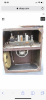
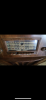
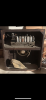
I think I might just take it on. It looks beautiful from the frontRadionet is sears 'term for the antenna coil at the left of the speaker. If it works at all, that's a minor miracle, as most of the paper & filter caps are aged out. These consoles were the entertainment centers of their day, usually played all day. Silvertone was a Sears brand, they made stuff as good as anyone else back then. Lots of room under that chassis for filter cap replacement if one would want to keep the old can(s) on top of chassis. Any tubes needed would be cheap compared to audio tubes. I have a ton of "em myself.
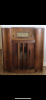
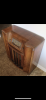
I see similar ones fairly regularly and many of them have rough or damaged cabinets. This one looks to be in nice condition as far as I can see from the pics.I think I might just take it on. It looks beautiful from the front
The guy says it’s not workingThey are all AM/SW receivers, with a few exceptions. Most only covered part of the SW bands. Back then, any country worth a squat broadcast internationally. That has largely gone away over the years. This one has all the tubes & shields, that's a bonus! Round eyeball in the middle of the dial is the tuning/signal strength indicator , usually a 6e5 or 6u5. Don't just plug it in & cross your fingers, at least dim-bulb it first.
Sounds like you can open up a small museum! And thank you for extending your offer for help. I’d really like to give restoring this baby a go but I’m relatively new to restoring tube and have no experience with radio so I’m on the fenceI have a house full of pre WW2 radios and the larger ones do sound good and for the most part, they can be restored without breaking the bank. The only relatively expensive tube in the radio is the 6U5 tuning eye tube. If you do buy it and need service information for it, I'm sure I have it. All other parts such as tubes, caps and resistors are readily available. What ever you do, do not try to power it up before checking all of the tubes for shorts and gas and at least replacing the filter caps as you don't want to let the smoke out of an expensive power transformer.
can I check the tubes with my multimeter?Thanks for the advice. I might hold off on the acquisition for the time being just because I’m already working on a Clairtone chassis pull (my first ever tube project) and feel that i should probably familiarize myself with the basics of tube before I take on radio which is undoubtedly more complex and intricate than a tube stereo both mechanically and theoretically. I was at an estate sale this weekend and the home was filled to the brim with books on all types of radio equipment including many books on radio theory. It was definitely opened my eyes to the amazing engineering and science that goes into radio transmission. But learning the intricacies of radio is a goal of mine nonetheless so once I do decide to take it on I will certainly refer to you for your expertise, knowledge and insight into the matter at hand. Thanks Bug HarryYou can restore your radio if you are careful and take your time. It will need its filter caps and any paper caps replaced for sure along with any resistors that are out of tolerance. The tubes really can't be tested with a multimeter with the exception of filament continuity. I buy most of my caps and resistors from Just Radios, Antique Electronic Supply and Sal's Capacitor Corner as they cater to the old radio and audio community. If you need tubes, check ESRC1 in Florida as they have good prices on tubes. Just keep in mind that there can be lethal voltages in the chassis when the radio is powered up so be careful. I do recommend getting the service info for the radio as it does make the restoration job easier. I'll be glad to help you and you also go to the antique radio forums at antiqueradios.com and then go to the forum section. There are many people there that will be willing to help you get your radio up and running.