• The move to the new server is done. There are some software and database maintenance updates in process. This has us passing the hat around to help out. We appreciate any donations. Seriously, even a dollar helps. The payment page may be found here - https://www.audiokarma.org/support.html

What are full range speakers for?

vintagetree

Active Member
I got some concepts about full range speakers, but not understand completely.

According to the definition, almost any speakers are full range?

And Are they good for music listening?

Thanks.
 
Register to hide this ad
Depends on the "range" the so called full range speakers produce.
The human hearing range is generally said to be 20Hz-20Khz. High end can drop as we age and/or suffer hearing damage.
If a speaker has no usable output below let's say 100 is it truly full range? In that case might "wide range" be a better descriptor?
And how many speaker really dig down to 20Hz anyways. No wonder subwoofers are so common and some of them don't have much if any output at 20Hz.
 
VX-8.2_P0BUM_Front2_XL.png


Tannoy VX 8.2 speakers, I might buy one pair.
Tannoy calls it full range speaker.
So full range speaker doesn't mean one driver unit, maybe two or three even more?
What I concern is how good this kind of speaker is when playing music?

Thanks.
 
The write up from Tannoy reads like these are intended to be part of a public address system, not a home application.

https://www.tannoy.com/product.html?modelCode=P0BUM

Specs aren't what I'd call full range for home audio. Maybe the term means something different in commercial applications?

Frequency response
80 Hz - 35 kHz ±3 dB
60 Hz - 45 kHz -10 dB

An electric bass guitar goes down to about 40 Hz so there's a lot of low frequency information these speakers won't produce.
 
That Tannoy is more like a full range speaker paired with a sub. But I don’t think they should really call it a full range speaker.

Normally a full range speaker is one speaker playing all frequencies, low thru high. There are plenty of them that do a good job down to 100hz or so. The ones that go lower tend to lose a flat response at the high frequencies.

Edit: Just saw what dcmfan posted above. Only down to 80hz, even with the low end driver? Yeah that’s definitely a commercial/PA type speaker.
 
To be fair, many many many people have used and enjoyed speakers for many many years that don't produce usable volume levels at the extremes, the lower end in particular.
Even though the low end may be missing, some people can "produce the missing part" in their heads, or there is a mid bass bump that makes it "seem" the speaker is playing lower than it actually is.

OP, are you considering buying them new or pre owned?
Can you listen to them before buying?
If not, can they be returned within 30 days* if you don't like them?

* or whatever the seller offers, seems 30 days is one option, some companies allow that if buying new products.

Few months ago, when i bought a receiver from a guy, he used these speakers to demon the receiver, at the time I felt those speakers were very good and I told the guy the speakers were good. so he today contacted me and asked me if i still like these speakers.

Frankly, even I audition the speakers in his garage for a while, i still don't think I can judge them properly.

Not that they are not real full range speakers, and they are PA. I will pass over.

Thanks.
 
I'd say 20-20,000 hz, plus or minus a fairly inaudible amount.
Using a dsp and peq's I was able to get 23-20khz plus or minus 3db out of my old triamped jbls. The way most get that or better is with the use of subs, but while as a system it is full range but the speakers are not necessarily full range by themselves.
Capture1.JPG
 
I'd say 20-20,000 hz, plus or minus a fairly inaudible amount.
Using a dsp and peq's I was able to get 23-20khz plus or minus 3db out of my old triamped jbls. The way most get that or better is with the use of subs, but while as a system it is full range but the speakers are not necessarily full range by themselves.
View attachment 2114639

If we neglect the low frequency for a while (sub can help), the high and mid frequency should be the same as the normal speakers, or better, is it right to understand like this? I checked online, tannoy concentric speakers usually are good enough.
Thanks.
 
If we neglect the low frequency for a while (sub can help), the high and mid frequency should be the same as the normal speakers, or better, is it right to understand like this? I checked online, tannoy concentric speakers usually are good enough.
Thanks.
It's usually the lowest frequencies that are the hardest for speakers to replicate, hence the sub.
 
First question: what do you mean by a "speaker"? Do you mean the driver or do you mean the complete box with driver(s)? Nearly all complete box speakers attempt to cover the full range, or as much of it as practical. Full range drivers never cover 20Hz - 20kHz but can cover enough of it to get away without needing supplementary drivers to extend the range. Tannoy are famous for their drivers which cover the "full range", but they're not really full range drivers - they're actually two drivers with the tweeter located at the centre of the woofer. They're "dual concentric" drivers.

Second question: what do you mean by full range? As mentioned above, 20Hz - 20kHz is often quoted as the range of human hearing but most speakers won't go down to 20Hz. What range do they cover? That depends on how you define the range. 80Hz - 16kHz +/- 3dB is different from 80Hz - 16kHz +/-6dB.

Third question: why wouldn't a speaker covering the full range be good for listening to music?
 
VX-8.2_P0BUM_Front2_XL.png


Tannoy VX 8.2 speakers, I might buy one pair.
Tannoy calls it full range speaker.
So full range speaker doesn't mean one driver unit, maybe two or three even more?
What I concern is how good this kind of speaker is when playing music?

Thanks.
It's perhaps either marketing jargon or simplification for layman consumers, or both. Like @SleeperSupra said, there are not very many speakers that are truly full range. It seems the expression "full range speakers" is meant for large speakers; that is, speakers that don't need subwoofer to produce adequate bass for average listening (i.e., no pipe organs). I also often found the phrase in AVR manual; "set your speakers to large if you are using full-range speakers, set your speakers to small if you are using satellite speakers and a subwoofer." You know, things like that.
 
When I first started using REW (Room Equalization Wizard) software to get a flat frequency response at my listening chair, one of the boxes to tick was in speaker type, "full range". Not checking the box evidently meant having a sub in order to get to full range. Not many "woofers" will play that deep, into the 20hz range no matter how much peq is applied, does not make them bad drivers at all , just maybe a bit incomplete and in need of a sub. In fact, just getting to the low 20hz range within 3 or 4 plus or minus db is only a part of it. How much distortion should also be a factor as well as output spl.

After buying new replacement JBL 2216Nd1 15" drivers (which come in the JBL 4367 and M2)which have the ability to go to 20 hz (in the M2) with a little "dsp" with very low distortion.
https://jblpro.com/innovation-transducers
Dual voice coils! And low 20hz capabilities without the use of subs...
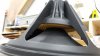
IMG_20180702_210858.jpg IMG_20180702_210908.jpg
 
Back
Top Bottom