• The move to the new server is done. There are some software and database maintenance updates in process. This has us passing the hat around to help out. We appreciate any donations. Seriously, even a dollar helps. The payment page may be found here - https://www.audiokarma.org/support.html

Yamaha CR-2040 Clean Up

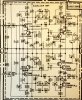
Avionic, thanks for the advice. I have a question. Since film capacitors are non-polarized is it safe to use them in place of polarized electrolytic capacitors? I have two 2.2uf 25v capacitors. C505, C506 on the schematic.

Thanks again,
RickPhono_board_schematic_a.jpg
 
Avionic, thanks for the quick reply, and all the great advice. I always look forward to answers.
It doesn't look like Nichicon makes film capacitors, do you have a preferred brand?

Thanks,
Rick
 
If you can solder you can recap that thing. I try to never remove a board; I work on it in situ and move the whole receiver/board into whatever position is necessary to get at the caps. I would not try to remove a wrapped-wire connection point. Awesome work-around with the dremel and flat tip screwdriver! That is a gorgeous receiver for sure; I remember drooling over them in the 70's in some Vermont hi-fi shop with my uncle. They still command high prices.

Another trick with Philips head screws is to try a different #2 screwdriver--sometimes a particular #2 screwdriver will fit a particular #2 Philips head screw better than another. You can also try tightening the screw, ever so slightly, then reversing it again. If the screw isn't attached to something delicate, you can whack the end of the screwdriver with a hammer to help loosen the screw and better seat the screwdriver tip in the head.

This is my 0.02$; you're in very good hands with Avionic!
 
Gotta say, I didn't try JIS Crosspoint. I did try larger and smaller philips drivers, tightening and loosing the screw, screw extractors and a revers drill bit. The heads on the screws were just too damaged. But using my son's Dremel tool to cut a slot into the heads worked perfectly. I dug through my collection of small screws and found 2 exact replacement for the damaged screws, so all is good.

I'm finally back to rebuilding this receiver after having to let it sit for a couple of years. Thanks to advice from guys like Avionic, it's coming along great!.

Rick
 
I'm pretty sure I know the answer to this question, but just want to confirm. With electrolytic capacitors rated at a particular voltage, is it ok to replace with a higher voltage, and how much higher is too high, if it ever is? The tone control board on this receiver calls for 12 1uF 16V caps. The closest I can find over 16 volts, in the series I want, is 50volt. are 1uF 50V a good replacement?

Thanks,
Rick
 
Thanks Avionic. I know I can replace same value uF with higher voltage devices, but is there a limit as to how much higher?

Also, is it ok, or maybe "good practice" to always replace electrolytic caps 4.7uF and under with film caps? Just trying to learn more.

Thanks again,
Rick
 
Also, is it ok, or maybe "good practice" to always replace electrolytic caps 4.7uF and under with film caps?
Really it " macht nichts" either will do the job. It has worked just fine for over 35 years using electrolytic..Know what I mean..
 
Ok, I know what you mean. The unit has been working for 35+ years, and doesn't sound too bad. Recapping the Power drive and Pre drive made a big difference in the overall sound. I have the Phono stage and MC Phone stage next, then the Tone Control board. I think when I'm done, it will sounds as sweet a it looks.

Thanks for your help and advice, it's much appreciated.

Rick
 
Spent some time on this project today and got the Equalizer/Phone board and MC section of the main board done. EQ/Phono board was easy, the MC section was more challenging, but no where near as difficult as I was expecting. The Tone board is next, and probably last, still waiting on the parts. In the mean time I've got it back together, except for the cover, and I'm playing some Chicken Shack on vinyl. I gotta say, this receiver does sound sweet. Thanks Avionic for the recommendation of Nichicon Fine Gold and Wima film.

I think the Tone board is gonna be pretty tough and is gonna take some time to get done. The back of the board is wide open, but the component side is pretty buried. And while Yamaha oriented the electrolytic caps the same way throughout the board, they didn't label much of anything.

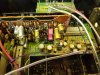
First image is the completed EQ/Phone board, second image is the Tone board from the top.
EQ-Phone-MC_Done.jpg ToneBoard.jpg ToneBoard.jpg
 
I just finished recapping the tone board. Except for the Tuner and Power Supply boards, that's everything. Man, what a difference! The dull, sort of muddy sound is gone, Now it sounds like a higher end receiver should sound, like what I remember form the first time I heard a CR-1020 way back in the early `80s. And the bass, treble and presence controls actually do something now. Even with the pair of 2-way minis I have on my bench, this receiver sounds awesome!

The last part of this project will be the Tuner and Power Supply boards. For the Tuner I'll use the Nichicon FG caps. Should I use the same caps for the Power Supply, or should I use something like the Nichicon PW(M) series caps? I see the PW series are rated at 105 degrees. This is a high power receiver so the higher rating seems appropriate.

Thanks,
Rick

 
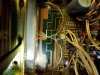
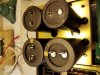
Ok, getting started on the final stage of this recap, the power supply and Tuner. I had been thinking about skipping these last steps and calling it done but decided against that. I'm glad I did because when I pulled the two large filter caps I see what I think is leakage, see the images below. But now I have another problem. The new filter cap's lugs are slightly thicker and wider. The overall width from the outside edge of one lug to the outside edge of the other is the same, just the spacing between the logs is slightly off, roughly 1.3mm. I think I can enlarge the mounting holes to accommodate the new filter caps, but not sure if that's the best way to go about fitting the caps. Looking for idea and suggestions.

Thanks,
Rick

FilterCapsLeak.jpg FilterCapsLocation.jpg FilterCapsAll.jpg FilterCapsLocation.jpg FilterCapsAll.jpg
 
Back
Top Bottom