• The move to the new server is done. There are some software and database maintenance updates in process. This has us passing the hat around to help out. We appreciate any donations. Seriously, even a dollar helps. The payment page may be found here - https://www.audiokarma.org/support.html

Yamaha newbie A-700 resto thread

Happy Birthday @Bratwurst7s !!! I hope this is yet another of many more to come, and your 2nd (of 3?) Denon comes back to life easily.

View attachment 3159676

I snapped this photo before I passed out earlier... The WIMAha (credit to @Soundscape lol) lives...
Thanks Jesse!
At the moment I am doing nothing more than a deep inspection, looking for any parts installed incorrectly, solder bridges etc.

Cheers,
James
 
Ok, I fired it up this morning to check on things (still on DBT of course).

Seems like normal behavior still, bright to dim, relay click after 8 seconds or so.

I measured DC at the speaker terminals and on the left channel it's sitting around 3mV.

On the right channel, though, it's going crazy. For about 5 seconds after the relay engages, it sits around -0.5V. Then, it starts going haywire, jumping rapidly to random values of anywhere from ~20V to -20V.

Is this oscillation? Shouldn't the relay open if this much DC is at the speaker terminals? Any suggestions on what to check?
 
Just to update where I'm at, here's everything (non-capacitor wise) that was replaced in the right channel:

R114, R302, R394 (burnt, replaced)
R367-369, R373 (slimed with glue)

bias TR126 (w/ BD13516S)

TR128 (w/ KSC2328)
TR130 (w/ KSA1013)

Drivers TR136 (w/MJE15032G) and TR138 (w/ MJE15033G)
Outputs TR140 (w/2SC3857) and TR142 (w/2SA1493)

D116 (w/ 1N4148)

Relay (w/ G4W-2212P-US-TV5-HP-DC24) <- I found this myself, I could have selected the wrong kind of relay.

I pulled and tested TR112, TR114, TR116, TR118, TR120, R258, R260, R262, R268, and R290 and they all were good.

I also double checked the voltages at the R ch out pin on the power amp board, and at the R channel headphone dropping resistor (both with speaker selector turned OFF), and the same crazy voltage as the R speaker terminals happened at both of those points too.

Any suggestions where to look next? The main reason I'm so confused is that the relay isn't opening even with the crazy DC voltages on one channel.

@avionic I would greatly appreciate any insight/help you could take the time to provide.

 
Last edited:
1000008987.jpg

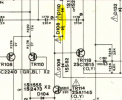
Pulled and tested all of the transistors in the protection circuit (TR149~152, 2SC2634) and all of them expect this one had over 300 hFE.

Should I replace the low gain one? I have seen KSC945 and KSC1815 suggested as substitutions but I tested a few I had on hand and they all had gain of 100-150 as well.


EDIT: Also, I've been really reading and pondering today and I think I might've figured out the cause of my original failure in one channel. I didn't know you shouldn't set bias on a DBT yet, so I had done that. So since the bias was way too high off the DBT, I think the bias transistor had a thermal runaway and failed, causing a domino effect down the line from it. Makes sense to me, anyway.
 
Last edited:
View attachment 3160037

Pulled and tested all of the transistors in the protection circuit (TR149~152, 2SC2634) and all of them expect this one had over 300 hFE.

Should I replace the low gain one? I have seen KSC945 and KSC1815 suggested as substitutions but I tested a few I had on hand and they all had gain of 100-150 as well.


EDIT: Also, I've been really reading and pondering today and I think I might've figured out the cause of my original failure in one channel. I didn't know you shouldn't set bias on a DBT yet, so I had done that. So since the bias was way too high off the DBT, I think the bias transistor had a thermal runaway and failed, causing a domino effect down the line from it. Makes sense to me, anyway.
It may be that a high hFE is simply not needed in that particular position. That would be a question for Avionic or another that can determine that.
Does that part show the same ranking letter suffix as the others?

Cheers,
James
 
Id wait till you change the trimpots before chasing your tail anymore .

Nashou
Yeah, I was going to look for the correct sized one to order tonight.

Out of curiosity, I swapped the trimpots around. The weird behavior didn't change, stayed on the right channel.

Also, for posterity, wanted to point out that the rapidly and randomly fluctuating voltages (from around -15 to +20VDC now) were also measured from chassis ground and the top of R308, not just the speaker outputs. The emitter of output device TR140 exhibits the exact same behavior.


I'm done "chasing my tail" for now, I am way past my knowledge limit and need to wait for some help and do some more reading.
 
Big developments in the wee hours of the night...

1000009023.jpg

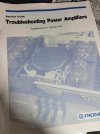
I've had this printed and bound for weeks now, not sure why I never read it. However, I really pored over it (and a few threads on here) for several hours.

I'm too exhausted to explain what I learned, but the info in it helped me start to understand more how amplifiers actually work. A line from the book I really liked - something to the effect of "replacing every single part will certainly make the amplifier work again, but it is better to understand why the fault is happening." I think I've heard one around here quite a bit :thumbsup:

Anyway, using the methods contained within (the book and the minds of many generous AKers), I learned which section of the amp I should take a closer look at.

1000009030.png

1000009021.jpg

1000009022.jpg

Gotcha! An open diode and zener were found (in the bias circuitry?)

Now I can't really even start to say what the hell these diodes actually do, or if replacing them for working parts will fix the issue, but I'm at least proud of myself for finding them, lol. Gotta work on that whole "why the fault is happening" part...

proper replacements should come sometime today.

I need some sleep...
 
Last edited:
Probably a good idea to add a hundred 1N4148 diodes to your next buy list if you don't already have some. I keep getting told that they are a very good "universal" diode.

Good work on finding those bad parts.
Now that I have a Peak Atlas Zen 50 for checking zener diodes I love it, money well spent.

Cheers,
James
 
Probably a good idea to add a hundred 1N4148 diodes to your next buy list if you don't already have some. I keep getting told that they are a very good "universal" diode.

Good work on finding those bad parts.
Now that I have a Peak Atlas Zen 50 for checking zener diodes I love it, money well spent.

Cheers,
James
Thanks James. I'm not quite out of the woods yet, but the small victory felt nice.

1000009035.png

I still had a few left on hand, but I already had 1000 of 1N4148 in my cart, lol. Only $14 and I won't have to worry about ordering more for a very long time, so why the hell not?

The diode I found open is a 1SS155, 1N4148 will go there.

I also know now from a post you made years ago that the 1SS82 can be substituted with BAV-21. I still have a couple on hand but have more in the cart.

The zener is the HZ-6, I have a previously placed order with several different voltage zeners in it that should come today. Thanks for the exact sub for that back in a thread from 2014, avionic, lol. He's helping me so much without even having to make new posts.
 
Last edited:
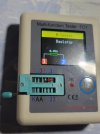
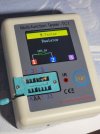
Treat yourself!! Hell yeah. I want some Atlas testers one day, this cheap Chinese one is bare minimum okay. I'm on my 3rd one since January from them going kaput. Thank goodness for Amazon's return policy.
That will be 3 devices from them. Bought a DCA75 and the Zen 50 a few months ago and am learning to love them.

I used one of those 328 chip based testers for years, they are extremely useful for the price. But they can't reliably test n-channel vfets or caps 10pF and below. The Peak stuff is expensive but so far seem to be very good.

LOL, 1000 1N4148, yeah, that should do you for a few months. ;)

James

edit: the single most important thing about those Chinese testers is to remember to discharge caps with a 100 ohm resistor before testing them.
 
Now I can't really even start to say what the hell these diodes actually do, or if replacing them for working parts will fix the issue, but I'm at least proud of myself for finding them, lol.
I'm not a current flow expert either. I know diodes allow current flow in one direction. Zeners are current controlled diodes. So if there's uncontrolled currents happening, I chase diodes. A transistor can be looked at as two diodes.
Long story short regarding chernobyl repairs. In my experience the semiconductors are the problems & the smoking parts are just symptoms. The tranny's & diodes are the most sensitive and fail first, creating excessive currents that BBQ's resistors, caps, etc.
 
Last edited:
Back
Top Bottom