

You are using an out of date browser. It may not display this or other websites correctly.
You should upgrade or use an alternative browser.
You should upgrade or use an alternative browser.
Beat this:
- Thread starter DeFriend
- Start date


I didn’t even mention my bicycle addiction.. Pre-‘85 lightweights for me; British, Italian, US, German, French, Belgian..
Been selling some of them off the past couple years but hope to keep my favorites.
without knowing it you've become an official member of the AK enablers union, where our ethos is "you can never have too many".
here's another for you lol
https://audiokarma.org/forums/index.php?threads/i-regressed-and-bought-a-new-watch.822798/
I didn’t even mention my bicycle addiction.. Pre-‘85 lightweights for me; British, Italian, US, German, French, Belgian..
Been selling some of them off the past couple years but hope to keep my favorites.
I ride a 1980 Motobecane Grand Jubilee

MisterDK
Addicted Member
without knowing it you've become an official member of the AK enablers union, where our ethos is "you can never have too many".
here's another for you lol
https://audiokarma.org/forums/index.php?threads/i-regressed-and-bought-a-new-watch.822798/
Ohh.. I don’t want to start collecting watches.. I still have 11-2/3 cars around here. Probably about 30, high quality bicycles left. Around 10, R/C nitro fuel boats... And still have slot car stuff I started collecting in the early ‘70s. Did I mention the camera collection? A long-time friend just offered me his nice RD-350 Yamaha. My kids won’t know what to do with all of this, so it needs to go down the road, I think. I probably don’t want to know what time it is.
Ohh.. I don’t want to start collecting watches.. I still have 11-2/3 cars around here. Probably about 30, high quality bicycles left. Around 10, R/C nitro fuel boats... And still have slot car stuff I started collecting in the early ‘70s. Did I mention the camera collection? A long-time friend just offered me his nice RD-350 Yamaha. My kids won’t know what to do with all of this, so it needs to go down the road, I think. I probably don’t want to know what time it is.
then you definitely don't want to get an Invicta, they're addictive.
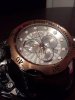
just a few of the collection

I've also begun culling the herd, down to about 30 watches, soon to unload a few turntables, preamps, tuners, etc.
MisterDK
Addicted Member
I ride a 1980 Motobecane Grand Jubilee
I still have a ‘71 Le Champion, the teal one with white lugs. Some Camp. Record with some Stronglight bits and Universal ‘68s, 531 double-butted. In really nice shape w/ original paint & decals.
Had a few Motobecanes, PX-10’s, Gitane, and a really cool Bertin. Still have a fully chromed, Alex Singer camper (touring) from ‘75, a custom order probably picked up in France (didn’t come through Spence Wolf’s shop, like many in the US).
My 3 kids aren’t going to want any of it..
I still have a ‘71 Le Champion, the teal one with white lugs. Some Camp. Record with some Stronglight bits and Universal ‘68s, 531 double-butted. In really nice shape w/ original paint & decals.
Had a few Motobecanes, PX-10’s, Gitane, and a really cool Bertin. Still have a fully chromed, Alex Singer camper (touring) from ‘75, a custom order probably picked up in France (didn’t come through Spence Wolf’s shop, like many in the US).
My 3 kids aren’t going to want any of it..
I know what you mean, my kids aren't going to appreciate the electronic gear either, I just hope they don't throw it all in a dumpster somewhere eh.
MisterDK
Addicted Member
I know what you mean, my kids aren't going to appreciate the electronic gear either, I just hope they don't throw it all in a dumpster somewhere eh.
No worries - it’ll go out for the yard sale. (kidding; let’s hope not).
I need to start labeling things with notes to do research, just in case. I have one pretty special bike that I had my kids pose with when they were little. I told the oldest one to never sell it. Luckily, she’s the one with most sense these days.
No worries - it’ll go out for the yard sale. (kidding; let’s hope not).
I need to start labeling things with notes to do research, just in case. I have one pretty special bike that I had my kids pose with when they were little. I told the oldest one to never sell it. Luckily, she’s the one with most sense these days.
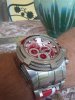
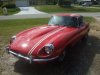
this Bolt Zeus looked nice with my red and white Jag.
MisterDK
Addicted Member
Series II - E; very cool. ‘68-‘69?this Bolt Zeus looked nice with my red and white Jag.
View attachment 1956781
View attachment 1956782
70Series II - E; very cool. ‘68-‘69?

ibog1
Active Member
You are so right, geesh. Recently watched a bio on Paul Newman and his racing. Almost said King of Cool when I posted, would have been more correct. Thanks.1. - is actually Steve McQueen. He drove the famous Mustang in Bullitt. ^_^

Yes, we do get a nice snow here and there in winter. Year ago we got 16"!Prescott AZ and Albuquerque are OK, Sante Fe gets to much snow. If I were rich I would move back to ST Helena, California. But you do need a bucket of goose grease to keep your feathers dry during the rainy season. San Diego is great! You just have to decide are away from the beach you want to live. It never freezes there. Acapulco is a little warm in the summer but you have all that ocean.

Trekkie4
Retired Member
I don't remember the 586 or 686. There were kids that had 386 and 486 around me that upgraded directly to Pentiums, but the computer lab in my engineering department had nothing but monochrome Apple Mac SE II (?) because they had built-in floating point processors.
We'd program in Quick BASIC and compile to machine code for big matrix calculations with partial derivatives.
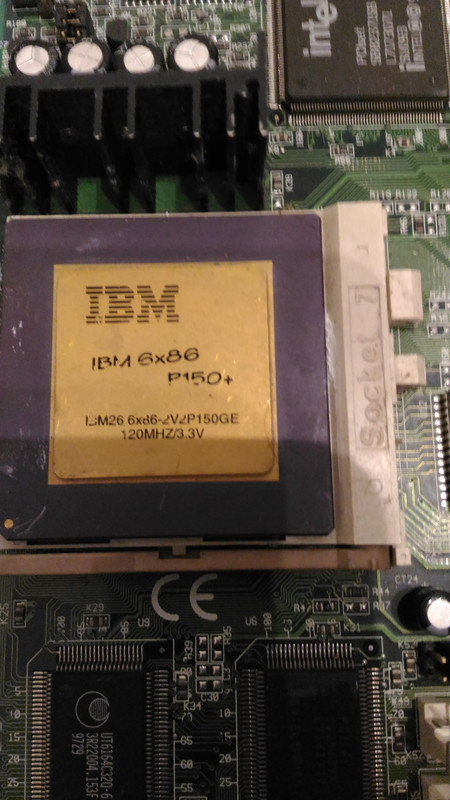
586 was a somewhat rare model. By the end of x86 lineup, around the same time Intel introduced their brand new "Pentium" processor, AMD decided to give it one more try with the older platform, hoping to squeeze the extra performance out of the old architecture & socket design. AMD "Am5x86" was in fact a 486 CPU, beefed up to the point where they called it a "5x86". It ran at 133MHz (same speed as Intel Pentium), but despite all this it was considerably slower than its Intel counterpart & its Socket 7 design. However, 586 was apparently a success because there was a lot of users who wanted to upgrade but didn't want to replace everything (motherboard, RAM, CPU, etc) or they simply couldn't afford the latest technology. So, this is where 5x86 came in, a power boost of the old & reliable 486 which held up surprisingly good IMHO.

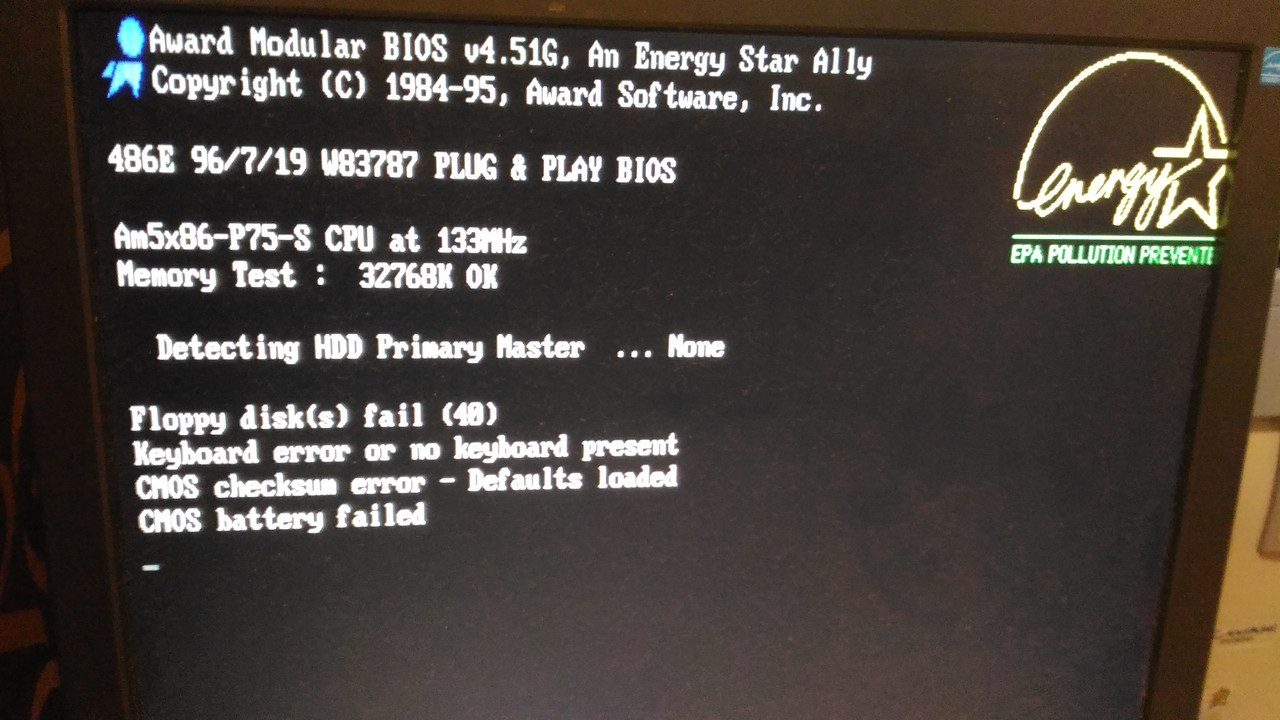

Of course, the Am5x86 was designed to work with Windows 95 (rather than MS-DOS &/or Windows 3.11), so booting up W95 was a no brainer!

6x86 was a similar concept, but unlike 5x86 it utilized the new Socket 7. Unfortunately, I would have to say that it came in too late & wasn't as successful. Same old story, take the older platform & then upgrade the performance to the point where it'll meet current standards ("current" as in around 1996). But this one was a failure, people reported having issues with this particular model, and besides it was too late to the party so to speak. First of all, you needed a new motherboard for this one, which supported S7 CPUs. So by the time they introduced 6x86 everyone was already into Pentiums & Athlons, and x86 generations were yesterday's news...
Nevertheless, it makes a nice conversation piece & is considered somewhat of a collectible nowdays, since you can't find many of these left. And yes - the one from the picture below does work. I don't have it mounted inside the case at the moment, but the actual motherboard & CPU are both tested & seem to be fully operational



Miss the snow
MisterDK
Addicted Member
Miss the snow
Tell me about it; over 90 here today..

I live in S Florida aka hell
beat_truck
Addicted Member
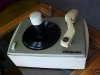
I don't have room for a jukebox or the patience to restore one. This little RCA RP190 changer that I have will have to do. It just needs new rubber parts. I have a Pickering V15 that I am going to replace the long dead crystal cartridge with. It can stack ~14 45s at a time.Elvis was pretty cool, but I never was a fan of Happy Days.
And here’s a jukebox; the first of the Stereo Seeburgs.. I have boxes of 45’s just waiting for one.
View attachment 1956503
I was never a fan of Happy Days either.


